Chocolate and caramel cake with banana and crunchy cereal layer

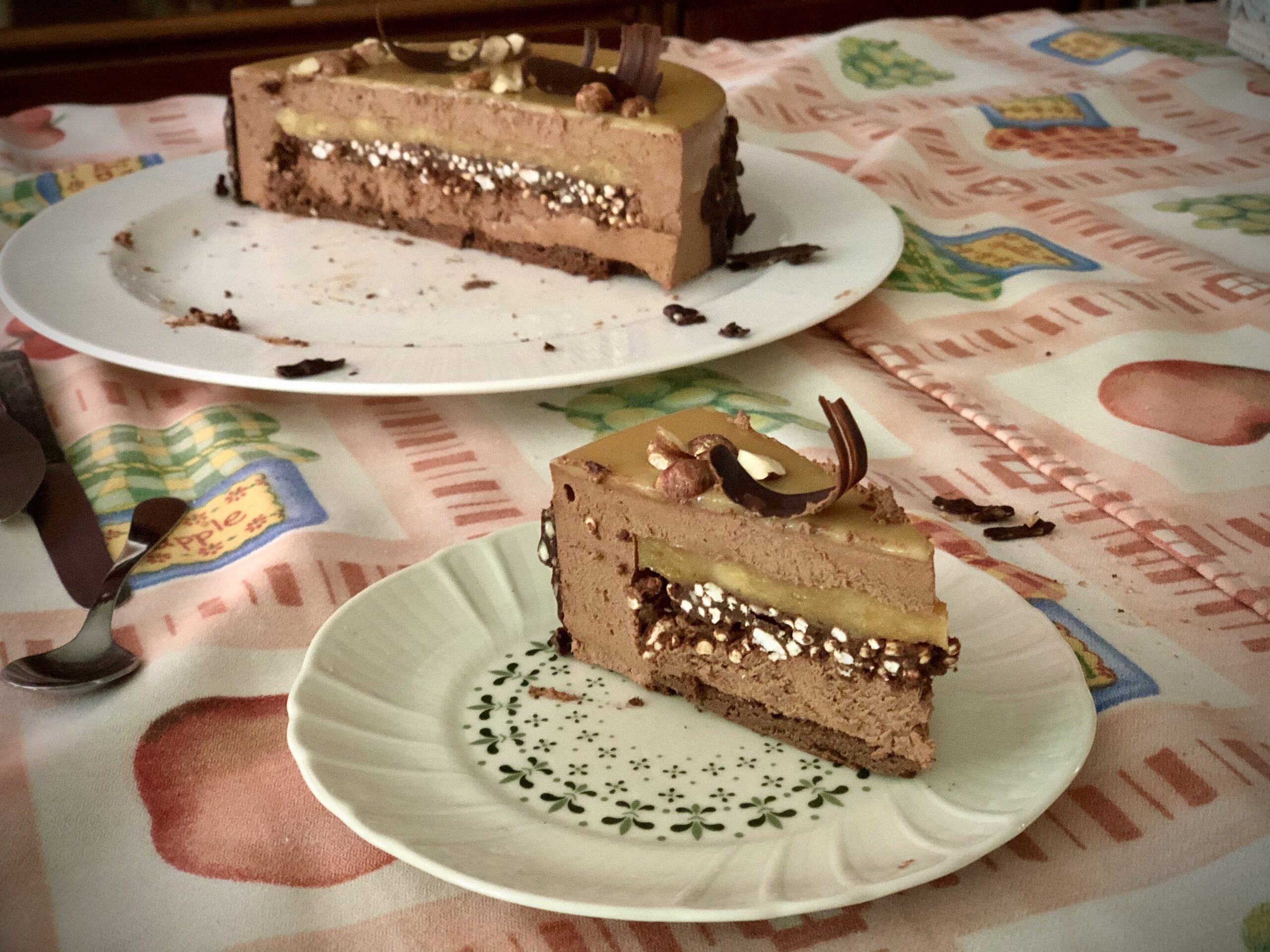
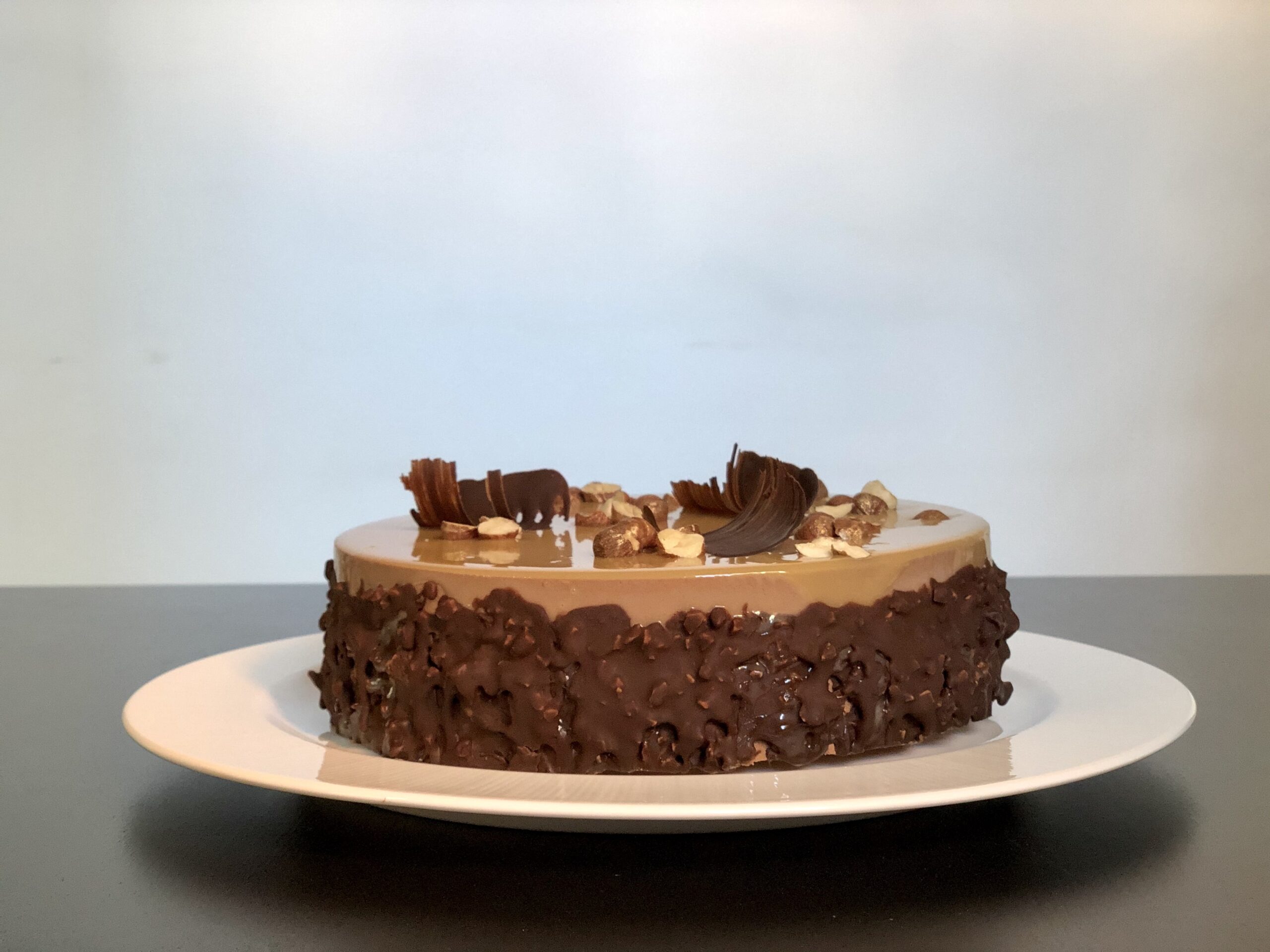
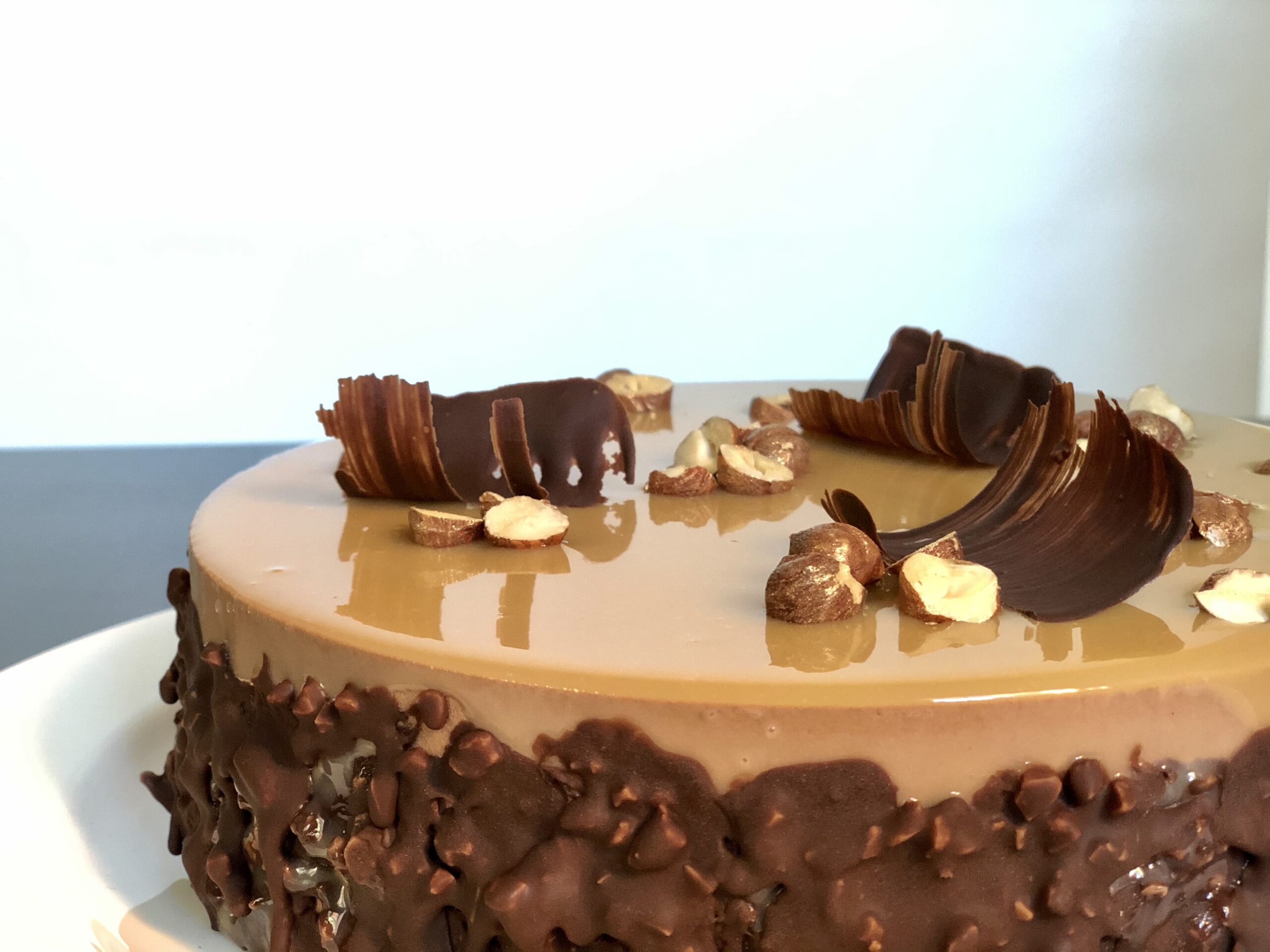
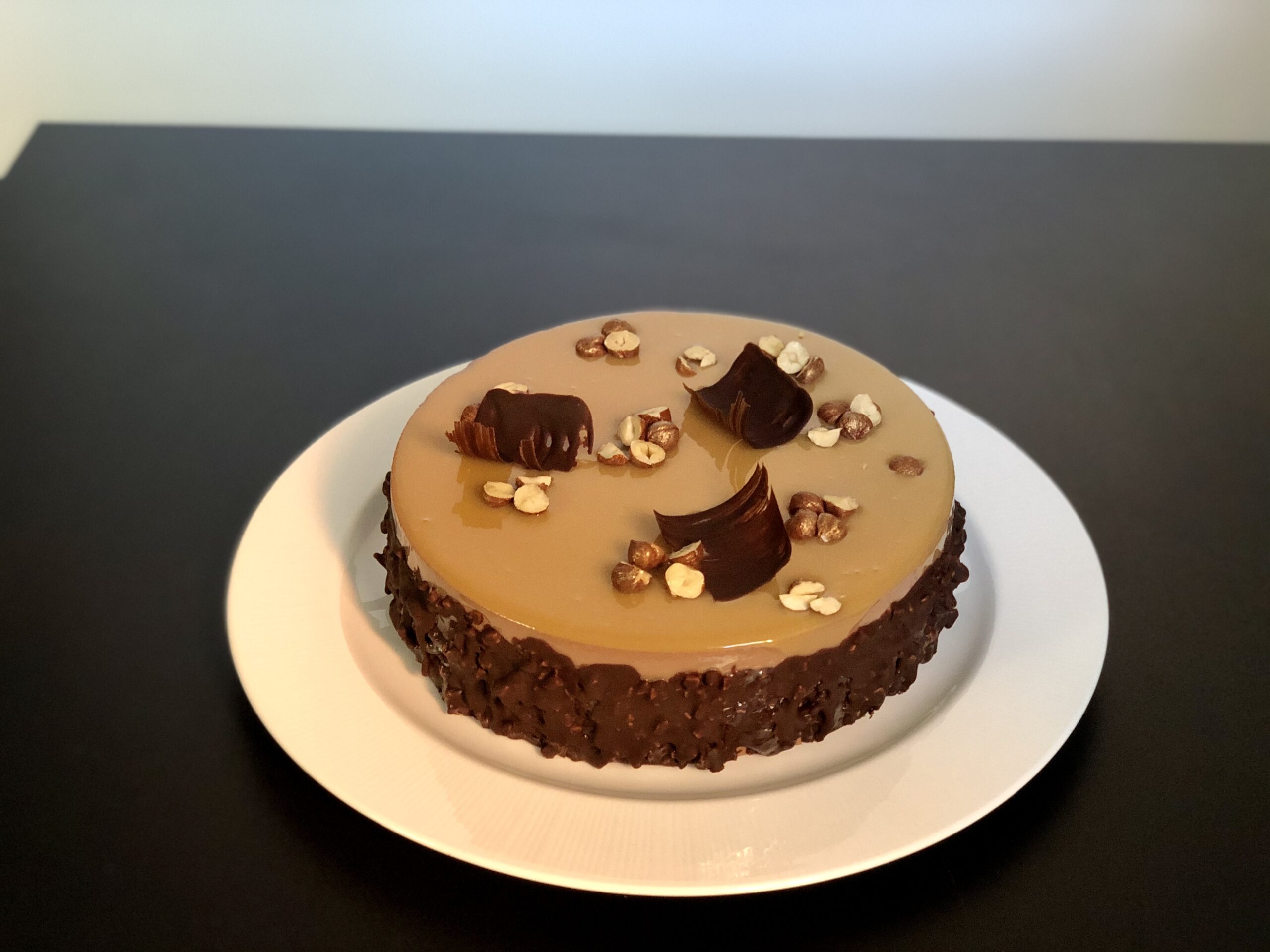
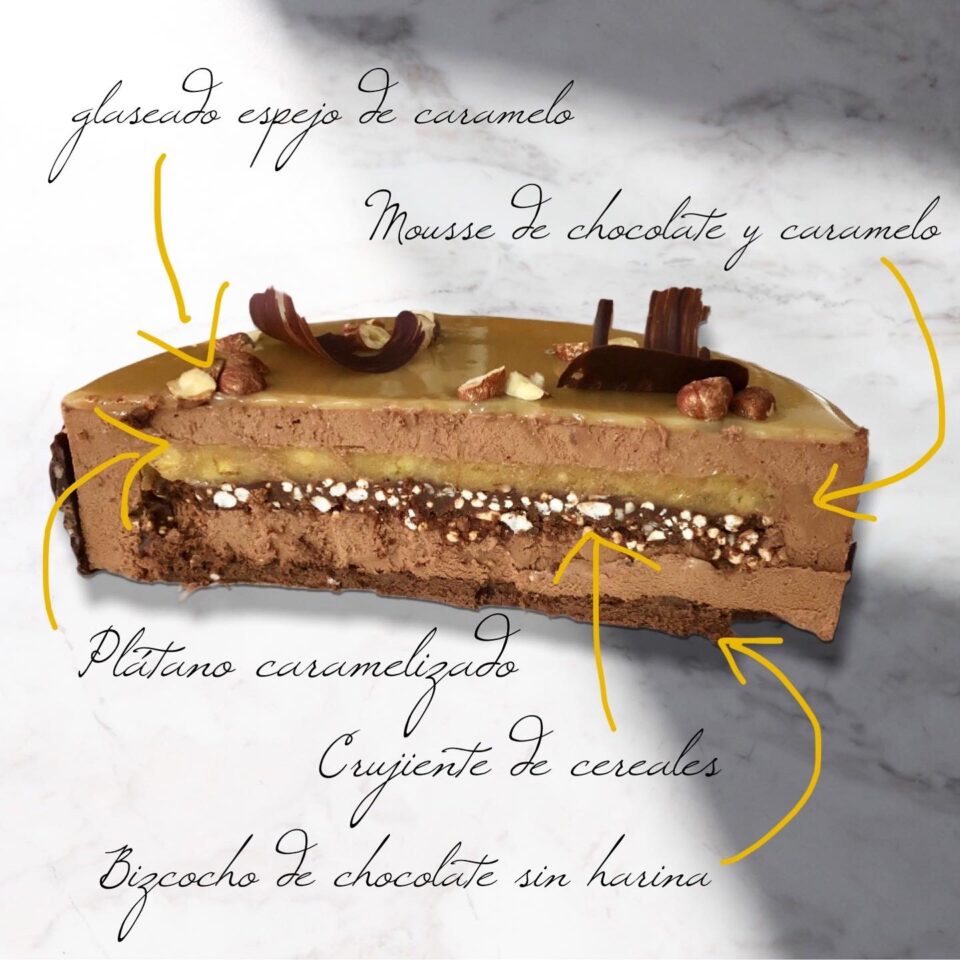
This time I wanted to make a chocolate cake that didn't have a super intense pure-chocolate flavor, since some of my taste-testers aren't huge fans of that level of intensity. The banana filling won me over as a way to balance out all that sweetness, and the crunchy layer adds a bit of joy to creamy desserts.

The recipe is from Ettore Cioccia, although I made several changes to the filling and decoration because I wanted to use up ingredients I had at home and try out some new things. So here's my version of this delicious cake — I hope you like it. It's not a complicated cake, but it does have several components and requires patience and planning to give yourself enough time, considering all the chilling/freezing times involved.
Pics and Cakes

Ingredients

Crunchy cereal layer

  • 60 g (2.1 oz) almond butter
  • 35 g (1.2 oz) chocolate
  • 20 g (0.7 oz) raw chopped hazelnuts
  • 15 g (0.5 oz) puffed rice
  • 15 g (0.5 oz) puffed quinoa

Caramelized banana

  • 30 g (2 tbsp) sugar
  • 15 g (1 tbsp) butter
  • 3 bananas (210 g / 7.4 oz)
  • Lemon juice
  • 2 g gelatin (1 sheet)

Flourless chocolate sponge

  • 60 g (2.1 oz) 65% dark chocolate
  • 20 g (1.5 tbsp) unsalted butter
  • 2 egg whites at room temperature
  • 2 egg yolks
  • 20 g (1.5 tbsp) sugar

Chocolate and caramel mousse

  • 200 g (7 oz) 65% chocolate
  • 6 g gelatin (3 sheets)
  • 60 g (1/4 cup) sugar
  • 100 ml (1/2 cup) heavy whipping cream
  • 4 egg yolks, beaten
  • 400 g (14 oz) heavy cream whipped to soft peaks

Ferrero-style coating

  • 215 g (7.6 oz) 65% chocolate
  • 40 g (3 tbsp) sunflower oil
  • 45 g (1.6 oz) chopped almonds (almond brittle)

Caramel mirror glaze

  • 300 g (1.5 cups) sugar
  • 300 g (1 cup) glucose syrup, slightly warmed in the microwave
  • 375 ml (1.5 cups) water
  • 200 g (7 oz) sweetened condensed milk
  • 300 g (10.6 oz) white couverture chocolate, finely chopped
  • 18 g gelatin, hydrated beforehand and then dissolved in 108 ml (about 1/2 cup) of hot water

Method

  1. We start by making the crunchy cereal layer. Melt the chocolate in the microwave in short bursts to keep it from burning. Next, add the almond butter and mix well. Finally, add the cereals and hazelnuts and mix again until everything comes together.
  2. Line the bottom of a 17 cm (6.7 in) springform ring or pan with plastic wrap and a strip of acetate around the edge. Pour in the chocolate mixture and smooth out the surface with a spoon. Pop it into the freezer.
  3. For the caramelized banana, hydrate the gelatin in a bowl of cold water.
  4. Cut the bananas into small dice and add a splash of lemon juice so they don't oxidize.
  5. Put the sugar in a saucepan and let it melt until it forms an amber-colored caramel. Add the butter, and once it's incorporated, add the banana. Cook for a few minutes over low heat, stirring frequently (the mixture is likely to get more liquid as the fruit releases its juice).
  6. Drain the gelatin well and stir it into the saucepan after turning off the heat. Stir well so it dissolves completely.
  7. Take the crunchy layer out of the freezer and pour the caramelized banana on top, forming another even layer. Put it back in the freezer.
  8. To make the chocolate sponge, preheat the oven to 180°C (355°F).
  9. Melt the chocolate and butter in short bursts in the microwave.
  10. In another bowl, whip the egg whites to stiff peaks with a pinch of salt and the sugar. Once they're firm, fold in the beaten yolks gently.
  11. Next, add the melted chocolate, also folding gently so it doesn't deflate, until you have a smooth batter.
  12. Spread it onto a parchment-lined baking sheet (it's not a lot of batter and it's not very runny) until it's about 1 cm (0.4 in) thick. The important thing is that you'll be able to cut a 17 cm (6.7 in) circle out of it later.
  13. Bake for 8 minutes.
  14. To make the chocolate and caramel mousse, hydrate the gelatin sheets in very cold water.
  15. Melt the chocolate in the microwave in short bursts and set aside.
  16. In a saucepan, melt the sugar and let it cook until you get a light caramel. Add 100 ml (1/2 cup) of cream (warmed in the microwave so there isn't a big temperature difference). Pour it in a little at a time, stirring constantly to keep crystals from forming, and very carefully so it doesn't splash you.
  17. Pour the mixture over the beaten egg yolks while stirring constantly, then return it to the heat until it reaches 82–84°C (180–183°F).
  18. Take it off the heat and add the well-drained gelatin, stirring until it dissolves.
  19. Next, blend with an immersion blender until smooth, and pour this hot cream over the melted chocolate. Mix well and let cool to 40–45°C (104–113°F).
  20. Finally, fold in a third of the soft-peak whipped cream and mix. Add the rest and fold gently again.
  21. For the assembly, take a 20 cm (8 in) springform pan (or ring) and line the edge with a strip of acetate and the bottom with plastic wrap.
  22. Now we're going to layer everything. First, spread a generous layer of chocolate and caramel mousse in the bottom and use a spatula to coat the sides too. Then unmold the banana and hazelnut crunch insert and place it on top of the mousse with the crunchy side facing up. Fill with more mousse, and finally lay down the chocolate sponge disc. Put the cake in the freezer for at least 3–4 hours (I leave it overnight and finish the decoration the next day).
  23. Now we're going to prepare the glazes. For the Ferrero-style coating, melt the chocolate in the microwave and then add the oil. Once it's well combined, add the chopped almonds. Set aside until it cools to 35°C (95°F).
  24. To make the caramel mirror glaze, hydrate the gelatin in a bowl of cold water. Heat the water, drain the gelatin, and dissolve it in this hot water. Set aside.
  25. In a saucepan, make a dry caramel using just the sugar — no water. When it turns a dark golden color, turn off the heat and pull the pan off the burner. Immediately and very carefully, slowly pour in the 375 ml (1.5 cups) of water while whisking. (Be very careful — it splatters and burns badly.)
  26. Then add the glucose, stir well until it dissolves, and next add the condensed milk and white chocolate, whisking until the chocolate dissolves and is fully incorporated.
  27. Finally, add the dissolved gelatin and mix until combined. Let it rest until the caramel cools to 25–30°C (77–86°F).
  28. All that's left is the final assembly. Take the frozen cake out of the freezer and remove the pan, the acetate strip, and the plastic wrap. Set the cake on top of a smaller mold or bowl so it's elevated and you can glaze it well. It's a good idea to put a plate or tray underneath to catch the drippings of glaze so you can reuse them.
  29. First we're going to glaze the sides with the Ferrero coating. The easiest way is to put the coating in a pitcher and pour it over the sides. Since the cake is frozen, the chocolate will set almost instantly. If you have any gaps, you can patch them up with the help of a spoon.
  30. Finally, pour the mirror glaze over the top of the cake. You want to use just the right amount so it only covers the top and doesn't drip down the sides. You can finish decorating it with broken hazelnuts and chocolate.
  31. Carefully transfer it to a flat plate and store in the fridge. Before serving, you'll need to give it 2 or 3 hours to defrost slowly.
Pics and Cakes
Pics and Cakes
Pics and Cakes

PiC tips

  • The amounts I give for the mirror glaze are enough to cover the entire cake (top and sides). In that case, you wouldn't need the Ferrero-style coating, and it would also look beautiful. Any leftover glaze (that hasn't been contaminated with other components of the cake) can be stored in the fridge for a few days, or longer in the freezer, and reheated whenever you want to glaze another dessert. In fact, that's what I did. This glaze had been frozen — it was leftover from a previous cake. You can also choose to halve the quantities.
  • I used almond butter, but you can use any other nut butter or even praline like Ettore does in his original recipe.
Pics and Cakes
14 de octubre de 2020 · 7 min · Palstelera

Tarta de chocolate y caramelo con plátano y crujiente de cereales

En esta ocasión quería hacer una tarta de chocolate que no tuviera un sabor muy intenso a chocolate puro ya que algunos de los catadores no son muy fan de esos niveles de intensidad. El relleno de plátano me convenció como matiz para compensar tanto dulzor y la capa crujiente le da un poco de alegría a los postres cremosos.

La receta es de Ettore Cioccia aunque introduje varios cambios en el relleno y en la decoración porque quería aprovechar ingredientes que tenía en casa y experimentar cosas nuevas. Así que aquí os dejo mi versión de esta deliciosa tarta que espero que os guste. No es una tarta complicada pero sí tiene varias elaboraciones y requiere paciencia y planificación para hacerla con tiempo suficiente teniendo en cuenta los tiempos de enfriado/congelado necesarios.

Pics and Cakes

Ingredientes

Crujiente de cereales

  • 60 g mantequilla de almendra
  • 35 g chocolate
  • 20 g avellanas crudas troceadas
  • 15 g de arroz inflado
  • 15 g de quinoa inflada

Banana caramelizada

  • 30 g azúcar
  • 15 g mantequilla
  • 3 plátanos (210 g)
  • Zumo de limón
  • 2 g de gelatina (1 hoja)

Bizcocho de chocolate sin harina

  • 60 g chocolate negro 65%
  • 20 g mantequilla sin sal
  • 2 claras de huevo a temperatura ambiente
  • 2 yemas de huevo
  • 20 g azúcar

Mousse de chocolate y caramelo

  • 200 g chocolate 65%
  • 6 g gelatina (3 hojas)
  • 60 g azúcar
  • 100 ml nata para montar
  • 4 yemas de huevo batidas
  • 400 g nata montada en picos suaves

Cobertura tipo Ferrero

  • 215 g chocolate 65%
  • 40 g aceite de girasol
  • 45 g almendra granillo

Glaseado espejo de caramelo

  • 300 g azúcar
  • 300 g glucosa calentada ligeramente en el microondas
  • 375 ml agua
  • 200 g leche condensada
  • 300 g chocolate blanco de cobertura picado finamente
  • 18 g gelatina hidratada previamente y disuelta después en 108 ml de agua caliente

Elaboración

  1. Empezamos preparando el crujiente de cereales. Para ello, derretimos el chocolate en el microondas en intervalos de pocos segundos para evitar que se nos queme. A continuación, añadimos la mantequilla de almendra y mezclamos bien. Por último, incorporamos los cereales y las avellanas y volvemos a mezclar hasta que se integre.
  2. En un aro o molde desmoldable de 17 cm colocamos film transparente en la parte inferior y una tira de acetato en el borde. Vertemos nuestra mezcla de chocolate y alisamos la superficie con una cuchara. Llevamos al congelador.
  3. Para el plátano caramelizado, hidratamos la gelatina en un bol con agua fría.
  4. Cortamos los plátanos en dados pequeños y les añadimos un chorrito de zumo de limón para que no se oxide.
  5. Ponemos el azúcar en un cazo y dejamos que se derrita hasta formar un caramelo de color ámbar. Incorporamos la mantequilla y cuando esté integrada, añadimos el plátano. Cocinamos unos pocos minutos a fuego lento removiendo frecuentemente (es probable que la mezcla se vuelva más líquida con el jugo que suelte la fruta).
  6. Escurrimos bien la gelatina y la incorporamos al cazo ya con el fuego apagado. Removemos bien para que se disuelva por completo.
  7. Sacamos el crujiente del congelador y echamos el plátano caramelizado encima formando otra capa uniforme. Guardamos de nuevo en el congelador.
  8. Para preparar el bizcocho de chocolate, precalentamos el horno a 180ºC.
  9. Derretimos el chocolate y la mantequilla a intervalos cortos en el microondas.
  10. En otro bol montamos las claras a punto de nieve con una pizca de sal y el azúcar y cuando estén bien firmes añadimos las yemas batidas con movimientos envolventes.
  11. A continuación añadimos el chocolate derretido también con movimientos suaves y envolventes para que no se baje hasta obtener una masa homogénea.
  12. Extendemos sobre una bandeja con papel de horno (no es mucha cantidad ni es una masa muy líquida) hasta obtener un grosor de 1 cm aproximadamente. Lo importante es que luego podamos obtener un círculo de bizcocho de 17 cm.
  13. Horneamos 8 minutos.
  14. Para preparar la mousse de chocolate y caramelo, hidratamos las hojas de gelatina en agua muy fría.
  15. Derretimos el chocolate en el microondas en intervalos cortos y reservamos.
  16. En un cazo ponemos el azúcar y dejamos cocinar hasta obtener un caramelo claro. Le añadimos 100 ml de nata (templada en el microondas para que no haya mucha diferencia de temperatura). Hay que echarla poco a poco y removiendo constantemente para evitar que se formen cristales y con mucho cuidado para que no nos salpique.
  17. Vertemos la preparación sobre las yemas de huevo batidas sin dejar de remover y ponemos de nuevo al fuego hasta que llegue a los 82-84º C.
  18. Retiramos del fuego y añadimos la gelatina bien escurrida, removemos hasta que se disuelva.
  19. A continuación, batimos con la batidora eléctrica hasta obtener una textura homogénea y añadimos esta crema caliente sobre el chocolate derretido. Mezclamos bien y dejamos enfriar hasta los 40-45º C.
  20. Por último, incorporamos un tercio de la nata montada en picos suaves, y mezclamos. Añadimos el resto y mezclamos de nuevo delicadamente.
  21. Para el montaje, cogemos un molde desmoldable (o aro) de 20 cm y colocamos una tira de acetato en el borde y film en la base.
  22. Vamos a insertar todas las preparaciones anteriores. Primero ponemos una generosa capa de mousse de chocolate y caramelo en el fondo y con una espátula lo extendemos por las paredes también. Luego desmoldamos el plátano y el crujiente de avellana y lo colocamos sobre la mousse con el crujiente hacia arriba. Rellenamos con más mousse, y por último colocamos el disco de bizcocho al chocolate. Guardamos la tarta en el congelador mínimo unas 3-4 horas (yo la dejo toda la noche y al día siguiente termino la decoración).
  23. Ahora vamos a preparar los glaseados. Para la cobertura tipo Ferrero derretimos el chocolate en el microondas y añadimos luego el aceite. Cuando esté bien integrado añadimos la almendra en granillo. Reservamos hasta que esté a 35º C.
  24. Para hacer el glaseado espejo de caramelo hidratamos la gelatina en un bol con agua fría. Calentamos el agua, escurrimos la gelatina y la deshacemos en esta agua caliente. Reservamos.
  25. En un cazo hacemos un caramelo solo con el azúcar en seco, sin añadirle agua, cuando tome un color rubio oscuro, apagamos el fuego y apartamos el cazo. Inmediatamente con cuidado y poco a poco vamos añadiendo los 375 ml de agua, mientras vamos removiendo con unas varillas. (Mucho cuidado porque esto salta y quema mucho).
  26. Luego agregamos la glucosa , removemos bien hasta que se disuelva y, a continuación, incorporamos la leche condensada y el chocolate blanco, removiendo con las varillas hasta que el chocolate se disuelva y se integre completamente.
  27. Por último añadimos la gelatina disuelta y mezclamos hasta incorporar. Dejamos reposar hasta que la temperatura del caramelo descienda hasta los 25-30ºC.
  28. Ya solo nos queda el montaje final. Sacamos la tarta congelada del congelador y retiramos el molde y la lámina de acetato y el film. Colocamos la tarta sobre otro molde más pequeño o cuenco para que quede con altura y la podamos glasear bien. Es recomendable que debajo pongas un plato o bandeja para recuperar los restos de glaseado que caiga y lo puedas volver a usar.
  29. Primero vamos a glasear las paredes con la cobertura Ferrero. Para ello lo mejor es poner la cobertura en una jarra e ir echándolo sobre las paredes. Como la tarta está congelada, el chocolate se solidificará casi al instante. Si te quedan huecos sin cobertura puedes ir «parcheando» con ayuda de una cuchara.
  30. Por último, añadimos el glaseado espejo en la parte superior de la tarta. Hay que echar la cantidad exacta para que solo cubra la parte superior y no gotee por las paredes. Puedes terminar de decorarla con avellanas partidas y chocolate.
  31. Con cuidado la pasamos a un plato llano y la guardamos en la nevera. Antes de disfrutarla tendrán que pasar 2 o 3 horas para que se descongele tranquilamente.
Pics and Cakes
Pics and Cakes
Pics and Cakes

Consejos PiC

  • Las cantidades que pongo para el glaseado espejo dan para cubrir toda la tarta con glaseado espejo (parte superior y paredes). En este caso, no te haría falta la cobertura tipo Ferrero y quedaría preciosa también. El glaseado que te sobre (y que no esté sucio de otras elaboraciones de la tarta) lo puedes guardar en la nevera unos días o en el congelador más tiempo y volver a calentarlo cuando quieras glasear otro postre. De hecho, es lo que yo hice. Este glaseado había estado congelado y era lo que me sobró de otra tarta previa. También puedes optar por reducir las cantidades a la mitad.
  • Yo utilicé mantequilla de almendras pero puedes usar de cualquier otro fruto seco o incluso praliné como hace Ettore en su receta original.
Pics and Cakes
14 de octubre de 2020 · 7 min · Palstelera

Bundt cake de cacao puro

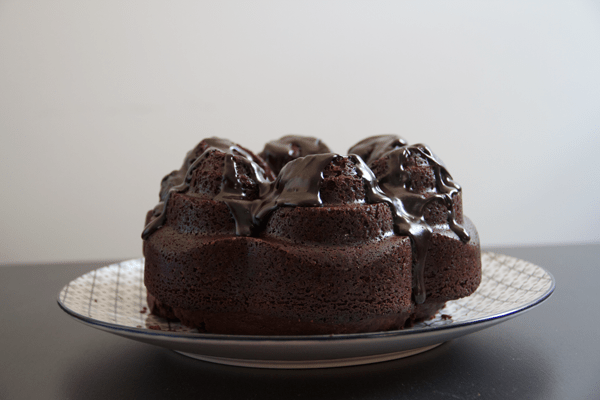
Para empezar bien el fin de semana, las vacaciones, celebrar las fiestas madrileñas de la Paloma… cualquier excusa es buena para hacer este maravilloso y esponjoso bizcocho de cacao. Esta receta la saqué del blog de Alma Obregón y solo hice unas ligeras variaciones (Cesmm siempre me dice que soy incapaz de seguir una receta al pie de la letra… ¿Será verdad?). Al hacerse con cacao puro en vez de con chocolate me parece menos pesado y el sirope de encima resulta perfecto para los amantes del chocolate amargo y no empalagoso. Bundt cake son los bizcochos en forma de anillo con un agujero en medio. Aunque técnicamente solo son los de la marca Nordic Ware® se suelen llamar así a todos los que tienen esta forma. Si queréis conocer más sobre su historia e incluso cuándo se celebra su día internacional, podéis leerlo aquí.

bundt

¿Qué necesitamos?

  • 125 g de mantequilla
  • 2 huevos
  • 250 ml de leche
  • 360 g de azúcar blanco
  • 60 g de cacao puro sin azúcar (yo uso de la marca Valor)
  • 260 g de harina
  • 1/2 cucharadita de bicarbonato sódico
  • 1/2 cucharadita de levadura química (tipo Royal)
  • 1 pizca de sal

Para el sirope:

  • 40 g de cacao puro sin azúcar
  • 3 cucharadas de azúcar blanco
  • 1 cucharada de maicena
  • 3 cucharadas de sirope de maíz
  • 120 ml de leche


 ¿Cómo lo hacemos?

  1. Precalentamos el horno a 180ºC.
  2. Derretimos la mantequilla en el microondas y una vez derretida completamente, añadimos los huevos y la leche y mezclamos bien. Es preferible que la leche esté a temperatura ambiente para que la mantequilla no se solidifique formando grumitos (si sucede, tampoco es grave, seguirá estando igual de delicioso).
  3. En otro bol mezclamos bien todos los ingredientes secos (harina tamizada, azúcar, bicarbonato, levadura y sal).
  4. A continuación añadimos la mezcla líquida a la seca y removemos bien con unas varillas hasta que tengamos una mezcla homogénea y sin grumos. No es necesario utilizar una batidora, con las varillas de mano queda perfecto.
  5. Vertemos la mezcla en el molde previamente engrasado (con un spray desmoldante o con mantequilla/margarina/aceite de girasol) y horneamos a 180ºC durante 45-50 minutos. Sabremos que está cocinado cuando al pinchar con una aguja de cocina, esta salga limpia.
  6. Lo dejamos reposar durante 20 minutos mínimo dentro del molde mientras preparamos el sirope.
  7. Para el sirope, mezclamos todos los ingredientes secos en un cazo pequeño y después añadimos el resto.
  8. Lo calentamos a fuego bajo y removemos constantemente hasta que vaya espesando y adquiera la consistencia deseada.
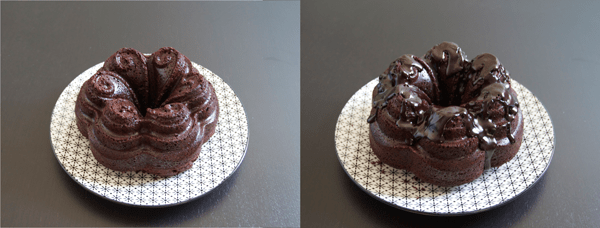
  9. Pasado el tiempo de reposo, desmoldamos el bizcocho y vertemos el sirope por encima. ¡A disfrutar!

bundt2

Consejos:

– El sirope de maíz lo podéis encontrar fácilmente en las tiendas de repostería creativa que hay cada vez por más sitios. Uno de los más típicos es el de la marca Karo y es el que yo usé para esta receta.

– Por tentador que sea hincarle el diente nada más sacarlo del horno, es muy importante dejarlo reposar. De lo contrario, se os romperá el bizcocho. Así que, paciencia…

– El sirope que hemos hecho es mejor verterlo caliente para que escurra bien por las paredes del bizcocho ya que solidifica muy rápido (nunca se quedará duro del todo pero sí como una especie de crema gomosa).

bundt3

12 de agosto de 2016 · 3 min · Palstelera

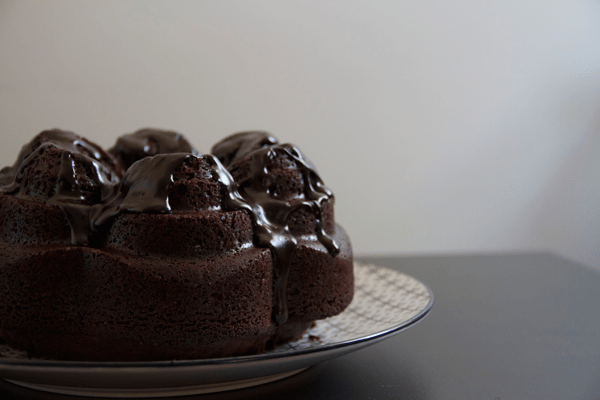
Pure Cocoa Bundt Cake

To kick off the weekend, the holidays, celebrate Madrid's La Paloma festivities… any excuse is a good one to bake this wonderful, fluffy cocoa cake. I got this recipe from Alma Obregón's blog and only made a few small tweaks (Cesmm always tells me I'm incapable of following a recipe to the letter… could it be true?). Made with pure cocoa instead of chocolate, it feels lighter, and the syrup on top is perfect for those who love bitter, not-too-sweet chocolate. Bundt cakes are those ring-shaped cakes with a hole in the middle. Technically, only Nordic Ware® brand cakes are bundt cakes, but the name is generally used for any cake of this shape. If you want to learn more about its history and even when its international day is celebrated, you can read about it here.

bundt

What do we need?

  • 125 g (4.4 oz / 1 stick + 1 tbsp) butter
  • 2 eggs
  • 250 ml (1 cup) milk
  • 360 g (1¾ cups) white sugar
  • 60 g (⅔ cup) unsweetened pure cocoa powder (I use the Valor brand)
  • 260 g (2 cups) all-purpose flour
  • ½ teaspoon baking soda
  • ½ teaspoon baking powder
  • 1 pinch of salt

For the syrup:

  • 40 g (scant ½ cup) unsweetened pure cocoa powder
  • 3 tablespoons white sugar
  • 1 tablespoon cornstarch
  • 3 tablespoons corn syrup
  • 120 ml (½ cup) milk


How do we make it?

  1. Preheat the oven to 180°C (350°F).
  2. Melt the butter in the microwave and once fully melted, add the eggs and the milk and mix well. It's best if the milk is at room temperature so the butter doesn't solidify into little lumps (if it does, it's not a big deal, the cake will be just as delicious).
  3. In another bowl, mix all the dry ingredients together (sifted flour, sugar, baking soda, baking powder, and salt).
  4. Then add the wet mixture to the dry one and stir well with a whisk until you have a smooth, lump-free batter. You don't need to use an electric mixer, a hand whisk works perfectly.
  5. Pour the batter into the previously greased pan (with a baking spray or with butter/margarine/sunflower oil) and bake at 180°C (350°F) for 45-50 minutes. You'll know it's done when a skewer inserted into the cake comes out clean.
  6. Let it rest for at least 20 minutes inside the pan while you prepare the syrup.
  7. For the syrup, mix all the dry ingredients in a small saucepan and then add the rest.
  8. Heat over low heat and stir constantly until it thickens and reaches the desired consistency.
  9. Once the resting time is up, unmold the cake and pour the syrup over the top. Enjoy!

bundt2

Tips:

– You can easily find corn syrup in creative baking shops, which are popping up in more and more places. One of the most common brands is Karo, which is what I used for this recipe.

– As tempting as it is to dig in straight out of the oven, it's really important to let it rest. Otherwise, the cake will fall apart. So, patience…

– It's best to pour the syrup while it's still hot so it runs nicely down the sides of the cake, since it solidifies very quickly (it never goes completely hard, but it sets into a kind of gooey cream).

bundt3

12 de agosto de 2016 · 3 min · Palstelera

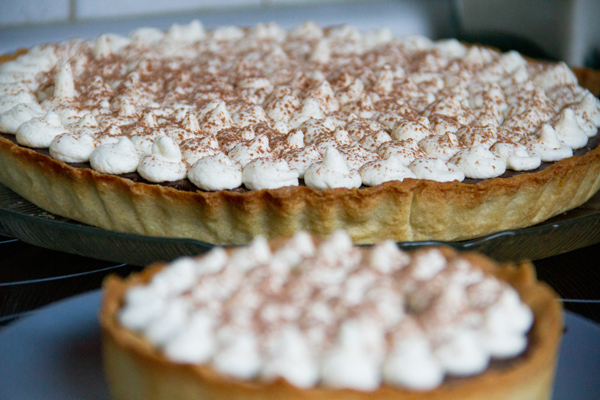
Chocolate and Salted Caramel Tart

Even though putting the words ‘caramel’ and ‘salted’ together in the same phrase sounds weird, it’s a delicious combination that I tried for the first time thanks to French delicatessens. So as soon as I saw this recipe on La receta de la felicidad I couldn’t resist giving it a go, and I knew it’d be a guaranteed success. Even those weird beings who aren’t crazy about chocolate end up liking it, thanks to the crunchy bite of the crust and the creaminess of the filling. So what are you waiting for to try it?

Pics and Cakes

What do we need?

For the special shortcrust pastry:

  • 250 g (2 cups) all-purpose flour

  • 30 g (1/4 cup) ground almonds

  • 150 g (2/3 cup) butter

  • 80 g (1/3 cup) sugar

  • 1 egg

  • 1 pinch of salt

  • 1 pinch of powdered vanilla

For the salted caramel sauce:

  • 70 g (1/3 cup) sugar

  • 70 ml (1/3 cup) heavy cream

  • 1 teaspoon butter

  • a pinch of salt

For the chocolate cream:

  • 500 ml (2 cups) heavy cream

  • 350 g (12 oz) dark chocolate

For the whipped cream:

  • 300 ml (1 1/4 cups) heavy whipping cream, very cold (at least 35% fat)

  • 2 heaping tablespoons of powdered sugar

  • Optional: cocoa powder for dusting on top

Pics and Cakes

How do we make it?

  • We start by preparing the crust. Mix the very cold butter, cut into small cubes, with the rest of the ingredients. You can use the dough attachment on your mixer or use a spoon and finish kneading by hand. It’ll come out crumbly and you’ll have to keep squeezing the butter with your hands to incorporate everything well, but don’t despair. Wrap in plastic wrap and chill in the fridge for half an hour.

  • Meanwhile, prepare a 24 to 26 cm (9.5 to 10 in) springform tin by lightly greasing it and placing a sheet of baking paper on the bottom.

  • Roll out the dough on a floured surface or between two sheets of baking paper or plastic wrap (so it doesn’t stick) until it’s about 3 mm (1/8 in) thick.

  • Roll the dough onto the rolling pin and unroll it over the tin. Press it well into the tin, patching any gaps with bits of dough. Trim the edges by running the rolling pin over the top of the tin and pressing down.

  • Put the tin with the dough in the fridge for 30 minutes.

  • Preheat the oven to 180°C (355°F).

  • Cover the bottom of the tart with baking paper and fill with dried chickpeas (just like when making quiches — this keeps the dough from rising in the oven). Bake the crust for about 25 minutes.

  • Take it out and once it’s cooled, unmold and place on a plate or tray.

  • Now we’ll prepare the salted caramel sauce. Have the cream and butter ready beforehand. Put the sugar in a saucepan over medium heat and wait without stirring until it turns into caramel (2 or 3 minutes). Once you have a golden caramel, lower the heat to minimum and add the butter, salt, and cream, stirring constantly until you get a smooth sauce. If any caramel lumps form, keep stirring vigorously over low-medium heat until they fully dissolve.

  • Once it’s cooled a bit, pour the caramel over the tart base and put it in the fridge for half an hour.

  • Next we make the chocolate cream. Bring the cream to a boil in a saucepan while you chop the chocolate. When it boils, remove from the heat and add the chopped chocolate. Let it sit for a few minutes and stir until you get a smooth cream. Once the chocolate cream has cooled a bit, pour it over the tart that you had reserved in the fridge and let it chill overnight.

  • Finally, whip the cream. Beat the very cold cream with the sugar using a whisk until it reaches the desired consistency (be careful not to overdo it or it’ll turn into butter).

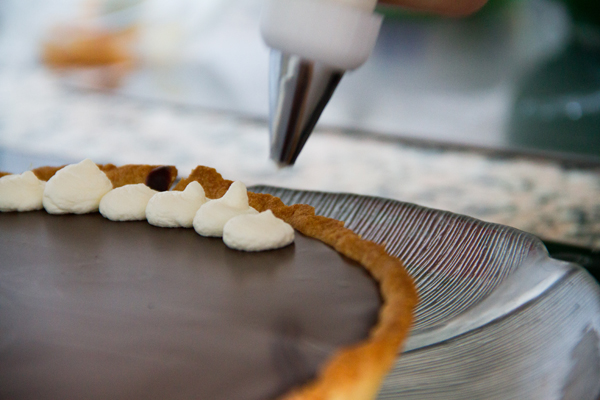
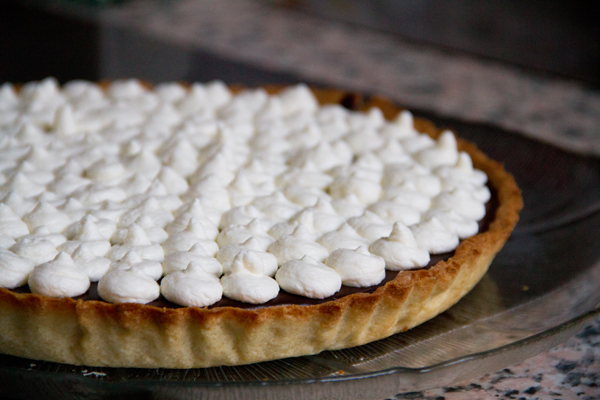
  • Put the whipped cream into a piping bag with a round tip and pipe little mounds of cream over the tart. Using a sieve, dust with cocoa powder and keep in the fridge until ready to serve.

Tips:

  • When whipping the cream you can use regular sugar, but store-bought powdered sugar will help keep the consistency longer since it usually contains a small amount of starch.

  • If you don’t want to even turn on the oven, you can swap the shortcrust base for a cookie base. Crush digestive-type cookies, for example, and mix with melted butter. Cover the tin pressing down well so it’s nice and compact, let it chill before pouring the caramel and you’re done.

  • If you don’t have a piping bag or tip, you can use a plastic bag (like a freezer bag) and snip a small hole in the corner.

Pics and Cakes

[English version] CHOCOLATE AND SALTED CARAMEL TART* *

For the crust:

  • *250 g all purpose flour *

  • *30 g powdered almonds *

  • *150 g butter, cold, cut into cubes *

  • *80 g sugar *

  • 1 egg

  • 1 pinch of salt

  • 1 pinch powdered vanilla

For the salted caramel sauce:

  • *70 g sugar *

  • *70 ml heavy cream *

  • 1 teaspoon butter

  • pinch of salt

For the chocolate cream:

  • *500 ml heavy cream *

  • *350 g dark chocolate *

For the whipped cream:

  • 300 ml heavy cream, very cold (1 cup aprox)

  • 2 tablespoons sugar

  • Optional: unsweetened cocoa powder for dusting

* *

  • Prepare the crust. Whizz all the ingredients in a food processor to a dough and finish by hand until getting a homogeneous dough. Wrap the dough and chill for 30 minutes. Roll out the pastry and line a deep 24-26 cm tart tin with it; patch any holes if crumbly. Cover and chill for at least 30 minutes.

  • Preheat oven to 180 ºC. Prick the tart shell all over with a fork or use baking beans and bake about 25 minutes.

  • Transfer to a rack and let cool.

  • Prepare the caramel sauce. Place sugar a small saucepan and bring to a boil over medium heat. Look for the caramel to turn a rich amber colour, then lower the heat and whisk in butter and cream (the mixture will bubble up, so be careful!). Pour caramel into cooled tart shell and let cool slightly; refrigerate 1/2 hour.

  • Prepare the chocolate cream. Chop the chocolate. Bring heavy cream to boil in a small saucepan over medium heat. Put chocolate into a medium bowl and pour in the hot cream. Let sit for a few minutes, then stir until smooth. Pour ganache evenly over tart and refrigerate 24 hours .

  • Before serving, prepare the whipped cream. In a bowl, using an electric mixer, beat the cream with the sugar until firm. Pipe the whipped cream on top of the pie and dust with some cocoa powdered if desired.

Tips:**- If you use confectioners’ sugar when whipping the cream, you’ll get a firmer cream.

- If you don’t want even to switch on the oven you can prepare the crust with biscuits. Just smash the biscuits and mix with melted butter. Cover the tart mold with it, pressing well with your fingers.Refrigerate before pouring the caramel sauce.

- If you don’t have piping bag, you can use a plastic bag instead.


16 de abril de 2013 · 6 min · Palstelera

Tarta de chocolate y caramelo salado

Aunque juntar las palabras ‘caramelo’ y ‘salado’ en la misma frase suene extraño, es una combinación deliciosa que probé por primera vez gracias a las delicatessen francesas. Por eso en cuanto vi esta receta en La receta de la felicidad no pude resistirme a probarla y sabía que sería un éxito asegurado. Incluso a aquellos seres extraños a los que no les apasiona el chocolate, les gusta por el toque crujiente de la base y la cremosidad del relleno. Así que no sé a qué estáis esperando para probarla.

 Pics and Cakes


¿Qué necesitamos?


Para la masa quebrada especial:

  • 250 g de harina

  • 30 g de almendra molida

  • 150 g de mantequilla

  • 80 g de azúcar

  • 1 huevo

  • 1 pizca de sal

  • 1 pizca de vainilla en polvo


Para la salsa de caramelo salado:

  • 70 g de azúcar

  • 70 ml de nata

  • una cucharadita de mantequilla

  • una pizca de sal


Para la crema de chocolate:

  • 500 ml de nata

  • 350 g de chocolate negro


Para la nata montada:

  • 300 ml de nata para montar muy fría (mínimo 35% de MG)

  • 2 cucharas colmadas de azúcar glas

  • Opcional: cacao en polvo para espolvorear por encima

 Pics and Cakes

¿Cómo lo hacemos?

  • Comenzamos preparando la base. Mezclamos la mantequilla muy fría cortada en cuadraditos con el resto de los ingredientes. Podemos utilizar un accesorio amasador de la batidora o utilizar una cuchara y terminamos de amasar con las manos. Se nos quedará desmigajado y tendremos que ir estrujando la mantequilla con las manos para poder incorporarlo bien pero no hay que desesperar. Envolvemos en film transparente y dejamos en la nevera media hora.

  • Mientras, preparamos un molde desmontable de 24 a 26 cm engrasándolo ligeramente y colocando una hoja de papel de hornear en la base.

  • Extendemos la masa con el rodillo sobre una superficie enharinada o entre dos papeles de hornear o film transparente (para que no se nos pegue) hasta dejarla de un grosor de 3 mm aproximadamente.

  • Enrollamos la masa sobre el rodillo y la vamos desenrollando sobre el molde. La colocamos presionando bien sobre el molde, cubriendo los huecos que pudieran quedar con trozos de masa. Eliminamos los bordes pasando el rodillo por encima del molde y presionando.

  • Metemos el molde con la masa 30 minutos en la nevera.

  • Precalentamos el horno a 180 º C.

  • Cubrimos el fondo de la tarta con papel de horno y rellenamos con garbanzos crudos (igual que cuando preparamos las quiches, esto es para que la masa no suba en el horno). Cocemos la base de nuestra tarta en el horno durante unos 25 minutos.

  • Sacamos y cuando esté fría, desmoldamos y ponemos sobre un plato o bandeja.

  • Ahora vamos a preparar la salsa de caramelo salado. Preparamos de antemano la nata y la mantequilla necesarias. Ponemos el azúcar en un cazo a fuego medio y esperamos sin mover a que se convierta en caramelo (2 ó 3 minutos). Cuando tengamos un caramelo dorado, bajamos el fuego al mínimo y  agregamos  la mantequilla, la sal y la nata removiendo constantemente hasta obtener una salsa homogénea. Si se nos ha hecho algún grumo de caramelo seguimos removiendo con energía a fuego bajo-medio hasta que se deshaga del todo.

  • Cuando se haya enfriado un poco, vertemos el caramelo sobre la base de la tarta y lo dejamos en la nevera media hora.

  • Seguimos preparando la crema de chocolate. Para ello, ponemos a hervir la nata en un cazo mientras que troceamos el chocolate. Cuando hierva, retiramos del fuego y agregamos el chocolate troceado. Dejamos reposar unos minutos y removemos hasta lograr una crema homogénea. Cuando la crema de chocolate se haya enfriado un poco, la vertemos sobre nuestra tarta que teníamos reservada en el frigorífico y la dejamos enfriar de un día para otro.

  • Por último, montamos la nata. Para ello, batimos con un batidor de varillas la nata muy fría con el azúcar hasta que tenga la consistencia deseada (cuidado con pasarnos o se convertirá en mantequilla).

  • Ponemos la nata en una manga con boquilla redonda y vamos depositando montoncitos de nata sobre la tarta. Con ayuda de un colador, espolvoreamos con cacao en polvo y reservamos en el frigorífico hasta el momento de servir.

Consejos:

  • Al montar la nata podéis utilizar azúcar normal pero el azúcar glas comprada ayudará a mantener la consistencia durante más tiempo ya que suele contener una pequeña cantidad de almidón.

  • Si no queréis encender ni siquiera el horno, podéis sustituir la base de masa quebrada por una base hecha con galletas. Para ello triturad galletas tipo digestive, por ejemplo, y mezclad con mantequilla derretida. Cubrid el molde presionando bien para que quede bien compacto, dejad enfriar antes de echar el caramelo y listo.

  • Si no tenéis manga pastelera ni boquilla, podéis utilizar una bolsa (por ejemplo, las de congelar) haciéndole un pequeño corte en la punta.

  Pics and Cakes

[English version] CHOCOLATE AND SALTED CARAMEL TART* *

For the crust:

  • *250 g all purpose flour *

  • *30 g powdered almonds *

  • *150 g butter, cold, cut into cubes *

  • *80 g sugar *

  • 1 egg

  • 1 pinch of salt

  • 1 pinch powdered vanilla

For the salted caramel sauce:

  • *70 g sugar *

  • *70 ml heavy cream *

  • 1 teaspoon butter

  • pinch of salt

For the chocolate cream:

  • *500 ml heavy cream *

  • *350 g dark chocolate *

For the whipped cream:

  • 300 ml heavy cream, very cold (1 cup aprox)

  • 2 tablespoons sugar

  • Optional: unsweetened cocoa powder for dusting

* *

  • Prepare the crust. Whizz all the ingredients in a food processor to a dough and finish by hand until getting a homogeneous dough. Wrap the dough and chill for 30 minutes. Roll out the pastry and line a deep 24-26 cm tart tin with it; patch any holes if crumbly. Cover and chill for at least 30 minutes.

  • Preheat oven to 180 ºC. Prick the tart shell all over with a fork or use baking beans and bake about 25 minutes.

  • Transfer to a rack and let cool.

  • Prepare the caramel sauce. Place sugar a small saucepan and bring to a boil over medium heat. Look for the caramel to turn a rich amber colour, then lower the heat and whisk in butter and cream (the mixture will bubble up, so be careful!). Pour caramel into cooled tart shell and let cool slightly; refrigerate 1/2 hour.

  • Prepare the chocolate cream. Chop the chocolate. Bring heavy cream to boil in a small saucepan over medium heat. Put chocolate into a medium bowl and pour in the hot cream. Let sit for a few minutes, then stir until smooth. Pour ganache evenly over tart and refrigerate 24 hours .

  • Before serving, prepare the whipped cream. In a bowl, using an electric mixer, beat the cream with the sugar until firm. Pipe the whipped cream on top of the pie and dust with some cocoa powdered if desired.

Tips:**- If you use confectioners’ sugar when whipping the cream, you’ll get a firmer cream.

- If you don’t want even to switch on the oven you can prepare the crust with biscuits. Just smash the biscuits and mix with melted butter. Cover the tart mold with it, pressing well with your fingers.Refrigerate before pouring the caramel sauce.

- If you don’t have piping bag, you can use a plastic bag instead.

* *


16 de abril de 2013 · 6 min · Palstelera

Lemon Pay

You might be wondering about the name and why I’m not just calling it lemon tart or lemon pie. The thing is, I made this tart for my mom and for her it brought back childhood memories. Apparently, when they were kids in Peru they used to eat this tart and they called it “pay de limón.” If we already use more and more anglicisms in Spain, you can imagine how common they are in Latin American countries and the kind of Spanglish that reigns there. In any case, whether or not this is the authentic Peruvian recipe, and whether you call it tart, pie, or pay, this dessert turned out absolutely delicious.

Pics and Cakes

What do we need?

  • 150 g (5.3 oz) ground digestive-style biscuits

  • 110 g (1/2 cup) butter

  • 400 g (14 oz) condensed milk

  • Half a cup of lemon juice

  • 4 egg yolks

  • 4 egg whites

  • 85 g (3/4 cup) powdered sugar

How do we make it?

  • First, melt the butter in the microwave and mix it with the ground biscuits until you get a uniform paste. Put this mixture into a shallow oven-safe pie pan. Press with your fingers until you’ve covered the bottom and sides of the pan well.

  • Pop it in the oven (preheated to 180°C / 350°F) and bake for 15 minutes. Take it out and let it cool.

  • To prepare the filling, mix the condensed milk well with the lemon juice and egg yolks. Pour the mixture over the biscuit base in the pan and put it back in the oven for another 15 minutes. Take it out and let it cool.

  • To make the meringue, whip the egg whites to stiff peaks with a pinch of salt using a whisk (electric is better; it’ll save you time and sore arms). Gradually add the sugar until you get a firm consistency.

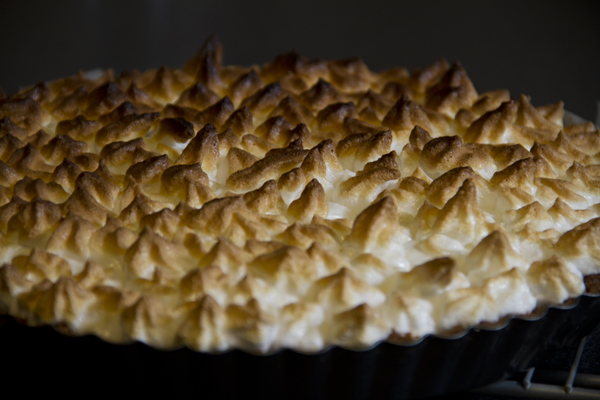
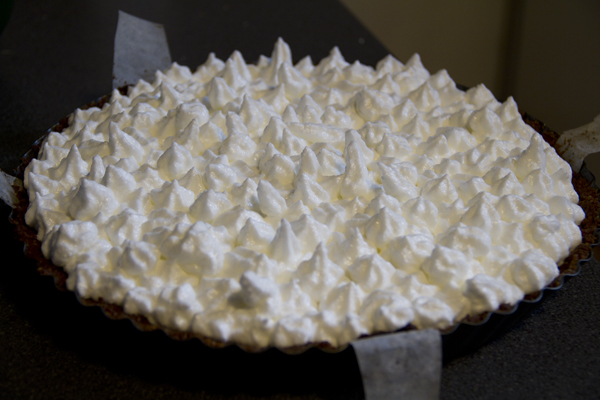
  • Now all that’s left is to put the meringue on top of the lemon tart. You can use a piping bag or just spoon it on, forming peaks.

  • Finally, when it’s completely covered, put it back in the oven for a few minutes so the meringue browns slightly.

Tips:

  • If you don’t love the tangy lemon flavor, you can reduce the amount of juice.

  • When you make the meringue, you need to get it really firm (you should even be able to flip the bowl upside down and have it stay put). It’s really important that neither the bowl nor the whisk have any grease on them so the whites whip up properly. Also, be careful in the oven because meringue burns really quickly, so never leave it unattended.

  • If you prefer, you can make a shortcrust pastry for the base.

Pics and Cakes

[English version] LEMON PIE* *Ingredients:

  • *2 cups ground biscuits *

  • 1/2 cup butter

  • 400 g condensed milk

  • 1/2 cup lemon juice

  • 4 egg yolks

  • 4 egg whites

  • 3/4 confectioner’s sugar

  • *First, melt butter in the microwave and stir well with ground biscuits. Put this mix into a pie mould using your fingers to press. Cover the bottom and the sides of the mould. *

  • Bake in preheated oven (to 180º) for 15 minutes.

  • *For the filling, mix together condensed milk, lemon juice and egg yolks. Pour the lemon mixture into the baked biscuit pastry. Bake in oven for 15 minutes. *

  • *Whip egg whites with a pinch of salt (use an electric whisk for better results and saving time). Add sugar gradually and keep whipping until getting a firm meringue. *

  • *Pour the meringue over the lemon pie. You can use a piping bag or use a spoon to make peaks. *

  • *Bake in oven for a few minutes until slightly golden brown. *

Tips:

- If you don’t like strong lemon flavour, you can reduce the amount of lemon juice.

- When making meringue you need a firm mixture (you could even put the mixing bowl upside down and it will keep there). To get good results, the mixing bowl has to be completely free of grease. Be careful when baking meringue because it get burnt very easily.

- You can also make shortbread pastry instead of biscuit pastry.


Comments

Marisa (2013-04-03 10:48:50):

Yum! I love this tart. Make it for me one day, please. :)

19 de febrero de 2013 · 4 min · Palstelera

Pay de limón

Tal vez os preguntaréis el porqué del nombre y por qué no llamarlo simplemente tarta de limón o en inglés* lemon pie*. El caso es que esta tarta se la hice a mi madre y para ella suponía un recuerdo de infancia. Al parecer cuando eran pequeños tomaban esta tarta en Perú y la llamaban así: pay de limón. Si ya en España cada vez utilizamos más anglicismos, os podréis hacer una idea de lo usados que son en países de América latina y del Spanglish que allí reina. En cualquier caso, sea o no la receta auténtica de Perú y se llame tarta, pie o pay, este postre quedó buenísimo.

Pics and Cakes

¿Qué necesitamos?

  • 150 g galletas tipo digestive molidas

  • 110 g de mantequilla

  • 400 g de leche condensada

  • Media taza de zumo de limón

  • 4 yemas de huevo

  • 4 claras de huevo

  • 85 g de azúcar glas


¿Cómo lo hacemos?

  • En primer lugar, derretimos la mantequilla en el microondas y la mezclamos con la galleta molida hasta que quede una pasta uniforme. Ponemos esta mezcla en un molde bajito para tartas apto para el horno. Presionamos con los dedos hasta cubrir bien el fondo y los laterales del molde.

  • Lo metemos en el horno (previamente calentado a 180º) y lo horneamos durante 15 minutos. Lo retiramos y dejamos enfriar.

  • Para preparar el relleno, mezclamos bien la leche condensada con el zumo de limón y las yemas de huevo. Vertemos la mezcla sobre nuestro molde con base de galleta y lo volvemos a introducir en el horno durante otros 15 minutos. Lo sacamos y dejamos enfriar.

  • Para preparar el merengue montamos las claras a punto de nieve con una pizca de sal con ayuda de unas varillas (si son eléctricas, mejor; nos ahorrarán tiempo y agujetas). Vamos añadiendo poco a poco el azúcar hasta conseguir una consistencia firme.

  • Ahora sólo queda poner el merengue sobre la tarta de limón. Para ello, podemos utilizar una manga pastelera o bien ir echándolo con una cuchara e ir formando picos.

  • Por último, cuando esté totalmente cubierta, volvemos a meterla en el horno y la dejamos unos minutos para que se dore ligeramente el merengue.


Consejos:

  • Si no os gusta el sabor tan ácido del limón podéis reducir la cantidad de zumo.

  • Cuando hagáis el merengue tenéis que conseguir que quede bien consistente (incluso podríais dar la vuelta al bol y no se caería). Es muy importante que ni el bol ni las varillas tengan nada de grasa para que se monten bien las claras. Además, hay que tener cuidado en el horno porque el merengue se quema muy rápido, así que nunca lo dejéis desatendido.

  • Si lo preferis podéis hacer una masa quebrada para la base.

Pics and Cakes

 [English version] LEMON PIE* *Ingredients:

  • *2 cups ground biscuits *

  • 1/2 cup butter

  • 400 g condensed milk

  • 1/2 cup lemon juice

  • 4 egg yolks

  • 4 egg whites

  • 3/4 confectioner’s sugar

* *

  • *First, melt butter in the microwave and stir well with ground biscuits. Put this mix into a pie mould using your fingers to press. Cover the bottom and the sides of the mould. *

  • Bake in preheated oven (to 180º) for 15 minutes.

  • *For the filling, mix together condensed milk, lemon juice and egg yolks. Pour the lemon mixture into the baked biscuit pastry. Bake in oven for 15 minutes. *

  • *Whip egg whites with a pinch of salt (use an electric whisk for better results and saving time). Add sugar gradually and keep whipping until getting a firm meringue. *

  • *Pour the meringue over the lemon pie. You can use a piping bag or use a spoon to make peaks. *

  • *Bake in oven for a few minutes until slightly golden brown. *

* *

Tips:

- If you don’t like strong lemon flavour, you can reduce the amount of lemon juice.

- When making meringue you need a firm mixture (you could even put the mixing bowl upside down and it will keep there). To get good results, the mixing bowl has to be completely free of grease. Be careful when baking meringue because it get burnt very easily.

- You can also make shortbread pastry instead of biscuit pastry.


19 de febrero de 2013 · 4 min · Palstelera