Baklava

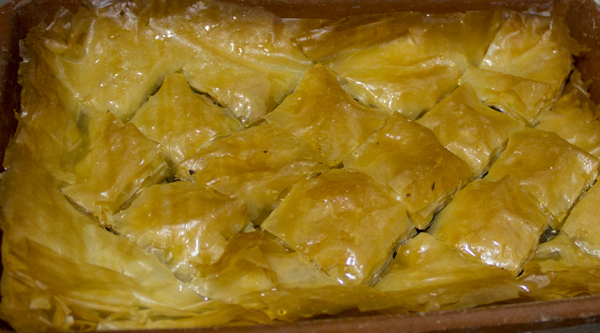
Whole kitchen, for their Sweet Proposal for the month of November, invites us to prepare a Persian classic: Baklava. Apparently this little pastry has its origins in ancient Mesopotamia, although several cultures and civilizations are still fighting over who actually invented it. Persian, Greek or Arab — it’s delicious. This time we’ve made two versions: one with dates and toasted almonds, and another with hazelnuts and chocolate. Filo pastry is a wonder of the kitchen that you really have to try, both for sweet and savory.
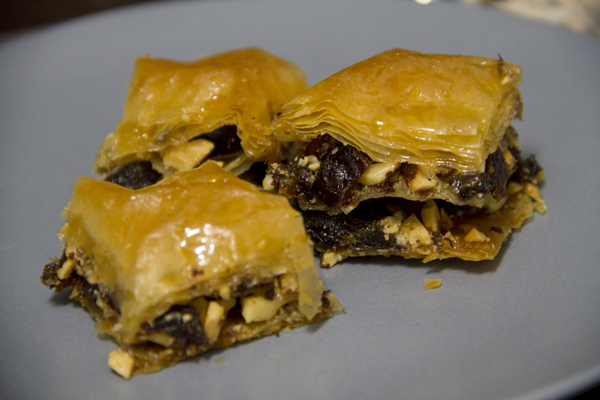
Pics and Cakes

What do we need?

  • 1 package of filo pastry

  • 100 g (3.5 oz) butter

For the syrup:

  • 210 ml (scant 1 cup) water

  • 180 g (about 3/4 cup) sugar

  • 30 g (1 tbsp) honey

  • Juice of half a lemon

  • A cinnamon stick

For the filling:

  • 18 dates

  • 50 g (1.75 oz) toasted almonds

  • 50 g (1.75 oz) chocolate (drops or chips)

  • 50 g (1.75 oz) hazelnuts

Pics and Cakes

How do we make it?

  • We start by making the syrup. Put all the ingredients in a saucepan and, over high heat, bring to a boil. Lower the heat a bit and let it simmer for about 15 minutes so it thickens.

  • Preheat the oven to 180°C (355°F).

  • Prepare the filling: pit the dates and cut them into small pieces. Chop the almonds and hazelnuts as well. In one bowl mix the dates with the almonds, and in another mix the hazelnuts with the chocolate.

  • Melt the butter for a few seconds in the microwave.

  • Grease the baking dish you’re going to use with butter and cut all the filo sheets to the size of your tray.

  • Lay down a sheet of filo and, with a brush or your hands, smear it with butter on one side. Add another layer and brush it with butter again. Keep going until you have 8 layers.

  • Spread half of the date-and-almond filling over the filo.

  • Add more filo on top — this time, 4 layers (always brushed with butter so they stay separate after baking).

  • Add the rest of the date-and-almond filling.

  • Make another batch of 8 filo layers (always buttered).

  • With a sharp knife, cut the baklava into squares.

  • Bake for 45 minutes total: the first 20 minutes uncovered, and the next 25 minutes with a sheet of aluminum foil over the baklava so it doesn’t brown too much.

  • As soon as you take it out of the oven, let it rest for 5 minutes, then pour the cold syrup over the hot baklava (this way it’ll stay crispy).

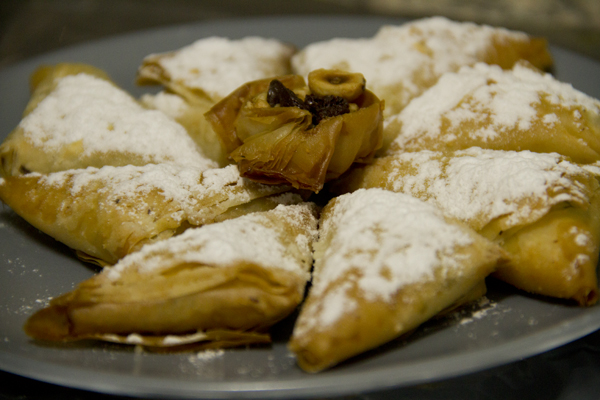
  • For the hazelnut-and-chocolate version you can repeat the same process in another baking dish, or make triangles. To do that, cut the filo into strips of about 5 cm by 20 cm (2 in by 8 in). Brush each layer with butter and stack 4 strips together.

  • Place a teaspoon of filling at one end and fold a corner over to form a triangle with the filling tucked inside. Take the other end and keep folding the triangle over itself. (Since it’s a bit tricky to explain, I found [this video](

{{}}

) where you can easily see how to do it.)

  • Bake them at 180°C (355°F) too, but they’ll be ready in 10–15 minutes.

  • Once out of the oven, you can dust them with powdered sugar.

Tips:

  • Filo pastry dries out very quickly, so whenever you’re not using it, keep it well wrapped in a plastic bag.

  • It’s important to add butter between each layer, but you don’t need to “drown” it either.

  • It’s quite a rich, filling sweet, so it’s better to cut the squares small.
Pics and Cakes

[English version] BAKLAVA* *Ingredients:

  • 1 package of filo pastry

  • 100 g butter

For the syrup:

  • 210 ml water

  • 180 g sugar

  • 30 g honey

  • Juice of 1/2 lemon

  • Cinnammon stick

For the filling:

  • 18 dates

  • 50 g almonds

  • 50 g chocolate (drops or chips)

  • 50 g hazelnuts

  • Combine the syrup ingredients in a medium saucepan and bring to boil. Let the syrup simmer on low heat for about 15 minutes

  • Preheat oven at 180ºC.

  • *Now prepare the filling: pit the dates and chop into small pieces. Chop almonds and hazelnuts. Mix almonds and dates into a bowl and chocolate and hazelnut in other. *

  • Melt the butter in the microwave for a few seconds.

  • Butter the baking pan and cut the filo pastry sheets into the size of the baking pan.

  • *Place a sheet of filo pastry and butter it. Place another sheet over it and butter again. Do it again until having 8 layers. *

  • *Scatter half of the dates-almonds filling. *

  • *Place more filo pastry. This time, only 4 layers but always buttered. It will make to have separate layers once the baklava is baked. *

  • *Add the other half of the filling. *

  • *Create another pack of 8 layers of filo pastry (always buttered). *

  • *With sharp knife cut baklava into small squares. *

  • *Bake for 45 minutes. The first 20 minutes uncovered and then you can cover with aluminium foil to prevent it from browning too much. *

  • When you take it out from oven, let stand for 5 minutes and then pour the cold syrup.

  • For the hazelnut-chocolate version, you can follow the same steps or make small triangles of filo pastry. For the triangles, cut the pastry into stripes (4 x 20 cm aprox.). Butter each stripe and put 4 of them together.

  • *Add a tsp of the filling in one of the sides and proceed to fold into triangle shape. You can see how to do it easily in [this video](

{{}}

).*

  • Bake at 180ºC only for 10-15 minutes.

  • You can powder some confectioners’ sugar when you take them out from oven.

Tips:

*- Filo pastry dries very fast, so when you are not using it, keep it in a plastic bag. *

- It’s important to butter every single sheet (layer) of filo pastry but don’t “over butter” (otherwise, it will be too greasy).

- It’s a filling sweet, so make small squares when cutting the baklava.


Comments

Apfelstrudelkuchen (2012-11-26 00:03:04):

Hi!!

Your baklava-as-triangles version turned out really original!! And with dates it must be amazing.

Hugs,

Mara (2012-11-26 17:34:08):

So good with the chocolate touch. I love the idea of making individual portions, because when you cut it the filo sheets tend to come apart a bit. Since everyone at home liked it so much I’ll make it again, and I’m going to do it your way, in the individual triangle version. This is my version: http://masdulcequesaladopuntocom.blogspot.com.es/

tía pi (2012-11-27 17:48:26):

This Friday I have guests over for dinner — it’s going to be a light meal, so the baklava is going to be a great dessert. I’ll let you know how it goes.

silvia (2012-11-29 22:09:14):

The little chocolate triangles were really tasty… and that’s saying something, because I’m not really one for sweets…

Palstelera (2012-12-07 19:16:00):

Mara, I’m glad you like the little-triangles version… :-)
25 de noviembre de 2012 · 6 min · Palstelera

Baklava

**Whole kitchen en su Propuesta Dulce para el mes de Noviembre nos invita a preparar un clásico persa Baklava. **Al parecer este pastelito tiene su origen en la antigua Mesopotamia aunque todavía hoy siguen disputándose varias culturas y civilizaciones su creación. Persa, griego o árabe, está buenísimo. En esta ocasión hemos preparado dos versiones; una con dátiles y almendras tostadas y otra con avellanas y chocolate. La pasta filo es una maravilla de la cocina que no podéis dejar de probar tanto para dulce como para salado.

 Pics and Cakes

¿Qué necesitamos?

  • 1 paquete de pasta filo

  • 100 g de mantequilla

Para el almíbar:

  • 210 ml de agua

  • 180 g de azúcar

  • 30 g de miel

  • Zumo de medio limón

  • Una ramita de canela

 Para el relleno:

  • 18 dátiles

  • 50 g de almendras tostadas

  • 50 g de chocolate (en gotas o perlas)

  • 50 g de avellanas

 Pics and Cakes

¿Cómo lo hacemos?

  • Empezamos haciendo ****el almíbar. Ponemos todos los ingredientes en una cazuela y, a fuego fuerte, lo llevamos a ebullición. Bajamos un poco el fuego y dejamos cocer durante 15 minutos aproximadamente para que espese.

  • Precalentamos el horno a 180ºC.

  • Preparamos el relleno: deshuesamos los dátiles y los partimos en trozos pequeños. Troceamos también las almendras y las avellanas. Mezclamos en un cuenco los dátiles con las almendras y en otro las avellanas con el chocolate.

  • Derretimos la mantequilla unos segundos en el microondas.

  • Untamos la fuente que vayamos a usar con mantequilla  y cortamos todas las láminas de pasta filo del tamaño de nuestra bandeja.

  • Ponemos una lámina de pasta filo, y con un pincel, o con las manos, la embadurnamos de mantequilla por una cara. Ponemos otra capa y volvemos a untarla con la mantequilla. Así hasta tener 8 capas.

  • Ponemos la mitad de nuestro relleno de dátiles y almendras y lo extendemos sobre la pasta filo.

  • Volvemos a poner pasta filo. Esta vez, 4 capas (siempre untándolas con mantequilla para que al hornearlas se queden separadas).

  • Echamos el resto del relleno de dátiles y almendras.

  • Hacemos otra tanda de 8 capas de pasta filo (siempre untadas con mantequilla).

  • Con un cuchillo afilado cortamos el baklava en cuadrados.

  • Horneamos 45 minutos en total, los 20 primeros destapado, y los 25 siguientes colocando papel de aluminio sobre el baklava para que no se dore demasiado.

  • Nada más sacarlo del horno, dejamos reposar 5 minutos, y vertemos el almíbar frío sobre el baklava caliente (así seguirá estando crujiente).

  • Para la versión de avellanas y chocolate podéis repetir el mismo proceso en otra fuente de horno o bien hacer triángulos. Para ello cortamos la pasta filo en tiras de 5 cm por 20 cm (aproximadamente). Embadurnamos con mantequilla cada capa y ponemos 4 tiras juntas.

  • Ponemos una cucharadita de relleno en un extremo y doblamos una esquina para formar un triángulo con el relleno en el interior. Cogemos el otro extremo y vamos plegando el triángulo sobre sí mismo. (Como es un tanto complicado de explicar, he encontrado [este vídeo](

{{}}

) donde podéis ver fácilmente cómo hacerlo).

  • Los horneamos también a 180ºC pero en 10-15 minutos estarán listos.

  • Al sacarlos los podemos espolvorear con azúcar glas por encima.


Consejos:

  • La pasta filo se seca enseguida así que cuando no la estés utilizando, guárdala bien en una bolsa de plástico.

  • Es importante echar la mantequilla entre cada capa pero tampoco es necesario “ahogarla”.

  • Es un dulce bastante contundente así que es preferible hacer los cuadraditos pequeños.

Pics and Cakes

[English version] BAKLAVA* *Ingredients:

  • 1 package of filo pastry

  • 100 g  butter


For the syrup:

  • 210 ml water

  • 180 g sugar

  • 30 g honey

  • Juice of 1/2 lemon

  • Cinnammon stick


For the filling:

  • 18 dates

  • 50 g almonds

  • 50 g chocolate (drops or chips)

  • 50 g hazelnuts

* *

  • Combine the syrup ingredients in a medium saucepan and bring to boil. Let the syrup simmer on low heat for about 15 minutes

  • Preheat oven at 180ºC.

  • *Now prepare the filling: pit the dates and chop into small pieces. Chop almonds and hazelnuts. Mix almonds and dates into a bowl and chocolate and hazelnut in other. *

  • Melt the butter in the microwave for a few seconds.

  • Butter the baking pan and cut the filo pastry sheets into the size of the baking pan.

  • *Place a sheet of filo pastry and butter it. Place another sheet over it and butter again. Do it again until having 8 layers. *

  • *Scatter half of the dates-almonds filling. *

  • *Place more filo pastry. This time, only 4 layers but always buttered. It will make to have separate layers once the baklava is baked. *

  • *Add the other half of the filling. *

  • *Create another pack of 8 layers of filo pastry (always buttered). *

  • *With sharp knife cut baklava into small squares. *

  • *Bake for 45 minutes. The first 20 minutes uncovered and then you can cover with aluminium foil to prevent it from browning too much. *

  • When you take it out from oven, let stand for 5 minutes and then pour the cold syrup.

  • For the hazelnut-chocolate version, you can follow the same steps or make small triangles of filo pastry. For the triangles, cut the pastry into stripes (4 x 20 cm aprox.). Butter each stripe and put 4 of them together.

  • *Add a tsp of the filling in one of the sides and proceed to fold into triangle shape. You can see how to do it easily in [this video](

{{}}

).*

  • Bake at 180ºC only for 10-15 minutes.

  • You can powder some confectioners’ sugar when you take them out from oven.

* *

Tips:

*- Filo pastry dries very fast, so when you are not using it, keep it in a plastic bag. *

- It’s important to butter every single sheet (layer) of filo pastry but don’t “over butter” (otherwise, it will be too greasy).

- It’s a filling sweet, so make small squares when cutting the baklava.


25 de noviembre de 2012 · 6 min · Palstelera

Donuts

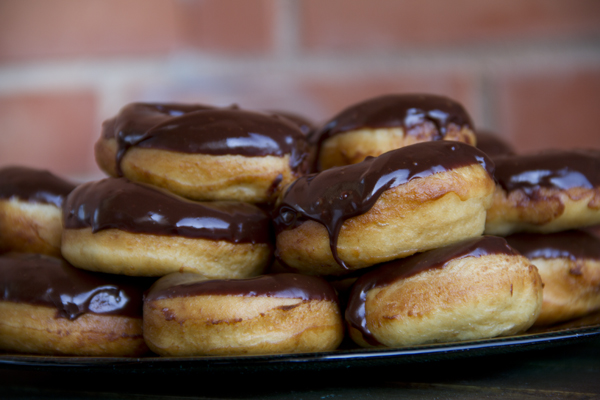
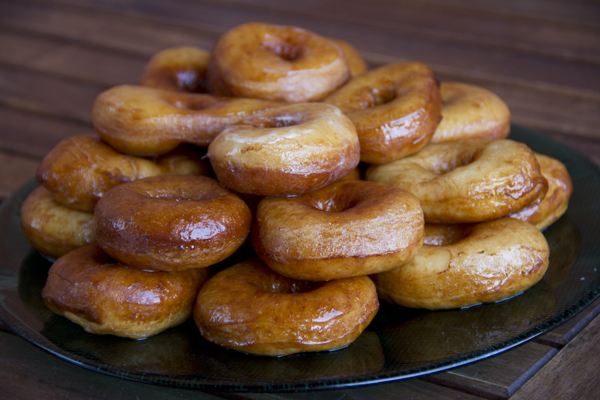
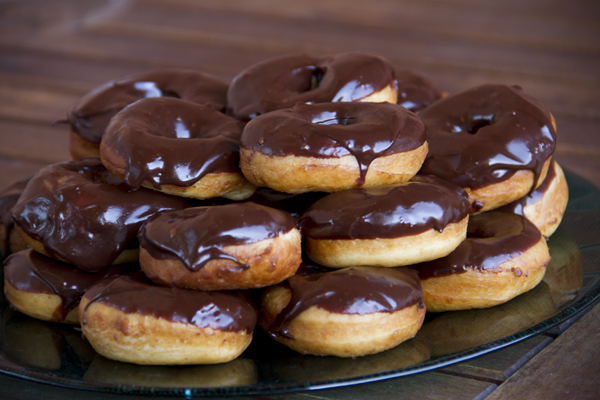
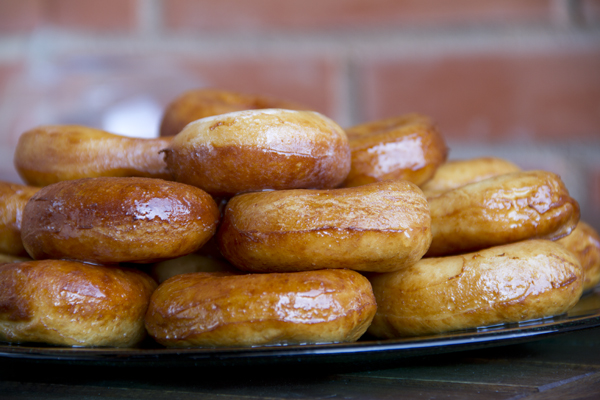
Creo que sin duda alguna éste es uno de los mejores descubrimientos culinarios que he hecho en mi vida. Por increíble que parezca el sabor es muy parecido a los comerciales, la masa es muy esponjosa, no se siente grasienta como la de algunos donuts de panadería y la cobertura de chocolate es sencillamente, magnífica. El único problema que tienen, es que son altamente adictivos… Os lo advierto, una vez que los probéis querréis repetir y repetir. Pero bueno, creo que merece la pena.

Pics and Cakes

¿Qué necesitamos?

  • 300 gr. de harina de fuerza

  • 200 gr de harina normal

  • 80 gr. de azúcar

  • 5 gr. de sal

  • 20 gr. de leche en polvo

  • 2 sobres de levadura de panadería

  • 230 gr. de agua templada

  • 1 huevo mediano

  • 40 gr. de manteca o margarina (nosotros usamos Crisco que es una grasa vegetal inolora e insípida)

  • 2 cucharaditas de esencia de naranja


Para el glaseado de azúcar:

  • 200 g azúcar glas

  • 1 cucharadita de mantequilla

  • Un chorrito de zumo de limón

  • Agua

Para el glaseado de chocolate:

  • 200 g azúcar glas

  • 1 cucharadita de mantequilla

  • 150 g chocolate para postres

  • Agua


Pics and Cakes

¿Cómo lo hacemos?

  • Mezclamos bien los ingredientes secos: harinas, azúcar, sal, leche en polvo y la levadura.

  • Añadimos el agua, ni caliente ni demasiado fría, a temperatura ambiente, el huevo batido y la esencia de naranja. Recordad, si el agua está caliente “matará la levadura”, si está muy fría tardará más tiempo en fermentar. Amasamos durante 8 minutos aproximadamente.

  • Añadimos la materia grasa y amasamos hasta que no se nos pegue a las manos. Es posible que necesitemos añadir más harina pero no lo sabremos hasta que no hayamos incorporado la manteca del todo. La textura resultante debe ser homogénea y elástica.

  • Formamos una bola y dejamos reposar unos 45 min. No pasa nada si lo dejamos más tiempo.

  • Pasado ese tiempo, amasamos un poco y estiramos del tamaño de 1 cm. de espesor. Si tenemos un cortapastas de donuts, perfecto. Si no con un cortador redondo (o con un vaso) hacemos los círculos y con un cortador más pequeño el círculo interior. Para el agujero del centro, nosotros hicimos el agujero con el dedo y lo agrandamos un poco (la masa es muy elástica así que no se notará la irregularidad).

  • Dejamos reposar en una bandeja sobre papel de hornear durante 1 hora mínimo para que vuelvan a crecer.

  • Freímos en aceite de girasol (si utilizamos aceite de oliva le dará demasiado sabor). El aceite no tiene que estar muy caliente ya que se queman enseguida. En cuanto los echemos a la sartén empezarán a hincharse. Los dejamos unos segundos y les damos la vuelta para que se doren por la otra parte.

  • Los sacamos y escurrimos en papel absorbente y todavía calientes, los bañamos con el glaseado de azúcar. Si los bañamos en glaseado de chocolate no hace falta que estén calientes.

  • Para hacer el glaseado de azúcar, derretimos un poco la mantequilla en el microondas y la mezclamos bien con el azúcar glas y un chorrito de limón. Añadimos unas cucharadas de agua hasta obtener una papilla ligera de color blanquecino.

  • Para el glaseado de chocolate, mezclamos el azúcar glas con unas cucharadas de agua (que nos quede de nuevo una papilla ligera). Derretimos el chocolate con la mantequilla en el microondas y una vez deshecho, lo añadimos a nuestra papilla de agua y azúcar. Si está demasiado espeso podemos añadir un poco más de agua. Si por el contrario, está demasiado duro, lo podemos dejar enfriar.

  • Para bañar los donuts en el glaseado de azúcar los sumergimos en el bol con el glaseado para que se pegue por todas partes. En cambio, para el glaseado de chocolate, sólo los bañaremos por una cara.


Pics and Cakes

Consejos:

  • Parece complicado pero no lo es. Simplemente hay que disponer de tiempo para hacerlos ya que es muy importante respetar los tiempos de ‘subida’ de la masa.

  • Es importante que la levadura sea de panadería y que la leche sea en polvo ya que si no, variarán nuestras proporciones de ingredientes secos y no obtendremos el mismo resultado.

  • A la hora de freír los donuts, hazlo de uno en uno o si es una sartén grande puedes poner 2 ó 3 máximo. De lo contrario, corres el riesgo de que se te quemen.


Pics and Cakes

*[English version] DOUGHNUTS ** *Ingredients:

  • 300 g strong flour

  • 200 g flour

  • 80 g sugar

  • 5 g salt

  • 20 g powdered milk

  • 2 sachets of dry yeast

  • 230 g warm water

  • 1 medium size egg

  • 40 g fat or margarine (we use Crisco)

  • 2 tsps orange flavour

  • *For sugar icing:
  • 200 g confectioners’ sugar

  • 1 tsp butter

  • Lemon juice

  • Water

For chocolate icing:

  • 200 g confectioners’ sugar

  • 1 tsp butter

  • 150 g chocolate

  • Water


  • Mix dry ingredients into a large bowl (flours, sugar, salt, powdered milk and yeast).

  • Add warm water, whisked egg and orange flavour. Remember, too hot water will ‘kill’ the yeast, too cold water will make fermentation slower. Knead for 8 minutes.

  • Add fat and keep kneading until having a non-sticky dough. You may need to add some more flour. The resulting texture should be a homogenous and elastic dough.

  • Make a ball and set aside for 45 minutes or more.

  • After this time, knead it and roll it out (1 cm). Use a round biscuit cutter to make the circles and use a smaller one to make the inner circle. You can also make the inner hole with your fingers. If you have a special doughnut cutter, it will be perfect.

  • Let the dough stand (already on the doughnut shape) again for 45 minutes on a baking tray covered by baking paper.

    • Deep fry in sunflower oil (don’t use olive oil because it will give them too strong flavour). Be careful, it will be fried very soon. Leave them some seconds and then turn them around until golden brown.*
  • Take them out and place on kitchen paper. Still hot, covered them with the sugar icing. If you use chocolate icing, they don’t need to be hot.

  • For sugar icing, melt butter in the microwave and mix with confectioners’ sugar and a trickle of lemon juice. Add some tbsp of water and stir well. You need a white thick soup.

  • For chocolate icing, mix confectioners’ sugar with some tbsp of water (you will need again a white thick soup). Melt chocolate with butter in the microwave and mix with the sugar mixture. If it’s too thick, you can add some more water. However, if it’s too liquid, you can let it cool for a while.

  • To cover the doughnuts with the sugar icing, plunge them into the bowl and cover both sides. However, for the chocolate icing, cover only one side of the doughnut.

    • Tips:*

*- It may seem complicated but it’s not. You only need time to do it because the rising times for the dough are essential for the success of the recipe. *

*- You need dry yeast and powdered milk to keep the proportion of dry ingredients and get perfect results. *

- When frying the doughnuts, take your time. Fry only one by one or, if you are using a large pan, 2 or 3 at the same time maximum. Otherwise, you risk to have them all burnt.


Pics and Cakes


1 de noviembre de 2012 · 8 min · Palstelera

Doughnuts

I think this is hands-down one of the best culinary discoveries I’ve made in my life. As unbelievable as it sounds, the flavor is really close to the store-bought ones — the dough is super fluffy, it doesn’t feel greasy like some bakery doughnuts, and the chocolate glaze is simply magnificent. The only problem is that they’re highly addictive… I’m warning you: once you try them, you’ll want to make them again and again. But hey, I think it’s worth it.

Pics and Cakes

What do we need?

  • 300 g (2.5 cups) bread flour

  • 200 g (1.5 cups) all-purpose flour

  • 80 g (1/3 cup + 1 tbsp) sugar

  • 5 g (1 tsp) salt

  • 20 g (3 tbsp) powdered milk

  • 2 packets of active dry yeast

  • 230 g (1 cup) warm water

  • 1 medium egg

  • 40 g (3 tbsp) shortening or margarine (we use Crisco, which is an odorless and tasteless vegetable fat)

  • 2 teaspoons orange extract

For the sugar glaze:

  • 200 g (1.75 cups) confectioners’ sugar

  • 1 teaspoon butter

  • A splash of lemon juice

  • Water

For the chocolate glaze:

  • 200 g (1.75 cups) confectioners’ sugar

  • 1 teaspoon butter

  • 150 g (5.3 oz) baking chocolate

  • Water

Pics and Cakes

How do we make them?

  • Mix the dry ingredients well: flours, sugar, salt, powdered milk and yeast.

  • Add the water — neither hot nor too cold, at room temperature — along with the beaten egg and the orange extract. Remember: if the water is hot it will “kill the yeast,” and if it’s too cold the dough will take longer to rise. Knead for about 8 minutes.

  • Add the fat and keep kneading until the dough no longer sticks to your hands. You might need to add more flour, but you won’t know until the shortening is fully incorporated. The resulting texture should be smooth and elastic.

  • Form a ball and let it rest for about 45 minutes. It’s fine to let it go longer.

  • After that time, knead it a bit and roll it out to about 1 cm (3/8 inch) thick. If you have a doughnut cutter, perfect. If not, use a round cutter (or a glass) to make the circles, and a smaller one for the inner circle. For the center hole, we just made it with our finger and stretched it a little (the dough is very elastic, so any irregularity won’t show).

  • Let them rest on a tray lined with parchment paper for at least 1 hour so they can rise again.

  • Fry in sunflower oil (if you use olive oil it’ll give them too much flavor). The oil shouldn’t be too hot or they’ll burn right away. As soon as you drop them in the pan they’ll start puffing up. Leave them for a few seconds and flip them so they brown on the other side.

  • Take them out and drain on paper towels, and while they’re still warm, dip them in the sugar glaze. If you’re using the chocolate glaze, they don’t need to be warm.

  • To make the sugar glaze, melt the butter a bit in the microwave and mix it well with the confectioners’ sugar and a splash of lemon. Add a few tablespoons of water until you get a light, whitish slurry.

  • For the chocolate glaze, mix the confectioners’ sugar with a few tablespoons of water (again, you want a light slurry). Melt the chocolate with the butter in the microwave and once melted, add it to the sugar-and-water mixture. If it’s too thick, add a bit more water. If on the other hand it’s too runny, let it cool down.

  • To coat the doughnuts in the sugar glaze, dip them into the bowl so the glaze sticks all over. For the chocolate glaze, only dip one side.

Pics and Cakes

Tips:

  • It looks complicated but it isn’t. You just need time, because respecting the dough’s rising times is really important.

  • It’s important that the yeast is bread yeast (not baking powder) and that the milk is powdered — otherwise your dry ingredient ratios will change and you won’t get the same result.

  • When frying the doughnuts, do them one at a time, or if you have a large pan, 2 or 3 at most. Otherwise you risk burning them.

Pics and Cakes

Pics and Cakes


1 de noviembre de 2012 · 5 min · Palstelera

Brownie

Whole Kitchen’s Sweet Proposal for October invites us to make an American classic: brownies

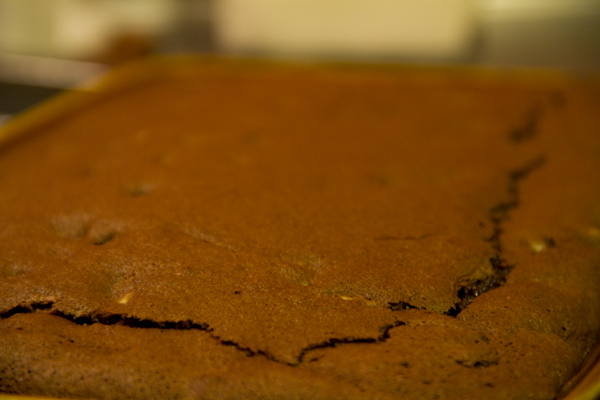
And what a treat, seriously. I’ve made dozens of brownies in my life and I have to confess I almost always pull out a different recipe and they all turn out delicious. The secret is that a brownie is a compact but fluffy cake (sometimes even moist), since it usually doesn’t have any leavening and therefore doesn’t rise. I read somewhere that the brownie was actually discovered thanks to someone forgetting to add the leavening to a chocolate cake. All I can say is… blessed mistake!

Pics and Cakes

What do we need?

  • 200 g (7 oz) baking chocolate

  • 100 g (3.5 oz / 7 tbsp) butter

  • 2 eggs

  • 100 g (1/2 cup) regular sugar

  • 1/2 teaspoon baking soda

  • 1/2 teaspoon salt

  • 80 g (2/3 cup) flour

  • 100 g (3.5 oz / about 1 cup) walnuts

Pics and Cakes

How do we make it?

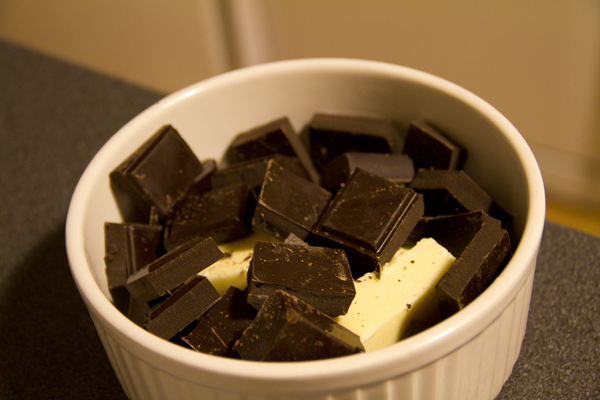
  • Chop the chocolate and put it in a microwave-safe bowl together with the butter. Melt in 20-30 second intervals, stirring each time so it doesn’t burn.

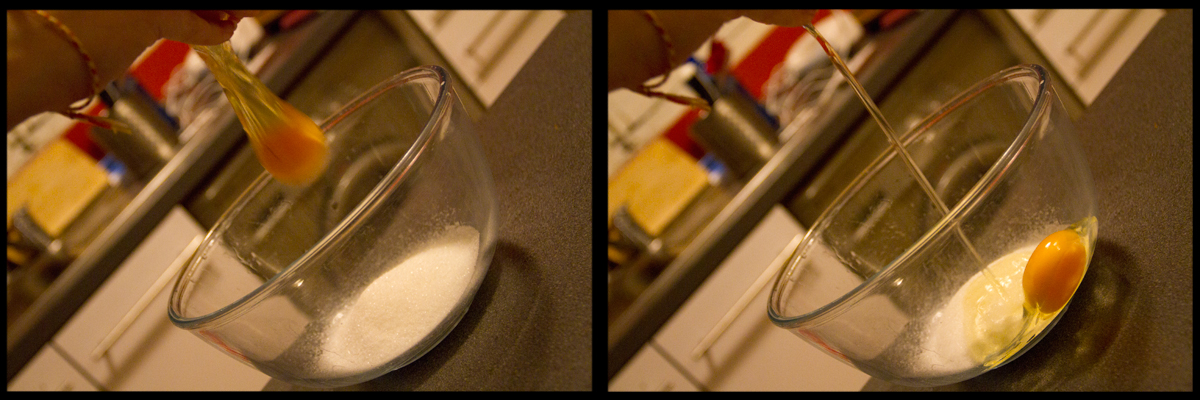
  • In another large bowl, whisk the eggs with the sugar until you get a foamy mixture.

  • Add the chocolate to this foamy mixture and stir well.

  • Mix the flour with the salt and baking soda. Sift it and add it to the previous mixture.

  • Stir well and add the walnuts.

  • Prepare a baking pan, greasing and flouring it so the cake doesn’t stick, and pour the mixture into it.

  • Put it in the oven (preheated to 180°C / 350°F) and bake for about 30 minutes.

  • It’ll be ready when you see a light brown crust has formed on top. Remember that the toothpick won’t come out perfectly clean since this is a moist cake. The important thing is that it’s not completely liquid.

Pics and Cakes

Tips:

  • Even though brownie batter is pretty dense and it’s usually not necessary, a trick to keep the walnuts from sinking to the bottom of the pan is to coat them in flour or cocoa first.

  • To turn the brownie into a proper dessert, serve it with a scoop of vanilla ice cream and hot chocolate sauce on top.

Pics and Cakes

[English version] BROWNIES* *Ingredients:

  • 200 g chocolate

  • 100 g butter

  • 2 eggs

  • 100 g sugar (sugar or confectioners’ sugar)

  • 1/2 tsp baking soda

  • 1/2 tsp salt

  • 80 g flor

  • *100 g walnuts *

  • Cut chocolate into chunks and put into a microwave bowl with butter. Melt it slowly (stop every 20-30 seconds and stir with a spoon).

  • *In a large bowl, whisk the eggs and the sugar together to get a fluffy mix. *

  • Add chocolate cream and stir well.

  • *Mix flour, salt and baking soda. Sift the flour mix and add to the previous cream. *

  • *Stir well and add walnuts. *

  • *Prepare the baking pan (butter and flour it!) and pour the mixture on it. *

  • *Put into oven (preheated at 180ºC) and bake for 30 minutes. *

  • *It will be ready when you see a brown crust created on the top. If you insert a needle or knife to check the baking, it might not be clean because it’s supposed to be a ‘wet’ cake. *

  • ** Tips:- Normally this tip is not needed with brownies recipe because the dough is very thick. However, when you add nuts to a cake and you don’t want to have all of them at the bottom of your baking pan, you can coat the walnuts in flour or cocoa powder. *- For a perfect dessert result, serve the brownie with a scoop of vanilla ice-cream and hot chocolate sauce over it!

25 de octubre de 2012 · 4 min · Palstelera

Brownie

Whole Kitchen en su Propuesta Dulce para el mes de octubre nos invita a preparar un clásico estadounidense: brownies

Y qué cosa más rica, por favor. He hecho decenas de brownies en mi vida y he de confesar que casi siempre rescato una receta diferente y todas salen riquísimas. El secreto es que el brownie es un bizcocho compacto pero esponjoso (en ocasiones, incluso húmedo) ya que no suele llevar levadura y por tanto no crece. En algún he leído que el descubrimiento del brownie fue precisamente gracias a haberse olvidado echar la levadura a un bizcocho de chocolate. Sólo me queda decir… ¡bendito error!

Pics and Cakes


¿Qué necesitamos?

  • 200 g de chocolate para postres

  • 100 g de mantequilla

  • 2 huevos

  • 100 g de azúcar normal

  • 1/2 cucharadita de postre de bicarbonato

  • 1/2 cucharadita de sal

  • 80 g de harina

  • 100 g de nueces

Pics and Cakes

¿Cómo lo hacemos?

  • Troceamos el chocolate y lo ponemos junto con la mantequilla en un bol apto para microondas. Lo derretimos en intervalos de 20-30 segundos, removiendo cada vez para evitar que se nos queme.

  • En otro bol grande, batimos los huevos con el azúcar con ayuda de unas varillas para que nos quede una mezcla espumosa.

  • Agregamos el chocolate a esta mezcla espumosa y removemos bien.

  • Mezclamos la harina con la sal y el bicarbonato. Lo tamizamos y echamos sobre la mezcla anterior.

  • Removemos bien y añadimos las nueces.

  • Preparamos un molde de horno, engrasándolo y enharinándolo para que no se nos pegue y vertemos la mezcla en él.

  • Lo introducimos al horno (precalentado a 180º) y lo horneamos durante 30 minutos aproximadamente.

  • Estará listo cuando veamos que se ha formado una costra por encima de color marrón claro. Recordad que la aguja no saldrá perfectamente limpia ya que se trata de un bizcocho húmedo. Lo importante es que no esté completamente líquido.

 Pics and Cakes

Consejos:

  • Aunque la masa del brownie es bastante densa y no suele hacer falta, un truco para que las nueces no se vayan al fondo del molde consiste en rebozarlas antes en harina o cacao.

  • Para hacer del brownie un auténtico postre se puede servir con una bola de helado de vainilla y chocolate caliente por encima.

Pics and Cakes

 [English version] BROWNIES* *Ingredients:

  • 200 g chocolate

  • 100 g butter

  • 2 eggs

  • 100 g sugar (sugar or confectioners’ sugar)

  • 1/2 tsp baking soda

  • 1/2 tsp salt

  • 80 g flor

  • *100 g walnuts *

* *

  • Cut chocolate into chunks and put into a microwave bowl with butter.  Melt it slowly (stop every 20-30 seconds and stir with a spoon).

  • *In a large bowl, whisk the eggs and the sugar together to get a fluffy mix. *

  • Add chocolate cream and stir well.

  • *Mix flour, salt and baking soda. Sift the flour mix and add to the previous cream. *

  • *Stir well and add walnuts. *

  • *Prepare the baking pan (butter and flour it!) and pour the mixture on it. *

  • *Put into oven (preheated at 180ºC) and bake for 30 minutes. *

  • *It will be ready when you see a brown crust created on the top. If you insert a needle or knife to check the baking, it might not be clean because it’s supposed to be a ‘wet’ cake. *

* **  Tips:- Normally this tip is not needed with brownies recipe because the dough is very thick. However, when you add nuts to a cake and you don’t want to have all of them at the bottom of your baking pan, you can coat the walnuts in flour or cocoa powder. *- For a perfect dessert result, serve the brownie with a scoop of vanilla ice-cream and hot chocolate sauce over it!


25 de octubre de 2012 · 4 min · Palstelera

Piononos

Whole kitchen, in their Sweet Proposal for September, invites us to make a Spanish classic: “Piononos”. And honestly, this challenge made me really happy because I think these little pastries are an absolute delight. I’d actually come across them before, though under the popular nickname ‘Vicksvaporub’ at Confitería Rufino in Aracena. Apparently they’re typical of Granada, and legend has it they got their name because they were made in honor of Pope Pius IX. Of course, like with every recipe, the origin and authorship are still up for debate, but whoever made them first, these little pastries are wonderful.

Pics and Cakes

What do we need?

(10-12 units)

For the sponge cake:

  • 2 large eggs

  • 2 tablespoons of sugar

  • 1 tablespoon of flour

  • 1 tablespoon of cornstarch

  • 2 tablespoons of milk

  • a pinch of salt

  • Butter for greasing

For the syrup:

  • 150 g (5.3 oz) sugar

  • 150 ml (2/3 cup) water

  • A cinnamon stick

  • A splash of rum (optional)

For the yolk cream:

  • 4 egg yolks

  • The weight of the yolks in sugar

  • The volume of the sugar in water

  • A pinch of cornstarch

How do we make them?

  • We start with the yolk cream so it has time to cool down.

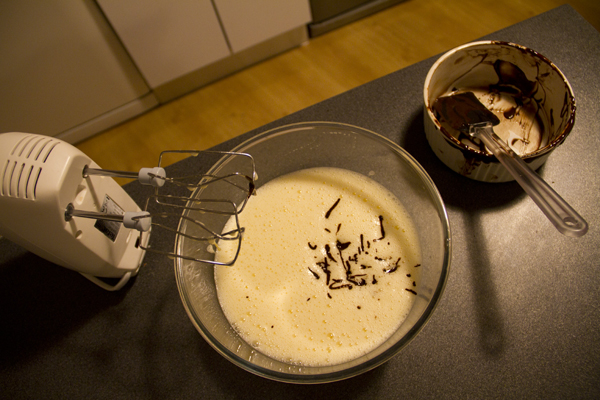
  • First, make a syrup with equal parts water and sugar. Put both ingredients in a small saucepan and bring to a boil. How thick the yolk cream ends up depends, in part, on how much you cook the syrup down. For a filling-cream texture, let the syrup reach the soft-ball stage (reduce it down to the original water volume — that is, if you used 250 ml (1 cup) of water and 250 ml (1 cup) of sugar, take it off the heat once it’s reduced to 250 ml (1 cup) of syrup).

  • Let the syrup cool a bit. Meanwhile, separate the yolks and whisk them lightly. Once the syrup is lukewarm, add it to the yolks slowly, whisking constantly (off the heat), until you’ve added all the syrup.

  • Put it on low heat and cook, stirring constantly, until it thickens. (The longer you cook it, the thicker it gets.) You can add half a teaspoon of cornstarch dissolved in a tablespoon of cold water.

  • Make the syrup by boiling all the ingredients for 5 minutes.

  • Line the baking tray with parchment paper and grease it with butter.

  • Preheat the oven to 180°C (355°F) and start preparing the sponge cake.

  • Whip the egg whites with a pinch of salt. Once they’re stiff, add the sugar little by little while still whisking, until it’s fully dissolved and the meringue is firm and glossy. Set aside.

  • In a bowl, combine the flour and cornstarch (sifted together), add the yolks and mix, then gradually add the milk to get a smooth, lump-free cream.

  • Add the yolk mixture to the meringue in several stages, folding gently with a spatula.

  • Carefully spread the batter on the prepared baking tray in a 4-5 mm (about 1/5 inch) thick layer. Place in the preheated oven on the middle rack. Pull it out as soon as it picks up a bit of color (about 7-8 minutes). Flip it onto another sheet of parchment paper. Let it cool slightly and brush it with the syrup.

  • Once it’s cool, spread a thin layer of yolk cream over the sponge sheet.

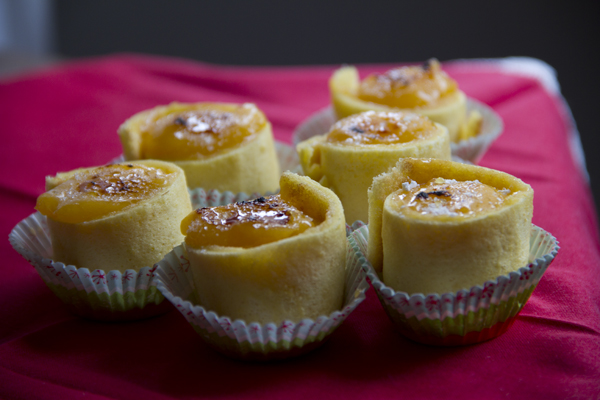
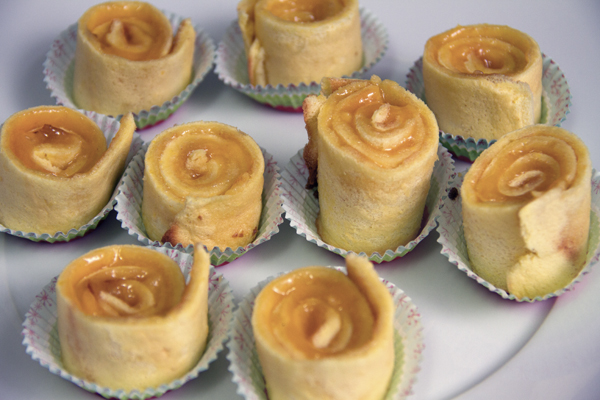
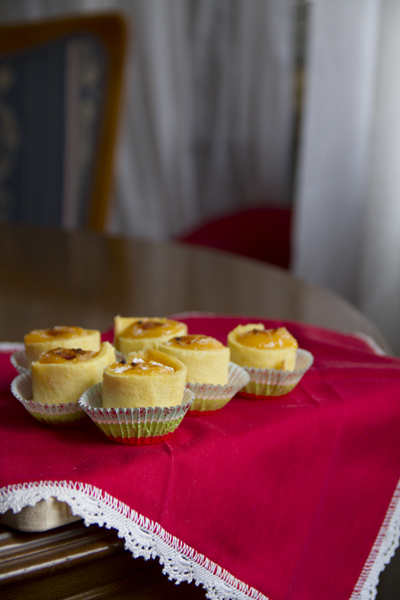
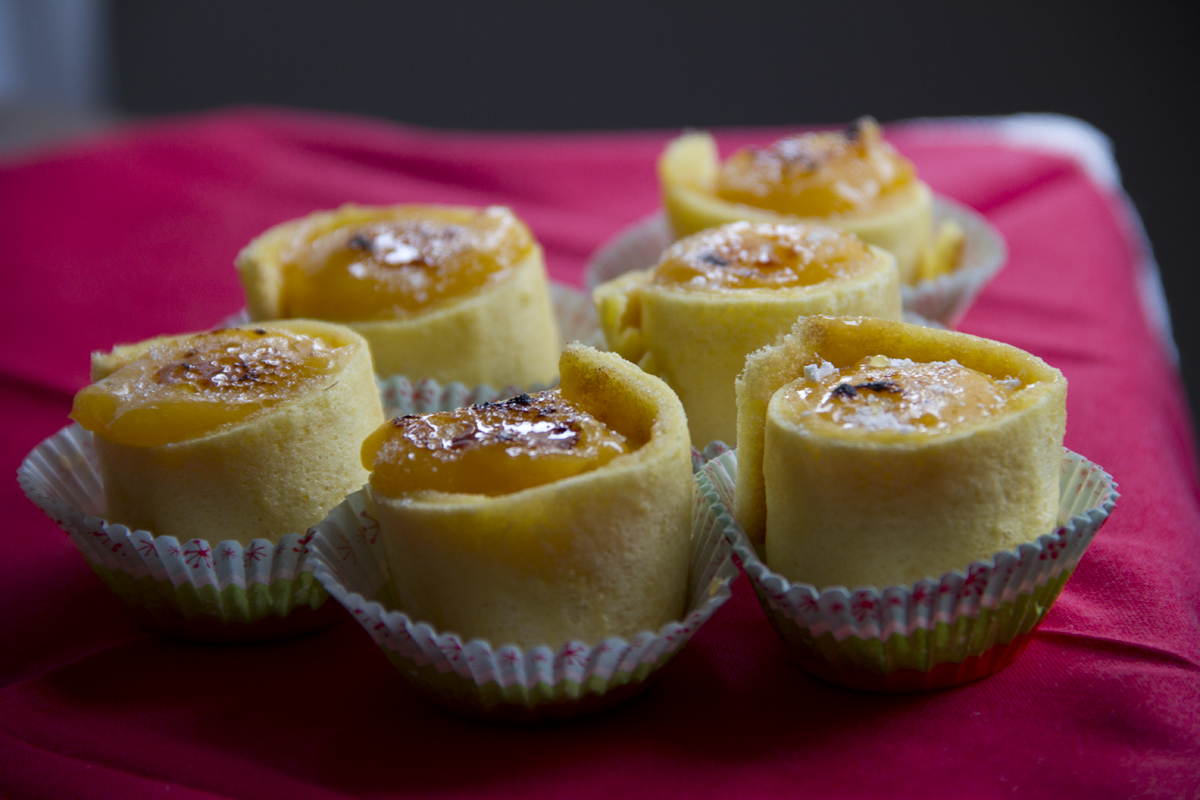
  • Cut strips about 3-4 cm (1.2-1.6 inches) wide and roll them up in a spiral. Place the little pastries vertically into paper cupcake liners. Add a teaspoon of cream on top of each one. Sprinkle with sugar and torch it with a kitchen blowtorch.

Pics and Cakes

Tips:

  • The sponge cake has to be very thin. These quantities worked for me with my oven, which has a square tray that’s smaller than usual. I think if you double the amounts you’ll have enough for a regular-size tray. In any case, if it’s too much batter, better not to use it all or the sponge will end up too thick.

  • In principle, the sponge doesn’t need any baking powder because the whipped egg whites give it enough volume. Even so, next time I’ll try adding a pinch to see how it turns out.

  • Don’t forget to grease the parchment paper with butter — the sponge sheet is very thin and could easily tear when you try to peel it off.

  • The recipe we followed is from Belenciaga, but using it as inspiration you can come up with all kinds of variations.

Pics and Cakes


25 de septiembre de 2012 · 4 min · Palstelera

Piononos

Whole kitchen en su Propuesta Dulce para el mes de Septiembre nos invita a preparar un clásico español, “Piononos”. Y la verdad es que este reto me ha encantado porque estos pastelitos me parecen una delicia. Lo cierto es que ya  los conocía aunque con el nombre popular de ‘Vicksvaporub’ en la Confitería Rufino de Aracena. Al parecer son típicos de Granada y cuenta la leyenda que reciben este nombre porque se hicieron en honor del papa Pío IX. Evidentemente como toda receta, el origen y la autoría siguen siendo objeto de disputa pero fuera quien fuera el que los hizo por primera vez, estos pastelitos son una maravilla.

 Pics and Cakes

¿Qué necesitamos?

(10-12 unidades)

Para el bizcocho:

  • 2 huevos grandes

  • 2 cucharadas de azúcar

  • 1 cucharada de harina

  • 1 cucharada de maizena

  • 2 cucharadas de leche.

  • una pizca de sal

  • Mantequilla para untar

Para el almíbar:

  • 150 g de azúcar

  • 150 ml agua

  • Un palo de canela

  • Un chorrito de ron (opcional)

Para la crema de yema:

  • 4 yemas

  • El peso de las yemas en azúcar

  • El volumen del azúcar en agua

  • Una pizca de maizena

¿Cómo lo hacemos?

  • Empezamos haciendo la crema de yema para que enfríe.

  • Lo primero es hacer un almíbar a partes iguales de agua y azúcar. Para ello, ponemos los dos ingredientes en una cazuela pequeña y lo llevamos a ebullición. Del grado de cocción del almíbar va a depender, en parte, lo espesa que nos quede la yema.Para una textura de crema de relleno dejamos que el almíbar alcance el punto de bola.(reducir al volumen original de agua. es decir si hemos usado 250 cc de agua y 250cc de azúcar, cuando haya reducido a 250cc de almíbar retiramos del fuego)

  • Dejamos templar el almíbar. Mientras separamos las yemas y las batimos ligeramente con las varillas. Una vez esté el almibar tibio lo vamos añadiendo a las yemas sin dejar de mover con las varillas, (fuera del fuego), hasta añadir todo el almíbar.

  • Llevamos al fuego bajo y sin dejar de remover cocemos hasta que espese. ( si prolongamos la cocción quedará más espesa). Le podemos añadir media cucharadita de maizena disuelta en una cucharada de agua fría.

  • Preparamos el almíbar hirviendo 5 minutos los ingredientes.

  • Forramos la bandeja de horno con papel vegetal y lo untamos con mantequilla.

  • Calentamos el horno a 180ºC y empezamos a preparar el bizcocho.

  • Montamos las claras con una pizca de sal. Cuando ya estén subidas añadimos el azúcar poco a poco sin dejar de batir, hasta que se disuelva bien y el merengue esté firme y brillante. Reservamos.

  • En un bol ponemos la harina y la maizena mezcladas y tamizadas, añadimos las yemas y mezclamos, vamos añadiendo la leche para conseguir una crema lisa y sin grumos.

  • Vamos añadiendo en varias veces la mezcla de yemas sobre el merengue mezclando con una espátula con movimientos envolventes.

  • Extendemos con cuidado la masa sobre la bandeja de horno preparada en una capa de 4 - 5 mm. Metemos al horno precalentado a media altura. en cuanto coja un poco de color lo sacamos ( unos 7-8 minutos). Volcamos sobre otro papel de horno. Dejamos que entibie un poco y calamos con el almíbar pincelándolo con la brocha

  • Cuando haya enfriado, extendemos una capa fina de crema sobre la plancha de bizcocho.

  • Se cortan tiras de unos 3- 4 cm y las enrollamos en espiral. Colocamos los pastelitos en cápsulas de papel, verticalmente. Se pone una cucharadita de crema encima de cada pastel. Se espolvorea con azúcar y se quema con el soplete.

Pics and Cakes

Consejos:

  • El bizcocho tiene que ser muy fino. con estas cantidades a mí me ha servido para mi horno cuya bandeja cuadrada es más pequeña de lo habitual. Creo que si dobláis las cantidades tendréis suficiente para una bandeja grande. De todas formas si es demasiada cantidad, mejor no utilizarla toda o el bizcocho quedará demasiado grueso.

  • En principio el bizcocho no necesita levadura porque al tener las claras montadas le da el volumen necesario. De todas formas, la próxima vez probaré a echarle una pizca a ver cuál es el resultado.

  • No olvidéis untar el papel de horno con mantequilla ya que la plancha de bizcocho resultante será muy fina y se os podría romper al despegarla.

  • La receta que hemos seguido es de Belenciaga pero inspirándonos en ella podemos hacer multitud de variaciones.

 Pics and Cakes

[English version] ‘PIONONOS’: YOLK-CREAM SWEET TREATS* **Ingredients (10-12 units): *For the sponge cake:

  • 2 large eggs

  • 2 tbsp sugar

  • 1 tbsp flour

  • 1 tbsp white corn flour (Maizena)

  • 2 tbsp milk

  • A pinch of salt

  • Butter

For the syrup:

  • 150 g sugar

  • 150 ml water

  • Cinnamon stick

  • A splash of rum

For the yolk cream:

  • 4 egg yolks

  • Same yolk weight in sugar

  • Same sugar volume in water

  • A pinch of white corn flour (Maizena)

* *

  • Start with the yolk cream to get it cold.

  • *Make a syrup with sugar and water. Put both ingredients in a sauce pan and cook over a high heat. We need a thick texture, so keep cooking until reducing to the original amount of water. *

  • Leave to cool. Separate the yolks and whisk them with the blender (provided with whisk attachment). Add slowly the syrup while whisking.

  • Put it again on to the heat and cook over a low heat, stirring constantly. You can add a bit of white corn flour to have a thicker cream.

  • *Let’s prepare the syrup. Simmer all the ingredients for 5 minutes and set aside. *

  • *Place bakery paper into the baking tray and butter it. *

  • *Preheat oven at 180ºC and let’s start with the sponge cake. *

  • *Whisk the egg whites with a pinch of salt until. Add progressively the sugar and whisk until the mixture is thick and glossy. Set aside. *

  • Place flour and corn flour into a large bowl, add egg yolks and stir well. Add the milk and mix thoroughly until the mixture is smooth.

  • Add slowly the yolk cream to the meringue and slowly stir.

  • Pour the mixture in the prepared baking tray creating a thin layer (4-5 mm). Bake until slightly golden brown (7-8 minutes).

  • Place into a new baking paper and remove the old one. Brush it with the syrup.

  • *Spread a thin layer of yolk cream over the sponge cake. *

  • *Cut into strips (3-4 cm) and roll them one by one. Place each sweet treat into small paper cupcakes molds in vertical position. *

  • Add a tsp of yolk cream on the top. Spread some sugar and burn it with a kitchen blowtorch.

* * * * *  Tips:*

- The sponge cake layer has to be really thin. These amounts work for a small baking tray. If you use the baking tray of a conventional oven, double the amounts. If you feel it’s too much don’t pour all the mixture. Otherwise, the resulting spong cake will be too thick.

- This spong cake doesn’t need baking powder because we have made a meringue first. However, next time I’ll try and add a pinch of it to see the result.

- Don’t forget buttering the baking paper. Otherwise, you risk to break the sponge cake when removing from it.


25 de septiembre de 2012 · 7 min · Palstelera

Galletas de masa quebrada

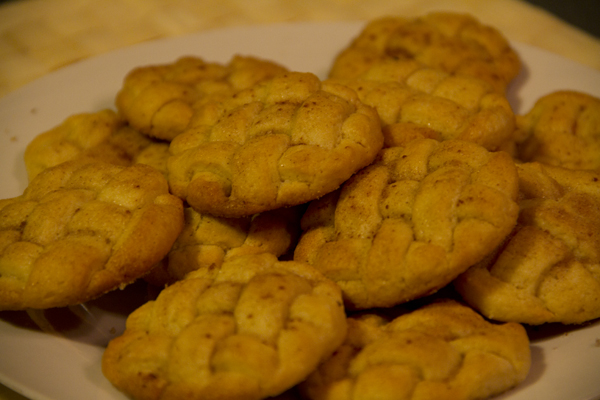
En una de mis visitas habituales al blog de La Receta de la Felicidad, encontré esta receta de galletas exprés. En mi caso no fueron tan exprés ya que decidí hacer yo misma la masa quebrada en vez de comprarla. En cualquier caso, la idea del trenzado de galletas sorprende por lo sencilla que es y lo bonita que queda, así que no tenéis excusa para no probarla.

 Pics and Cakes

¿Qué necesitamos?

-       1 lámina de masa quebrada*

  •       1 cucharada de mantequilla
  •       Azúcar y canela

*Si en vez de comprarla preferis hacer vosotros mismos la masa quebrada también necesitaréis:

  •       200 g de harina
  •       100 g de mantequilla fría
  •       1 huevo
  •       Una pizca de sal
  •       Una pizca de azúcar

  Pics and Cakes

¿Cómo lo hacemos?

Masa quebrada:

  • Ponemos todos los ingredientes en un cuenco. La mantequilla tiene que estar muy fría y cortada en trocitos.

  • Empezamos a amasar con las manos hasta tener una masa homogénea, hacemos una bola con ella y la envolvemos en papel film transparente. Dejamos reposar una hora en la nevera.

  • Pasado el tiempo de espera estiramos la masa con el rodillo hasta dejarla bastante finita (5 mm aproximadamente). Podemos hacerlo ayudándonos de un par de papeles de horno o incluso film transparente.

Galletas:

  • Precalentamos el horno a 200ºC.

  • Con la masa estirada, cortamos tiras de 1 cm con un cuchillo bien afilado.

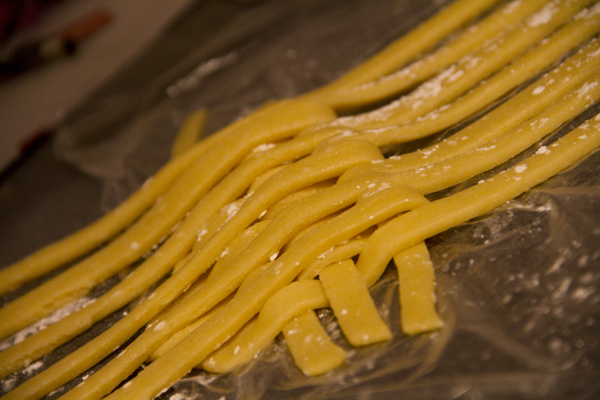
  • Procedemos a trenzar la masa. Para ello, pondremos la mitad de las tiras juntas en posición vertical. Luego iremos colocando una a una las otras tiras en horizontal haciéndolas pasar por las tiras verticales alternando arriba y abajo (como una imagen vale más que mil palabras, echadle un vistazo a la foto).

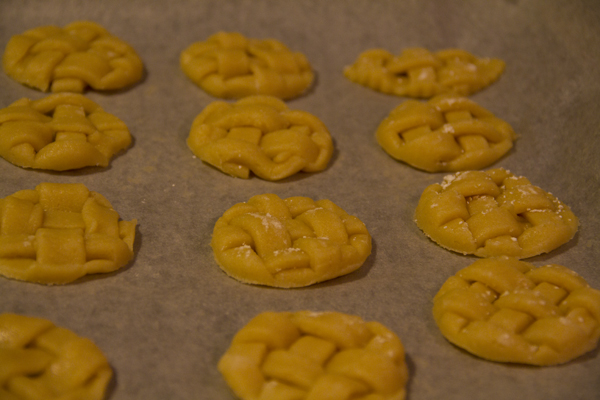
  • Con un cortapastas redondo (o de la forma deseada) vamos cortando las galletas de nuestra masa recién trenzada.

  • Las pincelamos con mantequilla derretida y añadimos azúcar y canela (sin temor a excedernos ya que la masa quebrada no es dulce).

  • Colocamos las galletas sobre una bandeja cubierta con papel de hornear y las horneamos durante 10 minutos.

Consejos:

  • Podéis echarle cualquier especia o saborizante que consideréis. En mi caso utilicé un azúcar glas aromatizada con canela y manzana.
  • Para que no pierdan demasiado su forma la masa quebrada tiene que estar muy fría y habrá que manosearla lo menos posible (en este caso, es más sencillo hacerlo con masa quebrada comprada).
  • Si las hacéis del tamaño más grande que una tacita de café podréis servirlas de la forma tan original que hace @SandeeA

Pics and Cakes

[English version] SHORTBREAD PASTRY BISCUITS *Ingredients:- 1 sheet of shortbread pastry

  • 1 tbsp of butter

  • Sugar and cinnamon  For the shortbread pastry you will need:- 200 g of white flour- 100 g of butter- 1 egg- A pinch of salt- A pinch of sugar *For the pastry

  • Place all the ingredients into a large bowl. Butter has to be very cold and cut into small pieces.

  • Mix properly until getting a uniform dough, make a bowl and cover with cling film. Leave in the fridge for 1 hour.

  • *Roll out the dough (5 mm thick). You can use a couple of baking papers or cling film to make the task easier. *

For the biscuits:

  • * Preheat oven at 200ºC*

  • Cut 1 cm-wide stripes with a sharpen knife. Create the pattern by putting half of the stripes into vertical positions. Then use the other stripes (one by one) to cross the first ones in horizontal position as shown in the picture.

  • Cut out rounds.

  • Brush tops with melt butter and sprinkle sugar and cinnamon.

  • Place into oven tray covered by baking paper sheet.

  • Bake for 10 minutes.

    Tips:- You can add any other spices or flavours. I used apple-cinnamon flavoured sugar.

  • To avoid the pastry loses its shape, keep it always very cold!
  • You can cut out rounds a bit bigger than small cups and use the same serving suggestion than @SandeeA
30 de agosto de 2012 · 3 min · Palstelera

Shortcrust Pastry Cookies

On one of my regular visits to the La Receta de la Felicidad blog, I came across this recipe for express cookies. In my case they weren’t quite so express since I decided to make the shortcrust pastry myself instead of buying it. In any case, the idea of the woven cookies is striking for how simple it is and how pretty they look, so you have no excuse not to try them.

Pics and Cakes

What do we need?

  •   1 sheet of shortcrust pastry*
    
  •   1 tablespoon of butter
    
  •   Sugar and cinnamon
    

*If instead of buying it you’d rather make the shortcrust pastry yourselves, you’ll also need:

  •   200 g (1.5 cups) of flour
    
  •   100 g (7 tbsp) of cold butter
    
  •   1 egg
    
  •   A pinch of salt
    
  •   A pinch of sugar
    

Pics and Cakes

How do we make it?

Shortcrust pastry:

  • Put all the ingredients in a bowl. The butter has to be very cold and cut into small pieces.

  • Start kneading with your hands until you have a smooth dough, shape it into a ball and wrap it in plastic wrap. Let it rest in the fridge for an hour.

  • Once the waiting time is up, roll out the dough with a rolling pin until it’s quite thin (about 5 mm / 1/4 inch). You can do this with the help of a couple of sheets of baking paper or even plastic wrap.

Cookies:

  • Preheat the oven to 200°C (390°F).

  • With the dough rolled out, cut strips of 1 cm (about 1/2 inch) with a sharp knife.

  • Now we weave the dough. To do this, place half of the strips together in a vertical position. Then place the other strips one by one horizontally, passing them through the vertical strips alternating over and under (since a picture is worth a thousand words, take a look at the photo).

  • With a round cookie cutter (or any shape you like), cut out the cookies from the freshly woven dough.

  • Brush them with melted butter and sprinkle with sugar and cinnamon (don’t be shy with the amount, since shortcrust pastry isn’t sweet).

  • Place the cookies on a tray lined with baking paper and bake them for 10 minutes.

Tips:

  • You can add any spice or flavoring you like. In my case I used a powdered sugar flavored with cinnamon and apple.
  • So they don’t lose their shape too much, the shortcrust pastry has to be very cold and you should handle it as little as possible (in this case, it’s easier with store-bought shortcrust pastry).
  • If you make them a bit bigger than a coffee cup, you can serve them in the original way that @SandeeA does.

Pics and Cakes

30 de agosto de 2012 · 3 min · Palstelera