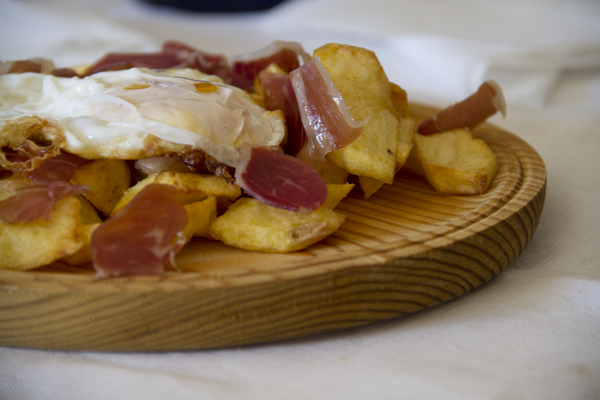
Broken Eggs (Huevos Rotos)

We’re back with a simple recipe, one of those everyone knows how to make, but that we wanted to share with you for two simple reasons: first and most important, it’s a really easy dish that you usually eat when you’re out for drinks but not at home (this is our way of encouraging you to make it yourself), and second because we’ve got a little tip about how to fry the potatoes. Want to know what it is? You’ll have to read the rest of the recipe.
Pics and Cakes

What do we need?

  • Good quality cured ham

  • 3 large potatoes

  • 2 farm-fresh eggs

  • Olive oil

  • Salt

How do we make it?

  • While we heat the oil in a pan (preferably a deep one), we separate or cut up the ham.

  • Peel the potatoes and cut them into irregular bite-sized pieces.

  • Once the oil is nice and hot, lower it to medium heat and add the potatoes. Let them cook more than fry.

  • When they’re soft, take them out and set aside on a plate. Turn the heat back up.

  • Fry the eggs and set them aside.

  • Now with the heat high, put the potatoes back in to brown them. This way they’ll be crispy on the outside and soft on the inside.

  • After draining them on a paper towel, arrange them on a plate or platter, add the ham and eggs, and enjoy.

[English version] HUEVOS ROTOS (FRENCH FRIES WITH EGGS AND SPANISH HAM)* *Ingredients:

  • Spanish cured ham

  • 3 potatoes

  • 2 free-range eggs

  • Olive oil

  • Salt

  • Heat the olive oil in a deep saucepan. In the meanwhile, cut the ham into medium size pieces and the potatoes in irregular pieces the size of a mouthful.

  • *When olive oil is very hot, reduce heat into medium and put the potatoes. Let them simmer. *

  • *When the potatoes are cooked (soft but white), take them out of the pan. Increase heat again. *

  • Fry the eggs and set aside.

  • When the heat is high again, fry again the potatoes until golden brown. They will be soft in the inside and crusty in the outside.

  • *Take them out into a plate with kitchen paper to remove the extra oil. Place the potatoes into a large plate, the eggs and ham over them and enjoy! *
16 de marzo de 2013 · 3 min · Cesmm

Huevos rotos

Volvemos a la carga con una receta sencilla, de esas que todos sabemos hacer, pero que nos gustaría compartir con vosotros por dos sencillas razones: la primera y más importante, que es una plato muy fácil y que sueles comer cuando estás de cañas pero no en casa (es una forma de animaros a hacerlo) y segunda por que tenemos un pequeño consejo sobre cómo freír las patatas. ¿Lo queréis conocer? Tendréis que leer el resto de la receta.

Pics and Cakes


¿Qué necesitamos?

  • Jamón del rico

  • 3 patatas grandres

  • 2 huevos de pueblo

  • Aceite de oliva

  • Sal

¿Cómo lo hacemos?

  • Mientras ponemos a calentar el aceite en una sartén, mejor si es profunda, separamos o cortamos el jamón.

  • Pelamos las patatas y las cortamos en trozos irregulares del tamaño de un bocado.

  • Cuando el aceite esté bien caliente lo bajamos a fuego medio y echamos las patatas. Dejamos que se cuezan más que freirse.

  • Una vez estén blandas las sacamos y reservamos en un plato. Volvemos a subir el fuego. 

  • Hacemos los huevos fritos y los reservamos. 

  • Ahora con el fuego caliente volvemos a echar las patatas para que se doren. Así quedarán crujientes por fuera y blandas por dentro.

  • Después de escurrirlas en un papel de cocina las colocamos en un plato o fuente, añadimos el jamón y los huevos y a disfrutar.


[English version] HUEVOS ROTOS (FRENCH FRIES WITH EGGS AND SPANISH HAM)* *Ingredients: 

  • Spanish cured ham

  • 3 potatoes

  • 2 free-range eggs

  • Olive oil

  • Salt

* *

  • Heat the olive oil in a deep saucepan. In the meanwhile, cut the ham into medium size pieces and the potatoes in irregular pieces the size of a mouthful.

  • *When olive oil is very hot, reduce heat into medium and put the potatoes. Let them simmer. *

  • *When the potatoes are cooked (soft but white), take them out of the pan. Increase heat again. *

  • Fry the eggs and set aside.

  • When the heat is high again, fry again the potatoes until golden brown. They will be soft in the inside and crusty in the outside.

  • *Take them out into a plate with kitchen paper to remove the extra oil. Place the potatoes into a large plate, the eggs and ham over them and enjoy! *

16 de marzo de 2013 · 3 min · Cesmm

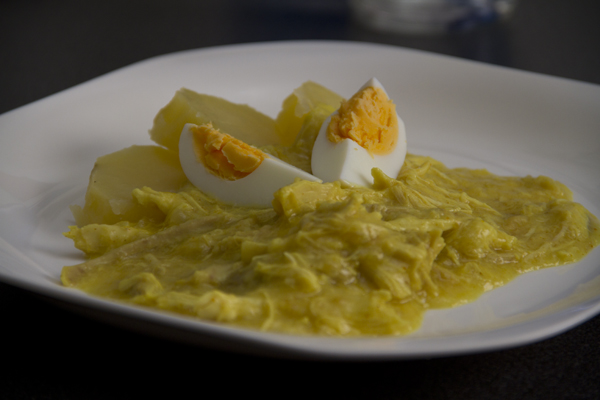
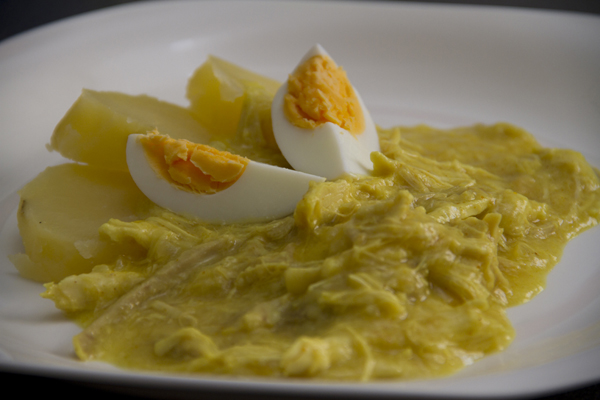
Ají de gallina

Este plato es un plato típico de la gastronomía peruana. Esta receta no digo que sea ni la auténtica ni la única y verdadera, simplemente la que ha hecho mi madre y su familia toda la vida. Ellos trajeron consigo esta receta del Perú y la verdad es que a mí me encanta. He probado el ají de gallina en varios restaurantes peruanos y ni siquiera en todos la receta es igual. Así que, como dice el refrán, ‘para gustos, los colores’ y yo aquí os propongo un ají de gallina peruano para chuparse los dedos.

Pics and Cakes

¿Qué necesitamos?

  • 1 pollo

  • 4 cebollas

  • 4 rebanadas de pan de molde

  • Un poco de leche

  • Cúrcuma

  • Pasta de ají molido

  • 4 patatas

  • 4 huevos

  • Sal


¿Cómo lo hacemos?

  • En primer lugar, cocemos el pollo en una cazuela con abundante agua y un poco de sal. Lo cocemos hasta que esté bien tierno (lo sabremos cuando la carne se separe del hueso sin dificultad).

  • Sacamos el pollo, colamos el caldo y lo reservamos.

  • Cuando el pollo se haya enfriado un poco, le quitamos la piel y los huesos y lo desmenuzamos. Reservamos los trozos de pollo desmenuzado.

  • Cocemos las patatas y los huevos y reservamos.

  • Por otro lado, desmenuzamos las rebanadas de pan de molde y las ponemos en remojo con leche.

  • Cortamos las cebollas en trozos muy pequeños y las echamos en una cazuela con aceite de oliva para pocharlas. Tenemos que cocinarlas a fuego medio y lentamente para que se hagan bien pero sin dorarse. Queremos que se quede bien blandita y que casi obtengamos una pasta de color amarillo.

  • Cuando la cebolla esté lista, añadimos el pan remojado en leche y removemos bien.

  • Poco a poco vamos añadiendo el caldo del pollo y seguimos removiendo para que se integre bien.

  • Echamos un par de cucharaditas de cúrcuma que le dará el color amarillo tan característico.

  • Añadimos el pollo desmenuzado y volvemos a remover. Si vemos que está demasiado espeso, añadimos un poco más de nuestro caldo de pollo. La textura no es como un puré de patatas pero tampoco como una sopa; algo intermedio.

  • Rectificamos la sal y añadimos un poco de picante (pasta de ají molido).

  • Por otro lado, pelamos las patatas y las cortamos en rodajas gruesas. Pelamos los huevos y los cortamos en cuartos.

  • Ya tenemos nuestro ají de gallina. Ahora solo queda servirlo acompañado de las patatas cocidas y de los huevos duros. ¡Y a disfrutarlo nomás!


Consejos:

  • Con un pollo entero sale bastante cantidad de ají de gallina así que si queréis podéis usar la mitad del pollo cocido para esta receta y la otra mitad para una deliciosa ensalada de pollo con piña, por ejemplo. :-)

  • En algunos restaurantes he comido este plato acompañado de arroz blanco en vez de patatas cocidas.

Pics and Cakes

 [English version] PERUVIAN AJÍ DE GALLINA* *Ingredients:

  • 1 chicken

  • 4 onions

  • *4 slices of (sandwich) bread *

  • A bit of milk

  • Turmeric

  • Ají sauce (hot pepper)

  • 4 potatoes

  • 4 eggs

  • Salt

* *

  • *First of all, cook the chicken in a large pot full of water and a bit of salt. Boil and cook until the chicken meat is soft and falling off the bone. *

  • *Take the chicken out, drain the stock and set aside. *

  • When the chicken is a bit colder, take off skin and bones and shred the chicken meat.

  • *Boil potatoes and eggs. *

  • *Crumble the bread slices and soak in milk. *

  • *Chop finely the onions and place in a pan with some olive oil. Stir fry slowly until soft and yellow. *

  • Then add the soaked bread and stir well.

  • *Add chicken stock bit by bit and stirring well. *

  • *Add a couple of tsp of turmeric. *

  • Add the small pieces of chicken and mix well. If it’s too thick, add some more chicken stock. Texture has to be thicker than a soup but smoother than smashed potatoes.

  • *Try and modifiy salt. Add some spicy sauce. *

  • *Peel off potatoes and slice them. Peel off eggs and cut them into quarters. *

  • *Serve ‘ají de gallina’ with some potatoes and eggs by the side. *

* Tips:*

- A whole chicken makes a big amount of ‘ají de gallina’. You can use the half of the chicken for this recipe and the other half for a delicious chicken and pineapple salad. :-)

*- In some Peruvian restaurants, the ‘ají de gallina’ is served with white rice instead of potatoes. *

4 de marzo de 2013 · 4 min · Palstelera

Ají de Gallina

This dish is a classic of Peruvian cuisine. I’m not claiming this recipe is the authentic or one true version — it’s simply the one my mother and her family have made all their lives. They brought this recipe with them from Peru and honestly, I love it. I’ve tried ají de gallina at several Peruvian restaurants and the recipe isn’t even the same in all of them. So, as the saying goes, “to each their own,” and here I’m offering you a finger-licking-good Peruvian ají de gallina.

Pics and Cakes

What do we need?

  • 1 chicken

  • 4 onions

  • 4 slices of sandwich bread

  • A splash of milk

  • Turmeric

  • Ground ají paste (Peruvian hot pepper)

  • 4 potatoes

  • 4 eggs

  • Salt

How do we make it?

  • First, cook the chicken in a large pot with plenty of water and a bit of salt. Cook it until it’s nice and tender (you’ll know it’s done when the meat falls off the bone easily).

  • Take the chicken out, strain the broth, and set it aside.

  • Once the chicken has cooled down a bit, remove the skin and bones and shred it. Set the shredded chicken aside.

  • Boil the potatoes and eggs and set aside.

  • Meanwhile, crumble the slices of sandwich bread and soak them in milk.

  • Chop the onions very finely and toss them into a pan with olive oil to sweat them down. Cook them over medium-low heat slowly so they soften without browning. We want them really soft, almost like a yellow paste.

  • Once the onion is ready, add the milk-soaked bread and stir well.

  • Slowly add the chicken broth bit by bit, stirring continuously so it all comes together.

  • Add a couple of teaspoons of turmeric, which will give it that signature yellow color.

  • Add the shredded chicken and stir again. If it looks too thick, add a bit more chicken broth. The texture shouldn’t be like mashed potatoes, but not like soup either — somewhere in between.

  • Adjust the salt and add a bit of heat (ground ají paste).

  • On the side, peel the potatoes and cut them into thick slices. Peel the eggs and cut them into quarters.

  • And there you have it — your ají de gallina. All that’s left is to serve it alongside the boiled potatoes and hard-boiled eggs. Now dig in, nomás!

Tips:

  • A whole chicken makes a pretty generous amount of ají de gallina, so if you’d like, you can use half of the cooked chicken for this recipe and save the other half for a delicious chicken and pineapple salad, for example. :-)

  • At some restaurants I’ve had this dish served with white rice instead of boiled potatoes.

Pics and Cakes

4 de marzo de 2013 · 3 min · Palstelera

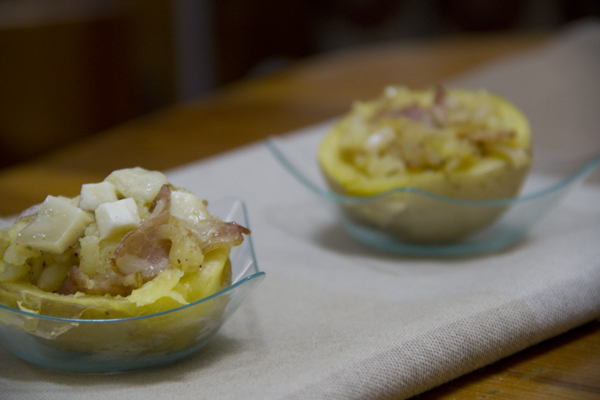
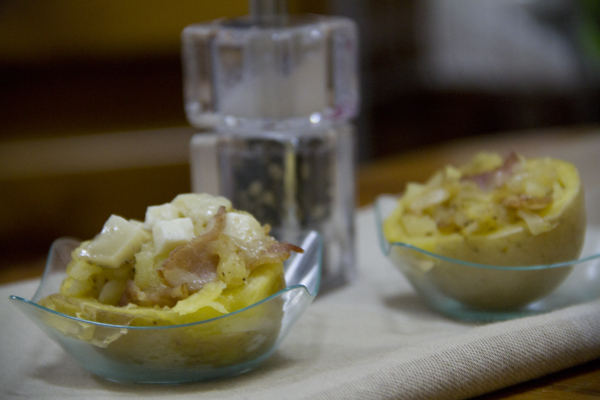
Patatas rellenas

He de reconocer que somos un poco esponjas y todo lo que vemos que nos gusta intentamos hacerlo en casa. Este es el caso de la receta de hoy. Hace ya algunos años nos fuimos los amigos a pasar una Semana Santa a Camposancos, un pueblito bueno de Pontevedra, y allí Ana (con la ayuda de Germán) nos prepararon unas riquísimas patatas rellenas para el regimiento que éramos (bueno, igual no éramos tantos…) El caso es que nos encantó la idea y desde entonces la hemos incorporado a nuestro recetario.

Pics and Cakes


¿Qué necesitamos?

  • 4 patatas medianas

  • 5 lonchas de beicon

  • 1 cebolla

  • Queso

  • Sal

  • Pimienta


¿Cómo lo hacemos?

  • Asamos las patatas en el horno. (Podéis mirarlo aquí si no sabéis cómo hacerlo).

  • Mientras tanto cortamos el beicon y la cebolla y la pochamos en la sartén con un poco de aceite.

  • Cuando las patatas estés listas, podemos comprobar con un pincho de cocina, las sacamos del horno y las partimos por la mitad.

  • Con cuidado y con ayuda de una cuchara, vaciamos las mitades, dejando la piel con una capa fina de patata.

  • Mezclamos la patata extraída con el beicon y la cebolla pochados. Salpimentamos.

  • Rellenamos las mitades de patata con la mezcla, añadimos un poco de queso y ponemos en el horno a gratinar.


Consejos:

  • Acepta cualquier tipo de queso. A nosotros nos gusta con emmental (querido Watson).

  • Si no queréis hacer las patatas asadas, podéis cocerlas pero recomendamos que al menos gratinéis con el queso en el horno.

  • Esta es nuestra propuesta para el relleno. Podéis adaptarla a vuestros gustos.

Pics and Cakes

*[English version] STUFFED POTATOES * Ingredients:

  • *4 medium potatoes *

  • *5 bacon slices *

  • *1 onion *

  • Cheese

  • Salt

  • Pepper

* ** *

  • *Bake the potatoes in the oven. *

  • *Chop bacon and onion and stirfry in a frying pan with a bit of olive oil. *

  • *Check if the potatoes are ready and cut them into halves. *

  • *With a spoon empty the potatoes leaving the skin with a thin layer of potato. *

  • *Mix this potato with the onion and bacon. Add salt and pepper. *

  • *Fill the potato halves with this mix, add some cheese and enter into the oven. *


Tips:*- You can use any kind of cheese you like. We usually like to add emmental cheese. **- If you prefer, you can boil the potatoes instead of baking them. But for the final step we advice to keep using the oven. *- This is just a proposal, you can modify the ingredients for the filling according to your preferences.

27 de diciembre de 2012 · 2 min · Cesmm

Stuffed Potatoes

I have to admit we’re a bit like sponges — anything we see and like, we try to make at home. That’s exactly what happened with today’s recipe. A few years ago we went with friends to spend Easter week in Camposancos, a lovely little village in Pontevedra, and there Ana (with Germán’s help) made us some delicious stuffed potatoes that could have fed a regiment (well, maybe we weren’t quite that many…). The thing is, we loved the idea and ever since it’s been part of our recipe book.

Pics and Cakes

What do we need?

  • 4 medium potatoes

  • 5 slices of bacon

  • 1 onion

  • Cheese

  • Salt

  • Pepper

How do we make it?

  • Bake the potatoes in the oven. (You can check here if you’re not sure how to do it.)

  • Meanwhile, chop the bacon and onion and sauté them in a pan with a little olive oil.

  • When the potatoes are ready — you can check by poking them with a kitchen skewer — take them out of the oven and cut them in half.

  • Carefully, with the help of a spoon, scoop out the halves, leaving the skin with a thin layer of potato.

  • Mix the scooped-out potato with the sautéed bacon and onion. Season with salt and pepper.

  • Fill the potato halves with the mixture, add a bit of cheese on top, and put them in the oven to broil.

Tips:

  • Any kind of cheese works. We like it with Emmental (elementary, my dear Watson).

  • If you don’t feel like baking the potatoes, you can boil them instead, but we recommend at least broiling them with the cheese in the oven.

  • This is just our take on the filling. Feel free to adapt it to your taste.

Pics and Cakes

27 de diciembre de 2012 · 2 min · Cesmm

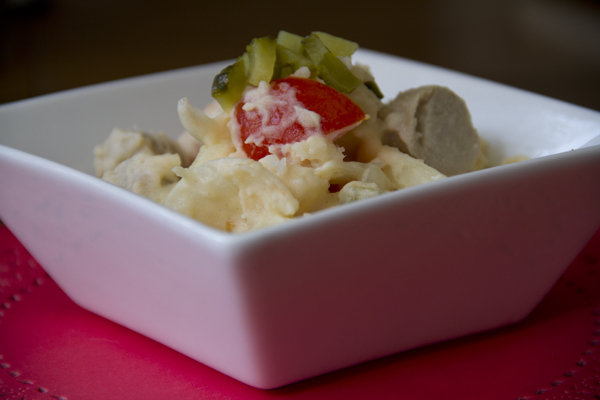
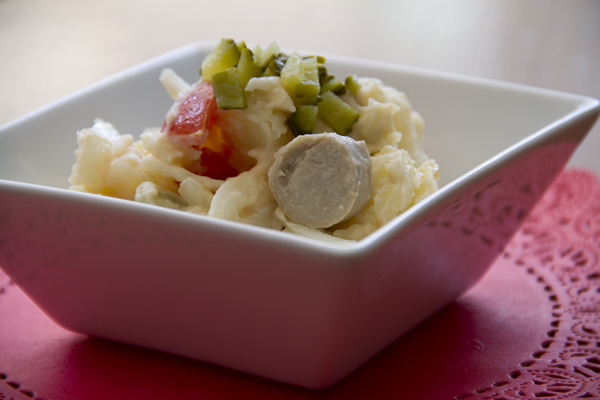
Ensalada alemana

Aprovechando que todavía no hace mucho frío, aunque parece evidente que Winter is Coming, os presentamos una sencilla receta que se puede preparar para cualquier reunión familiar, encuentro con amigos o comida del día a día, incluso dejándola hecha el día anterior.

Pics and Cakes

**¿Qué necesitamos? **

(4-6 personas)

  •       2-3 patatas grandes
  •       3-4 salchichas
  •       1 cebolla
  •       2 tomate -       3-4 pepinillos

¿Cómo lo hacemos?

  • Cocemos las patas lavadas con piel.

  • Pinchamos las patatas con un “pincho catador” (un tenedor o cualquier utensilio que sirva para ver si las patatas están cocidas). Cuando estén listas, retiramos, pelamos, troceamos y reservamos.

  • En una sartén, con un chorro de aceite, ponemos las salchichas y las hacemos y las cortamos en tacos. Una vez listas reservamos.

  • Mientras tanto, podemos aprovechar para partir una cebolla en tiras y picar los tomates en cuadrados.

  • Mezclamos todo en una ensaladera grande y añadimos la salsa mostanesa (mayonesa y mostaza en proporción 4 a 1).

  • Por último, dejamos enfriar en la nevera.

Consejos:

  • A Palstelera le encantan los pepinillos agridulces, así que el consejo es evidente, poned pepinillos agridulces.
  • Las proporciones de mayonesa y mostaza son orientativas. Depende del tipo de mostaza que utilices y de cómo te guste el sabor si más suave o más picante.

Pics and Cakes

[English version] GERMAN-STYLE SALAD **Ingredients:- 2-3 large potatoes

  • 3-4 sausages

  • 1 onion

  • 2 tomatoes

  • 3-4 pickles 

  • Cook the potatoes with peel.

  • Pierce the potatoes with a “pincho catador” (a fork or any other cooking tool to check when the potatoes are boiled). When ready, peel them off and cut into pieces (medium size).

  • Add some olive oil in a saucepan and cook the sausages. Cut into pieces (medium size).

  • Slice onion and chop tomatoes.

  • *Put all the ingredients into a large salad bowl and add the special sauce (mayonnaise and mustard in a proportion 4:1) *

  • *Place into fridge until serving. *

   Tips:- Use sweet and sour pickles (German style) and it will be much better!- The measures for the sauce are up to you and it will depend on the kind of mustard you use.

2 de septiembre de 2012 · 2 min · Cesmm

German-Style Salad

Taking advantage of the fact that it’s not too cold yet, though it’s clearly true that Winter is Coming, here’s a simple recipe you can put together for any family gathering, get-together with friends, or just an everyday meal — you can even make it the day before.

Pics and Cakes

What do we need?

(serves 4-6)

  •   2-3 large potatoes
    
  •   3-4 sausages
    
  •   1 onion
    
  •   2 tomatoes
    
  •   3-4 pickles
    

How do we make it?

  • Boil the potatoes with the skin on, washed.

  • Poke the potatoes with a “pincho catador” (a fork or any utensil that lets you check if the potatoes are done). Once they’re ready, take them out, peel, chop into pieces and set aside.

  • In a frying pan with a splash of oil, cook the sausages and then cut them into chunks. Set aside once done.

  • Meanwhile, slice an onion into strips and dice the tomatoes.

  • Mix everything in a large salad bowl and add the mostanesa sauce (mayonnaise and mustard in a 4-to-1 ratio).

  • Finally, let it chill in the fridge.

Tips:

  • Palstelera loves sweet-and-sour pickles, so the tip is obvious — go with sweet-and-sour pickles.
  • The mayo-to-mustard ratio is just a guideline. It depends on the kind of mustard you’re using and whether you like the flavor milder or with more kick.

Pics and Cakes

2 de septiembre de 2012 · 1 min · Cesmm

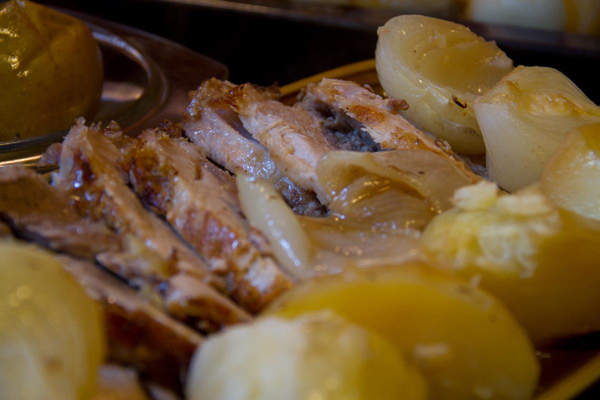
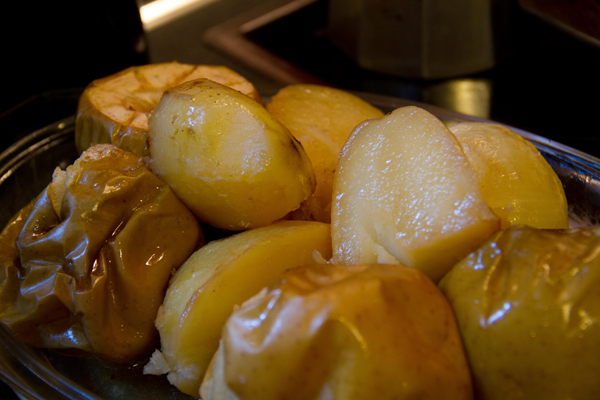
Cazuela San Isidro

Este nombre tan castizo no es más que una denominación familiar para un exquisito asado de cerdo acompañado con patatas, cebollas y manzana. La tradición con la que surgió este plato invita a prepararlo en una cazuela de barro comprada en la Pradera de San Isidro para celebrar el día del patrón madrileño. De todas maneras, ya sea con cazuela de barro, con santo de por medio o sin ello, el resultado será un plato facilísimo y perfecto para una comida con varios comensales.

Pics and Cakes

¿Qué necesitamos?

-       1 paletilla de cerdo (mejor con hueso) -       4 manzanas -       6 cebollas -       8 patatas -       300 ml de cerveza o vino blanco -       Sal y pimienta


¿Cómo lo hacemos?

  • Precalentamos el horno a 200ºC

  • Ponemos la paletilla en una bandeja de horno o en una fuente de barro preferiblemente honda. Salpimentamos toda la pieza por ambas partes.

  • Introducimos la fuente en el horno.  Lo dejamos 30 minutos aproximadamente para que se dore a fuego fuerte y luego le daremos la vuelta a la pieza de carne. A partir de este momento cuando veamos que la carne está demasiado seca, iremos regándola con cerveza o vino blanco.

  • Mientras tanto, aprovechamos para pelar las cebollas y patatas. Las cebollas las partiremos a la mitad y las patatas, en trozos grandes.

  • Por último, añadimos las patatas, cebollas y manzanas enteras a la fuente con la carne y bajamos el horno a una temperatura de 180º para que se haga lentamente durante 1 hora y media más aproximadamente.


Consejos:

  • Cada horno es un mundo así que la temperatura y el tiempo pueden variar de unos a otros. Os recomendamos que lo vigiléis sobre todo al principio para que la temperatura sea alta pero que no chamusque la carne.
  • La cantidad de líquido que vayamos a añadir dependerá de lo rápido que se evapore y cuánto absorba la paletilla.
  • Para presentarlo, recomendamos cortar en lonchas la carne asada y servirla junto a los demás ingredientes.

Pics and Cakes


[English version] ROAST PORK WITH ONIONS, POTATOES AND APPLES **Ingredients:- Pork shoulder arm roast

  • 4 apples

  • 6 onions

  • 8 potatoes

  • 300 ml beer or white wine

  • Salt and pepper 

  • Preheat oven at 200º

  • Put the piece of meat in a deep oven plate. Salt and pepper evenly the piece of meat

  • Enter the plate in the oven and leave for 30 minutes approximately until it golden brown. Then turn upside the piece of meat. From now, start adding some white wine or beer when the meat seems to be too dry.

  • Meanwhile, peal and cut the potatoes and onions. Cut half the onions and leave the potatoes in big portions.

  • Finally, add potatoes, onions and apples to the oven plate with the meat and decrease the oven temperature (180ºC). Leave it baking slowly for 1h30 more approximately. 

  Tips:- Every oven is different, so temperature and baking time may differ from some to others. We advice you to watch it carefully, especially at the beginning because high temperature is needed but not so much to have it burnt.

  • The amount of liquid will depend on how fast it will be absorbed by the meat or evaporated.
  • For serving, we recommend you to slice the meet and serve with the rest of ingredients. 


15 de julio de 2012 · 3 min · Palstelera

San Isidro Casserole

This very traditional Spanish name is just a family nickname for a delicious pork roast served with potatoes, onions, and apples. The tradition behind this dish calls for preparing it in a clay pot bought at the Pradera de San Isidro to celebrate Madrid’s patron saint day. Either way, with or without a clay pot, with or without the saint involved, the result is a super easy dish that’s perfect for a meal with several guests.

Pics and Cakes

What do we need?

  •   1 pork shoulder (bone-in is better)
    
  •   4 apples
    
  •   6 onions
    
  •   8 potatoes
    
  •   300 ml (1.25 cups) beer or white wine
    
  •   Salt and pepper
    

How do we make it?

  • Preheat the oven to 200°C (390°F)

  • Place the pork shoulder on an oven tray or, preferably, in a deep clay dish. Season the whole piece with salt and pepper on both sides.

  • Put the dish in the oven. Leave it for about 30 minutes so it browns at high heat, then flip the meat over. From this point on, whenever the meat looks too dry, we’ll baste it with beer or white wine.

  • Meanwhile, take the chance to peel the onions and potatoes. Cut the onions in half and the potatoes into large chunks.

  • Finally, add the potatoes, onions, and whole apples to the dish with the meat and lower the oven to 180°C (355°F) so it cooks slowly for about another hour and a half.

Tips:

  • Every oven is its own world, so temperature and time can vary from one to another. We recommend keeping an eye on it, especially at the beginning, so the temperature stays high but doesn’t burn the meat.
  • The amount of liquid you’ll need to add depends on how fast it evaporates and how much the shoulder absorbs.
  • To serve, we recommend slicing the roasted meat and plating it alongside the rest of the ingredients.

Pics and Cakes

[English version] ROAST PORK WITH ONIONS, POTATOES AND APPLES **Ingredients:- Pork shoulder arm roast

  • 4 apples

  • 6 onions

  • 8 potatoes

  • 300 ml (1.25 cups) beer or white wine

  • Salt and pepper

  • Preheat oven at 200°C (390°F)

  • Put the piece of meat in a deep oven plate. Salt and pepper evenly the piece of meat

  • Enter the plate in the oven and leave for 30 minutes approximately until it golden brown. Then turn upside the piece of meat. From now, start adding some white wine or beer when the meat seems to be too dry.

  • Meanwhile, peal and cut the potatoes and onions. Cut half the onions and leave the potatoes in big portions.

  • Finally, add potatoes, onions and apples to the oven plate with the meat and decrease the oven temperature (180°C / 355°F). Leave it baking slowly for 1h30 more approximately.

    Tips:- Every oven is different, so temperature and baking time may differ from some to others. We advice you to watch it carefully, especially at the beginning because high temperature is needed but not so much to have it burnt.

  • The amount of liquid will depend on how fast it will be absorbed by the meat or evaporated.

  • For serving, we recommend you to slice the meet and serve with the rest of ingredients.


15 de julio de 2012 · 3 min · Palstelera