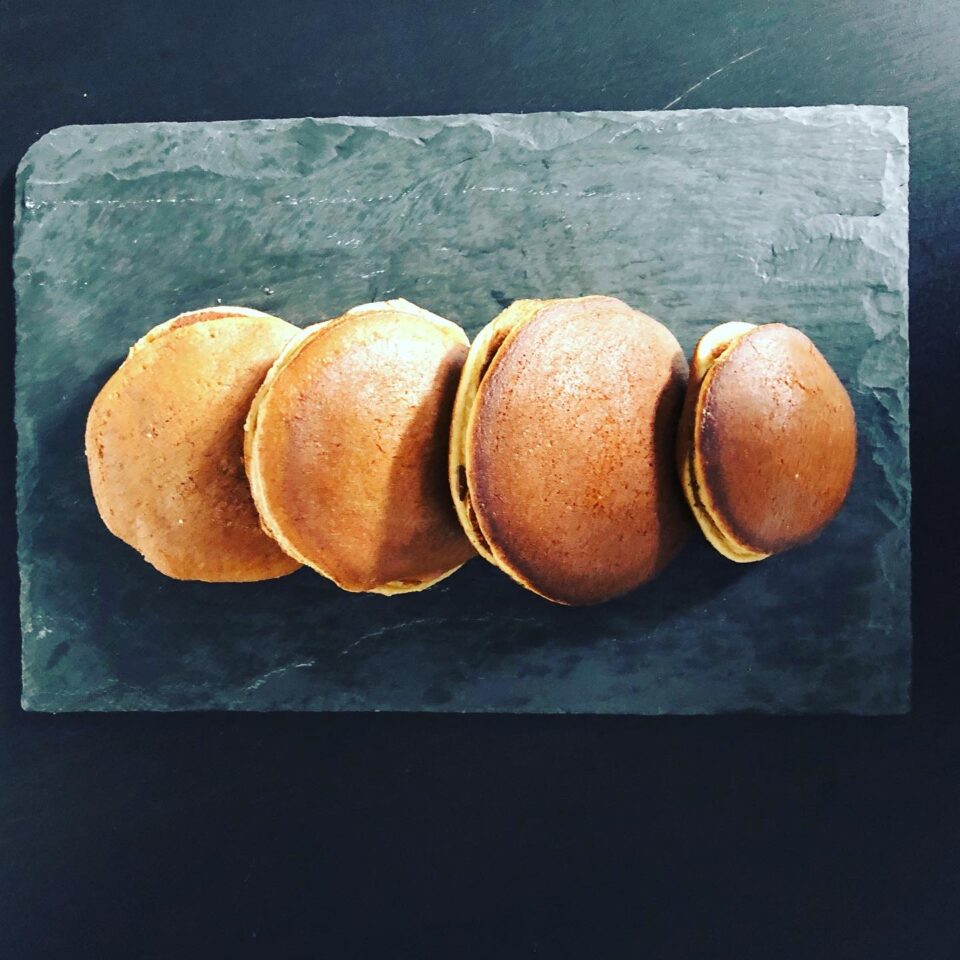
Dorayaki

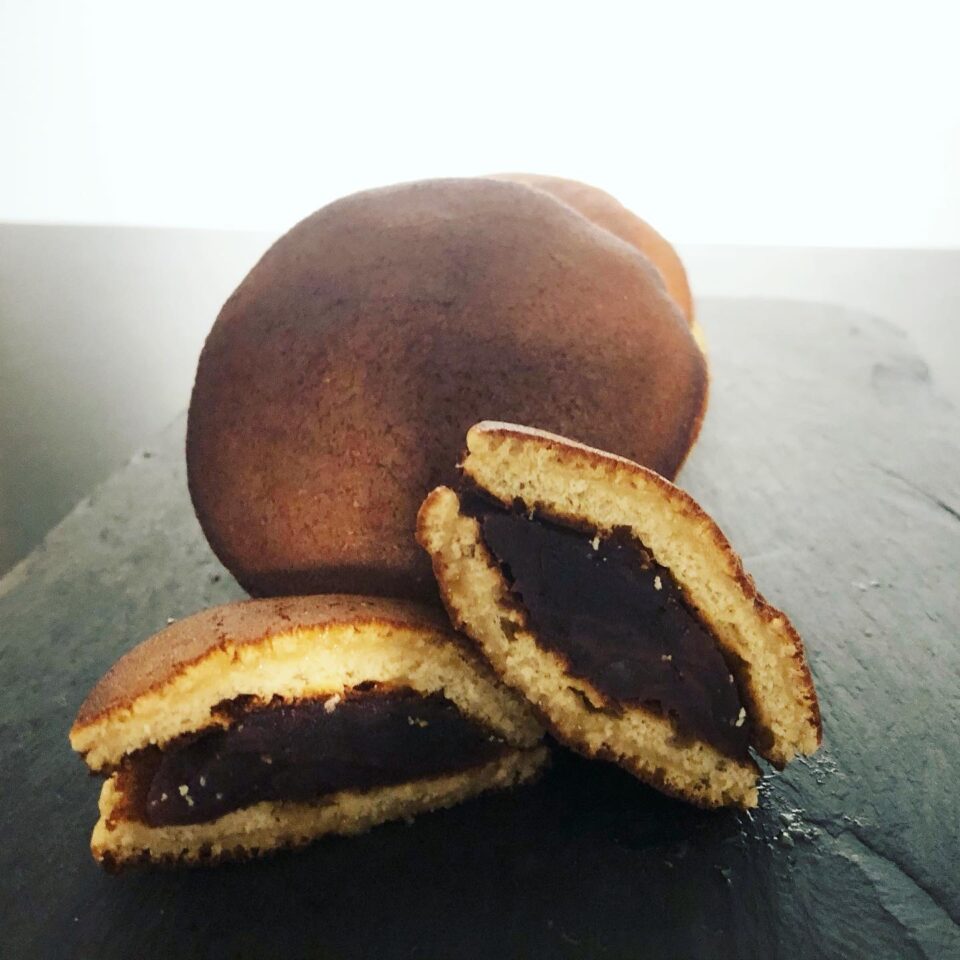
Dorayaki are a traditional Japanese sweet that you probably know as the favorite food of the cartoon character Doraemon. They're a type of pancake cooked in a pan and sandwiched together (kind of like a Codan shell, but a bit thicker). The traditional filling is anko, a sweet paste made from azuki beans and sugar. Anko is used in lots of Japanese desserts, so if you've never tried it, I encourage you to give it a chance — even if the words "bean" and "sweet" don't sound too tempting together in the same sentence.

This recipe comes from Masaharu Tada, the chef at the residence of the Japanese Ambassador in Spain.

Ingredients

Makes 5 units (that is, 10 pancakes)

  • 1.5 g (¼ tsp) baking soda
  • 15 ml (1 tbsp) water
  • 2 eggs
  • 6 g (1 tsp) mirin (I didn't have any and substituted white wine)
  • 15 g (1 tbsp) honey
  • 80 g (⅔ cup) powdered sugar
  • 100 g (¾ cup) flour
  • 300 g (10.5 oz) anko for the filling
Pics and Cakes

Method

  1. Mix the baking soda with the water until fully dissolved. It's better if the water is lukewarm to make this step easier.
  2. Beat the eggs in a bowl with a whisk and add the mirin, honey, and sugar, then whisk again.
  3. Once everything is combined, add the water and baking soda mixture and whisk again.
  4. Add the flour and whisk until you get a smooth, lump-free batter — but be careful not to overmix.
  5. To make sure the batter has no lumps at all, pass it through a strainer or sieve.
  6. Let the batter rest for 30 minutes so that the baking soda kicks in and you get a much fluffier, more homogeneous batter.
  7. Once the resting time is up, heat a pan, brush on a little vegetable oil, and pour a small amount of batter in the center — it'll spread on its own into a perfect circle.
  8. When bubbles appear on the surface, it's time to flip the pancake and cook the other side.
  9. Repeat with the rest of the batter.
  10. Once all the pancakes are done, all that's left is to pair them up and put the anko filling inside. The best way is to roll the anko into a ball, place it on one pancake, cover with its pair, and gently press them together so they close without breaking.
Pics and Cakes

PiC Tips

  • If you don't have or don't like anko, you can fill them with chocolate cream or pastry cream. Anko is the original version and, besides being delicious, it's easier to handle for this recipe since it's a more compact filling.
  • The heat of the pan will depend on your stove. You need to keep an eye on them so the dorayaki turn out golden on the outside but well cooked on the inside. I made them on medium heat on an induction cooktop.
  • It's a fairly sweet batter and since the anko is also sweet, I think you could get away with reducing the amount of powdered sugar a little.
28 de septiembre de 2020 · 3 min · Palstelera

Dorayaki

Los dorayaki son un dulce típico de Japón que es probable que conozcas por ser una de las comidas favoritas del personaje de dibujos Doraemon. Se trata de un tipo de tortitas hechas en la sartén y que se unen a modo de sándwich (como si fuera una concha Codan pero más gordita). El relleno tradicional es el anko que es una pasta dulce elaborada a partir de judías azuki y azúcar. El anko se utiliza en muchos postres japoneses así que si no lo has probado nunca, te animo a que le des una oportunidad aunque las palabras «judía» y «dulce» no te resulten muy tentadoras en la misma frase.

Esta receta es de Masaharu Tada, el chef de la residencia del Embajador de Japón en España.

Ingredientes

Salen 5 unidades (es decir, 10 tortitas)

  • 1,5 g de bicarbonato
  • 15 ml de agua
  • 2 huevos
  • 6 g de mirin (yo no tenía y lo sustituí por vino blanco)
  • 15 g de miel
  • 80 g de azúcar glas
  • 100 g de harina
  • 300 g de anko para el relleno
Pics and Cakes

Elaboración

  1. Mezclar el bicarbonato con el agua hasta que se disuelva del todo. Es preferible que el agua esté tibia para que te resulte más fácil este paso.
  2. Batir los huevos en un bol con unas varillas y añadir el mirin, la miel y el azúcar y batir de nuevo.
  3. Cuando esté todo integrado, añadir la mezcla de agua y bicarbonato y batir de nuevo.
  4. Añadir la harina y batir hasta obtener una masa lisa sin grumos pero, cuidado, que no queremos batir en exceso la mezcla.
  5. Para asegurarnos de que la masa no tiene ningún grumo hay que pasarla por un colador o tamiz.
  6. Dejar reposar la masa durante 30 minutos para que así el bicarbonato haga efecto y obtengamos una masa mucho más esponjosa y homogénea.
  7. Pasado el tiempo de reposo, ponemos a calentar una sartén, untamos un poco de aceite vegetal y echamos un poco de masa en el centro, ella sola se expandirá un poco hasta formar un círculo perfecto.
  8. Cuando salgan burbujas en la superficie es el momento de voltear la tortita y cocinar por el otro lado.
  9. Repetir con el resto de la masa.
  10. Una vez hechas todas las tortitas, solo queda emparejarlas y poner en su interior el relleno de anko. Para ello lo mejor es hacer una bola con el anko, ponerla sobre una de las tortitas, cubrir con su pareja e ir aplastándolas suavemente para que se cierre sin romperse.
Pics and Cakes

Consejos PiC

  • Si no tienes o no te gusta el anko puedes rellenarla con una crema de chocolate o crema pastelera. El anko es la versión original y además de estar delicioso es más manejable para esta receta por tratarse de un relleno más compacto.
  • El calor de la sartén va a depender de tu cocina. Tienes que ir vigilando que los dorayaki te queden dorados por fuera pero bien cocinados por dentro. Yo los hice a una temperatura media en la placa de inducción.
  • Es una masa bastante dulce y como el anko también lo es, creo que admitiría reducir un poco la cantidad de azúcar glas.
28 de septiembre de 2020 · 3 min · Palstelera