Poke de atún y aguacate con huancaína de mango

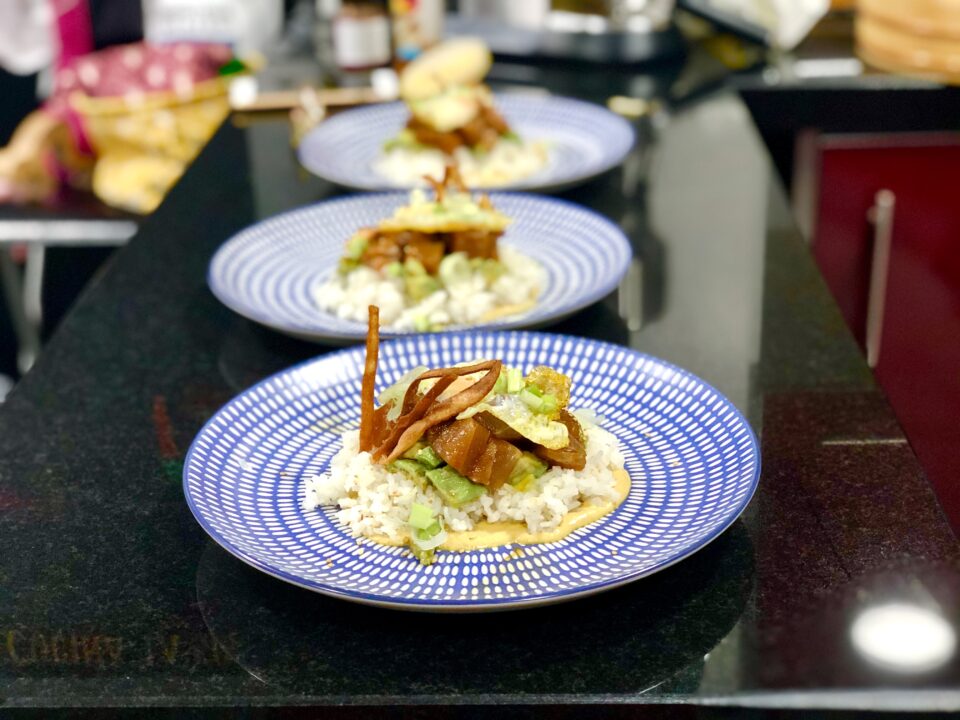
Esta receta la hice siguiendo los pasos exactos de Kitchen Club y la verdad es que si los ingredientes prometían ser una bomba de sabor, el resultado fue incluso mejor de lo esperado. Muchos sabores que combinaban a la perfección. Si acaso, el huevito frito sería un elemento prescindible pero la salsa estaba deliciosa y nos hizo repetir a todos los catadores. De presentación no me quedó ni de lejos tan espectacular como la receta original pero el sabor estuvo a la altura.
Pics and Cakes

Ingredientes

(Para 6 personas)

Salsa huancaína de mango

  • 80 g queso fresco (tipo burgos)
  • 100 ml leche evaporada
  • 60 ml puré de mango
  • 3 galletas tipo cracker o de soda
  • 1 rebanada de pan de molde remojada en leche
  • 2 cdas de cebolla picada
  • 40 g de nueces
  • 3 cdas pasta de ají amarillo (o al gusto)
  • ½ cdta comino
  • sal

Tartar de atún

  • 300 g de atún
  • Ralladura de 1 lima
  • 1 cdta shichimi togarashi (yo no tenía y usé pasta harissa)
  • 1 cda aceite sésamo
  • 30 ml salsa soja
  • 50 ml aceite oliva

Resto de la receta

  • 400 g de arroz sushi
  • 2 aguacates maduros
  • 6 huevos de codorniz
  • 2 tortillas de maíz
  • Sal, aceite y sésamo

Elaboración

  1. Empezamos preparando la salsa huancaína. Salteamos la cebolla en una sartén con un poco de aceite de oliva a fuego fuerte, debe estar dorada pero crujiente.
  2. En un robot de cocina agregamos la cebolla y el resto de ingredientes, trituramos hasta conseguir una crema.
  3. Corregimos el punto de sal. Reservamos.
  4. Picamos el atún en dados medianos y lo aliñamos con ralladura de lima, harissa, aceite de sésamo, salsa de soja y aceite de oliva. Removemos con cuidado y reservamos.
  5. Cortamos los aguacates en dados medianos y aliñamos con sal y aceite de oliva (les podemos dejar los huesos hasta el momento de emplatar para que no se oxiden o echar un poquito de zumo de lima).
  6. Cortamos las tortillas de maíz en tiras y freímos hasta que queden crujientes pero que no se nos quemen (se doran bastante rápido y al enfriar quedan más duras). Reservamos.
  7. Freímos los huevos de codorniz con puntilla.
  8. Llegada la hora de emplatar, ponemos una buena cantidad de salsa en cada plato, luego colocamos el arroz sushi sin aplastar, añadimos el aguacate aliñado, el tartar de atún y terminamos con el huevo de codorniz y las tiras de tortillas de maíz.
  9. Decoramos con cebolleta fresca y sésamo.

Consejos PiC

  • La pasta de ají amarillo la puedes encontrar fácilmente en tiendas de alimentación de productos latinos. Lo mismo para el puré de mango que lo suelen tener congelado (muy buena opción si no es época de mangos o no los encontramos maduros).
  • No he puesto cómo hice el arroz tipo sushi porque lo hice en la arrocera y después un poco de «trampa» porque usé unos polvos de un preparado que ya vienen con la sal, azúcar y vinagre correspondientes. Yo me los traje de Japón pero en tiendas de productos asiáticos seguramente los puedas encontrar.
  • Recuerda congelar el pescado al menos 24 horas para evitar problemas con el anisaki.
29 de septiembre de 2020 · 3 min · Palstelera

Tuna and Avocado Poke with Mango Huancaína

I made this recipe following the exact steps from Kitchen Club, and honestly, if the ingredients promised to be a flavor bomb, the result was even better than expected. So many flavors that combined perfectly. If anything, the little fried egg would be a dispensable element, but the sauce was delicious and made all the tasters go back for seconds. Presentation-wise it didn't turn out anywhere near as spectacular as the original recipe, but the flavor was up to par.

Pics and Cakes

Ingredients

(Serves 6)

Mango huancaína sauce

  • 80 g (2.8 oz) fresh cheese (burgos-style)
  • 100 ml (scant ½ cup) evaporated milk
  • 60 ml (¼ cup) mango purée
  • 3 cracker or soda-style biscuits
  • 1 slice of sandwich bread soaked in milk
  • 2 tbsp chopped onion
  • 40 g (1.4 oz) walnuts
  • 3 tbsp ají amarillo paste (or to taste)
  • ½ tsp cumin
  • salt

Tuna tartare

  • 300 g (10.5 oz) tuna
  • Zest of 1 lime
  • 1 tsp shichimi togarashi (I didn't have any and used harissa paste)
  • 1 tbsp sesame oil
  • 30 ml (2 tbsp) soy sauce
  • 50 ml (3.5 tbsp) olive oil

Rest of the recipe

  • 400 g (14 oz) sushi rice
  • 2 ripe avocados
  • 6 quail eggs
  • 2 corn tortillas
  • Salt, oil and sesame seeds

Method

  1. Start by making the huancaína sauce. Sauté the onion in a pan with a little olive oil over high heat — it should be golden but still crunchy.
  2. In a food processor, add the onion and the rest of the ingredients, and blitz until you get a creamy sauce.
  3. Adjust the salt. Set aside.
  4. Chop the tuna into medium dice and dress it with lime zest, harissa, sesame oil, soy sauce and olive oil. Stir gently and set aside.
  5. Cut the avocados into medium dice and dress with salt and olive oil (you can leave the pits in until plating so they don't oxidize, or add a little lime juice).
  6. Cut the corn tortillas into strips and fry until crispy but not burnt (they brown pretty quickly and harden as they cool). Set aside.
  7. Fry the quail eggs with crispy edges.
  8. When it's time to plate, spoon a generous amount of sauce on each plate, then place the sushi rice on top without packing it down, add the dressed avocado, the tuna tartare, and finish with the quail egg and the corn tortilla strips.
  9. Garnish with fresh spring onion and sesame seeds.

PiC Tips

  • You can easily find ají amarillo paste at Latin grocery stores. Same goes for mango purée, which they usually have frozen (a great option if it's not mango season or you can't find ripe ones).
  • I haven't included how I made the sushi rice because I used the rice cooker and then cheated a bit by using a powdered mix that already comes with the salt, sugar and vinegar. I brought mine from Japan, but you can probably find something similar at Asian grocery stores.
  • Remember to freeze the fish for at least 24 hours to avoid anisakis problems.
29 de septiembre de 2020 · 3 min · Palstelera

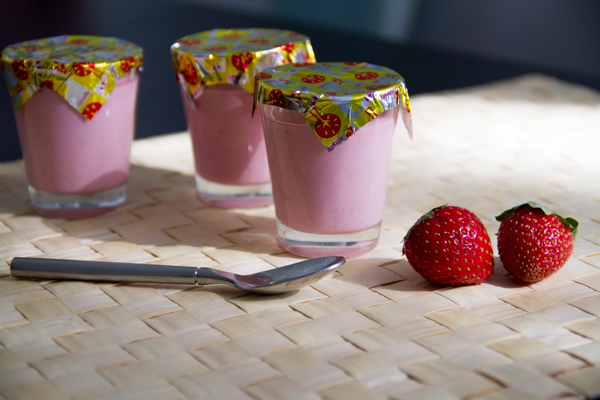
Petit suisse de fresa

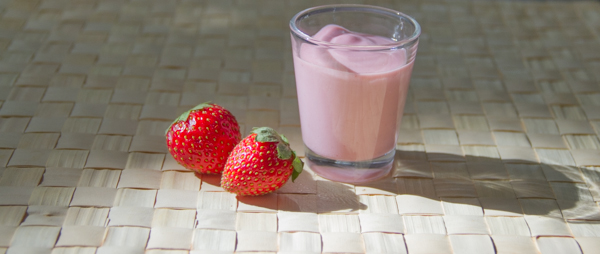
Para muchos es seguramente un recuerdo de infancia y apuesto que, de vez en cuando, tenéis la tentación de volver a comprarlos y comeros dos sin que vuestra madre os regañe. Pues bien, si os digo que los podéis hacer en casa y que el tamaño depende de vosotros, creo que ya estáis tardando en ir a comprar unos buenos fresones.

Pics and Cakes

¿Qué necesitamos?

  • 500 g de fresas
  • 250 g de queso crema (tipo Philadelphia)
  • 100 g de nata de montar
  • 150 g de azúcar
  • 2 cucharaditas de cuajada en polvo


 ¿Cómo lo hacemos?

  1. En primer lugar, lavamos las fresas y les quitamos el rabito. Las trituramos bien con la batidora hasta obtener un puré de fresas.
  2. En un vasito ponemos un poco del puré de fresas y disolvemos la cuajada. Reservamos.
  3. Ponemos el resto del puré de fresas en un cazo y lo calentamos hasta que hierva.
  4. Lo retiramos del fuego, añadimos la parte del puré donde habíamos disuelto la cuajada y lo removemos bien.
  5. Lo ponemos de nuevo al fuego, unos dos minutos sin dejar de remover. (CUIDADO en este paso ya que si ponéis muy fuerte el fuego  puede salpicaros el puré de fresas y quemaros. Os aseguro que el maldito es peor que el agua porque, al ser más denso, se te pega con ganas).
  6. Dejamos templar el puré un poquito y añadimos el resto de ingredientes (azúcar, queso y nata).
  7. Batimos todo bien con la batidora y vemos que ya habrá adquirido un bonito color de petit suisse.
  8. Solo nos queda verterlo en los vasitos que queramos servirlo y lo dejamos en la nevera toda la noche.

Pics and Cakes

Consejos:

– Nosotros utilizamos vasos de chupito, quedan muy bien y es una medida perfecta ya que tenemos que admitir que se trata de un postre consistente (ahora entiendo porque las madres no nos dejaban comer muchos…:-P). También podéis usar los vasos de cristal de yogures o cualquier vasito que tengáis.

– No puedo deciros a ciencia cierta cuánto tiempo nos pueden durar en la nevera pero con los ingredientes que lleva calculo que una semana aguantan sin problema.

 
4 de junio de 2015 · 2 min · Palstelera

Strawberry Petit Suisse

For many of you, this is probably a childhood memory, and I bet that every once in a while you get tempted to buy them again and eat two in a row without your mom scolding you. Well, if I tell you that you can make them at home and that the size is up to you, I think you should already be on your way out to buy some good ripe strawberries.

Pics and Cakes

What do we need?

  • 500 g (1.1 lb) strawberries
  • 250 g (9 oz / about 1 cup) cream cheese (Philadelphia type)
  • 100 g (about 1/2 cup) heavy whipping cream
  • 150 g (3/4 cup) sugar
  • 2 teaspoons powdered cuajada (rennet-based setting mix)


How do we make it?

  1. First, wash the strawberries and remove the stems. Blend them well with a hand blender until you get a strawberry purée.
  2. In a small glass, put a bit of the strawberry purée and dissolve the cuajada in it. Set aside.
  3. Put the rest of the strawberry purée in a saucepan and heat it until it boils.
  4. Remove from the heat, add the portion of purée with the dissolved cuajada, and stir well.
  5. Put it back on the heat for about two minutes, stirring constantly. (BE CAREFUL at this step because if the heat is too high the strawberry purée can splatter and burn you. Trust me, the stuff is worse than water — being denser, it really sticks to you.)
  6. Let the purée cool down a little and then add the rest of the ingredients (sugar, cheese, and cream).
  7. Blend everything well with the hand blender and you'll see it has already taken on a lovely petit suisse color.
  8. All that's left is to pour it into whatever little glasses you want to serve it in and leave it in the fridge overnight.

Pics and Cakes

Tips:

– We used shot glasses — they look really cute and it's the perfect portion size, since we have to admit this is a pretty rich dessert (now I understand why our moms wouldn't let us eat too many… :-P). You can also use the little glass yogurt jars or any small cup you have around.

– I can't tell you for sure how long they'll keep in the fridge, but with these ingredients I'd estimate they'll last a week without any problem.

4 de junio de 2015 · 2 min · Palstelera

Salmorejo

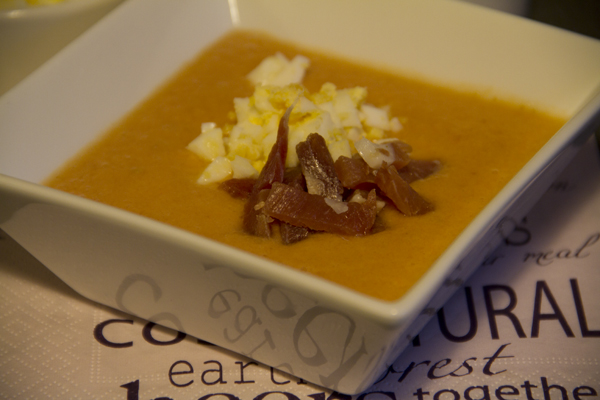
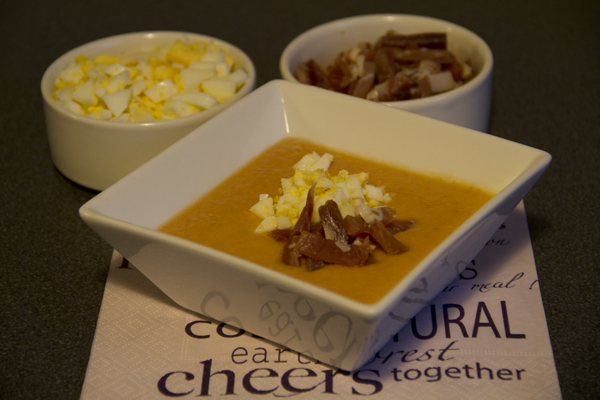
Salmorejo is one of my favorite dishes, and I can vouch for the fact that I’m not the only person in my family who, the moment we get back from a long trip abroad, the first thing we ask for at home is a good salmorejo and a proper Spanish potato omelette. This dish is typical of Córdoba and it shares similarities with gazpacho since, at the end of the day, it’s a kind of cold soup or cream with tomato as its base. Needless to say, the better the tomatoes you use, the better the salmorejo will turn out.

Pics and Cakes

What do we need?

(serves 6)

  •   1 kg (2.2 lb) ripe red tomatoes
    
  •   1 piece of bread
    
  •   150 ml (2/3 cup) olive oil (or to taste)
    
  •   1-2 cloves of garlic
    
  •   Salt
    
  •   Vinegar
    
  •   4 eggs
    
  •   200 g (7 oz) Serrano ham
    

How do we make it?

  • Wash the tomatoes, cut them into pieces and put them in a bowl.

  • Add the bread (it can be stale bread that we’ve soaked in water for a few minutes beforehand to soften it), salt, garlic, vinegar and a little olive oil.

  • Blend with the mixer until you get a smooth cream. Keep adding more olive oil until you get a soft, creamy texture. The amount of olive oil depends on personal taste. The more oil you add, the thicker it will get and the pinker it will look.

  • Taste and adjust the salt and vinegar to your liking. Set aside in the fridge.

  • Boil the eggs, peel them and cut them into small cubes.

  • Chop the Serrano ham into small cubes too.

  • Serve the salmorejo very cold with ham and egg on top.

Tips:

  • Some people prefer to peel the tomatoes for a finer result. To make this easier, you can blanch the tomatoes first to remove the skin comfortably.
  • You can make the salmorejo a bit lighter by skipping the bread and reducing the amount of oil.
  • As always, garlic is up to personal taste, but don’t go overboard or you’ll kill the flavor.

Pics and Cakes

*[English version] SALMOREJO (Spanish cold tomatoe soup)

  • **Ingredients (serves 6):- 1 kg ripe red tomatoes
  • Bread

  • 150 ml olive oil

  • Vinegar

  • Salt

  • 1-2 cloves of garlic- 4 eggs- 200 g cured ham

  • Wash and cut tomatoes into pieces. Place into a large bowl.

  • Add bread (you can use stale bread so put it before with some water in order to soften it), salt, garlic, vinegar and a bit of olive oil.

  • Blend all the ingredients with a mixer or blender until you get a smooth cream. Add more olive oil until creamy and soft. (The amount of olive oil is up to you).

  • Try and add more salt and vinegar if necessary. Place into fridge.

  • Boil the eggs, peel them and cut into small pieces.

  • Cut ham into small pieces.

  • Serve cold salmorejo with some egg and ham in the top.

    Tips:- You can peel the tomatoes. For making it easier, scald tomatoes in boiling water.

  • If you want to prepare a lighter version, avoid adding bread and reduce the amount of olive oil.

  • Use garlic according to your preferences but don’t add too much or you won’t taste the other flavours!


Comments

zordor (2012-08-21 05:56:31):

Haha I can vouch for it, I can vouch that the first thing we need to see on the table is salmorejo and potato omelette :) Ufff you’ve made me so hungry! Well, not even hungry! Salmorejo is something you can eat even when you’re not hungry!

Marisa (2012-08-21 09:26:34):

Yummmm! I’m making it tomorrow

20 de agosto de 2012 · 3 min · Palstelera

Salmorejo

El salmorejo es uno de mis platos favoritos y doy fe de que no soy la única persona en mi familia que nada más volver de un viaje largo por el extranjero, lo primero que pedimos para comer en casa es un buen salmorejo y una tortilla de patata como dios manda. Este plato es típico de Córdoba y tiene similitudes con el gazpacho ya que a fin de cuentas es una especie de sopa o crema fría cuya base es el tomate. Ni qué decir tiene, por tanto, que cuanto mejores sean los tomates que utilicemos mejor nos saldrá el salmorejo.

 Pics and Cakes

¿Qué necesitamos?

(6 personas)

-       1 kg de tomates rojos maduros -       1 trozo de pan -       150 ml de aceite de oliva (o al gusto) -       1-2 dientes de ajo -       Sal -       Vinagre -       4 huevos -       200 g de jamón serrano


¿Cómo lo hacemos?

  • Lavamos los tomates, los cortamos en trozos y los ponemos en un cuenco.

  • Añadimos el pan (puede ser pan duro que habremos puesto a remojar unos minutos antes para que se reblandezca), sal, ajo, vinagre y un poquito de aceite.

  • Batimos con la batidora hasta que se quede una crema fina. Vamos añadiendo más aceite de oliva hasta que se quede una textura suave y cremosa. La cantidad de aceite de oliva depende del gusto de cada uno. Cuanto más aceite añadamos más espeso nos quedará y tendrá un tono más rosita.

  • Probamos y rectificamos la sal y el vinagre al gusto. Reservamos en la nevera.

  • Cocemos los huevos, los pelamos y los cortamos en cuadraditos pequeños.

  • Troceamos el jamón serrano también en pequeños taquitos.

  • Servimos el salmorejo muy frío con jamón y huevo por encima.


Consejos:

  • Hay gente que prefiere pelar los tomates para que el resultado final sea más fino. Para facilitar la tarea podéis escaldar los tomates antes y así quitar la piel cómodamente.
  • Se puede hacer el salmorejo un poco más ligero si no le añadimos pan y reducimos la cantidad de aceite.
  • Como siempre el ajo dependerá del gusto de cada uno pero no conviene echar en exceso para no matar el sabor.


Pics and Cakes

*[English version] SALMOREJO (Spanish cold tomatoe soup) * **Ingredients (serves 6):- 1 kg ripe red tomatoes

  • Bread

  • 150 ml olive oil

  • Vinegar

  • Salt

  • 1-2 cloves of garlic- 4 eggs- 200 g cured ham 

  •  Wash and cut tomatoes into pieces. Place into a large bowl.

  • Add bread (you can use stale bread so put it before with some water in order to soften it), salt, garlic, vinegar and a bit of olive oil.

  • Blend all the ingredients with a mixer or blender until you get a smooth cream. Add more olive oil until creamy and soft. (The amount of olive oil is up to you).

  • Try and add more salt and vinegar if necessary. Place into fridge.

  • Boil the eggs, peel them and cut into small pieces.

  • Cut ham into small pieces.

  • Serve cold salmorejo with some egg and ham in the top.

   Tips:- You can peel the tomatoes. For making it easier, scald tomatoes in boiling water.

  • If you want to prepare a lighter version, avoid adding bread and reduce the amount of olive oil.
  • Use garlic according to your preferences but don’t add too much or you won’t taste the other flavours!

20 de agosto de 2012 · 3 min · Palstelera