Dorayaki

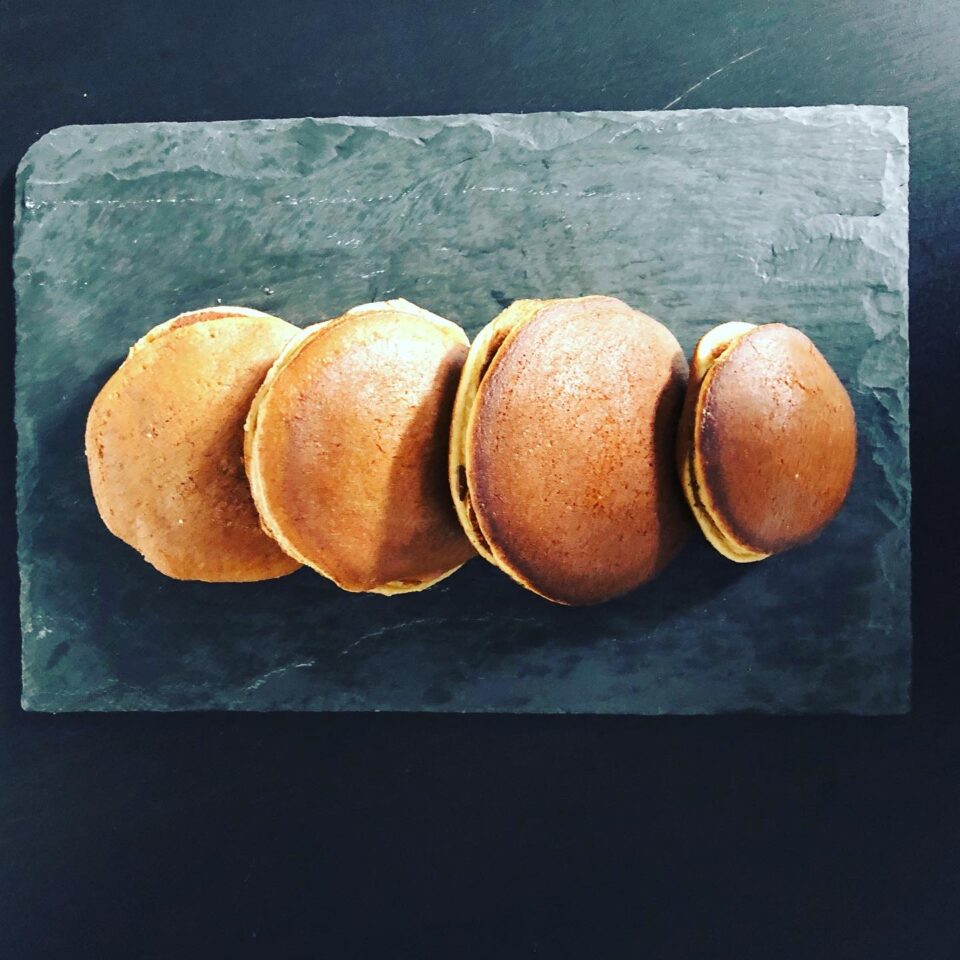
Dorayaki are a traditional Japanese sweet that you probably know as the favorite food of the cartoon character Doraemon. They're a type of pancake cooked in a pan and sandwiched together (kind of like a Codan shell, but a bit thicker). The traditional filling is anko, a sweet paste made from azuki beans and sugar. Anko is used in lots of Japanese desserts, so if you've never tried it, I encourage you to give it a chance — even if the words "bean" and "sweet" don't sound too tempting together in the same sentence.

This recipe comes from Masaharu Tada, the chef at the residence of the Japanese Ambassador in Spain.

Ingredients

Makes 5 units (that is, 10 pancakes)

  • 1.5 g (¼ tsp) baking soda
  • 15 ml (1 tbsp) water
  • 2 eggs
  • 6 g (1 tsp) mirin (I didn't have any and substituted white wine)
  • 15 g (1 tbsp) honey
  • 80 g (⅔ cup) powdered sugar
  • 100 g (¾ cup) flour
  • 300 g (10.5 oz) anko for the filling
Pics and Cakes

Method

  1. Mix the baking soda with the water until fully dissolved. It's better if the water is lukewarm to make this step easier.
  2. Beat the eggs in a bowl with a whisk and add the mirin, honey, and sugar, then whisk again.
  3. Once everything is combined, add the water and baking soda mixture and whisk again.
  4. Add the flour and whisk until you get a smooth, lump-free batter — but be careful not to overmix.
  5. To make sure the batter has no lumps at all, pass it through a strainer or sieve.
  6. Let the batter rest for 30 minutes so that the baking soda kicks in and you get a much fluffier, more homogeneous batter.
  7. Once the resting time is up, heat a pan, brush on a little vegetable oil, and pour a small amount of batter in the center — it'll spread on its own into a perfect circle.
  8. When bubbles appear on the surface, it's time to flip the pancake and cook the other side.
  9. Repeat with the rest of the batter.
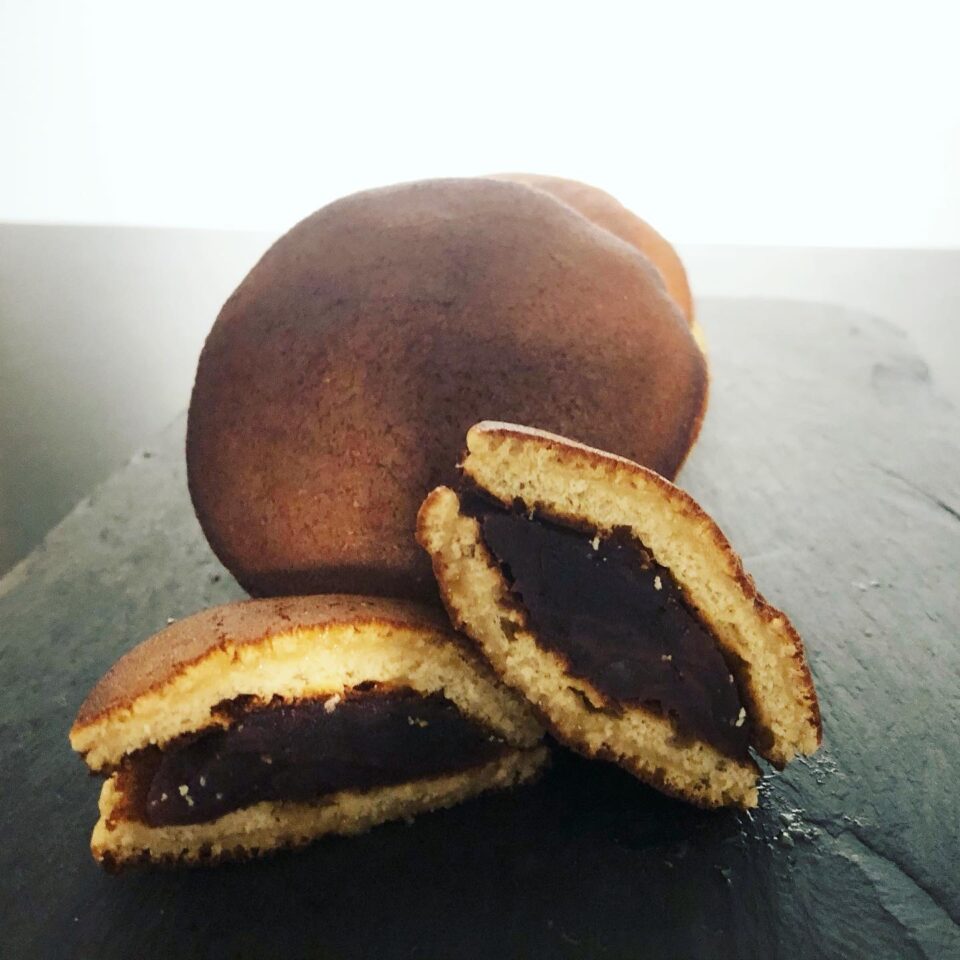
  10. Once all the pancakes are done, all that's left is to pair them up and put the anko filling inside. The best way is to roll the anko into a ball, place it on one pancake, cover with its pair, and gently press them together so they close without breaking.
Pics and Cakes

PiC Tips

  • If you don't have or don't like anko, you can fill them with chocolate cream or pastry cream. Anko is the original version and, besides being delicious, it's easier to handle for this recipe since it's a more compact filling.
  • The heat of the pan will depend on your stove. You need to keep an eye on them so the dorayaki turn out golden on the outside but well cooked on the inside. I made them on medium heat on an induction cooktop.
  • It's a fairly sweet batter and since the anko is also sweet, I think you could get away with reducing the amount of powdered sugar a little.
28 de septiembre de 2020 · 3 min · Palstelera

Dorayaki

Los dorayaki son un dulce típico de Japón que es probable que conozcas por ser una de las comidas favoritas del personaje de dibujos Doraemon. Se trata de un tipo de tortitas hechas en la sartén y que se unen a modo de sándwich (como si fuera una concha Codan pero más gordita). El relleno tradicional es el anko que es una pasta dulce elaborada a partir de judías azuki y azúcar. El anko se utiliza en muchos postres japoneses así que si no lo has probado nunca, te animo a que le des una oportunidad aunque las palabras «judía» y «dulce» no te resulten muy tentadoras en la misma frase.

Esta receta es de Masaharu Tada, el chef de la residencia del Embajador de Japón en España.

Ingredientes

Salen 5 unidades (es decir, 10 tortitas)

  • 1,5 g de bicarbonato
  • 15 ml de agua
  • 2 huevos
  • 6 g de mirin (yo no tenía y lo sustituí por vino blanco)
  • 15 g de miel
  • 80 g de azúcar glas
  • 100 g de harina
  • 300 g de anko para el relleno
Pics and Cakes

Elaboración

  1. Mezclar el bicarbonato con el agua hasta que se disuelva del todo. Es preferible que el agua esté tibia para que te resulte más fácil este paso.
  2. Batir los huevos en un bol con unas varillas y añadir el mirin, la miel y el azúcar y batir de nuevo.
  3. Cuando esté todo integrado, añadir la mezcla de agua y bicarbonato y batir de nuevo.
  4. Añadir la harina y batir hasta obtener una masa lisa sin grumos pero, cuidado, que no queremos batir en exceso la mezcla.
  5. Para asegurarnos de que la masa no tiene ningún grumo hay que pasarla por un colador o tamiz.
  6. Dejar reposar la masa durante 30 minutos para que así el bicarbonato haga efecto y obtengamos una masa mucho más esponjosa y homogénea.
  7. Pasado el tiempo de reposo, ponemos a calentar una sartén, untamos un poco de aceite vegetal y echamos un poco de masa en el centro, ella sola se expandirá un poco hasta formar un círculo perfecto.
  8. Cuando salgan burbujas en la superficie es el momento de voltear la tortita y cocinar por el otro lado.
  9. Repetir con el resto de la masa.
  10. Una vez hechas todas las tortitas, solo queda emparejarlas y poner en su interior el relleno de anko. Para ello lo mejor es hacer una bola con el anko, ponerla sobre una de las tortitas, cubrir con su pareja e ir aplastándolas suavemente para que se cierre sin romperse.
Pics and Cakes

Consejos PiC

  • Si no tienes o no te gusta el anko puedes rellenarla con una crema de chocolate o crema pastelera. El anko es la versión original y además de estar delicioso es más manejable para esta receta por tratarse de un relleno más compacto.
  • El calor de la sartén va a depender de tu cocina. Tienes que ir vigilando que los dorayaki te queden dorados por fuera pero bien cocinados por dentro. Yo los hice a una temperatura media en la placa de inducción.
  • Es una masa bastante dulce y como el anko también lo es, creo que admitiría reducir un poco la cantidad de azúcar glas.
28 de septiembre de 2020 · 3 min · Palstelera

Bollos suizos

Hay recetas que las ves y mueres de ganas por hacerlas alguna vez en tu vida. El resultado de las fotos en las webs es tan perfecto que te resulta imposible creer que puedas conseguir que te quede algo, al menos, similar. Pues bien, eso me pasó a mí con estos increíbles bollos suizos del blog de María Lunarillos y he de decir que lo conseguí: quedaron sencillamente espectaculares. Os pongo la receta tal y como yo la hice, ya que los tiempos de levado difieren mucho de la receta original. Vamos, que no es para unas prisas pero merece la pena…

suizos1


¿Qué necesitamos?

  • 500 g de harina de fuerza
  • 250 g de leche entera
  • Dos huevos
  • 90 g de azúcar
  • 5 g de sal
  • 3 g de levadura seca de panadería
  • 80 g de mantequilla pomada
  • Un huevo batido para pintar
  • Azúcar y agua para decorar

 ¿Cómo lo hacemos?

  1. En primer lugar, disolvemos la levadura en 100 g de leche templada y añadimos 100 g de harina de fuerza. Mezclamos bien con una cuchara de palo, tapamos el bol y dejamos que fermente hasta que le salgan burbujas.
  2. Tras el tiempo necesario de reposo, añadimos todos los demás ingredientes, excepto la mantequilla. Empezamos mezclando con la cuchara de madera y finalmente con las manos. Dejamos reposar 10 minutos y amasamos de nuevo simplemente cogiendo un pellizco de la masa desde fuera y plegándolo hacia adentro. Repetimos este tiempo de reposo y pequeño amasado otras dos veces. Notaréis que la masa se vuelve menos pegajosa y más elástica.
  3.  Añadimos la mantequilla en pomada y volvemos a amasar. En este caso yo lo hice con las varillas de amasado pero puede hacerse perfectamente a mano. Tiene que quedar una masa bastante lisa.
  4. Untamos un bol limpio con un poco de aceite de girasol y colocamos la masa tapada con film transparente. Dejamos reposar hasta que doble el volumen. Como hacía bastante fresco en mi cocina, yo la tuve toda la noche (en total, la dejé levando unas 20 horas).
  5. Cuando haya doblado el volumen, sacamos la masa sobre la encimera enharinada y la aplastamos con las manos para quitarle todo el aire. Vamos formando bolitas de 60 gramos.
  6. Para formar las bolas perfectas, las pellizcamos para formar una especie de hatillo y luego las boleamos. Como una imagen vale más que mil palabras, podéis ver esta técnica en el vídeo de María Lunarillos.
  7. Dejamos reposar las bolas en una bandeja de horno con papel vegetal tapadas con film transparente hasta que doblen su volumen. En mi caso, las dejé casi 4 horas y no llegaron a doblar el volumen pero fue suficiente.
  8. Precalentamos el horno a 210ºC y vamos pintando los bollos con huevo con cuidado de no aplastarlos. Los pintamos dos veces dejando unos 10 minutos entre mano y mano para que se seque ligeramente la película formada por el huevo.
  9. Con un cuchillo de sierra muy afilado hacemos un corte profundo en el centro y echamos azúcar humedecida con agua (como la que usamos para los roscones de reyes).
  10. Metemos en el horno en la parte más baja (calor arriba y abajo sin aire), bajamos la temperatura a 200ºC y horneamos 12 minutos. Por último, horneamos 1 minuto más con el aire encendido.
  11. Sacamos y dejamos enfriar todo lo que vuestras ansias por hincarle el diente os permitan.

suizos2

Consejos:

– No es una receta difícil pero requiere tiempo y paciencia. Es preferible fiarse del aspecto de la masa que de los tiempos que os indico, ya que dependiendo de la temperatura ambiente y otros factores estos pueden variar considerablemente.

– En muchas recetas hay ingredientes fácilmente sustituibles por otros pero en esta ocasión, no podéis cambiar la harina de fuerza por harina normal ni la levadura de panadería por levadura química.

suizos3

 
17 de noviembre de 2017 · 3 min · Palstelera

Swiss Buns

There are recipes you see and immediately you're dying to try at least once in your life. The results in the photos online look so perfect it seems impossible you'll ever get something even remotely similar. Well, that's exactly what happened to me with these incredible Swiss buns from María Lunarillos's blog, and I have to say I pulled it off: they came out simply spectacular. I'm sharing the recipe just as I made it, since the proofing times are quite different from the original. Be warned, this isn't one for when you're in a rush, but it's totally worth it…

suizos1

What do we need?

  • 500 g (4 cups) bread flour
  • 250 g (1 cup) whole milk
  • Two eggs
  • 90 g (about 1/2 cup) sugar
  • 5 g (1 tsp) salt
  • 3 g (1 tsp) active dry yeast
  • 80 g (about 1/3 cup) softened butter
  • One beaten egg for glazing
  • Sugar and water for decorating

How do we make it?

  1. First, dissolve the yeast in 100 g (about 1/3 cup + 1 tbsp) of warm milk and add 100 g (about 3/4 cup) of bread flour. Mix well with a wooden spoon, cover the bowl, and let it ferment until you see bubbles forming.
  2. After the resting time, add all the other ingredients except the butter. Start mixing with the wooden spoon and finish with your hands. Let it rest for 10 minutes and knead again, simply pinching a bit of dough from the outside and folding it inward. Repeat this rest-and-quick-knead cycle two more times. You'll notice the dough becomes less sticky and more elastic.
  3. Add the softened butter and knead again. In my case I used the dough hooks on my mixer, but you can do it perfectly well by hand. You want to end up with a fairly smooth dough.
  4. Grease a clean bowl with a little sunflower oil and put the dough in, covered with plastic wrap. Let it rest until doubled in size. Since my kitchen was pretty cool, I left it overnight (about 20 hours of proofing in total).
  5. Once doubled, turn the dough out onto a floured countertop and press it down with your hands to release all the air. Form little balls of 60 g (about 2 oz) each.
  6. To get perfect balls, pinch them to form a sort of bundle and then roll them. Since a picture is worth a thousand words, you can see this technique in the video by María Lunarillos.
  7. Let the balls rest on a baking tray lined with parchment paper, covered with plastic wrap, until doubled in size. In my case, I left them for almost 4 hours and they didn't quite double, but it was enough.
  8. Preheat the oven to 210°C (410°F) and brush the buns with beaten egg, being careful not to flatten them. Brush them twice, leaving about 10 minutes between coats so the egg film dries slightly.
  9. With a very sharp serrated knife, make a deep cut down the center and sprinkle on sugar moistened with water (just like the kind we use for roscón de reyes).
  10. Place in the oven on the lowest rack (top and bottom heat, no fan), lower the temperature to 200°C (390°F), and bake for 12 minutes. Finish with 1 more minute with the fan turned on.
  11. Take them out and let them cool as long as your cravings to sink your teeth into one will let you.

suizos2

Tips:

– It's not a difficult recipe but it requires time and patience. It's better to trust the look of the dough than the times I give you, since depending on the room temperature and other factors they can vary considerably.

– In many recipes there are ingredients you can easily swap for others, but in this case, you cannot replace the bread flour with regular flour or the active dry yeast with baking powder.

suizos3

17 de noviembre de 2017 · 4 min · Palstelera

Banana Muffins

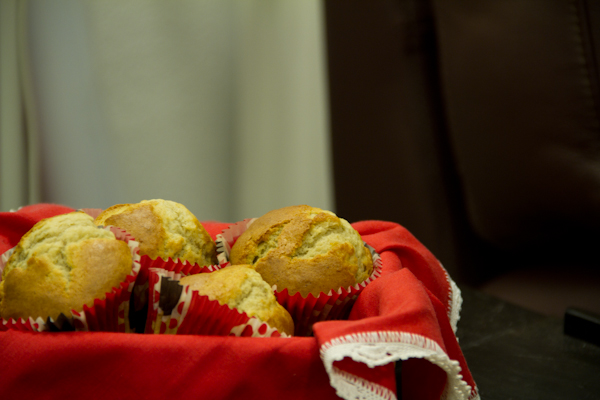
Today we’re bringing you a muffin recipe. Muffins are similar to Spanish magdalenas but, unlike those, they usually use butter instead of oil and the batter isn’t as smooth (you just mix the ingredients without having to beat them). Also, muffins can be either sweet or savory and they take a wide variety of “chunks” inside (chocolate chips, dried fruit, nuts, etc.). Don’t confuse them with the famous cupcakes that are so trendy these days, which are always sweet and decorated with buttercream or some other kind of frosting.

Pics and Cakes

What do we need?

  • 230 g (1¾ cups) all-purpose flour

  • 150 g (¾ cup) sugar

  • 1 teaspoon baking powder

  • 1/4 teaspoon baking soda

  • 1/4 teaspoon salt

  • 1 teaspoon cinnamon (optional)

  • 2 eggs

  • 110 g (½ cup) butter (room temperature)

  • 3 ripe bananas

  • 1 teaspoon vanilla extract (optional)

How do we make it?

  • Preheat the oven to 180°C (355°F).

  • In a bowl, combine all the dry ingredients (flour, sugar, baking powder, baking soda, salt and cinnamon).

  • In another bowl, mash the bananas with a fork until you get a purée. Add the lightly beaten eggs, the softened butter and the vanilla. Mix well.

  • Fold the banana mixture into the bowl with the dry ingredients. Using a spatula, mix until the ingredients are just combined, but don’t overmix. The batter will be a bit thick and lumpy.

  • Divide the batter into muffin molds, filling each one about 3/4 of the way since they’ll rise. Bake for about 20-25 minutes or until a toothpick inserted comes out completely clean.

Tips:

  • You can add walnuts or chocolate chips to this recipe by mixing them in with the dry ingredients.

  • The riper the bananas, the better. You can even use those ones that have gone ugly and a bit brown.

  • Even if you use paper liners, I recommend placing them in a metal muffin pan. Otherwise, the paper liners might not hold the weight and the batter will spill out.

    [English version] BANANA MUFFINS* Ingredients:-*

  • 230 g all-purpose flour

  • 150 g granulated sugar

  • 1 teaspoon baking powder

  • 1/4 teaspoon baking soda

  • 1/4 teaspoon salt

  • 1 teaspoon cinnamon (optional)

  • 2 eggs

  • 110 g butter (soften)

  • 3 ripe bananas

  • 1 teaspoon vanilla extract (optional)

  • Preheat oven to 180ºC.

  • Combine all dry ingredients in a large bowl (flour, sugar, baking powder, baking soda, salt and cinnamon).

  • In a different bowl, mash the bananas with a fork. Add lightly beaten eggs, soften butter and vanilla. Mix well.

  • With a rubber spatula or wooden spoon, lightly fold he wet ingredients (banana mixture) into the dry ingredients just until combined and the batter is thick and chunky. The important thing is not to over mix the batter. You do not want it smooth.

  • Bake about 20 -25 minutes or until a toothpick inserted in the center comes out clean.

Tips:

- You can add nuts or chocolate chips when combining the dry ingredients. - The riper bananas the better. You can use even those ones that have turned brown. - When using paper liners, use a muffin pan too. Otherwise paper liners might not be strong enough to hold the butter and the muffin shape will be ruined.

2 de octubre de 2014 · 3 min · Palstelera

Muffins de plátano

Hoy os traemos una receta de muffins. Los muffins son una especie de magdalenas pero, a diferencia de estas, suelen llevar mantequilla en lugar de aceite y la mezcla que hacemos no es tan fina (bastará con mezclar los ingredientes sin tener que batirlos). Además, los muffins se caracterizan porque pueden ser tanto dulces como salados y admiten una gran variedad de ’trozos’ en su interior (pepitas de chocolate, fruta deshidratada, frutos secos, etc.). No debemos confundirlos con los famosos* cupcakes* que tan de moda están ahora y que siempre son dulces y van decorados con crema de mantequilla u otro tipo de glaseado.

Pics and Cakes


¿Qué necesitamos?

  • 230 g de harina

  • 150 g de azúcar

  • 1 cucharadita de levadura Royal

  • 1/4 cucharadita de bicarbonato

  • 1/4 cucharadita de sal

  • 1 cucharadita de canela (opcional)

  • 2 huevos

  • 110 g de mantequilla (temperatura ambiente)

  • 3 plátanos maduros

  • 1 cucharadita de esencia de vainilla (opcional)


¿Cómo lo hacemos?

  • Precalentamos el horno a 180ºC.

  • Mezclamos en un bol todos los ingredientes secos (harina, azúcar, levadura, bicarbonato, sal y canela).

  • En otro bol ponemos los plátanos y los machacamos con ayuda de un tenedor hasta obtener un puré. Añadimos los huevos ligeramente batidos, la mantequilla blanda y la vainilla. Mezclamos todo bien.

  • Incorporamos la mezcla de plátanos al bol donde teníamos los ingredientes secos. Con ayuda de una espátula, mezclamos bien hasta que se integren los ingredientes, pero no debemos batirlo en exceso. La masa será un poco espesa e irregular.

  • Repartimos la masa en moldes para magdalenas llenando solo las 3/4 partes aproximadamente de cada uno ya que luego crecerán. Horneamos unos 20-25 minutos o hasta que pinchemos con una aguja de cocina y salga completamente limpia.


Consejos:

  • Podéis añadir nueces o pepitas de chocolate a esta receta incorporándolas a los ingredientes secos.

  • Los plátanos, cuanto más maduros mejor. Incluso podéis usar esos que ya se han puesto feos y un poco marrones.

  • Aunque utilicéis moldes de papel, os recomiendo que los coloquéis en una bandeja de metal especial para magdalenas. Si no, los moldes de papel pueden no aguantar el peso y se os desparramaría la mezcla.

    [English version] BANANA MUFFINSIngredients:-*

  • 230 g all-purpose flour

  • 150 g granulated sugar

  • 1 teaspoon baking powder

  • 1/4 teaspoon baking soda

  • 1/4 teaspoon salt

  • 1 teaspoon cinnamon (optional)

  • 2 eggs

  • 110 g butter (soften)

  • 3 ripe bananas

  • 1 teaspoon vanilla extract (optional)

  • Preheat oven to 180ºC.

  • Combine all dry ingredients in a large bowl (flour, sugar, baking powder, baking soda, salt and cinnamon).

  • In a different bowl, mash the bananas with a fork. Add lightly beaten eggs, soften butter and vanilla. Mix well.

  • With a rubber spatula or wooden spoon, lightly fold he wet ingredients (banana mixture) into the dry ingredients just until combined and the batter is thick and chunky. The important thing is not to over mix the batter. You do not want it smooth.

  •  Bake about 20 -25 minutes or until a toothpick inserted in the center comes out clean.

* *

Tips:

- You can add nuts or chocolate chips when combining the dry ingredients. - The riper bananas the better. You can use even those ones that have turned brown. - When using paper liners, use a muffin pan too. Otherwise paper liners might not be strong enough to hold the butter and the muffin shape will be ruined.

2 de octubre de 2014 · 3 min · Palstelera

Estonian Kringle

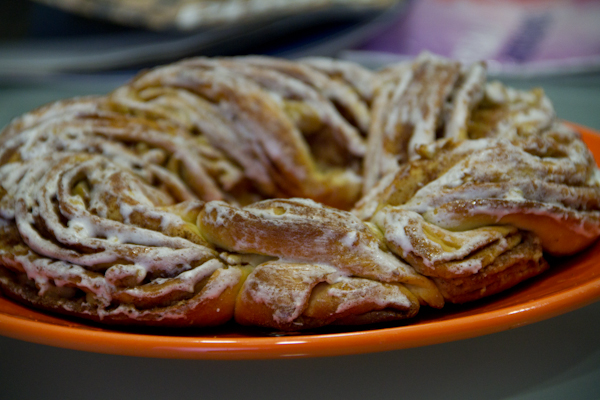
It’s not just that it seems like we haven’t published anything in ages — it’s actually true… almost three months without any blog action on PiC! The summer has been a bit hectic but here we are, back and loaded with new finger-licking recipes. Today I’m bringing you a recipe that could be considered the Nordic roscón de Reyes, and some say its shape is reminiscent of pretzels and the dough is brioche-style. In short, a sweet wonder we pulled from a Thermomix magazine but made without one to prove that any recipe is adaptable.

Pics and Cakes

What do we need?

For the dough:

  • 30 g (2 tbsp) sugar

  • The peel of 1/2 lemon (yellow part only)

  • 120 g (1/2 cup) milk

  • 30 g (2 tbsp) butter

  • 15 g fresh yeast

  • 1 egg yolk

  • 300 g (2.5 cups) bread flour

  • **1 pinch of salt

For the filling:

  • 50 g (3.5 tbsp) butter (room temperature)

  • 60 g (1/4 cup) sugar

  • 2 tablespoons cinnamon

  • 50 g (1/2 cup) chopped walnuts

For the glaze:

  • 20 g egg white

  • 50 g (1/2 cup) confectioners’ sugar

How do we make it?

  • If we have an electric coffee grinder or a food processor, we put the sugar with the lemon peel and grind it well until the lemon is incorporated into the sugar and we get a sort of paste. If we don’t have one, we can just grate the lemon peel and mix it with the sugar.

  • We heat the milk a little in the microwave and add it to the bowl with the sugar and lemon peel.

  • We add the butter and the yeast and stir until everything comes together nicely.

  • We add the egg yolk and mix well again.

  • Finally, we add the flour and the salt. We stir with a spoon or fork and then transfer the dough to a floured surface and knead by hand.

  • We form a ball with the dough and let it rest in the bowl covered with cling film until it doubles in size.

  • In the meantime, we prepare the filling. To do this, we mix the room-temperature butter with the sugar and the cinnamon.

  • We preheat the oven to 180°C (355°F).

  • Once the dough has doubled in size, we place it on a floured surface and roll it out with a rolling pin until we have a rectangle of about 40 x 50 cm (16 x 20 in).

  • We spread the filling cream over it and sprinkle the walnuts on top.

  • We roll up the dough (starting from the wider side).

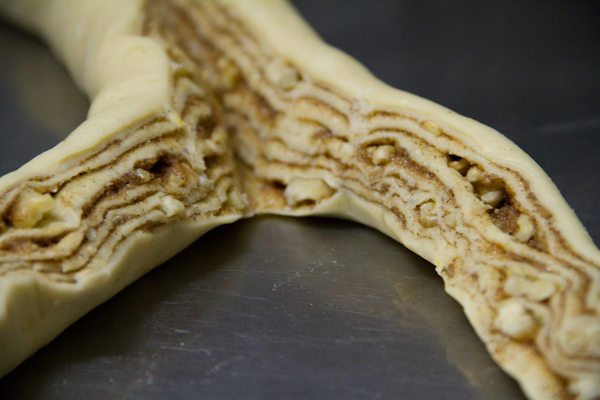
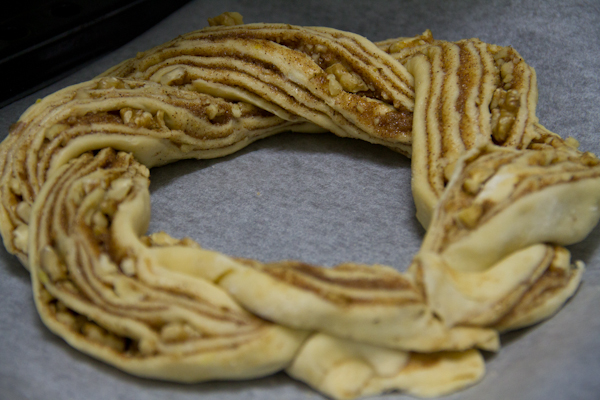
  • Once we have a sort of thin Swiss roll, we cut the log lengthwise down the middle, leaving one of the ends joined. When we cut it, we should see the alternating layers of dough and filling.

  • We cross each piece of dough to form a kind of braid (always keeping the layered side facing up).

  • Once everything is ‘braided’, we form a wreath and place it on a baking tray lined with parchment paper.

  • We bake for about 20 minutes.

  • While it’s baking, we prepare the glaze. To do this, we beat the egg whites a little with a fork and mix them with the confectioners’ sugar.

  • When we take the kringle out of the oven, we brush it with this glaze.

Pics and Cakes

Tips:

  • The lemon peel is optional. You can skip it or swap it for orange peel — for sure it’ll be delicious too.

  • If you want a whiter, thicker glaze, you can beat the egg whites with the sugar using an electric whisk. That’s how we made it, and that’s why the glaze looks like it does in the photo. If you beat it just with a fork, it’ll give the kringle a certain shine but it won’t be white and as thick.

  • Starting from this base, you can fill the dough with other nuts or even jam.

Pics and Cakes

[English version] ESTONIAN KRINGLE* *Ingredients: For the dough:

  • 30 g sugar

  • 1/2 lemon peel (only the yellow part)

  • 120 g milk

  • 30 g butter

  • 15 g fresh yeast

  • 1 egg yolk

  • 300 g strength

  • 1 pinch of salt

For the filling:

  • 50 g de butter (room temperature)

  • 60 g de sugar

  • 2 tbsp cinnamon

  • 50 g chopped walnuts

For the icing:

  • 20 g egg white

  • 50 g confectioners’ sugar

  • If you have a coffee grinder or food processor, place the sugar and the lemon peel on it and grind it until getting a sort of paste. If you don’t have a grinder, just mix sugar with grated lemon peel.

  • Heat the milk in the microwave and pour over the sugar.

  • Add the butter and yeast and stir well.

  • Add egg yolk and stir well again.

  • Then, add flour and salt. Mix with a spoon and fork and then knead the dough on a floury surface.

  • Make a dough ball and leave to rise into the bowl covered with cling film (until the dough has doubled in volume).

  • In the meanwhile, prepare the filling. Mix butter (room temperature) with sugar and cinnamon.

  • Preheat oven at 180º.

  • When the dough has doubled in volume, place on a floury surface and roll it out with a rolling pin until getting a rectangle (40 x 50 cm aprox.)

  • Spread the filling and sprinkle with chopped walnuts.

  • Roll up the dough (starting by the wider side).

  • Cut the log in half length-wise leaving one edge uncut.

  • Start braiding the two pieces, trying to keep the open layers exposed so the cut ends remain on top.

  • Pinch the ends together and form a wreath.

  • Bake for 20 minutes.

  • Prepare the icing. Whisk white eggs with a fork and add confectioners’ sugar. Mix well.

  • Out of the oven, brush the kringle with the sugar icing.

  • *Tips: - Lemon peel is optional. You can leave it out or use orange peel. For sure, it will be delicious too. - If you want a thicker and whiter sugar icing you can use an electric mixer with whisk attachment. The result will be more similar to our kringle shown in the picture. If you whisk only with fork you will have a lighter and clearer icing. - You can change the filling and use any nuts or jam you like.

24 de septiembre de 2013 · 5 min · Palstelera

Kringle Estonia

No solo es que parezca que llevamos siglos sin publicar sino que es cierto… ¡casi tres meses sin actividad bloguera en PiC! El verano ha sido un poco ajetreado pero aquí estamos de vuelta cargaditos con nuevas recetas para chuparse los dedos. Hoy os traigo una receta que podría considerarse el roscón de Reyes nórdico y que algunos dicen que su forma recuerda a los pretzels y la masa es tipo brioche. En fin, una maravilla dulce que hemos sacado de una revista de Thermomix pero que la hemos hecho sin ella para demostrar que cualquier receta es adaptable.

Pics and Cakes


¿Qué necesitamos?

Para la masa:

  • 30 g de azúcar

  • La piel de 1/2 limón (sólo la parte amarilla)

  • 120 g de leche

  • 30 g de mantequilla

  • 15 g de levadura prensada fresca

  • 1 yema de huevo

  • 300 g de harina de fuerza

  • **1 pizca de sal

Para el relleno:

  • 50 g de mantequilla (a temperatura ambiente)

  • 60 g de azúcar

  • 2 cucharadas de canela

  • 50 g de nueces picadas

Para el glaseado:

  • 20 g de clara de huevo

  • 50 g de azúcar glas


¿Cómo lo hacemos?

  • Si tenemos un molinillo eléctrico de café o una picadora, ponemos el azúcar con la piel de limón y trituramos bien hasta que el limón se integre en el azúcar y quede una especie de pasta. Si no lo tenemos podemos rallar la piel del limón y mezclarla con el azúcar.

  • Calentamos un poco la leche en el microondas y la añadimos al bol donde tenemos el azúcar con la piel de limón.

  • Añadimos la mantequilla y la levadura y removemos hasta que se integre bien.

  • Agregamos la yema de huevo y volvemos a mezclar bien.

  • Por último, incorporamos la harina y la sal. Removemos con la cuchara o tenedor y luego pasamos la masa a una superficie enharinada y amasamos con las manos.

  • Formamos una bola con la masa y la dejamos reposar en el bol tapado con film transparente haste que duplique su volumen.

  • Mientras tanto, vamos preparando el relleno. Para ello, mezclamos la mantequilla a temperatura ambiente con el azúcar y la canela.

  • Precalentamos el horno a 180º.

  • Cuando la masa ya haya duplicado su volumen, la ponemos sobre una superficie enharinada y la extendemos con un rodillo hasta obtener un rectángulo de 40 x 50 cm aprox.

  • Untamos la crema de relleno sobre ella y distribuimos las nueces por encima.

  • Enrollamos la masa (empezando por la parte más ancha).

  • Cuando tengamos una especie de brazo de gitano delgado cortamos el rollo por la mitad (de forma transversal) y dejando uno de los extremos unidos. Al cortarlo, tendremos que ver las capas de masa y relleno que se alternan.

  • Cruzamos cada parte de la masa para hacer una especie de trenza (siempre con la parte de las capas visibles hacia arriba.

  • Cuando esté todo ’trenzado’ formamos una rosca y la colocamos en una bandeja de horno con papel de hornear.

  • Horneamos durante 20 minutos aproximadamente.

  • Mientras se hornea, preparamos el glaseado. Para ello, batimos un poco las claras con un tenedor y las mezclamos con el azúcar glas.

  • Cuando saquemos el kringle del horno lo pintaremos con este glaseado.

Pics and Cakes

Consejos:

  • La piel del limón es opcional. Podéis omitirla o cambiarla por piel de naranja, seguro que también está riquísimo.

  • Si el glaseado lo queréis más blanco y consistente podéis batir las claras con el azúcar con una batidora de varillas eléctrica. Así es como lo preparamos nosotros y por eso el glaseado se ve en la foto. Si lo batimos simplemente con un tenedor le dará cierto brillo al kringle pero no será de color blanco y tan espeso.

  • Partiendo de esta base podéis rellenar la masa con otros frutos secos o incluso mermelada.

Pics and Cakes

[English version] ESTONIAN KRINGLE* *Ingredients: For the dough:

  • 30 g sugar

  • 1/2 lemon peel (only the yellow part)

  • 120 g milk

  • 30 g butter

  • 15 g fresh yeast

  • 1 egg yolk

  • 300 g strength

  • 1 pinch of salt

For the filling:

  • 50 g de butter (room temperature)

  • 60 g de sugar

  • 2 tbsp cinnamon

  • 50 g chopped walnuts

For the icing:

  • 20 g egg white

  • 50 g confectioners’ sugar

* *

  • If you have a coffee grinder or food processor, place the sugar and the lemon peel on it and grind it until getting a sort of paste. If you don’t have a grinder, just mix sugar with grated lemon peel.

  • Heat the milk in the microwave and pour over the sugar.

  • Add the butter and yeast and stir well.

  • Add egg yolk and stir well again.

  • Then, add flour and salt. Mix with a spoon and fork and then knead the dough on a floury surface.

  • Make a dough ball and leave to rise into the bowl covered with cling film (until the dough has doubled in volume).

  • In the meanwhile, prepare the filling. Mix butter (room temperature) with sugar and cinnamon.

  • Preheat oven at 180º.

  • When the dough has doubled in volume, place on a floury surface and roll it out with a rolling pin until getting a rectangle (40 x 50 cm aprox.)

  • Spread the filling and sprinkle with chopped walnuts.

  • Roll up the dough (starting by the wider side).

  • Cut the log in half length-wise leaving one edge uncut.

  • Start  braiding the two pieces, trying to keep the open layers exposed so the cut ends remain on top.

  • Pinch the ends together and form a wreath.

  • Bake for 20 minutes.

  • Prepare the icing. Whisk white eggs with a fork and add confectioners’ sugar. Mix well.

  • Out of the oven, brush the kringle with the sugar icing.

* *Tips: - Lemon peel is optional. You can leave it out or use orange peel. For sure, it will be delicious too. - If you want a thicker and whiter sugar icing you can use an electric mixer with whisk attachment. The result will be more similar to our kringle shown in the picture. If you whisk only with fork you will have a lighter and clearer icing. - You can change the filling and use any nuts or jam you like.


24 de septiembre de 2013 · 5 min · Palstelera

Lemon Pay

You might be wondering about the name and why I’m not just calling it lemon tart or lemon pie. The thing is, I made this tart for my mom and for her it brought back childhood memories. Apparently, when they were kids in Peru they used to eat this tart and they called it “pay de limón.” If we already use more and more anglicisms in Spain, you can imagine how common they are in Latin American countries and the kind of Spanglish that reigns there. In any case, whether or not this is the authentic Peruvian recipe, and whether you call it tart, pie, or pay, this dessert turned out absolutely delicious.

Pics and Cakes

What do we need?

  • 150 g (5.3 oz) ground digestive-style biscuits

  • 110 g (1/2 cup) butter

  • 400 g (14 oz) condensed milk

  • Half a cup of lemon juice

  • 4 egg yolks

  • 4 egg whites

  • 85 g (3/4 cup) powdered sugar

How do we make it?

  • First, melt the butter in the microwave and mix it with the ground biscuits until you get a uniform paste. Put this mixture into a shallow oven-safe pie pan. Press with your fingers until you’ve covered the bottom and sides of the pan well.

  • Pop it in the oven (preheated to 180°C / 350°F) and bake for 15 minutes. Take it out and let it cool.

  • To prepare the filling, mix the condensed milk well with the lemon juice and egg yolks. Pour the mixture over the biscuit base in the pan and put it back in the oven for another 15 minutes. Take it out and let it cool.

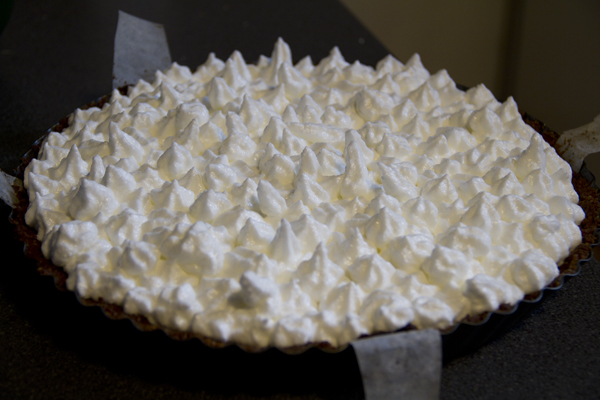
  • To make the meringue, whip the egg whites to stiff peaks with a pinch of salt using a whisk (electric is better; it’ll save you time and sore arms). Gradually add the sugar until you get a firm consistency.

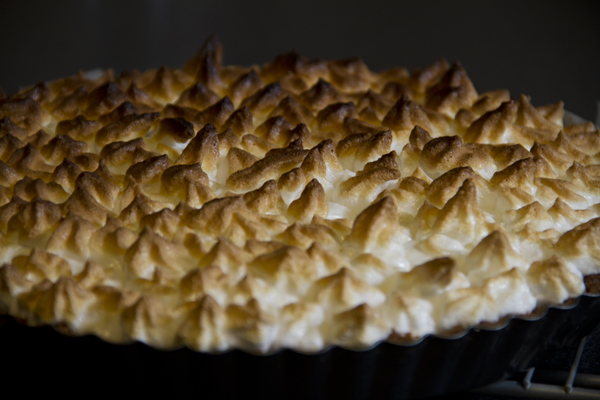
  • Now all that’s left is to put the meringue on top of the lemon tart. You can use a piping bag or just spoon it on, forming peaks.

  • Finally, when it’s completely covered, put it back in the oven for a few minutes so the meringue browns slightly.

Tips:

  • If you don’t love the tangy lemon flavor, you can reduce the amount of juice.

  • When you make the meringue, you need to get it really firm (you should even be able to flip the bowl upside down and have it stay put). It’s really important that neither the bowl nor the whisk have any grease on them so the whites whip up properly. Also, be careful in the oven because meringue burns really quickly, so never leave it unattended.

  • If you prefer, you can make a shortcrust pastry for the base.

Pics and Cakes

[English version] LEMON PIE* *Ingredients:

  • *2 cups ground biscuits *

  • 1/2 cup butter

  • 400 g condensed milk

  • 1/2 cup lemon juice

  • 4 egg yolks

  • 4 egg whites

  • 3/4 confectioner’s sugar

  • *First, melt butter in the microwave and stir well with ground biscuits. Put this mix into a pie mould using your fingers to press. Cover the bottom and the sides of the mould. *

  • Bake in preheated oven (to 180º) for 15 minutes.

  • *For the filling, mix together condensed milk, lemon juice and egg yolks. Pour the lemon mixture into the baked biscuit pastry. Bake in oven for 15 minutes. *

  • *Whip egg whites with a pinch of salt (use an electric whisk for better results and saving time). Add sugar gradually and keep whipping until getting a firm meringue. *

  • *Pour the meringue over the lemon pie. You can use a piping bag or use a spoon to make peaks. *

  • *Bake in oven for a few minutes until slightly golden brown. *

Tips:

- If you don’t like strong lemon flavour, you can reduce the amount of lemon juice.

- When making meringue you need a firm mixture (you could even put the mixing bowl upside down and it will keep there). To get good results, the mixing bowl has to be completely free of grease. Be careful when baking meringue because it get burnt very easily.

- You can also make shortbread pastry instead of biscuit pastry.


Comments

Marisa (2013-04-03 10:48:50):

Yum! I love this tart. Make it for me one day, please. :)

19 de febrero de 2013 · 4 min · Palstelera

Pay de limón

Tal vez os preguntaréis el porqué del nombre y por qué no llamarlo simplemente tarta de limón o en inglés* lemon pie*. El caso es que esta tarta se la hice a mi madre y para ella suponía un recuerdo de infancia. Al parecer cuando eran pequeños tomaban esta tarta en Perú y la llamaban así: pay de limón. Si ya en España cada vez utilizamos más anglicismos, os podréis hacer una idea de lo usados que son en países de América latina y del Spanglish que allí reina. En cualquier caso, sea o no la receta auténtica de Perú y se llame tarta, pie o pay, este postre quedó buenísimo.

Pics and Cakes

¿Qué necesitamos?

  • 150 g galletas tipo digestive molidas

  • 110 g de mantequilla

  • 400 g de leche condensada

  • Media taza de zumo de limón

  • 4 yemas de huevo

  • 4 claras de huevo

  • 85 g de azúcar glas


¿Cómo lo hacemos?

  • En primer lugar, derretimos la mantequilla en el microondas y la mezclamos con la galleta molida hasta que quede una pasta uniforme. Ponemos esta mezcla en un molde bajito para tartas apto para el horno. Presionamos con los dedos hasta cubrir bien el fondo y los laterales del molde.

  • Lo metemos en el horno (previamente calentado a 180º) y lo horneamos durante 15 minutos. Lo retiramos y dejamos enfriar.

  • Para preparar el relleno, mezclamos bien la leche condensada con el zumo de limón y las yemas de huevo. Vertemos la mezcla sobre nuestro molde con base de galleta y lo volvemos a introducir en el horno durante otros 15 minutos. Lo sacamos y dejamos enfriar.

  • Para preparar el merengue montamos las claras a punto de nieve con una pizca de sal con ayuda de unas varillas (si son eléctricas, mejor; nos ahorrarán tiempo y agujetas). Vamos añadiendo poco a poco el azúcar hasta conseguir una consistencia firme.

  • Ahora sólo queda poner el merengue sobre la tarta de limón. Para ello, podemos utilizar una manga pastelera o bien ir echándolo con una cuchara e ir formando picos.

  • Por último, cuando esté totalmente cubierta, volvemos a meterla en el horno y la dejamos unos minutos para que se dore ligeramente el merengue.


Consejos:

  • Si no os gusta el sabor tan ácido del limón podéis reducir la cantidad de zumo.

  • Cuando hagáis el merengue tenéis que conseguir que quede bien consistente (incluso podríais dar la vuelta al bol y no se caería). Es muy importante que ni el bol ni las varillas tengan nada de grasa para que se monten bien las claras. Además, hay que tener cuidado en el horno porque el merengue se quema muy rápido, así que nunca lo dejéis desatendido.

  • Si lo preferis podéis hacer una masa quebrada para la base.

Pics and Cakes

 [English version] LEMON PIE* *Ingredients:

  • *2 cups ground biscuits *

  • 1/2 cup butter

  • 400 g condensed milk

  • 1/2 cup lemon juice

  • 4 egg yolks

  • 4 egg whites

  • 3/4 confectioner’s sugar

* *

  • *First, melt butter in the microwave and stir well with ground biscuits. Put this mix into a pie mould using your fingers to press. Cover the bottom and the sides of the mould. *

  • Bake in preheated oven (to 180º) for 15 minutes.

  • *For the filling, mix together condensed milk, lemon juice and egg yolks. Pour the lemon mixture into the baked biscuit pastry. Bake in oven for 15 minutes. *

  • *Whip egg whites with a pinch of salt (use an electric whisk for better results and saving time). Add sugar gradually and keep whipping until getting a firm meringue. *

  • *Pour the meringue over the lemon pie. You can use a piping bag or use a spoon to make peaks. *

  • *Bake in oven for a few minutes until slightly golden brown. *

* *

Tips:

- If you don’t like strong lemon flavour, you can reduce the amount of lemon juice.

- When making meringue you need a firm mixture (you could even put the mixing bowl upside down and it will keep there). To get good results, the mixing bowl has to be completely free of grease. Be careful when baking meringue because it get burnt very easily.

- You can also make shortbread pastry instead of biscuit pastry.


19 de febrero de 2013 · 4 min · Palstelera