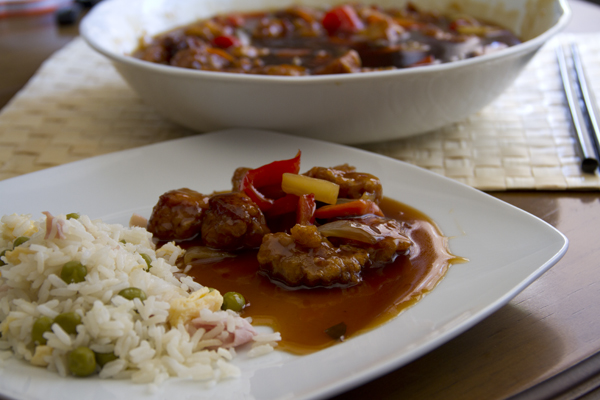
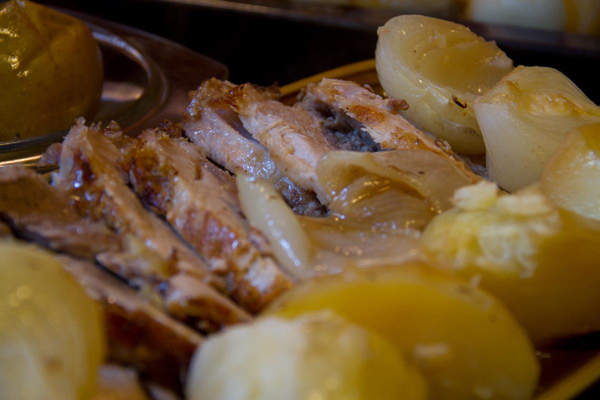
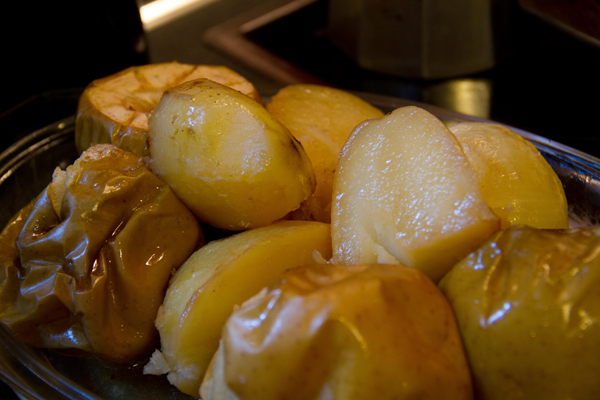
Fideuá

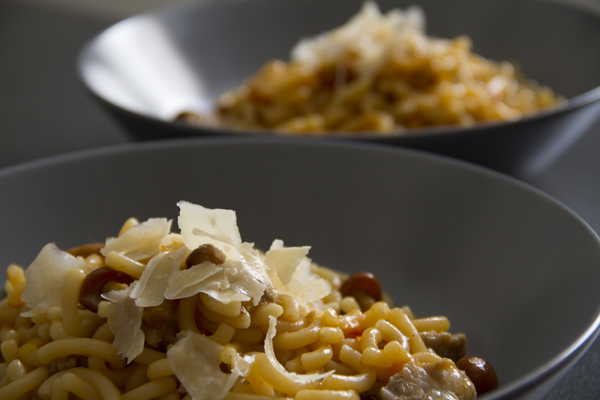
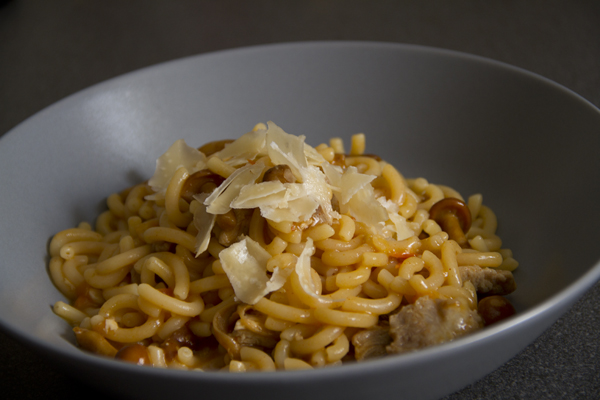
Today we bring you an adaptation of the fideuá from Spain’s eastern coast, which is mainly made with fish and seafood. Everyone knows my dislike for fish, so when my mom made this dish, swapping the fish for pork secreto, I jumped right on it.

Pics and Cakes

What do we need?

  • 200 g (7 oz) pork secreto

  • 200 g (7 oz) fideuá pasta

  • Water

  • Mushrooms

  • Saffron

  • Salt

  • Olive oil

  • Paprika

  • Garlic

  • Parmesan cheese

How do we make it?

  • Pour a splash of olive oil into a large pot, sauté the garlic, add the meat and mushrooms with a pinch of salt, and cook everything together. Add a bit of paprika.

  • Once it’s nicely sautéed, toss in the noodles and stir everything together so they pick up the flavor.

  • Add twice as much water as pasta (or a bit more if you want it slightly brothy).

  • Let it cook for about 15-20 minutes, adding a pinch of saffron and a little more paprika along the way.

  • When plating, shave a few slices of parmesan cheese and lay them on top.

Tips:

  • We used shiitake mushrooms, but it turns out great with any kind of mushroom.

  • If you don’t have pork secreto, you can use any tender cut of pork.

  • The original recipe calls for ñoras (dried sweet red peppers), which are crushed and added to the sofrito. If you can find them (and don’t get scared off by the price), they give the dish a special touch.

Pics and Cakes *[English version] FIDEUÁ ** *Ingredients:

  • 200 g (7 oz) pork meat

  • 200 g (7 oz) fideuá pasta

  • Water

  • Mushrooms

  • Saffron

  • Salt

  • Olive oil

  • Paprika

  • Garlic

  • Parmesan cheese

  • Gently fry the chopped garlic with a bit of olive oil in a cooking pot. Add meat and mushrooms, some salt, and cook. Add paprika.

  • When it is slightly cooked, add the pasta and gently fry all the ingredients together to mix the flavors.

  • Add the water (twice the amount of pasta. For instance, if you used 2 cups of pasta, add 4 cups of water. You can add a bit of extra water if you like a soupy dish.)

  • Add some saffron and a bit more paprika and cook for around 15-20 minutes.

  • Slice parmesan cheese and place it over the fideuá before serving.

Tips:

- We used shiitake mushrooms, but any kind of mushroom will be delicious.

- The original recipe uses ‘ñora’ (dried red spicy pepper). You can use it if you like spicy flavors. Add it when slightly frying all the ingredients (step 1).


Comments

la enana (2013-03-04 13:40:11):

The recipe was delicious! I made it the other day and we loved it! I used paprika instead of pimentón because I haven’t been able to find it around here, and although the result was very good, in my opinion the flavor pimentón gives is even better.

27 de febrero de 2013 · 3 min · Cesmm

Fideuá

Hoy os traemos una adaptación de la fideuá de la costa levantina, la cual se hace principalmente con pescado y marisco. Es conocido por todos mi animadversión al pez, por lo que cuando mi madre preparó este plato, en el que se sustituye el pescado por secreto, en seguida me hice con él.

Pics and Cakes


¿Qué necesitamos?

  • 200 g de secreto

  • 200 g de pasta para fideuá

  • Agua

  • Setas

  • Azafrán

  • Sal

  • Aceite

  • Pimentón

  • Ajo

  • Queso parmesano


¿Cómo lo hacemos?

  • Ponemos en una cazuela grande un chorrito de aceite, rehogamos el ajo, añadimos la carne y las setas, una pizca de sal y cocinamos todo junto. Agregamos un poco de pimentón.

  • Cuando se haya sofrito echamos los fideos y rehogamos todo junto para que cojan sabor.

  • Añadimos el doble de agua que de pasta (incluso un poquito más si queremos que se quede un poco caldoso).

  • Dejamos cocer durante unos 15-20 minutos, en los que añadimos un poco de azafrán y un poco más de pimentón.

  • Cuando emplatemos, cortamos un poco de queso parmesano en láminas y colocamos encima.


Consejos:

  • Nosotros utilizamos setas shitake pero queda buenísimo con cualquier tipo de setas.

  • Si no tenéis secreto podéis utilizar cualquier carne tierna de cerdo.

  • La receta original lleva ñoras, las cuales se machacan y se añaden al sofrito. Si las encontráis (y no os asustáis por el precio que tienen) dan un toque especial al plato.

 Pics and Cakes *[English version] FIDEUÁ ** *Ingredients: 

  • 200 g pork meat

  • 200 g fideuá pasta

  • Water

  • Mushrooms

  • Safran

  • Salt

  • Olive oil

  • Paprika

  • Garlic

  • Parmesan cheese

* *

  • Fry gently the chopped garlic with a bit of olive oil in a cooking pot. Add meat and mushrooms, some salt an cook. Add paprika.

  • *When it is slightly cooked, add the pasta and fry gently all the ingredients together in order to mix flavours. *

  • Add the water (double amount than pasta. For instance, if you have used 2 cups of pasta, add 4 cups of water. You can add some extra water if you like to have a soupy dish.)

  • Add some safran and a bit more of paprika an cook for around 15-20 minutes.

  • *Slice parmesan cheese and place it over the fideuá before serving. *

* *

Tips:

*- We used shitake mushrooms but with any kind of mushrooms will be delicious. *

*- The original recipe has ‘ñora’ (dry red spicy pepper). You can use it if you like spicy flavours. Add it when frying slightly all the ingredients (step 1). *


27 de febrero de 2013 · 3 min · Cesmm

Cerdo agridulce

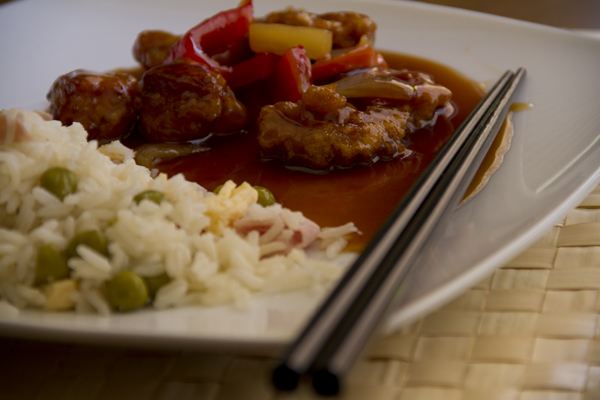
Whole Kitchen en su Propuesta Salada para el mes de enero nos invita a preparar un clásico de la cocina china: cerdo agridulce.

** **Para nosotros es el plato por excelencia cuando tomamos comida china así que no podía faltar en nuestro blog. La receta, a decir verdad, no sé ni siquiera de dónde la saqué porque hice una fusión de diversas páginas de internet y ahora no recuerdo la fuente exacta. Pero bueno, como cualquier plato, lo suyo es probar a hacerlo y si hay algo que no nos convence, lo rectificamos a nuestro gusto, que para eso es nuestra cocina.
Pics and Cakes

¿Qué necesitamos?

  • 400 g magra de cerdo

  • 1 cebolla grande

  • 1 pimiento rojo

  • 1 zanahoria

  • 4 rodajas de piña

  • Aceite

  • Sal

Para el rebozado:

  • 3 cucharadas de harina de trigo

  • 2 cucharadas de maizena

  • 1 huevo

  • 1 cucharadita de levadura en polvo

  • Agua

Para la salsa agridulce:

  • 3/4 taza de azúcar

  • 1/3 taza de vinagre de manzana

  • 2/3 taza de agua

  • 1/4 taza de salsa de soja

  • 2 cucharadas de ketchup

  • 2 cucharadas de salsa Worcester

  • 2 cucharadas de maizena

Pics and Cakes  

¿Cómo lo hacemos?

  • En primer lugar, preparamos la salsa agridulce. Para ello ponemos todos los ingredientes en una cazuela mediana excepto la maizena y cocinamos a fuego fuerte para que se mezclen y disuelvan bien todos los ingredientes.

  • Dejamos que hierva y cocinamos a fuego medio unos minutos para que la salsa se reduzca y espese. Disolvemos la maizena en una taza con un poquito de agua y se la añadimos a la salsa. Cuando tenga la consistencia deseada, la retiramos del fuego.

  • Cortamos la cebolla y los pimientos en cuadrados de un tamaño mediano (1,5 cm aprox.)

  • Cortamos la zanahoria en rodajas finas en diagonal.

  • Cortamos la piña en trozos.

  • En una sartén con un poco de aceite salteamos toda nuestra verdura (lo último que añadiremos es la piña). No hay que cocinarla mucho ya que queremos que quede crujiente.

  • Cuando esté lista la sacamos y la incorporamos a la cazuela donde teníamos la salsa agridulce ya lista.

  • Cortamos la carne de cerdo en cubitos (del tamaño de un bocado, similar al tamaño de las verduras) y la sazonamos.

  • En un bol mezclamos bien las dos harinas y la levadura, y a continuación añadiremos el huevo y el agua muy fría. La cantidad de agua es variable. Así que es mejor ir echándola poco a poco hasta tener la textura de una bechamel suave.

  • Mientras se calienta el aceite para freír en una sartén, echamos los trozos de carne en el bol con la mezcla para el rebozado.

  • Cuando el aceite esté bien caliente, vamos echando de uno en uno los trozos de carne embadurnados. Cuando estén dorados los sacamos en un plato con papel absorbente.

  • Por último añadimos el cerdo ya frito a la cazuela con la salsa agridulce con verduras. Si en este tiempo, la salsa se ha enfriado, podemos calentarla antes de agregar la carne.

  • Servimos acompañado de arroz blanco, arroz basmati o arroz tres delicias.


Consejos:

  • Al hacer la salsa agridulce, recomiendo que no echéis todo el vinagre de golpe ya que puede resultaros muy fuerte. Es mejor ir añadiendo poco a poco en función de nuestro gusto.

  • Si la piña que habéis utilizado es de lata (en su jugo natural) podéis añadir este jugo a la salsa agridulce.

  • La carne rebozada la añadimos justo al final para que el rebozado siga crujiente. Por eso recomiendo servir y comer inmediatamente.

* [English version] SWEET&SOUR PORK** *

  • 400 g pork meat

  • 1 large onion

  • 1 red bell pepper

  • 1 carrot

  • 4 pineapple slices

  • Olive oil

  • Salt

For the coating:

  • 3 tbsp flour

  • 2 tbsp corn flour

  • 1 egg

  • 1 tsp baking powder

  • Water

For the sweet&sour sauce:

  • 3/4 cup of sugar

  • 1/3 cup of apple vinegar

  • 2/3 cup of water

  • 1/4 cup of soya sauce

  • 2 tbsp of ketchup

  • 2 tbsp of Worcester sauce

  • 2 tbsp of corn flour

  • First, prepare the sauce. Place all the ingredients (except from corn flour) into a sauce pan and cook (high heat) until all ingredients are melted and all together.

  • Simmer for several minutes to reduce the amount of sauce (the liquid will evaporate). Dissolve the corn flour in a bit of cold water and add to the sauce. When the sauce has the desired thickness, it will be ready. Set aside.

  • Cut onion and pepper in medium squares  (1,5 cm aprox.)

  • Cut the carrot into thin slices (diagonally).

  • Cut pineapple into medium pieces.

  • In a frying pan, put some olive oil and stir-fry all the veggies (the last ingredient to add will be the pineapple). No need to over cook the veggies because we want them hard and fresh).

  • Then we add all these vegetables to the sauce and mix well.

  • Now, prepare the meat. Cut the pork meat into squares (mouthful size, similar to vegetables size) and add salt.

  • In a bowl, mix both kinds of flour and baking powder. Then add the egg and very cold water. The amount of water may vary. So, add it bit by bit until having the consistency of light bechamel sauce.

  • Heat a frying pan full of oil. Put all the meat pieces into the flour-egg mix.

  • When the oil is hot, introduce the meat pieces coated with the flour-egg mix. Take them out when golden brown and place them into a plate covered by kitchen paper. .

  • Add the fried pork to the sauce and ready to eat. If the sauce is a bit cold, you can warm it before adding the meat.

  • Serve with regular rice, basmati rice or fried rice (Chinese style).

Tips: *- When preparing the sauce, you can add bit by bit the vinegar and taste it to avoid too strong flavour.*- If you have used canned pineapple, you can use the natural juice inside the can for the sauce.*

- We add the coated meat at the very end to enjoy it really crispy. So, serve and eat immediately.
18 de enero de 2013 · 5 min · Palstelera

Sweet and Sour Pork

Whole Kitchen, in their Savory Proposal for January, invites us to make a Chinese classic: sweet and sour pork.

**For us, this is THE go-to dish whenever we have Chinese food, so it couldn’t be missing from our blog. To be honest, I don’t even know exactly where I got the recipe from, because I ended up mashing together a bunch of different websites and now I can’t recall the exact source. But hey, like with any dish, the trick is to give it a go, and if there’s something you don’t love, tweak it to your taste — that’s what your own kitchen is for.

Pics and Cakes

What do we need?

  • 400 g (14 oz) lean pork

  • 1 large onion

  • 1 red bell pepper

  • 1 carrot

  • 4 pineapple slices

  • Oil

  • Salt

For the batter:

  • 3 tablespoons all-purpose flour

  • 2 tablespoons cornstarch

  • 1 egg

  • 1 teaspoon baking powder

  • Water

For the sweet and sour sauce:

  • 3/4 cup sugar

  • 1/3 cup apple cider vinegar

  • 2/3 cup water

  • 1/4 cup soy sauce

  • 2 tablespoons ketchup

  • 2 tablespoons Worcestershire sauce

  • 2 tablespoons cornstarch

Pics and Cakes

How do we make it?

  • First, we make the sweet and sour sauce. Put all the ingredients except the cornstarch into a medium saucepan and cook over high heat so that everything mixes and dissolves well.

  • Let it come to a boil and then simmer over medium heat for a few minutes so the sauce reduces and thickens. Dissolve the cornstarch in a cup with a little water and add it to the sauce. Once it has the consistency you want, take it off the heat.

  • Cut the onion and bell pepper into medium-sized squares (about 1.5 cm / 1/2 inch).

  • Slice the carrot thinly on the diagonal.

  • Cut the pineapple into chunks.

  • In a pan with a little oil, stir-fry all the veggies (add the pineapple last). Don’t overcook them — we want them to stay crunchy.

  • Once they’re ready, take them out and add them to the saucepan with the sweet and sour sauce.

  • Cut the pork into bite-sized cubes (similar in size to the veggies) and season with salt.

  • In a bowl, mix the two flours and the baking powder, then add the egg and very cold water. The amount of water varies, so it’s better to add it little by little until you get the texture of a light béchamel.

  • While the oil heats up in a frying pan, drop the pieces of pork into the bowl with the batter.

  • Once the oil is good and hot, fry the coated pieces one by one. When they’re golden, take them out onto a plate lined with paper towels.

  • Finally, add the fried pork to the saucepan with the sweet and sour sauce and veggies. If the sauce has cooled down by now, warm it back up before adding the meat.

  • Serve with white rice, basmati rice, or three delights fried rice.

Tips:

  • When making the sweet and sour sauce, I’d recommend not pouring in all the vinegar at once, as it can come out really strong. Better to add it bit by bit, to taste.

  • If the pineapple you used is canned (in its own juice), you can add that juice to the sweet and sour sauce.

  • The battered meat goes in right at the end so the coating stays crispy. That’s why I recommend serving and eating it right away.

18 de enero de 2013 · 3 min · Palstelera

Cazuela San Isidro

Este nombre tan castizo no es más que una denominación familiar para un exquisito asado de cerdo acompañado con patatas, cebollas y manzana. La tradición con la que surgió este plato invita a prepararlo en una cazuela de barro comprada en la Pradera de San Isidro para celebrar el día del patrón madrileño. De todas maneras, ya sea con cazuela de barro, con santo de por medio o sin ello, el resultado será un plato facilísimo y perfecto para una comida con varios comensales.

Pics and Cakes

¿Qué necesitamos?

-       1 paletilla de cerdo (mejor con hueso) -       4 manzanas -       6 cebollas -       8 patatas -       300 ml de cerveza o vino blanco -       Sal y pimienta


¿Cómo lo hacemos?

  • Precalentamos el horno a 200ºC

  • Ponemos la paletilla en una bandeja de horno o en una fuente de barro preferiblemente honda. Salpimentamos toda la pieza por ambas partes.

  • Introducimos la fuente en el horno.  Lo dejamos 30 minutos aproximadamente para que se dore a fuego fuerte y luego le daremos la vuelta a la pieza de carne. A partir de este momento cuando veamos que la carne está demasiado seca, iremos regándola con cerveza o vino blanco.

  • Mientras tanto, aprovechamos para pelar las cebollas y patatas. Las cebollas las partiremos a la mitad y las patatas, en trozos grandes.

  • Por último, añadimos las patatas, cebollas y manzanas enteras a la fuente con la carne y bajamos el horno a una temperatura de 180º para que se haga lentamente durante 1 hora y media más aproximadamente.


Consejos:

  • Cada horno es un mundo así que la temperatura y el tiempo pueden variar de unos a otros. Os recomendamos que lo vigiléis sobre todo al principio para que la temperatura sea alta pero que no chamusque la carne.
  • La cantidad de líquido que vayamos a añadir dependerá de lo rápido que se evapore y cuánto absorba la paletilla.
  • Para presentarlo, recomendamos cortar en lonchas la carne asada y servirla junto a los demás ingredientes.

Pics and Cakes


[English version] ROAST PORK WITH ONIONS, POTATOES AND APPLES **Ingredients:- Pork shoulder arm roast

  • 4 apples

  • 6 onions

  • 8 potatoes

  • 300 ml beer or white wine

  • Salt and pepper 

  • Preheat oven at 200º

  • Put the piece of meat in a deep oven plate. Salt and pepper evenly the piece of meat

  • Enter the plate in the oven and leave for 30 minutes approximately until it golden brown. Then turn upside the piece of meat. From now, start adding some white wine or beer when the meat seems to be too dry.

  • Meanwhile, peal and cut the potatoes and onions. Cut half the onions and leave the potatoes in big portions.

  • Finally, add potatoes, onions and apples to the oven plate with the meat and decrease the oven temperature (180ºC). Leave it baking slowly for 1h30 more approximately. 

  Tips:- Every oven is different, so temperature and baking time may differ from some to others. We advice you to watch it carefully, especially at the beginning because high temperature is needed but not so much to have it burnt.

  • The amount of liquid will depend on how fast it will be absorbed by the meat or evaporated.
  • For serving, we recommend you to slice the meet and serve with the rest of ingredients. 


15 de julio de 2012 · 3 min · Palstelera

San Isidro Casserole

This very traditional Spanish name is just a family nickname for a delicious pork roast served with potatoes, onions, and apples. The tradition behind this dish calls for preparing it in a clay pot bought at the Pradera de San Isidro to celebrate Madrid’s patron saint day. Either way, with or without a clay pot, with or without the saint involved, the result is a super easy dish that’s perfect for a meal with several guests.

Pics and Cakes

What do we need?

  •   1 pork shoulder (bone-in is better)
    
  •   4 apples
    
  •   6 onions
    
  •   8 potatoes
    
  •   300 ml (1.25 cups) beer or white wine
    
  •   Salt and pepper
    

How do we make it?

  • Preheat the oven to 200°C (390°F)

  • Place the pork shoulder on an oven tray or, preferably, in a deep clay dish. Season the whole piece with salt and pepper on both sides.

  • Put the dish in the oven. Leave it for about 30 minutes so it browns at high heat, then flip the meat over. From this point on, whenever the meat looks too dry, we’ll baste it with beer or white wine.

  • Meanwhile, take the chance to peel the onions and potatoes. Cut the onions in half and the potatoes into large chunks.

  • Finally, add the potatoes, onions, and whole apples to the dish with the meat and lower the oven to 180°C (355°F) so it cooks slowly for about another hour and a half.

Tips:

  • Every oven is its own world, so temperature and time can vary from one to another. We recommend keeping an eye on it, especially at the beginning, so the temperature stays high but doesn’t burn the meat.
  • The amount of liquid you’ll need to add depends on how fast it evaporates and how much the shoulder absorbs.
  • To serve, we recommend slicing the roasted meat and plating it alongside the rest of the ingredients.

Pics and Cakes

[English version] ROAST PORK WITH ONIONS, POTATOES AND APPLES **Ingredients:- Pork shoulder arm roast

  • 4 apples

  • 6 onions

  • 8 potatoes

  • 300 ml (1.25 cups) beer or white wine

  • Salt and pepper

  • Preheat oven at 200°C (390°F)

  • Put the piece of meat in a deep oven plate. Salt and pepper evenly the piece of meat

  • Enter the plate in the oven and leave for 30 minutes approximately until it golden brown. Then turn upside the piece of meat. From now, start adding some white wine or beer when the meat seems to be too dry.

  • Meanwhile, peal and cut the potatoes and onions. Cut half the onions and leave the potatoes in big portions.

  • Finally, add potatoes, onions and apples to the oven plate with the meat and decrease the oven temperature (180°C / 355°F). Leave it baking slowly for 1h30 more approximately.

    Tips:- Every oven is different, so temperature and baking time may differ from some to others. We advice you to watch it carefully, especially at the beginning because high temperature is needed but not so much to have it burnt.

  • The amount of liquid will depend on how fast it will be absorbed by the meat or evaporated.

  • For serving, we recommend you to slice the meet and serve with the rest of ingredients.


15 de julio de 2012 · 3 min · Palstelera