Albóndigas en salsa

Volvemos a las andadas tras un largo periodo sin actividad. No significa que en todos estos meses hayamos dejado de cocinar cosas ricas pero la pereza a veces hace estragos… Pero, como una buena amiga dijo, hay que vencer a la pereza. Por ello, con intención de retomar este pequeño compendio de recetas, Pics&Cakes vuelve a la carga. Eso sí, como al fotógrafo oficial lo tenemos bastante atareado puede que las fotos no hagan justicia a las delicias que prepararemos. Disculpas por adelantado.

Y sin más, hoy una receta tradicional y sencilla de albóndigas caseras.


¿Qué necesitamos?

  • 500 gr de carne de ternera picada
  • 1 huevo
  • 2 dientes de ajo
  • 2 rebanadas de pan de molde integral
  • 100 ml de leche
  • Sal
  • 1 cucharada de aceite de oliva
  • Harina y aceite de oliva (para rebozar y freír, respectivamente)
  • 2 cebollas
  • 4 zanahorias
  • 1/2 vaso de vino blanco
  • 1 cucharada de harina
  • Sal y hierbas provenzales

 ¿Cómo lo hacemos?

  1. Ponemos la carne picada en un bol y añadimos el pan remojado previamente en leche, el huevo, el aceite de oliva, los ajos machacados y sal al gusto. Mezclamos bien con las manos.
  2. Formamos bolas del tamaño de una pelota de ping pong o del que prefiramos. Enharinamos ligeramente y reservamos en una fuente.
  3. Para la salsa picamos las cebollas y las zanahorias y las sofreímos en una sartén con un poco de aceite de oliva y sal.
  4. Cuando adquieran un poquito de color, añadimos la harina y el vino blanco. Removemos y bajamos la temperatura. Dejamos cocinar unos 20 minutos y añadimos agua si fuera necesario.
  5. Preparamos una sartén con aceite y vamos friendo las albóndigas hasta que estén doradas por fuera. No es necesario que se cocinen completamente por dentro porque terminaremos de cocinarlas después con la salsa.  Las sacamos en un plato con papel de cocina y reservamos.
  6. Para terminar, trituramos las verduras sofritas con una batidora o robot de cocina para que quede ligada como una salsa. Añadimos las albóndigas y cocinamos a fuego suave durante unos 10 minutos aproximadamente.
  7. Echamos hierbas provenzales al gusto y rectificamos de sal.

Consejos:

– La salsa se puede hacer con cualquier verdura que os apetezca y tengáis por la nevera. En nuestro caso, teníamos excedente de zanahorias…

– Podéis acompañarlas de patatas fritas. Para ello, os recomiendo que las friáis en dos tiempos. Primero a fuego suave hasta que estén blanditas por dentro (pinchadlas con una aguja de cocina) y sacadlas a un plato. Las reserváis hasta que tengáis las albóndigas y la salsa hechas. Entonces, volvéis a calentar el aceite de las patatas y las doráis a fuego fuerte durante un par de minutos. Se os quedarán crujientes por fuera y blandas por dentro.
 
 
9 de noviembre de 2017 · 3 min · Palstelera

Meatballs in Sauce

We're back at it after a long stretch of inactivity. It doesn't mean we stopped cooking tasty things during all those months, but laziness sometimes wreaks havoc... However, as a good friend once said, you have to defeat laziness. So, with the intention of picking up this little recipe collection again, Pics&Cakes is back in action. That said, since our official photographer is pretty busy these days, the photos might not do justice to the delicious things we'll be making. Apologies in advance.

And without further ado, today a traditional and simple recipe for homemade meatballs.

What do we need?

  • 500 g (1.1 lb) ground beef
  • 1 egg
  • 2 garlic cloves
  • 2 slices of whole wheat sandwich bread
  • 100 ml (about 1/2 cup) milk
  • Salt
  • 1 tablespoon olive oil
  • Flour and olive oil (for coating and frying, respectively)
  • 2 onions
  • 4 carrots
  • 1/2 glass (about 120 ml / 1/2 cup) white wine
  • 1 tablespoon flour
  • Salt and Provençal herbs

How do we make it?

  1. Place the ground beef in a bowl and add the bread (previously soaked in milk), the egg, the olive oil, the crushed garlic, and salt to taste. Mix well with your hands.
  2. Shape into balls the size of a ping-pong ball, or whatever size you prefer. Lightly coat with flour and set aside on a plate.
  3. For the sauce, chop the onions and carrots and sauté them in a pan with a little olive oil and salt.
  4. Once they get a bit of color, add the flour and the white wine. Stir and lower the heat. Let cook for about 20 minutes, adding water if needed.
  5. Heat oil in a pan and fry the meatballs until they're golden on the outside. They don't need to be fully cooked through, because we'll finish cooking them later in the sauce. Transfer them to a plate lined with paper towels and set aside.
  6. To finish, blend the sautéed vegetables with a hand blender or food processor so it comes together as a sauce. Add the meatballs and cook over low heat for about 10 minutes.
  7. Sprinkle in Provençal herbs to taste and adjust the salt.

Tips:

– You can make the sauce with any vegetables you like and have around in the fridge. In our case, we had a surplus of carrots...

– You can serve them with French fries. For those, I recommend frying them in two stages. First over low heat until they're soft on the inside (poke them with a kitchen needle) and transfer them to a plate. Set them aside until your meatballs and sauce are ready. Then, reheat the oil from the fries and brown them over high heat for a couple of minutes. They'll come out crispy on the outside and soft on the inside.

9 de noviembre de 2017 · 3 min · Palstelera

Chicken and Lamb Kebab

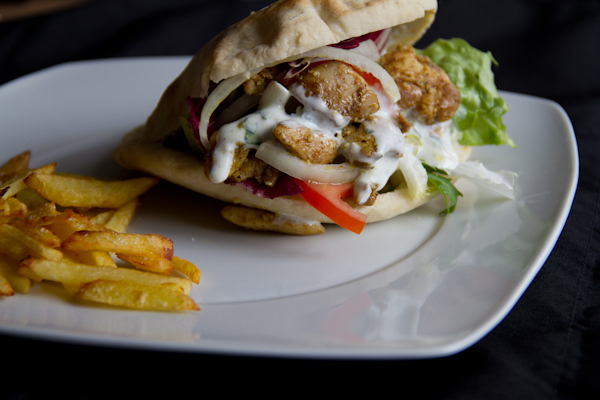
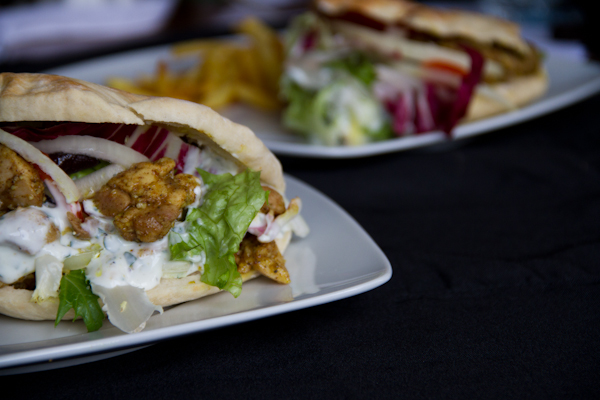
Everyone who visits Turkey says that the kebab there is nothing like the ones we eat in Spain, so at this point I'm not entirely sure what to call this. In any case, what I can promise you is that it's delicious and the preparation couldn't be simpler. We discovered this recipe thanks to the YouTube channel Recetas de Cocina, which is always worth a visit. Give these kebabs a try and let us know how it goes.

Pics and Cakes

What do we need?

  • 400 g (14 oz) lamb leg chops
  • 400 g (14 oz) chicken thighs
  • 4 teaspoons garlic powder
  • 4 tablespoons Ras el Hanout (a North African spice blend)
  • Salt and pepper
  • Lettuce (chopped or julienned)
  • Sliced tomato
  • Sliced or finely julienned onion
  • Pita breads


For the yogurt sauce:

  • 2 Greek yogurts
  • 2 tablespoons mayonnaise
  • Juice of 1/2 lemon
  • 1 or 2 garlic cloves
  • 3 teaspoons sugar
  • 1 pinch of cumin
  • Salt, pepper and fresh parsley


How do we make it?

  1. Cut the lamb chops and chicken into bite-sized pieces.
  2. In a bowl, combine 6 tablespoons of olive oil and 2 tablespoons of Ras el Hanout and mix well. Add the chopped chicken, season with salt and pepper, and sprinkle in two teaspoons of garlic powder.
  3. Mix well so all the meat is fully coated and let it marinate for at least 1 hour in the fridge (the longer it sits, the more flavor it will pick up).
  4. Repeat steps 2 and 3 with the chopped lamb.
  5. While the meat rests, let's prepare the yogurt sauce. Mix the yogurt with the mayonnaise. Then add the crushed garlic, the sugar, the cumin, salt, pepper, and finally the lemon juice and chopped fresh parsley. Mix everything thoroughly (no blender needed) and keep it in the fridge until you're ready to use it.
  6. Once the meat has had enough time to marinate, you have two options: cook it in the oven, or in a frying pan or on a griddle.
    a) For the first option, line a baking tray with parchment paper and spread the pieces of meat out separately. Bake at 200°C (390°F) until they look golden. When you take the meat off the tray, drain off any excess oil.
    b) If you prefer, you can sauté them in a pan or cook them on a griddle. There's no need to add oil since the marinade is enough. This option is faster since there's no oven preheating and the cooking time is shorter.
  7. All that's left is to assemble the kebabs. In a pita bread, layer meat, lettuce, tomato, onion and yogurt sauce to taste.

Pics and Cakes

Tips:

– You can adjust the yogurt sauce to taste, but it's better to go light than to overdo any one ingredient, especially garlic and salt, which are hard to fix once you've added too much. I recommend adding little by little and tasting as you go.

– It's better to cook the meats separately so people can choose whether they want their kebab with just one type of meat or mixed. Lamb tends to have a much stronger flavor than chicken, which not everyone enjoys.

– The meat quantities are just a guide. Adjust them depending on how many kebabs you want to make.

11 de junio de 2015 · 3 min · Palstelera

Kebab de pollo y cordero

Todo el mundo que visita Turquía dice que el kebab de allí no tiene nada que ver con los que comemos en España así que, llegados a este punto, no sé exactamente cómo llamar a esto. En cualquier caso lo que os puedo asegurar es que está delicioso y su elaboración no podía ser más sencilla. La receta en este caso la descubrimos gracias al canal de Youtube Recetas de Cocina por el que siempre merece darse una vueltecita. Animaos a preparar estos kebab y nos contáis qué tal la experiencia.

Pics and Cakes

¿Qué necesitamos?

  • 400 gr de chuletas de pierna de cordero
  • 400 g de contramuslos de pollo
  • 4 cucharaditas de ajo en polvo
  • 4 cucharadas de Ras el hanout (mezcla de especias originaria del Magreb)
  • Sal y pimienta
  • Lechuga (en trozos o en juliana)
  • Tomate en rodajas
  • Cebolla en rodajas o juliana fina
  • Panes de pita


Para la salsa de yogur:

  • 2 yogures griegos
  • 2 cucharadas de mayonesa
  • zumo de 1/2 limón
  • 1 o 2 dientes de ajo
  • 3 cucharaditas de azúcar
  • 1 pizca de comino
  • Sal, pimienta y perejil fresco


 ¿Cómo lo hacemos?

  1. Cortamos las chuletas de cordero y el pollo en trocitos del tamaño de un bocado.
  2. En un bol ponemos 6 cucharadas de aceite de oliva y 2 cucharadas de Ras el Hanout y mezclamos bien. Añadimos el pollo cortado, lo salpimentamos y espolvoreamos dos cucharaditas de ajo en polvo.
  3. Mezclamos bien para que toda la carne quede bien impregnada y dejamos marinar al menos 1 hora en la nevera (cuanto más tiempo lo dejemos más sabor cogerá la carne).
  4. Repetimos los pasos 2 y 3 con la carne troceada de cordero.
  5. Aprovechando el tiempo de reposo de la carne vamos a preparar la salsa de yogur. Para ello, mezclamos el yogur con la mayonesa. Después añadimos el ajo previamente machacado, el azúcar, el comino, la sal, la pimienta y, por último, el limón y el perejil fresco picado. Mezclamos todo muy bien (no es necesaria la batidora) y reservamos en la nevera hasta que la utilicemos.
  6. Después de haber dejado el tiempo suficiente para marinar la carne, tenemos dos opciones: bien cocinarla en el horno o bien en la sartén o plancha.
    a) Para la primera opción, ponemos papel de horno sobre la bandeja del horno y extendemos los trozos de carne separados. Los horneamos a 200º hasta que los veamos dorados. Al sacar la carne de la bandeja, retiramos el exceso de aceite.
    b) Si preferimos podemos saltearlos en una sartén o hacerlos a la plancha. No es necesario añadir aceite ya que con el marinado tiene suficiente. Esta opción es más rápida ya que no requiere precalentado del horno y la cocción es más rápida.
  7. Ya solo nos queda montar nuestros kebabs. En un pan de pita alternamos carne, lechuga, tomate, cebolla y salsa de yogur al gusto.

Pics and Cakes

Consejos:

– La salsa de yogur podéis rectificarla al gusto pero es preferible quedarnos cortos que excedernos en el uso de algún ingrediente, especialmente con el ajo y la sal que tienen difícil arreglo. Os recomiendo que lo echéis poco a poco y lo vayáis probando.

– Es preferible que hagáis las carnes por separado para que la gente pueda elegir si quiere su kebab solo de un tipo de carne o mixto. Además la carne de cordero suele tener un sabor bastante fuerte comparado con el pollo, que puede no gustar a todo el mundo.

– Las cantidades de la carne son orientativas. Las podéis adaptar según el número de kebabs que queráis preparar.

 
11 de junio de 2015 · 3 min · Palstelera

Fideuá

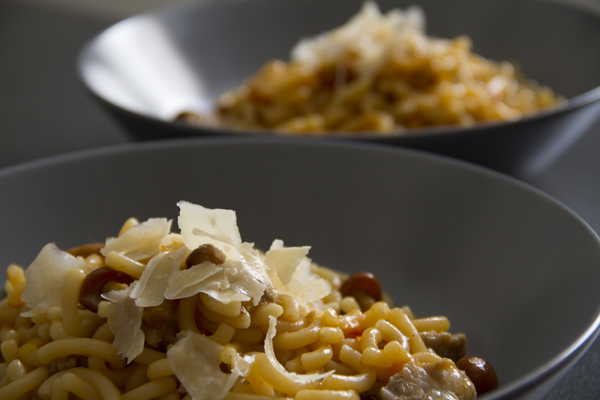
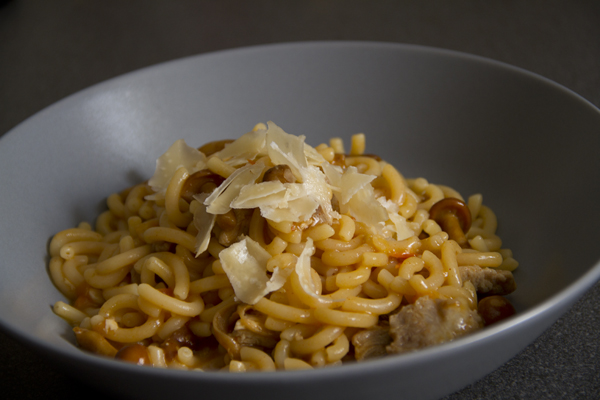
Today we bring you an adaptation of the fideuá from Spain’s eastern coast, which is mainly made with fish and seafood. Everyone knows my dislike for fish, so when my mom made this dish, swapping the fish for pork secreto, I jumped right on it.

Pics and Cakes

What do we need?

  • 200 g (7 oz) pork secreto

  • 200 g (7 oz) fideuá pasta

  • Water

  • Mushrooms

  • Saffron

  • Salt

  • Olive oil

  • Paprika

  • Garlic

  • Parmesan cheese

How do we make it?

  • Pour a splash of olive oil into a large pot, sauté the garlic, add the meat and mushrooms with a pinch of salt, and cook everything together. Add a bit of paprika.

  • Once it’s nicely sautéed, toss in the noodles and stir everything together so they pick up the flavor.

  • Add twice as much water as pasta (or a bit more if you want it slightly brothy).

  • Let it cook for about 15-20 minutes, adding a pinch of saffron and a little more paprika along the way.

  • When plating, shave a few slices of parmesan cheese and lay them on top.

Tips:

  • We used shiitake mushrooms, but it turns out great with any kind of mushroom.

  • If you don’t have pork secreto, you can use any tender cut of pork.

  • The original recipe calls for ñoras (dried sweet red peppers), which are crushed and added to the sofrito. If you can find them (and don’t get scared off by the price), they give the dish a special touch.

Pics and Cakes *[English version] FIDEUÁ ** *Ingredients:

  • 200 g (7 oz) pork meat

  • 200 g (7 oz) fideuá pasta

  • Water

  • Mushrooms

  • Saffron

  • Salt

  • Olive oil

  • Paprika

  • Garlic

  • Parmesan cheese

  • Gently fry the chopped garlic with a bit of olive oil in a cooking pot. Add meat and mushrooms, some salt, and cook. Add paprika.

  • When it is slightly cooked, add the pasta and gently fry all the ingredients together to mix the flavors.

  • Add the water (twice the amount of pasta. For instance, if you used 2 cups of pasta, add 4 cups of water. You can add a bit of extra water if you like a soupy dish.)

  • Add some saffron and a bit more paprika and cook for around 15-20 minutes.

  • Slice parmesan cheese and place it over the fideuá before serving.

Tips:

- We used shiitake mushrooms, but any kind of mushroom will be delicious.

- The original recipe uses ‘ñora’ (dried red spicy pepper). You can use it if you like spicy flavors. Add it when slightly frying all the ingredients (step 1).


Comments

la enana (2013-03-04 13:40:11):

The recipe was delicious! I made it the other day and we loved it! I used paprika instead of pimentón because I haven’t been able to find it around here, and although the result was very good, in my opinion the flavor pimentón gives is even better.

27 de febrero de 2013 · 3 min · Cesmm

Fideuá

Hoy os traemos una adaptación de la fideuá de la costa levantina, la cual se hace principalmente con pescado y marisco. Es conocido por todos mi animadversión al pez, por lo que cuando mi madre preparó este plato, en el que se sustituye el pescado por secreto, en seguida me hice con él.

Pics and Cakes


¿Qué necesitamos?

  • 200 g de secreto

  • 200 g de pasta para fideuá

  • Agua

  • Setas

  • Azafrán

  • Sal

  • Aceite

  • Pimentón

  • Ajo

  • Queso parmesano


¿Cómo lo hacemos?

  • Ponemos en una cazuela grande un chorrito de aceite, rehogamos el ajo, añadimos la carne y las setas, una pizca de sal y cocinamos todo junto. Agregamos un poco de pimentón.

  • Cuando se haya sofrito echamos los fideos y rehogamos todo junto para que cojan sabor.

  • Añadimos el doble de agua que de pasta (incluso un poquito más si queremos que se quede un poco caldoso).

  • Dejamos cocer durante unos 15-20 minutos, en los que añadimos un poco de azafrán y un poco más de pimentón.

  • Cuando emplatemos, cortamos un poco de queso parmesano en láminas y colocamos encima.


Consejos:

  • Nosotros utilizamos setas shitake pero queda buenísimo con cualquier tipo de setas.

  • Si no tenéis secreto podéis utilizar cualquier carne tierna de cerdo.

  • La receta original lleva ñoras, las cuales se machacan y se añaden al sofrito. Si las encontráis (y no os asustáis por el precio que tienen) dan un toque especial al plato.

 Pics and Cakes *[English version] FIDEUÁ ** *Ingredients: 

  • 200 g pork meat

  • 200 g fideuá pasta

  • Water

  • Mushrooms

  • Safran

  • Salt

  • Olive oil

  • Paprika

  • Garlic

  • Parmesan cheese

* *

  • Fry gently the chopped garlic with a bit of olive oil in a cooking pot. Add meat and mushrooms, some salt an cook. Add paprika.

  • *When it is slightly cooked, add the pasta and fry gently all the ingredients together in order to mix flavours. *

  • Add the water (double amount than pasta. For instance, if you have used 2 cups of pasta, add 4 cups of water. You can add some extra water if you like to have a soupy dish.)

  • Add some safran and a bit more of paprika an cook for around 15-20 minutes.

  • *Slice parmesan cheese and place it over the fideuá before serving. *

* *

Tips:

*- We used shitake mushrooms but with any kind of mushrooms will be delicious. *

*- The original recipe has ‘ñora’ (dry red spicy pepper). You can use it if you like spicy flavours. Add it when frying slightly all the ingredients (step 1). *


27 de febrero de 2013 · 3 min · Cesmm

Blue Cheese Burger

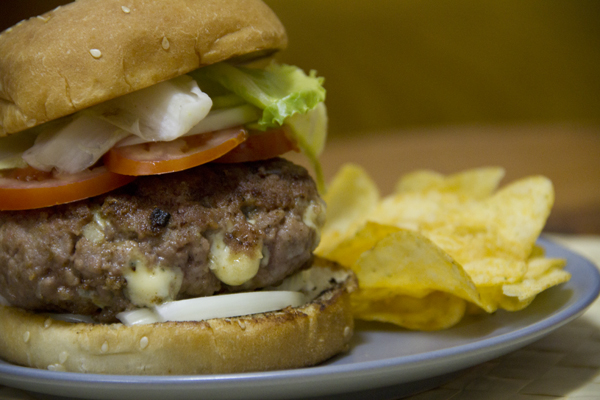
Good and freezing morning. Today we’re bringing you a really simple recipe, the kind that even Jesús will be able to pull off without having to call twenty times :p The thing is, I’m a huge fan of making burgers at home. They’re usually way better than the ones you eat out, plus you make them to your own taste and load them with the ingredients you like best. This time we made the burger with blue cheese mixed right into the patty.

Pics and Cakes

What do we need?

(For each big-eater burger)

  • 200 g (7 oz) ground beef

  • 25-30 g (1 oz) blue cheese

  • 1 egg

  • Pepper

  • Salt

  • Breadcrumbs

  • Tomato

  • Lettuce

  • Onion

  • Burger bun

How do we make it?

  • Take the ground beef and dump it into a large bowl, since you’re going to be getting your hands in there.

  • Add the egg, a bit of freshly ground pepper, salt to taste, and a little breadcrumbs to give the meat some consistency.

  • Mix everything together with your hands.

  • Once all the ingredients are well combined, add the blue cheese cut into cubes. Try to work it into the meat but without pressing too hard so the cheese doesn’t break apart.

  • Wrap in cling film and shape into a burger.

  • Let the burger rest in the fridge for a couple of hours.

  • When you’re ready to eat, put a frying pan with a splash of oil over the heat and, while it’s warming up, start chopping the rest of the ingredients.

  • Cut the onion into rings, the lettuce into fairly large leaves (that way it’s easier to eat), and the tomato into slices.

  • Once the oil is hot, lower the heat a bit so the burger doesn’t burn on the outside while staying raw inside. Cook it to your liking (I like mine rare).

  • When it’s done, set it aside, wipe the pan clean with kitchen paper, and toast the bun for about half a minute.

  • Build your burger and enjoy.

Tips:

  • If you’re not going to use all the ground beef you bought, you can keep the formed patties in the freezer.

  • For me, as I said, I really enjoy a good burger, so 150 to 200 grams (5-7 oz) of ground beef is the “standard” size. Yes, that’s on the generous side, but hey, it’s a burger. Obviously you can make it with less.

  • If you want, you can dust the patty in flour before cooking it.

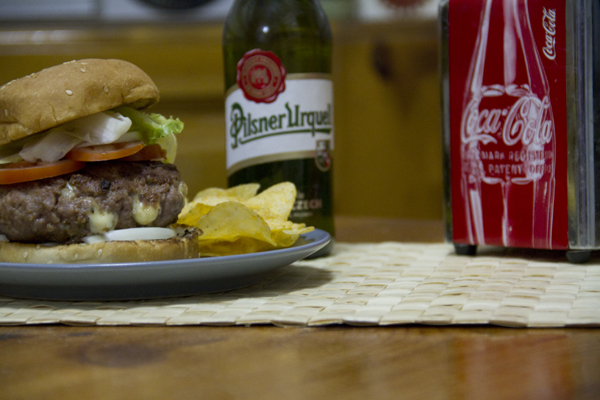
  • As my dad says when we play tute, “side dish requested.” A good beer or a cold Coke with fries (homemade or store-bought) is a must.

Pics and Cakes

[English version] **Ingredients:

(For each big hamburger)

  • 200 g de minced meat

  • 25-30 g de blue cheese

  • 1 egg

  • Pepper

  • Salt

  • Bread crumbs

  • Tomato

  • Salad

  • Onion

  • Hamburger bun

  • Place minced meat into a large bowl and mix well with your hands.

  • Add the egg, a bit of salt and pepper and some bread crumbs.

  • Mix well all ingredients.

  • Then chop blue cheese into small squares and add to the meat mix. Try to ‘knead’ the mix integrating the cheese but keeping it into pieces.

  • Make a ball, wrap in cling film and and flatten it with your hand to have hamburger shape.

  • Leave for a couple of hours in fridge.

  • Then, pour a bit of olive oil in the frying pan. Let it get warm and start preparing your fresh ingredients (onion, tomato and salad).

  • Cut onion into rings, tomato into slices and salad (lettuce) into big parts (it will be easier to eat).

  • Cook the hamburger according to your preferences (well done, medium or rare).

  • When it’s ready take it out from the pan, clean the frying pan with kitchen paper and toat the bread bun.

  • Prepare you hamburger sandwich with all the ingredients and enjoy it.

Tips:

  • You can freeze the prepared raw hamburgers and you will only need to defrost and cook in the pan whenever you need it.

  • This amount of minced meat is for a big hamburger but it’s up to you the size of your hamburger.

  • You can coat in flour the raw hamburger before cooking it.

  • It’s a must to serve the hamburger with a cold beer and chips or fries.


11 de diciembre de 2012 · 4 min · Cesmm

Hamburguesa con queso azul

Buenos y gélidos días. Hoy os presentamos una receta bien sencilla, de esas que hasta Jesús será capaz de hacer sin necesidad de llamar veinte veces :p El caso es que yo soy muy fan de hacer las hamburguesas en casa. Normalmente están mucho mejor que las que comes por ahí y encima las haces a tu gusto y le pones los ingredientes que más te gustan. En esta ocasión nosotros hicimos la hamburguesa integrando queso azul en ella.

Pics and Cakes

**¿Qué necesitamos? **

(Para cada hamburguesa de buen comedor)

  • 200 g de carne picada

  • 25-30 g de queso azul

  • 1 huevo

  • Pimienta

  • Sal

  • Pan rallado

  • Tomate

  • Lechuga

  • Cebolla

  • Pan de hamburguesa

¿Cómo lo hacemos?

  • Cogemos la carne picada la pasamos a un bol grande, ya que hay que manosear.

  • Añadimos el huevo, un poco de pimienta recién molida, sal al gusto y un poco de pan rallado para dar consistencia a la carne.

  • Mezclamos todo con las manos.

  • Cuando esté bien mezclado todos los ingredientes añadimos el queso azul cortado en cuadrados. Intentaremos integrarlo en la carne pero sin hacer mucha fuerza para que el queso no se rompa.

  • Envolvemos en film transparente y damos forma de hamburguesa.

  • Dejamos que la hamburguesa repose en la nevera un par de horas.

  • Cuando la vayamos a comer, ponemos una sartén con un chorrito de aceite en el fuego y mientras coge temperatura vamos cortando el resto de ingredientes.

  • Partimos la cebolla en aros, la lechuga en hojas más o menos grandes (así será más fácil de comer) y el tomate en rodajas.

  • Cuando el aceite esté caliente bajamos un poco la temperatura  para que no se nos queme mucho por fuera y se quede muy cruda por dentro. La hacemos a nuestro gusto (a mí me gusta poco hecha).

  • Cuando esté lista reservamos y limpiamos la sartén con papel de cocina y ponemos el pan medio minuto para tostarlo un poco.

  • Montamos la hamburguesa y a disfrutar.

Consejos:

  • Si no vais a consumir toda la carne picada que habéis comprado podéis conservar la hamburguesa ya hecha en el congelador.

  • Para mí, que como he dicho antes disfruto de las hamburguesas, de 150 a 200 gramos de carne picada es la medida “estándar” . Sí, es bastante tirando a mucho pero es que es una hamburguesa. Evidentemente podéis hacerla con menos cantidad.

  • Si queréis podéis pasar la hamburguesa por harina antes de hacerla en la sartén.

  • Como dice mi padre cuando jugamos al tute “se ruega acompañamiento”. Una buena cerveza o una coca-cola fría con patatas (hechas o compradas) son imprescindibles.

Pics and Cakes

[English version] **Ingredients:

(For each big hamburger)

  • 200 g de minced meat

  • 25-30 g de blue cheese

  • 1 egg

  • Pepper

  • Salt

  • Bread crumbs

  • Tomato

  • Salad

  • Onion

  • Hamburger bun

  • Place minced meat into a large bowl and mix well with your hands.

  • Add the egg, a bit of salt and pepper and some bread crumbs.

  • Mix well all ingredients.

  • Then chop blue cheese into small squares and add to the meat mix. Try to ‘knead’ the mix integrating the cheese but keeping it into pieces.

  • Make a ball, wrap in cling film and and flatten it with your hand to have hamburger shape.

  • Leave for a couple of hours in fridge.

  • Then, pour a bit of olive oil in the frying pan. Let it get warm and start preparing your fresh ingredients (onion, tomato and salad).

  • Cut onion into rings, tomato into slices and salad (lettuce) into big parts (it will be easier to eat).

  • Cook the hamburger according to your preferences (well done, medium or rare).

  • When it’s ready take it out from the pan, clean the frying pan with kitchen paper and toat the bread bun.

  • Prepare you hamburger sandwich with all the ingredients and enjoy it.

Tips:

  • You can freeze the prepared raw hamburgers and you will only need to defrost and cook in the pan whenever you need it.

  • This amount of minced meat is for a big hamburger but it’s up to you the size of your hamburger.

  • You can coat in flour the raw hamburger before cooking it.

  • It’s a must to serve the hamburger with a cold beer and chips or fries.


11 de diciembre de 2012 · 4 min · Cesmm