Scones

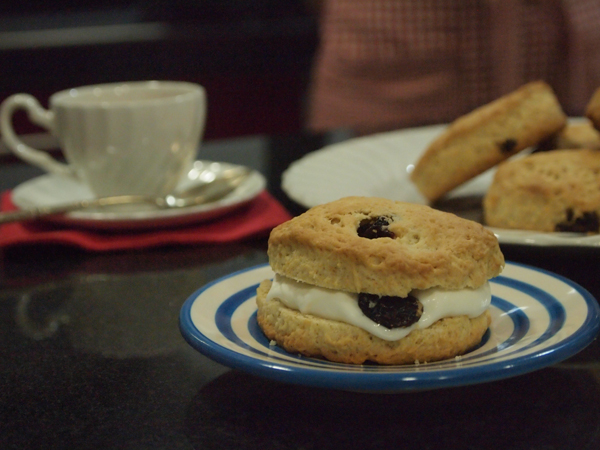
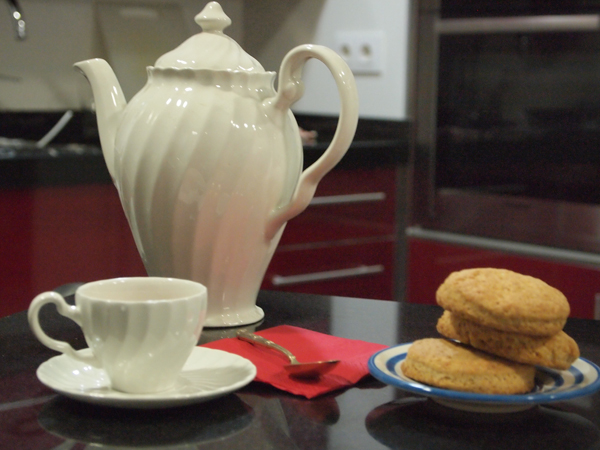
Whole Kitchen, in their Sweet Proposal for January, invites us to make a Scottish classic: Scones

We almost ran out of time with this recipe because — unusual for us — we made it the same day it was published. Luckily, it’s super easy and takes very little time. As usual, the baking time is what stretches the recipe out the most, but hey, the little wait is well worth it. We followed the recipe from www.joyofbaking.com
Pics and Cakes

What do we need?

  • 260 g (2 cups) all-purpose flour

  • 50 g (¼ cup) sugar

  • 1 sachet of Royal baking powder

  • a pinch of salt

  • 75 g (5 tbsp) very cold butter, cubed

  • 1 beaten egg

  • 120 ml (½ cup) heavy cream

How do we make it?

  • Preheat the oven to 190°C (375°F).

  • In a bowl, mix the flour with the sugar, baking powder and salt. Add the butter and rub it in with your fingertips — it should look like crumbs. Set aside.

  • In a separate bowl, mix the egg with the cream.

  • Combine both mixtures until well integrated, but don’t overwork the dough.

  • Roll out lightly until you have a fairly thick dough (about 1.5 cm / ½ inch). (Our first ones came out too thin.) Using a cookie cutter or a glass, cut out circles about 6 cm (2.5 inches) wide.

  • Place them on a baking tray lined with parchment paper and brush with a little milk.

  • Bake for 15 to 18 minutes, until golden.

  • Take them out of the oven and let them cool on a wire rack.

Tips:

  • We forgot to brush the scones with milk and they still turned out delicious, so if you forget too, it’s not the end of the world.

  • You can add chocolate chips, nuts, raisins… to the dough. This time we used dried cranberries.

  • To eat them, just split them in half and spread on butter and jam, whipped cream, lemon curd or anything else you fancy.
Pics and Cakes

[English version] SCONES* Ingredients: *

  • 260 g all-purpose flour

  • 50 g granulated white sugar

  • *1 sachet baking powder *

  • 1/4 teaspoon salt

  • 75 g cold unsalted butter

  • 1 large egg

  • 120 ml milk, half-and-half, or heavy cream

  • *Preheat oven to 190 degrees C. Line a baking sheet with parchment paper. *

  • In a large bowl, whisk or sift together the flour, sugar, baking powder and salt. Cut the butter into small pieces and blend into the flour mixture with a pastry blender, two knives, or with your fingertips. (The mixture should look like coarse crumbs.) In a small measuring cup whisk together the milk or cream and beaten egg. Add this mixture to the flour mixture. Stir just until combined. Do not over mix.

  • Transfer to a lightly floured surface and knead the dough gently four or five times and then pat into a 1,5cm of thickness. Then, using a 6 cm round cookie cutter, cut the dough into rounds. Place the rounds on the prepared cookie sheet, spacing a few centimetres apart. Brush the tops of the scones with a little cream.(This helps to brown the tops of the scones during baking.)

  • *Bake for about 15 -18 minutes or until nicely browned and a toothpick inserted into the center of a scone comes out clean. Remove from oven and transfer to a wire rack to cool. *

Tips:

*- We forgot brushing the scones with milk before baking. The result was wonderful anyway, so in case you forget it too, don’t panic! *

- You can add to the dough chocolate chips, nuts, raisins… We used dried cranberries.

*- You can serve them with butter and jam, marmalade, whipped cream, lemon curd or anything you like. *


Comments

Marivi (2013-01-26 00:39:22):

They look fantastic, and with the filling I’m sure they were even better.

Cristina (2013-01-26 00:55:54):

I really like your version, with cranberries they must be really good ;) and judging by the photos they look delicious!

A kiss!

PIlarHG (2013-01-26 00:59:03):

The same thing happened to me! I ended up making the recipe today too! Lucky it’s a quick one! They turned out great! ;)

Apfelstrudelkuchen (2013-01-26 01:55:06):

Hi!!!

Yeah, it’s true that nothing happens if you don’t brush them, because those scones look absolutely delicious.

A little kiss, Sandra von Cake

Palstelera (2013-01-26 12:48:42):

The truth is they were really tasty, and since I used the leftover cream to whip it up with a bit of sugar, even better. :-)

Palstelera (2013-01-26 12:49:39):

So glad you like them. The cranberries were a last-minute decision and they worked out really well.

Palstelera (2013-01-26 12:50:13):

Yes! Thank goodness they were quick :-)

Palstelera (2013-01-26 12:51:02):

Although now I’ll have to make them again to make them thicker and brushed with milk to see how they turn out :-)

Gri (2013-01-28 11:20:08):

I love your scones… they look fantastic!

A hug Gri http://eltallerdelosviernes.blogspot.com.es/2013/01/hoy-toca-receta-del-cwk.html

mara (2013-01-28 16:49:19):

They turned out so well and look so good with cranberries. I made mine plain because my daughters don’t like them. Here’s my version http://masdulcequesaladopuntocom.blogspot.com.es/2013/01/scones.html

zordor (2013-01-30 05:45:23):

This had a rhyme to it, but honestly I can’t remember what it was right now… :P

guillus (2013-02-27 20:27:45):

Scones! Do we also have to explain how to eat them? :P

guillus (2013-02-27 20:28:47):

Scones! Do we also have to explain how to eat them? :P And with clotted cream they’re even better…
January 25, 2013 · 5 min · Palstelera

Sweet and Sour Pork

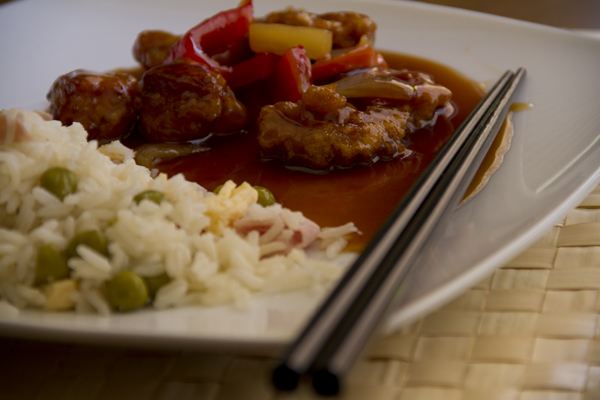
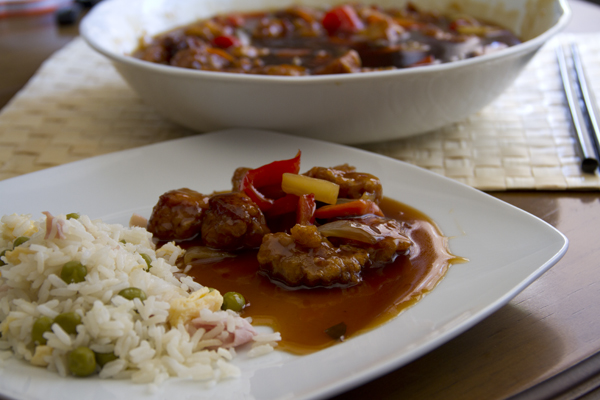
Whole Kitchen, in their Savory Proposal for January, invites us to make a Chinese classic: sweet and sour pork.

**For us, this is THE go-to dish whenever we have Chinese food, so it couldn’t be missing from our blog. To be honest, I don’t even know exactly where I got the recipe from, because I ended up mashing together a bunch of different websites and now I can’t recall the exact source. But hey, like with any dish, the trick is to give it a go, and if there’s something you don’t love, tweak it to your taste — that’s what your own kitchen is for.

Pics and Cakes

What do we need?

  • 400 g (14 oz) lean pork

  • 1 large onion

  • 1 red bell pepper

  • 1 carrot

  • 4 pineapple slices

  • Oil

  • Salt

For the batter:

  • 3 tablespoons all-purpose flour

  • 2 tablespoons cornstarch

  • 1 egg

  • 1 teaspoon baking powder

  • Water

For the sweet and sour sauce:

  • 3/4 cup sugar

  • 1/3 cup apple cider vinegar

  • 2/3 cup water

  • 1/4 cup soy sauce

  • 2 tablespoons ketchup

  • 2 tablespoons Worcestershire sauce

  • 2 tablespoons cornstarch

Pics and Cakes

How do we make it?

  • First, we make the sweet and sour sauce. Put all the ingredients except the cornstarch into a medium saucepan and cook over high heat so that everything mixes and dissolves well.

  • Let it come to a boil and then simmer over medium heat for a few minutes so the sauce reduces and thickens. Dissolve the cornstarch in a cup with a little water and add it to the sauce. Once it has the consistency you want, take it off the heat.

  • Cut the onion and bell pepper into medium-sized squares (about 1.5 cm / 1/2 inch).

  • Slice the carrot thinly on the diagonal.

  • Cut the pineapple into chunks.

  • In a pan with a little oil, stir-fry all the veggies (add the pineapple last). Don’t overcook them — we want them to stay crunchy.

  • Once they’re ready, take them out and add them to the saucepan with the sweet and sour sauce.

  • Cut the pork into bite-sized cubes (similar in size to the veggies) and season with salt.

  • In a bowl, mix the two flours and the baking powder, then add the egg and very cold water. The amount of water varies, so it’s better to add it little by little until you get the texture of a light béchamel.

  • While the oil heats up in a frying pan, drop the pieces of pork into the bowl with the batter.

  • Once the oil is good and hot, fry the coated pieces one by one. When they’re golden, take them out onto a plate lined with paper towels.

  • Finally, add the fried pork to the saucepan with the sweet and sour sauce and veggies. If the sauce has cooled down by now, warm it back up before adding the meat.

  • Serve with white rice, basmati rice, or three delights fried rice.

Tips:

  • When making the sweet and sour sauce, I’d recommend not pouring in all the vinegar at once, as it can come out really strong. Better to add it bit by bit, to taste.

  • If the pineapple you used is canned (in its own juice), you can add that juice to the sweet and sour sauce.

  • The battered meat goes in right at the end so the coating stays crispy. That’s why I recommend serving and eating it right away.

January 18, 2013 · 3 min · Palstelera

Baklava

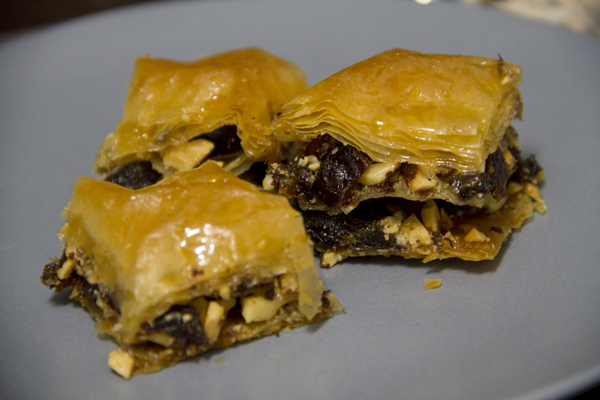
Whole kitchen, for their Sweet Proposal for the month of November, invites us to prepare a Persian classic: Baklava. Apparently this little pastry has its origins in ancient Mesopotamia, although several cultures and civilizations are still fighting over who actually invented it. Persian, Greek or Arab — it’s delicious. This time we’ve made two versions: one with dates and toasted almonds, and another with hazelnuts and chocolate. Filo pastry is a wonder of the kitchen that you really have to try, both for sweet and savory.

Pics and Cakes

What do we need?

  • 1 package of filo pastry

  • 100 g (3.5 oz) butter

For the syrup:

  • 210 ml (scant 1 cup) water

  • 180 g (about 3/4 cup) sugar

  • 30 g (1 tbsp) honey

  • Juice of half a lemon

  • A cinnamon stick

For the filling:

  • 18 dates

  • 50 g (1.75 oz) toasted almonds

  • 50 g (1.75 oz) chocolate (drops or chips)

  • 50 g (1.75 oz) hazelnuts

Pics and Cakes

How do we make it?

  • We start by making the syrup. Put all the ingredients in a saucepan and, over high heat, bring to a boil. Lower the heat a bit and let it simmer for about 15 minutes so it thickens.

  • Preheat the oven to 180°C (355°F).

  • Prepare the filling: pit the dates and cut them into small pieces. Chop the almonds and hazelnuts as well. In one bowl mix the dates with the almonds, and in another mix the hazelnuts with the chocolate.

  • Melt the butter for a few seconds in the microwave.

  • Grease the baking dish you’re going to use with butter and cut all the filo sheets to the size of your tray.

  • Lay down a sheet of filo and, with a brush or your hands, smear it with butter on one side. Add another layer and brush it with butter again. Keep going until you have 8 layers.

  • Spread half of the date-and-almond filling over the filo.

  • Add more filo on top — this time, 4 layers (always brushed with butter so they stay separate after baking).

  • Add the rest of the date-and-almond filling.

  • Make another batch of 8 filo layers (always buttered).

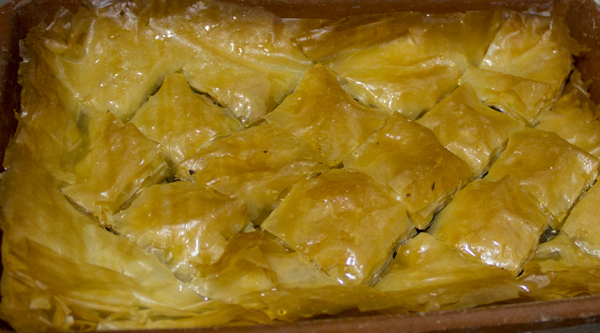
  • With a sharp knife, cut the baklava into squares.

  • Bake for 45 minutes total: the first 20 minutes uncovered, and the next 25 minutes with a sheet of aluminum foil over the baklava so it doesn’t brown too much.

  • As soon as you take it out of the oven, let it rest for 5 minutes, then pour the cold syrup over the hot baklava (this way it’ll stay crispy).

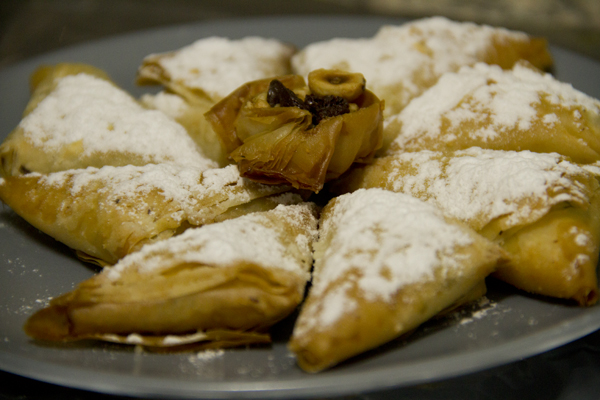
  • For the hazelnut-and-chocolate version you can repeat the same process in another baking dish, or make triangles. To do that, cut the filo into strips of about 5 cm by 20 cm (2 in by 8 in). Brush each layer with butter and stack 4 strips together.

  • Place a teaspoon of filling at one end and fold a corner over to form a triangle with the filling tucked inside. Take the other end and keep folding the triangle over itself. (Since it’s a bit tricky to explain, I found [this video](

{{}}

) where you can easily see how to do it.)

  • Bake them at 180°C (355°F) too, but they’ll be ready in 10–15 minutes.

  • Once out of the oven, you can dust them with powdered sugar.

Tips:

  • Filo pastry dries out very quickly, so whenever you’re not using it, keep it well wrapped in a plastic bag.

  • It’s important to add butter between each layer, but you don’t need to “drown” it either.

  • It’s quite a rich, filling sweet, so it’s better to cut the squares small.

Pics and Cakes

[English version] BAKLAVA* *Ingredients:

  • 1 package of filo pastry

  • 100 g butter

For the syrup:

  • 210 ml water

  • 180 g sugar

  • 30 g honey

  • Juice of 1/2 lemon

  • Cinnammon stick

For the filling:

  • 18 dates

  • 50 g almonds

  • 50 g chocolate (drops or chips)

  • 50 g hazelnuts

  • Combine the syrup ingredients in a medium saucepan and bring to boil. Let the syrup simmer on low heat for about 15 minutes

  • Preheat oven at 180ºC.

  • *Now prepare the filling: pit the dates and chop into small pieces. Chop almonds and hazelnuts. Mix almonds and dates into a bowl and chocolate and hazelnut in other. *

  • Melt the butter in the microwave for a few seconds.

  • Butter the baking pan and cut the filo pastry sheets into the size of the baking pan.

  • *Place a sheet of filo pastry and butter it. Place another sheet over it and butter again. Do it again until having 8 layers. *

  • *Scatter half of the dates-almonds filling. *

  • *Place more filo pastry. This time, only 4 layers but always buttered. It will make to have separate layers once the baklava is baked. *

  • *Add the other half of the filling. *

  • *Create another pack of 8 layers of filo pastry (always buttered). *

  • *With sharp knife cut baklava into small squares. *

  • *Bake for 45 minutes. The first 20 minutes uncovered and then you can cover with aluminium foil to prevent it from browning too much. *

  • When you take it out from oven, let stand for 5 minutes and then pour the cold syrup.

  • For the hazelnut-chocolate version, you can follow the same steps or make small triangles of filo pastry. For the triangles, cut the pastry into stripes (4 x 20 cm aprox.). Butter each stripe and put 4 of them together.

  • *Add a tsp of the filling in one of the sides and proceed to fold into triangle shape. You can see how to do it easily in [this video](

{{}}

).*

  • Bake at 180ºC only for 10-15 minutes.

  • You can powder some confectioners’ sugar when you take them out from oven.

Tips:

*- Filo pastry dries very fast, so when you are not using it, keep it in a plastic bag. *

- It’s important to butter every single sheet (layer) of filo pastry but don’t “over butter” (otherwise, it will be too greasy).

- It’s a filling sweet, so make small squares when cutting the baklava.


Comments

Apfelstrudelkuchen (2012-11-26 00:03:04):

Hi!!

Your baklava-as-triangles version turned out really original!! And with dates it must be amazing.

Hugs,

Mara (2012-11-26 17:34:08):

So good with the chocolate touch. I love the idea of making individual portions, because when you cut it the filo sheets tend to come apart a bit. Since everyone at home liked it so much I’ll make it again, and I’m going to do it your way, in the individual triangle version. This is my version: http://masdulcequesaladopuntocom.blogspot.com.es/

tía pi (2012-11-27 17:48:26):

This Friday I have guests over for dinner — it’s going to be a light meal, so the baklava is going to be a great dessert. I’ll let you know how it goes.

silvia (2012-11-29 22:09:14):

The little chocolate triangles were really tasty… and that’s saying something, because I’m not really one for sweets…

Palstelera (2012-12-07 19:16:00):

Mara, I’m glad you like the little-triangles version… :-)

November 25, 2012 · 6 min · Palstelera

Ciabatta Bread

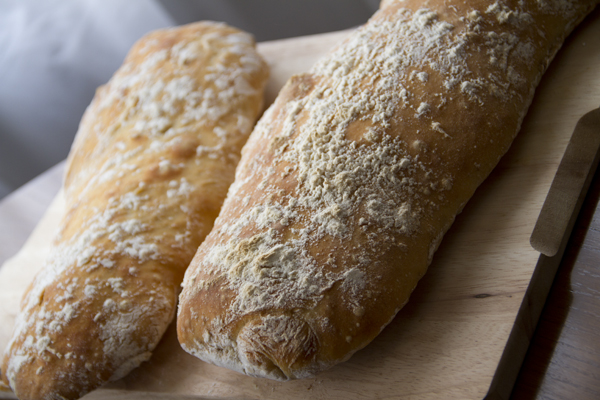
Whole Kitchen in their Savory Challenge for the month of November invites us to prepare an Italian classic: “Ciabatta”. I had been really wanting to make this recipe but I never thought it would turn out well, and… it turned out so well, yes indeed! It even looked like a real ciabatta. The recipe is slow because of the rising times, but it’s simple to make and the result is incredibly good.

Pics and Cakes

What do we need?

(For two loaves)

For the starter:

  • 2.5 g fresh yeast

  • 150 ml (2/3 cup) water

  • 3 tablespoons warm milk

  • 1/4 teaspoon honey or granulated sugar

  • 150 g (1.25 cups) bread flour

For the dough:

  • 2.5 g fresh yeast

  • 250 ml (1 cup) water

  • 1/2 tablespoon olive oil

  • 350 g (2.75 cups) bread flour

  • 1 and 1/2 teaspoons salt

Pics and Cakes

How do we make it?

  • First, we prepare the starter. Sprinkle the yeast into a large bowl with the water and milk. Let it sit for 5 minutes, then add the honey or sugar and stir to dissolve.

  • Add the flour and mix to form a loose dough. Cover the bowl with a kitchen towel and let it ferment for 12 hours or overnight.

  • Once the wait is over, we move on to the dough. Sprinkle the yeast into a small bowl with the water. Let it sit for 5 minutes; stir to dissolve. Add the yeast water and the olive oil to the starter and mix well.

  • Into the bowl, add the flour with the salt and mix to form a wet, sticky dough. Beat continuously with a wooden spoon for 5 minutes; the dough will turn fluffy and start to pull away from the sides, but it will still be too soft to knead.

  • Cover the dough with a kitchen towel. Let it ferment for about 3 hours, until the dough has tripled in size and is full of air bubbles. Generously flour two baking sheets and have extra flour ready to dust your hands.

  • Divide the dough in half while it’s still in the bowl. Tip half of the dough onto one of the sheets.

  • With your hands well coated in flour, shape it into a rectangular loaf about 30 cm (12 inches) long. Dust the loaf and your hands again with flour. Tidy and thicken it by running your fingers along the sides and gently tucking under the bottom of the dough. Repeat the same with the other half.

  • Uncovered, let the loaves rise for about 20 minutes; they will spread out and grow in volume.

  • Put them in the oven, preheated to 220°C (430°F), and bake for 30 minutes until the loaves have risen, are golden brown, and sound hollow when tapped on the bottom. Let cool on a wire rack.

Tips:

  • It’s a very sticky dough that you barely have to work with your hands. That’s why, in the final steps, it’s important to keep your hands well covered in flour and not handle the dough too much, since otherwise half of it will end up stuck to you.

  • I use the pressed baker’s yeast you can find in cubes in the supermarket in the bakery/pastry section, always refrigerated. I buy a bunch and freeze them, so I always have some on hand whenever I need it. That said, it’s important to keep in mind that frozen yeast loses a bit of its “power”, so you’ll need to add a little more than what the recipe calls for.

  • When baking, I put both sheets in at the same time and after 20 minutes I swapped them so that both loaves cooked evenly on both sides.

Pics and Cakes


Comments

Marisa (2012-11-22 12:51:05):

She brought a piece home for me and it’s awesome, delicious, amazing… mmm, I want more!

tía pi (2012-11-22 18:13:13):

It’s a pleasure how well you explain everything and the tips you give. I promise to make it and tell you how it turns out.

Angeles (2012-11-22 22:35:32):

It looks fantastic, just like an authentic Italian ciabatta.

marmota zampona (2012-11-24 19:27:46):

I’m going to give it a try right now.

November 22, 2012 · 4 min · Palstelera

Brownie

Whole Kitchen’s Sweet Proposal for October invites us to make an American classic: brownies

And what a treat, seriously. I’ve made dozens of brownies in my life and I have to confess I almost always pull out a different recipe and they all turn out delicious. The secret is that a brownie is a compact but fluffy cake (sometimes even moist), since it usually doesn’t have any leavening and therefore doesn’t rise. I read somewhere that the brownie was actually discovered thanks to someone forgetting to add the leavening to a chocolate cake. All I can say is… blessed mistake!

Pics and Cakes

What do we need?

  • 200 g (7 oz) baking chocolate

  • 100 g (3.5 oz / 7 tbsp) butter

  • 2 eggs

  • 100 g (1/2 cup) regular sugar

  • 1/2 teaspoon baking soda

  • 1/2 teaspoon salt

  • 80 g (2/3 cup) flour

  • 100 g (3.5 oz / about 1 cup) walnuts

Pics and Cakes

How do we make it?

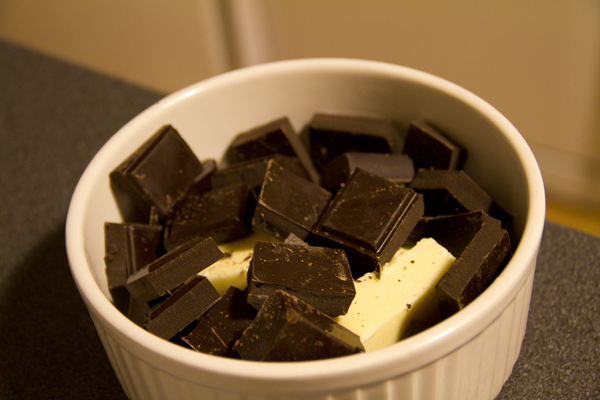
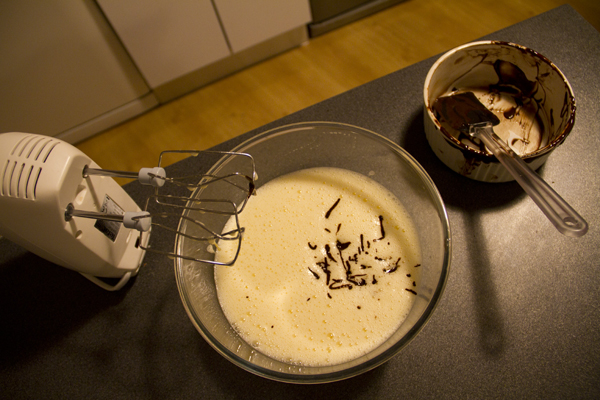
  • Chop the chocolate and put it in a microwave-safe bowl together with the butter. Melt in 20-30 second intervals, stirring each time so it doesn’t burn.

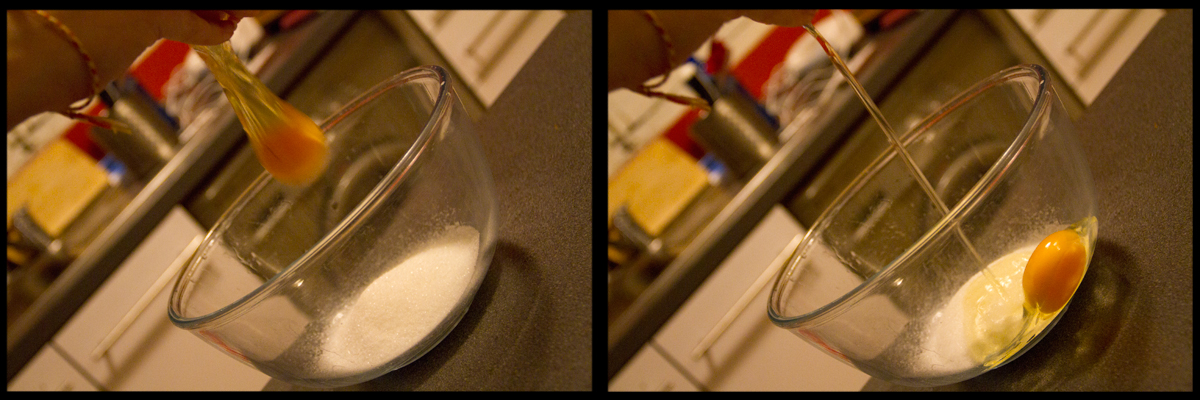
  • In another large bowl, whisk the eggs with the sugar until you get a foamy mixture.

  • Add the chocolate to this foamy mixture and stir well.

  • Mix the flour with the salt and baking soda. Sift it and add it to the previous mixture.

  • Stir well and add the walnuts.

  • Prepare a baking pan, greasing and flouring it so the cake doesn’t stick, and pour the mixture into it.

  • Put it in the oven (preheated to 180°C / 350°F) and bake for about 30 minutes.

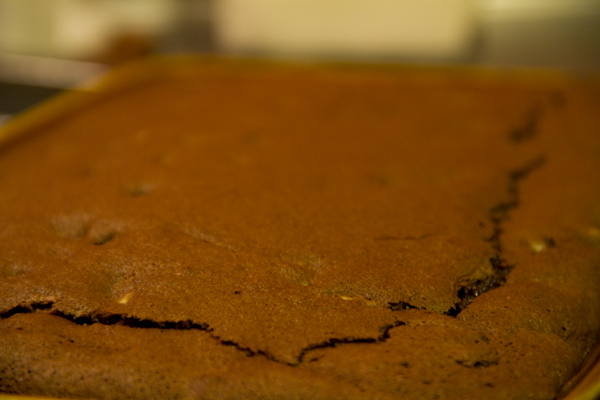
  • It’ll be ready when you see a light brown crust has formed on top. Remember that the toothpick won’t come out perfectly clean since this is a moist cake. The important thing is that it’s not completely liquid.

Pics and Cakes

Tips:

  • Even though brownie batter is pretty dense and it’s usually not necessary, a trick to keep the walnuts from sinking to the bottom of the pan is to coat them in flour or cocoa first.

  • To turn the brownie into a proper dessert, serve it with a scoop of vanilla ice cream and hot chocolate sauce on top.

Pics and Cakes

[English version] BROWNIES* *Ingredients:

  • 200 g chocolate

  • 100 g butter

  • 2 eggs

  • 100 g sugar (sugar or confectioners’ sugar)

  • 1/2 tsp baking soda

  • 1/2 tsp salt

  • 80 g flor

  • *100 g walnuts *

  • Cut chocolate into chunks and put into a microwave bowl with butter. Melt it slowly (stop every 20-30 seconds and stir with a spoon).

  • *In a large bowl, whisk the eggs and the sugar together to get a fluffy mix. *

  • Add chocolate cream and stir well.

  • *Mix flour, salt and baking soda. Sift the flour mix and add to the previous cream. *

  • *Stir well and add walnuts. *

  • *Prepare the baking pan (butter and flour it!) and pour the mixture on it. *

  • *Put into oven (preheated at 180ºC) and bake for 30 minutes. *

  • *It will be ready when you see a brown crust created on the top. If you insert a needle or knife to check the baking, it might not be clean because it’s supposed to be a ‘wet’ cake. *

  • ** Tips:- Normally this tip is not needed with brownies recipe because the dough is very thick. However, when you add nuts to a cake and you don’t want to have all of them at the bottom of your baking pan, you can coat the walnuts in flour or cocoa powder. *- For a perfect dessert result, serve the brownie with a scoop of vanilla ice-cream and hot chocolate sauce over it!

October 25, 2012 · 4 min · Palstelera

Coq au vin

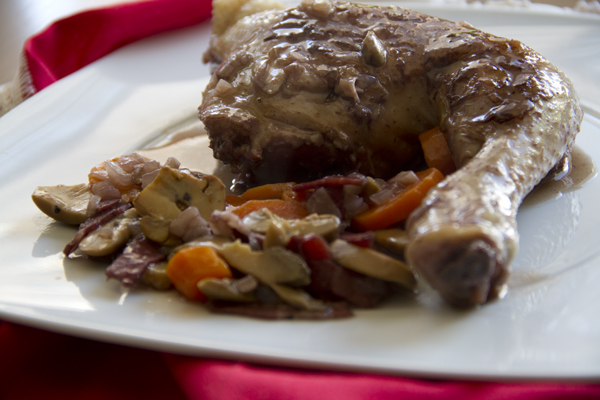
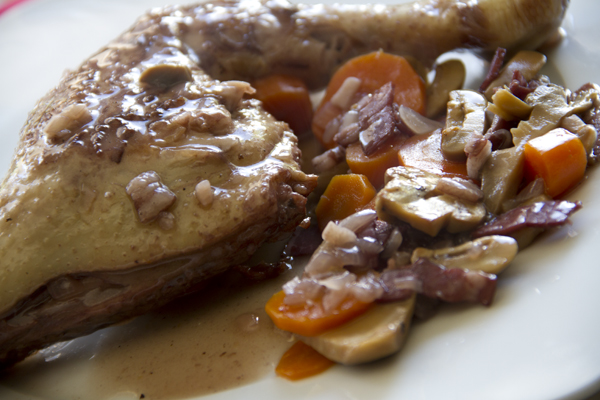
Whole kitchen in their Savory Proposal for October invites us to prepare a French classic, “Coq au Vin”. Or in other words, chicken in wine — you can tell I learned French at school :p.

Pics and Cakes

What do we need?

(serves 2)

  • 2 chicken thighs

  • 1 large onion

  • 2 carrots

  • 3 slices of bacon

  • 2 cloves of garlic

  • 50 g (1.75 oz) mushrooms

  • 2 glasses of wine

  • 4 glasses of chicken stock

  • Flour and butter

  • Salt and pepper

How do we make it?

  • Start by chopping the onion, carrot and bacon.

  • Heat a little oil over medium heat in a wide, shallow pot. Add the chopped ingredients.

  • Once they’re slightly golden, add the minced garlic, cook for a minute and set aside in a bowl.

  • In a zip-lock plastic bag, add a couple of tablespoons of flour, a pinch of salt and pepper. Drop in one of the thighs and shake to coat. Repeat with the other.

  • Once floured and seasoned, sear the thighs in a pan for about 10 minutes.

  • Remove the chicken, add the wine and let it reduce a bit.

  • Return the thighs to the pan, add the vegetables and pour in the chicken stock.

  • Simmer everything together over low heat for about 50 minutes.

  • Once the chicken is well cooked, remove the chicken and the vegetables.

  • With a tablespoon of flour and one of butter, form a smooth paste and stir it into the sauce.

  • Stirring constantly, cook over low heat for a couple of minutes until the mixture thickens.

  • In a frying pan with a little oil, sauté the mushrooms until golden.

  • Finally, return all the ingredients to the pot and let everything cook together for a couple of minutes so the flavors blend.

Tips:

  • If you have some sauce left over, you can use it to make some tasty meatballs in sauce.

  • If it doesn’t thicken enough, add a tablespoon of cornstarch dissolved in cold water.

Pics and Cakes

[English version] COQ AU VIN* *Ingredients (serving 2):

  • 2 chicken legs an thighs

  • 1 large onion

  • 2 carrots

  • 3 bacon slides

  • 2 cloves of garlic

  • 50 g mushrooms

  • 2 cups of red wine

  • *4 cups of chicken stock *

  • Flour and butter

  • Salt and pepper

  • Chop onion, carrot and bacon.

  • *Place some olive oil into a deep sauce pan and heat it. Add chopped ingredients. *

  • Cook until ingredients are slightly browned, add chopped garlic and keep cooking for one minute. Set aside.

  • *Put a couple of tbsp of flour, a pinch of salt and pepper into a plastic bag. Put the chicken inside and shake it well to create a thin layer on the chicken. *

  • Stir over a high heat for 10 minutes.

  • *Remove chicken, add red wine and simmer to reduce it. *

  • *Put the chicken back into the sauce pan, add chopped vegetables and chicken stock. *

  • *Simmer for round 50 minutes, cooking over a low heat. *

  • When chicken is soft and cooked, remove it from the sauce pan.

  • *In a different bowl, mix some flour and butter and add it to the sauce. *

  • *Keep stiring, cooking over a low heat for a couple of minutes. *

  • *In another pan, stir fry the mushrooms with a bit of olive oil until golden browned. *

  • Add all the ingredients into the sauce pan with the wine sauce and cook for a couple of minutes in order to combine all flavors.

  • Tips:**- If there is some sauce left, you can use for preparing meatballs. It will be delicious!*
    • If you want a thicker sauce, add some corn flour.*

Comments

tía pi (2012-11-18 22:03:03):

Today I made the coq au vin following your recipe — delicious! I didn’t make it with rooster, I used a free-range chicken, one of those that look like they’ve got hepatitis, and honestly it was finger-licking good. I had some sauce left over and I’m planning to poach a few eggs to keep dipping bread. Thanks, piggies.

October 18, 2012 · 4 min · Cesmm

Piononos

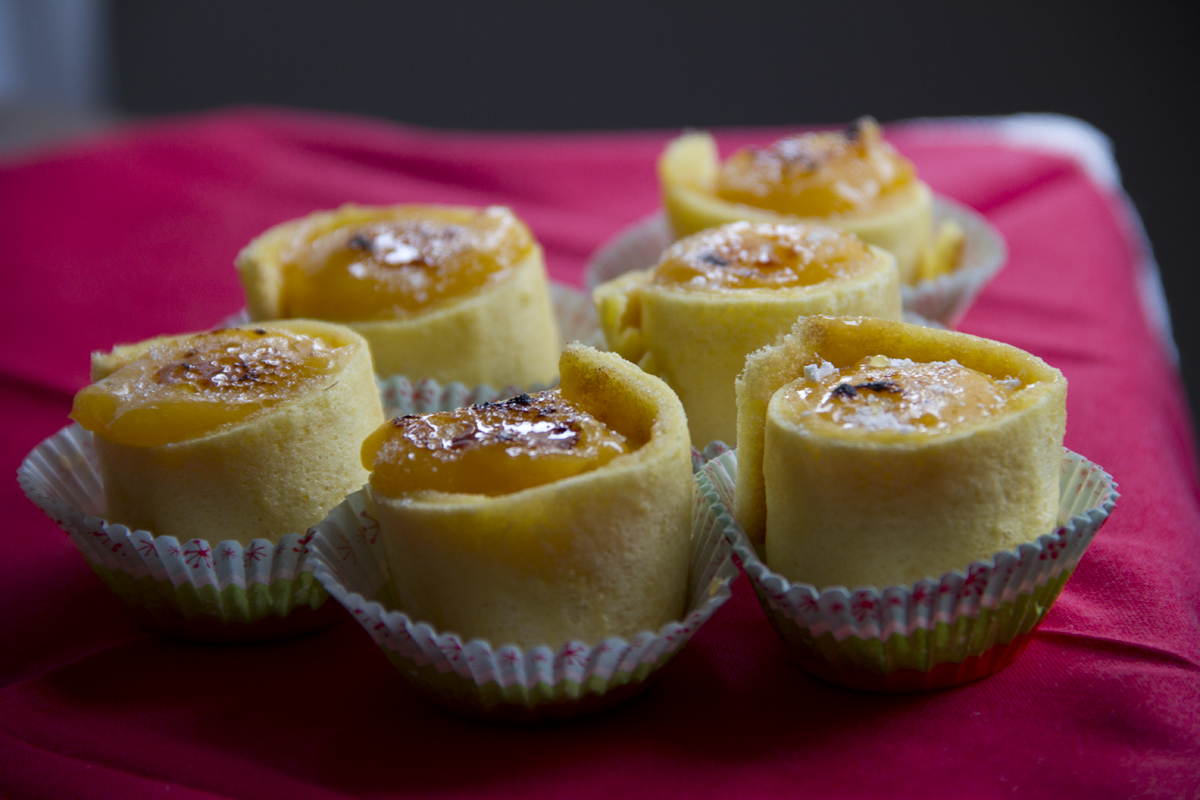
Whole kitchen, in their Sweet Proposal for September, invites us to make a Spanish classic: “Piononos”. And honestly, this challenge made me really happy because I think these little pastries are an absolute delight. I’d actually come across them before, though under the popular nickname ‘Vicksvaporub’ at Confitería Rufino in Aracena. Apparently they’re typical of Granada, and legend has it they got their name because they were made in honor of Pope Pius IX. Of course, like with every recipe, the origin and authorship are still up for debate, but whoever made them first, these little pastries are wonderful.

Pics and Cakes

What do we need?

(10-12 units)

For the sponge cake:

  • 2 large eggs

  • 2 tablespoons of sugar

  • 1 tablespoon of flour

  • 1 tablespoon of cornstarch

  • 2 tablespoons of milk

  • a pinch of salt

  • Butter for greasing

For the syrup:

  • 150 g (5.3 oz) sugar

  • 150 ml (2/3 cup) water

  • A cinnamon stick

  • A splash of rum (optional)

For the yolk cream:

  • 4 egg yolks

  • The weight of the yolks in sugar

  • The volume of the sugar in water

  • A pinch of cornstarch

How do we make them?

  • We start with the yolk cream so it has time to cool down.

  • First, make a syrup with equal parts water and sugar. Put both ingredients in a small saucepan and bring to a boil. How thick the yolk cream ends up depends, in part, on how much you cook the syrup down. For a filling-cream texture, let the syrup reach the soft-ball stage (reduce it down to the original water volume — that is, if you used 250 ml (1 cup) of water and 250 ml (1 cup) of sugar, take it off the heat once it’s reduced to 250 ml (1 cup) of syrup).

  • Let the syrup cool a bit. Meanwhile, separate the yolks and whisk them lightly. Once the syrup is lukewarm, add it to the yolks slowly, whisking constantly (off the heat), until you’ve added all the syrup.

  • Put it on low heat and cook, stirring constantly, until it thickens. (The longer you cook it, the thicker it gets.) You can add half a teaspoon of cornstarch dissolved in a tablespoon of cold water.

  • Make the syrup by boiling all the ingredients for 5 minutes.

  • Line the baking tray with parchment paper and grease it with butter.

  • Preheat the oven to 180°C (355°F) and start preparing the sponge cake.

  • Whip the egg whites with a pinch of salt. Once they’re stiff, add the sugar little by little while still whisking, until it’s fully dissolved and the meringue is firm and glossy. Set aside.

  • In a bowl, combine the flour and cornstarch (sifted together), add the yolks and mix, then gradually add the milk to get a smooth, lump-free cream.

  • Add the yolk mixture to the meringue in several stages, folding gently with a spatula.

  • Carefully spread the batter on the prepared baking tray in a 4-5 mm (about 1/5 inch) thick layer. Place in the preheated oven on the middle rack. Pull it out as soon as it picks up a bit of color (about 7-8 minutes). Flip it onto another sheet of parchment paper. Let it cool slightly and brush it with the syrup.

  • Once it’s cool, spread a thin layer of yolk cream over the sponge sheet.

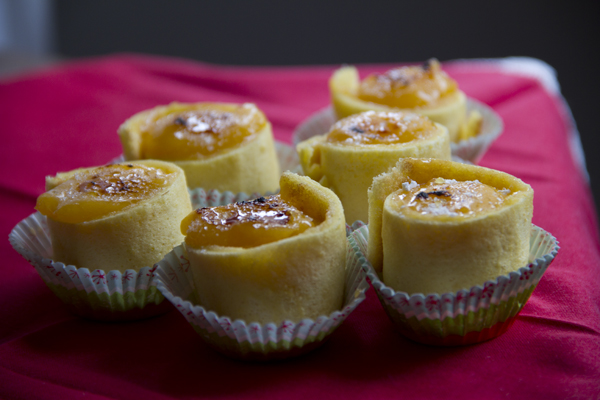
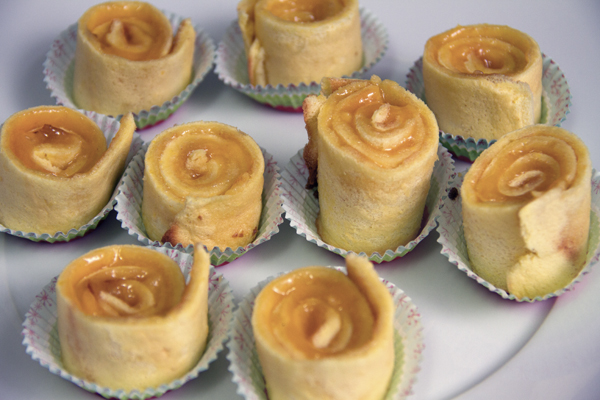
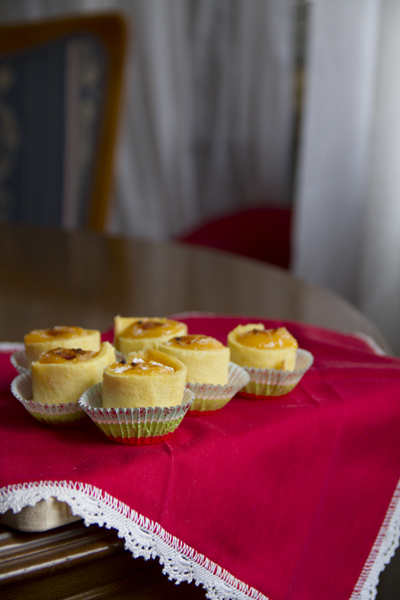
  • Cut strips about 3-4 cm (1.2-1.6 inches) wide and roll them up in a spiral. Place the little pastries vertically into paper cupcake liners. Add a teaspoon of cream on top of each one. Sprinkle with sugar and torch it with a kitchen blowtorch.

Pics and Cakes

Tips:

  • The sponge cake has to be very thin. These quantities worked for me with my oven, which has a square tray that’s smaller than usual. I think if you double the amounts you’ll have enough for a regular-size tray. In any case, if it’s too much batter, better not to use it all or the sponge will end up too thick.

  • In principle, the sponge doesn’t need any baking powder because the whipped egg whites give it enough volume. Even so, next time I’ll try adding a pinch to see how it turns out.

  • Don’t forget to grease the parchment paper with butter — the sponge sheet is very thin and could easily tear when you try to peel it off.

  • The recipe we followed is from Belenciaga, but using it as inspiration you can come up with all kinds of variations.

Pics and Cakes


September 25, 2012 · 4 min · Palstelera

Fresh Stuffed Pasta

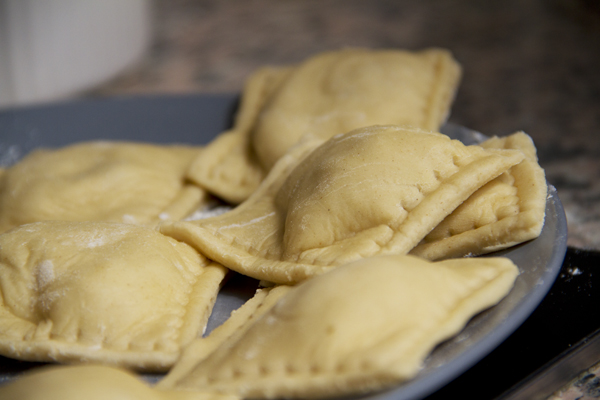
Whole Kitchen in their Savory Proposal for the month of September invites us to make an Italian classic: “Stuffed Pasta.” With this recipe we kick off a new adventure on this amazing food blog, where every month we’re challenged to make a savory dish and a sweet one. We love the idea — it’s original and pretty useful, since it pushes you to make dishes you might not normally tackle, and it also lets you check out what the other participants come up with.

Pics and Cakes

What do we need?

(Serves 4)

  • For the dough:
  •   300 g (2.5 cups) flour
    
  •   1 egg and 1 egg white
    
  •   2 tbsp olive oil
    
  •   1/2 tsp salt
    
  •   1 tsp vinegar
    
  • For the filling:
  •   2 small onions, finely chopped
    
  •   1 clove of garlic, finely chopped
    
  •   300 g (10.5 oz) mushrooms
    
  •   2 tbsp parsley
    
  •   Salt
    
  •   40 g (1.5 oz) aged cheese
    
  • For the sauce:
  •   200 ml (3/4 cup + 1 tbsp) heavy cream
    
  •   4 slices of bacon (thick-cut)
    
  •   Salt and pepper
    

Pics and Cakes

How do we do it?

  • Put the flour in a bowl, make a well in the center, and add the egg, the egg white, the salt, the oil, and the vinegar.

  • Knead until you get an elastic dough, adding a splash of water if needed.

  • Wrap the dough in plastic wrap and let it rest in the fridge for at least an hour.

  • Heat a little oil in a large pan, add the onions, garlic, and mushrooms. Cook gently over low heat until all the liquid has evaporated.

  • Stir in the parsley and season. Add the finely chopped aged cheese and mix well (with the heat off). Let it cool.

  • Once the dough has rested, divide it in two and roll out one half with a rolling pin until very thin. Ideally you’d use a pasta machine, but not everyone has one at home, so a rolling pin will do the trick.

  • Place small mounds of filling on the pasta sheet, leaving space between them.

  • Roll out the second half of the dough very thin and lay it over the first one. With your hands, press around the mounds to shape the ravioli.

  • Finally, cut out the ravioli with a round cutter (like a pizza cutter) with fluted edges. Set the ravioli aside while you prepare the sauce.

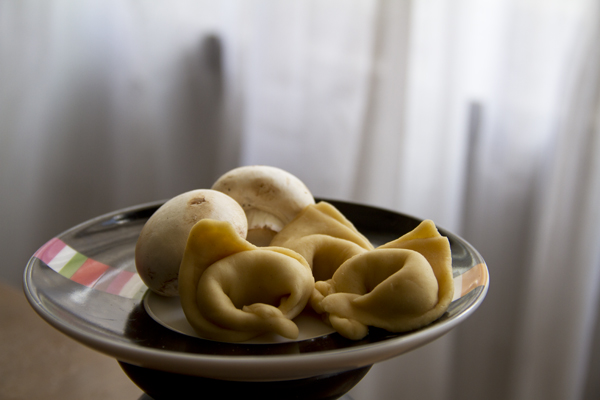
  • If instead of ravioli you’d rather make tortellini, roll out the dough very thin, fill it, and fold as shown in this [video](

{{}}

).

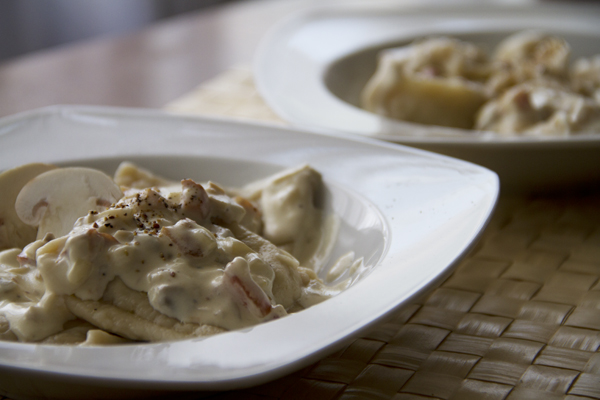
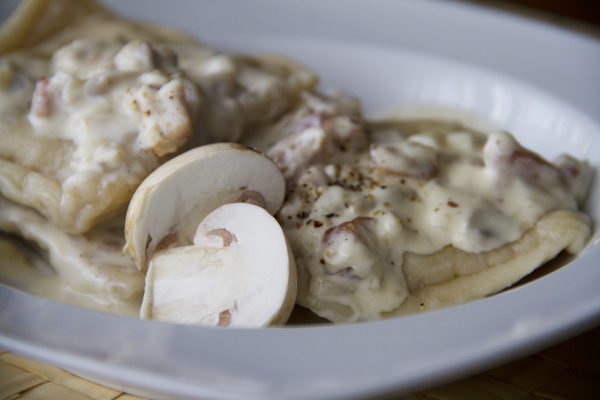
  • For the sauce, use the leftover filling. Sauté the bacon cut into small cubes, add the leftover filling and the cream, and bring to a boil. Simmer for a few minutes and adjust salt and pepper to taste.

  • Cook the pasta, drain it, add the sauce, and… buon appetito!

Pics and Cakes

Tips:

  • The dough has to be very thin. If you’re using a rolling pin, that means once you think it’s thin enough, roll it out at least three more times. I also recommend making your ravioli or tortellini small, since they’ll grow when cooked.
  • If you don’t have a pasta cutter, you can use a regular knife, but make sure to seal the edges well afterward or you’ll lose the filling during cooking. You can seal them with your fingers, a fork, or the edge of a serrated knife.
  • Our pasta took quite a while to cook (15 minutes) because the pieces were too big and chunky.

Pics and Cakes


September 18, 2012 · 4 min · Palstelera