Swiss Buns

There are recipes you see and immediately you're dying to try at least once in your life. The results in the photos online look so perfect it seems impossible you'll ever get something even remotely similar. Well, that's exactly what happened to me with these incredible Swiss buns from María Lunarillos's blog, and I have to say I pulled it off: they came out simply spectacular. I'm sharing the recipe just as I made it, since the proofing times are quite different from the original. Be warned, this isn't one for when you're in a rush, but it's totally worth it…

suizos1

What do we need?

  • 500 g (4 cups) bread flour
  • 250 g (1 cup) whole milk
  • Two eggs
  • 90 g (about 1/2 cup) sugar
  • 5 g (1 tsp) salt
  • 3 g (1 tsp) active dry yeast
  • 80 g (about 1/3 cup) softened butter
  • One beaten egg for glazing
  • Sugar and water for decorating

How do we make it?

  1. First, dissolve the yeast in 100 g (about 1/3 cup + 1 tbsp) of warm milk and add 100 g (about 3/4 cup) of bread flour. Mix well with a wooden spoon, cover the bowl, and let it ferment until you see bubbles forming.
  2. After the resting time, add all the other ingredients except the butter. Start mixing with the wooden spoon and finish with your hands. Let it rest for 10 minutes and knead again, simply pinching a bit of dough from the outside and folding it inward. Repeat this rest-and-quick-knead cycle two more times. You'll notice the dough becomes less sticky and more elastic.
  3. Add the softened butter and knead again. In my case I used the dough hooks on my mixer, but you can do it perfectly well by hand. You want to end up with a fairly smooth dough.
  4. Grease a clean bowl with a little sunflower oil and put the dough in, covered with plastic wrap. Let it rest until doubled in size. Since my kitchen was pretty cool, I left it overnight (about 20 hours of proofing in total).
  5. Once doubled, turn the dough out onto a floured countertop and press it down with your hands to release all the air. Form little balls of 60 g (about 2 oz) each.
  6. To get perfect balls, pinch them to form a sort of bundle and then roll them. Since a picture is worth a thousand words, you can see this technique in the video by María Lunarillos.
  7. Let the balls rest on a baking tray lined with parchment paper, covered with plastic wrap, until doubled in size. In my case, I left them for almost 4 hours and they didn't quite double, but it was enough.
  8. Preheat the oven to 210°C (410°F) and brush the buns with beaten egg, being careful not to flatten them. Brush them twice, leaving about 10 minutes between coats so the egg film dries slightly.
  9. With a very sharp serrated knife, make a deep cut down the center and sprinkle on sugar moistened with water (just like the kind we use for roscón de reyes).
  10. Place in the oven on the lowest rack (top and bottom heat, no fan), lower the temperature to 200°C (390°F), and bake for 12 minutes. Finish with 1 more minute with the fan turned on.
  11. Take them out and let them cool as long as your cravings to sink your teeth into one will let you.

suizos2

Tips:

– It's not a difficult recipe but it requires time and patience. It's better to trust the look of the dough than the times I give you, since depending on the room temperature and other factors they can vary considerably.

– In many recipes there are ingredients you can easily swap for others, but in this case, you cannot replace the bread flour with regular flour or the active dry yeast with baking powder.

suizos3

November 17, 2017 · 4 min · Palstelera

Estonian Kringle

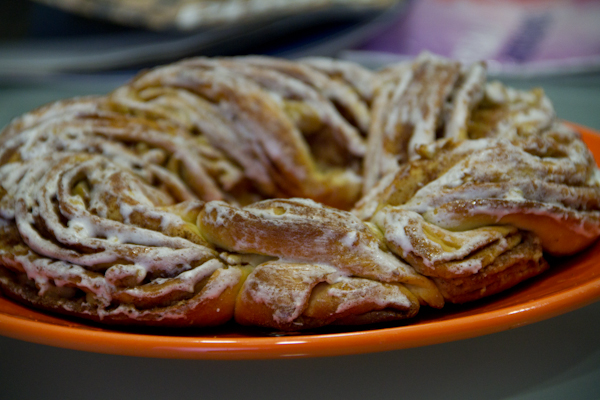
It’s not just that it seems like we haven’t published anything in ages — it’s actually true… almost three months without any blog action on PiC! The summer has been a bit hectic but here we are, back and loaded with new finger-licking recipes. Today I’m bringing you a recipe that could be considered the Nordic roscón de Reyes, and some say its shape is reminiscent of pretzels and the dough is brioche-style. In short, a sweet wonder we pulled from a Thermomix magazine but made without one to prove that any recipe is adaptable.

Pics and Cakes

What do we need?

For the dough:

  • 30 g (2 tbsp) sugar

  • The peel of 1/2 lemon (yellow part only)

  • 120 g (1/2 cup) milk

  • 30 g (2 tbsp) butter

  • 15 g fresh yeast

  • 1 egg yolk

  • 300 g (2.5 cups) bread flour

  • **1 pinch of salt

For the filling:

  • 50 g (3.5 tbsp) butter (room temperature)

  • 60 g (1/4 cup) sugar

  • 2 tablespoons cinnamon

  • 50 g (1/2 cup) chopped walnuts

For the glaze:

  • 20 g egg white

  • 50 g (1/2 cup) confectioners’ sugar

How do we make it?

  • If we have an electric coffee grinder or a food processor, we put the sugar with the lemon peel and grind it well until the lemon is incorporated into the sugar and we get a sort of paste. If we don’t have one, we can just grate the lemon peel and mix it with the sugar.

  • We heat the milk a little in the microwave and add it to the bowl with the sugar and lemon peel.

  • We add the butter and the yeast and stir until everything comes together nicely.

  • We add the egg yolk and mix well again.

  • Finally, we add the flour and the salt. We stir with a spoon or fork and then transfer the dough to a floured surface and knead by hand.

  • We form a ball with the dough and let it rest in the bowl covered with cling film until it doubles in size.

  • In the meantime, we prepare the filling. To do this, we mix the room-temperature butter with the sugar and the cinnamon.

  • We preheat the oven to 180°C (355°F).

  • Once the dough has doubled in size, we place it on a floured surface and roll it out with a rolling pin until we have a rectangle of about 40 x 50 cm (16 x 20 in).

  • We spread the filling cream over it and sprinkle the walnuts on top.

  • We roll up the dough (starting from the wider side).

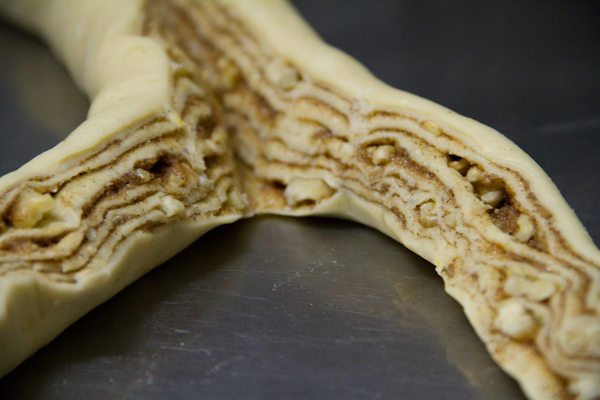
  • Once we have a sort of thin Swiss roll, we cut the log lengthwise down the middle, leaving one of the ends joined. When we cut it, we should see the alternating layers of dough and filling.

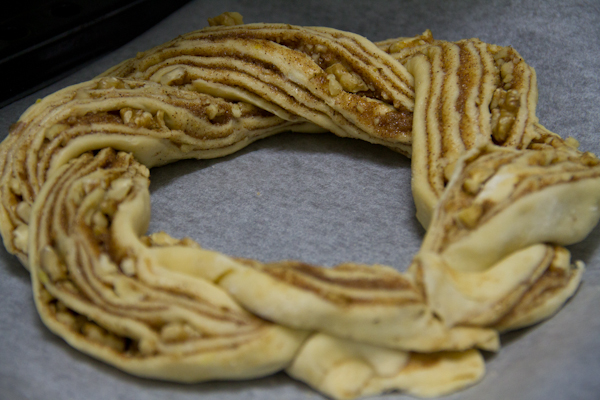
  • We cross each piece of dough to form a kind of braid (always keeping the layered side facing up).

  • Once everything is ‘braided’, we form a wreath and place it on a baking tray lined with parchment paper.

  • We bake for about 20 minutes.

  • While it’s baking, we prepare the glaze. To do this, we beat the egg whites a little with a fork and mix them with the confectioners’ sugar.

  • When we take the kringle out of the oven, we brush it with this glaze.

Pics and Cakes

Tips:

  • The lemon peel is optional. You can skip it or swap it for orange peel — for sure it’ll be delicious too.

  • If you want a whiter, thicker glaze, you can beat the egg whites with the sugar using an electric whisk. That’s how we made it, and that’s why the glaze looks like it does in the photo. If you beat it just with a fork, it’ll give the kringle a certain shine but it won’t be white and as thick.

  • Starting from this base, you can fill the dough with other nuts or even jam.

Pics and Cakes

[English version] ESTONIAN KRINGLE* *Ingredients: For the dough:

  • 30 g sugar

  • 1/2 lemon peel (only the yellow part)

  • 120 g milk

  • 30 g butter

  • 15 g fresh yeast

  • 1 egg yolk

  • 300 g strength

  • 1 pinch of salt

For the filling:

  • 50 g de butter (room temperature)

  • 60 g de sugar

  • 2 tbsp cinnamon

  • 50 g chopped walnuts

For the icing:

  • 20 g egg white

  • 50 g confectioners’ sugar

  • If you have a coffee grinder or food processor, place the sugar and the lemon peel on it and grind it until getting a sort of paste. If you don’t have a grinder, just mix sugar with grated lemon peel.

  • Heat the milk in the microwave and pour over the sugar.

  • Add the butter and yeast and stir well.

  • Add egg yolk and stir well again.

  • Then, add flour and salt. Mix with a spoon and fork and then knead the dough on a floury surface.

  • Make a dough ball and leave to rise into the bowl covered with cling film (until the dough has doubled in volume).

  • In the meanwhile, prepare the filling. Mix butter (room temperature) with sugar and cinnamon.

  • Preheat oven at 180º.

  • When the dough has doubled in volume, place on a floury surface and roll it out with a rolling pin until getting a rectangle (40 x 50 cm aprox.)

  • Spread the filling and sprinkle with chopped walnuts.

  • Roll up the dough (starting by the wider side).

  • Cut the log in half length-wise leaving one edge uncut.

  • Start braiding the two pieces, trying to keep the open layers exposed so the cut ends remain on top.

  • Pinch the ends together and form a wreath.

  • Bake for 20 minutes.

  • Prepare the icing. Whisk white eggs with a fork and add confectioners’ sugar. Mix well.

  • Out of the oven, brush the kringle with the sugar icing.

  • *Tips: - Lemon peel is optional. You can leave it out or use orange peel. For sure, it will be delicious too. - If you want a thicker and whiter sugar icing you can use an electric mixer with whisk attachment. The result will be more similar to our kringle shown in the picture. If you whisk only with fork you will have a lighter and clearer icing. - You can change the filling and use any nuts or jam you like.

September 24, 2013 · 5 min · Palstelera

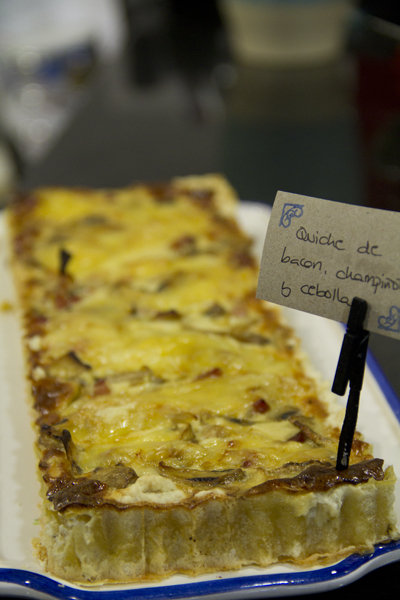
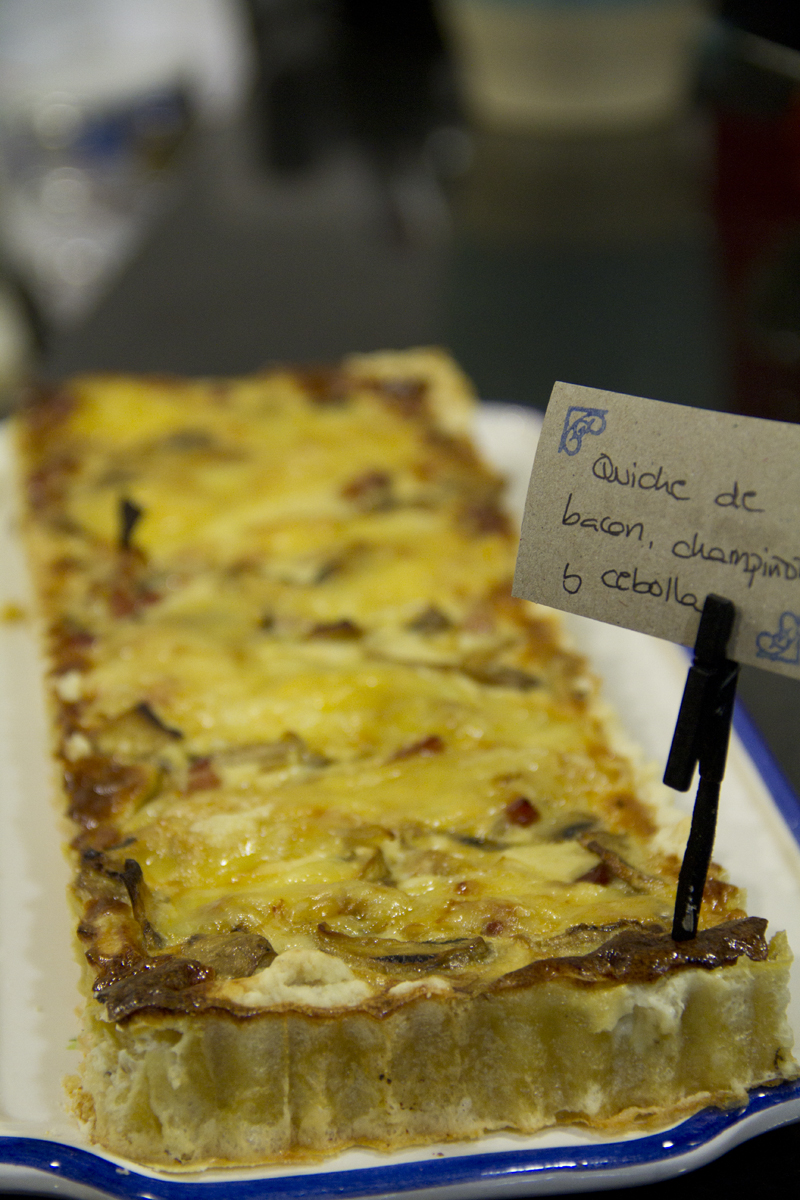
Quiche Lorraine

As part of the campaign “No newly-independent young adult shall go hungry, even if they don’t like cooking,” here’s another easy recipe — one of those that almost everyone knows, but just in case, I don’t want to hear that you’re not eating well just because you couldn’t be bothered to do a couple of little things in the kitchen.

Pics and Cakes

What do we need?

For the shortcrust pastry:

  • 200 g (1 ⅔ cups) flour

  • 100 g (7 tbsp) cold butter

  • 1 egg

  • A pinch of salt

  • A pinch of sugar

For the filling:

  • 200 g (7 oz) bacon

  • 100 g (3.5 oz) emmental cheese

  • 50 g (1.75 oz) mushrooms

  • 200 ml (¾ cup) heavy cream

  • 4 medium eggs

  • Half an onion

  • Salt and pepper.

How do we make it?

  • As you know, for the shortcrust pastry you can check here.

  • While we’re making the dough, preheat the oven to 180°C (350°F).

  • Once the dough is ready, place it in a baking pan and pop it in the oven for about fifteen minutes. Before putting it in the oven, prick it with a fork so it doesn’t puff up.

  • With the pastry in the oven, heat a frying pan with a splash of oil. When it’s hot, add the onion and mushrooms, all sliced beforehand. Once they’ve softened a bit, add the bacon cut into strips and cook to your liking. Set aside.

  • Beat the eggs in a large bowl and mix them with the cream. Season with salt and pepper.

  • Add the sautéed ingredients to the bowl.

  • When the pastry is partially cooked, take it out of the oven and pour in the mixture. Spread it evenly across the surface and sprinkle the cheese on top.

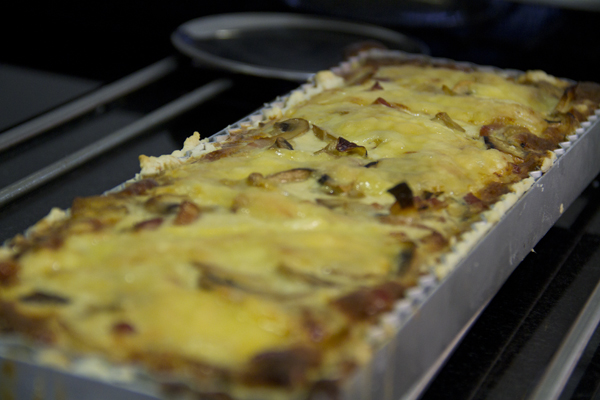
  • Put it back in the oven and bake for around half an hour.

Tips:

  • Just like we mentioned here, you can pick any kind of cheese you like or whatever you have at home.

  • Shortcrust pastry isn’t hard to make, but if you’d rather, you can buy it pre-made at any supermarket. That way we make sure “No newly-independent young adult goes hungry, even if they don’t like cooking.”

Pics and Cakes

[English version] QUICHE LORRAINE* Ingredients: *Shortbread pastry:

  • 200 g flour

  • 1oo g cold butter

  • 1 egg

  • A pinch of salt

  • A pinch of sugar


Filling:

  • 200 g bacon

  • 100 g emmental cheese

  • 50 g mushrooms

  • 200 ml cream

  • 4 eggs

  • 1/2 onion

  • Salt and pepper

  • *Prepare the shortbread pastry. You can see here our recipe. *

  • Preheat oven at 180º C.

  • Roll out the pastry and place into a baking pan. Bake for 15 minutes. If we bake directly with the filling on it, the pastry will be underdone. To avoid the pastry to ‘grow’ in the oven, you can place a baking paper and fill up with baking beans. You can also pierce the pastry with a fork.

  • While the pastry is baking in the oven, heat a bit of olive oil in a frying pan. Chop onion and mushrooms and place them into the hot frying pan. After a few minutes, add the bacon cut into strips and keep stir frying for a few extra minutes. Take it out from heat and set aside.

  • In a large bowl, beat eggs and cream together. Add salt and pepper.

  • Add the stir fried ingredients and mix well.

  • The pastry will be already slightly cooked, so take it out from oven and pour evenly the cream mix inside. Sprinkle with some cheese on the top.

  • Bake into the oven for around 30 minutes.

Tips:

*- As we said before here you can choose any kind of cheese you like. *

- Shortbread pastry is not a difficult task but you can also buy it in any supermarket.


Comments

yolanda del pozo (2013-04-19 09:44:08):

All the recipes on this site are easy, cheap, quick and tasty — what more could you ask for? And the photos are amazing too, just looking at them makes you want to make the dish and, above all, eat it. Congrats, great work!

silvia (2015-01-14 20:34:14):

The other day I bought shortcrust pastry by mistake… so checking out this great website, I’m bookmarking this recipe.

Just one question: what’s that about pricking the pastry before baking… do you have to pierce it? And what kind of pan works best? Like a non-stick one?

Kisses

April 16, 2013 · 4 min · Cesmm

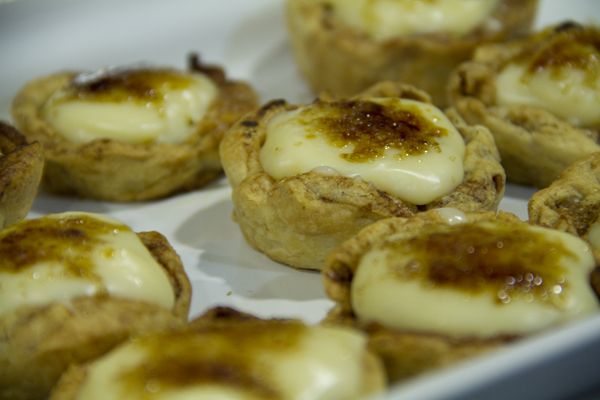
Custard Cream Tartlets

As strange as it sounds, this recipe could pass as an express one, even though we have to make a custard cream. And the secret of today’s recipe lies precisely in making that cream fast, easy, delicious, and in just 10 minutes. The trick: the microwave, that great forgotten appliance we only ever bother with to heat up the morning milk.

Pics and Cakes

What do we need?

For the cream:

  • 100 g (1/2 cup) sugar

  • 40 g (1/3 cup) cornstarch

  • 3 egg yolks

  • 1/2 liter (2 cups) milk

  • 1 tablespoon butter

For the tartlet:

  • 1 sheet of puff pastry

  • Sugar

  • Cinnamon

Pics and Cakes

How do we make it?

  • First we prepare the custard cream. Whisk the sugar and cornstarch together in one bowl, and the egg yolks with the milk in another.

  • Then mix everything together and pop it in the microwave for 8 minutes at max power, stopping every 2 minutes to stir.

  • Once the 8 minutes are up, add the butter, stir, and you’re done.

  • Next, roll the puff pastry sheet out a bit with a rolling pin and sprinkle it with sugar and cinnamon.

  • Roll the dough into a log, pressing it with your fingers so it doesn’t end up too uniform.

  • Cut it into several pieces and flatten each one to form a sort of mini-pizza.

  • Use a muffin tin (the kind with several holes, like little flan molds). Place each circle into one of the cavities and press it in to form a tartlet.

  • Pop it in the oven, preheated to 180°C (350°F), for about 12 minutes.

  • Keep an eye on it and press the dough down every now and then to keep the hollow where the cream will go.

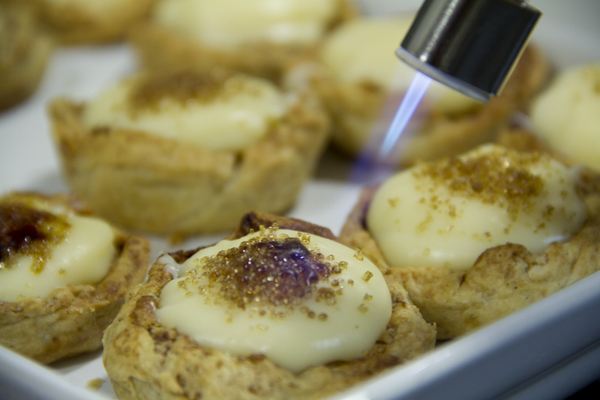
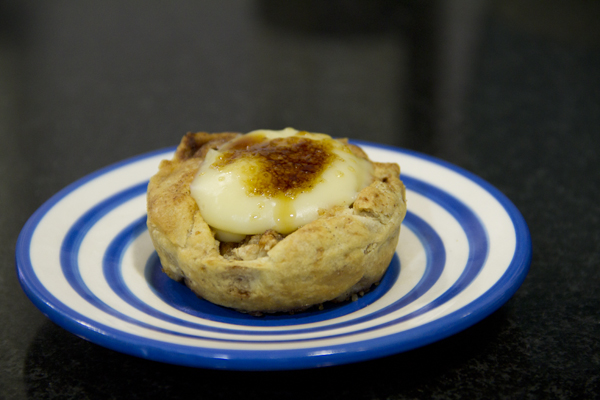
  • Once baked, fill them with the cream, sprinkle with sugar, and brown them in the oven or with a blowtorch.

Tips:

  • Microwaves come in different wattages so the cooking time may vary. As you heat the cream, you’ll see it thicken until it reaches the consistency you want.

  • If you want to use the custard cream for another recipe that calls for a thinner cream, just cut down on the amount of cornstarch.

Pics and Cakes

March 25, 2013 · 2 min · Palstelera

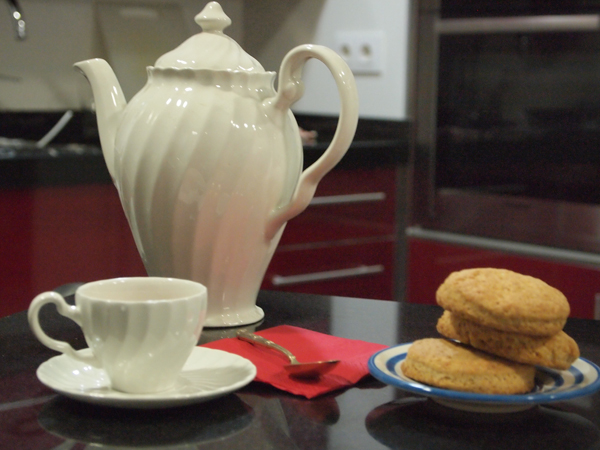
Scones

Whole Kitchen, in their Sweet Proposal for January, invites us to make a Scottish classic: Scones

We almost ran out of time with this recipe because — unusual for us — we made it the same day it was published. Luckily, it’s super easy and takes very little time. As usual, the baking time is what stretches the recipe out the most, but hey, the little wait is well worth it. We followed the recipe from www.joyofbaking.com

Pics and Cakes

What do we need?

  • 260 g (2 cups) all-purpose flour

  • 50 g (¼ cup) sugar

  • 1 sachet of Royal baking powder

  • a pinch of salt

  • 75 g (5 tbsp) very cold butter, cubed

  • 1 beaten egg

  • 120 ml (½ cup) heavy cream

How do we make it?

  • Preheat the oven to 190°C (375°F).

  • In a bowl, mix the flour with the sugar, baking powder and salt. Add the butter and rub it in with your fingertips — it should look like crumbs. Set aside.

  • In a separate bowl, mix the egg with the cream.

  • Combine both mixtures until well integrated, but don’t overwork the dough.

  • Roll out lightly until you have a fairly thick dough (about 1.5 cm / ½ inch). (Our first ones came out too thin.) Using a cookie cutter or a glass, cut out circles about 6 cm (2.5 inches) wide.

  • Place them on a baking tray lined with parchment paper and brush with a little milk.

  • Bake for 15 to 18 minutes, until golden.

  • Take them out of the oven and let them cool on a wire rack.

Tips:

  • We forgot to brush the scones with milk and they still turned out delicious, so if you forget too, it’s not the end of the world.

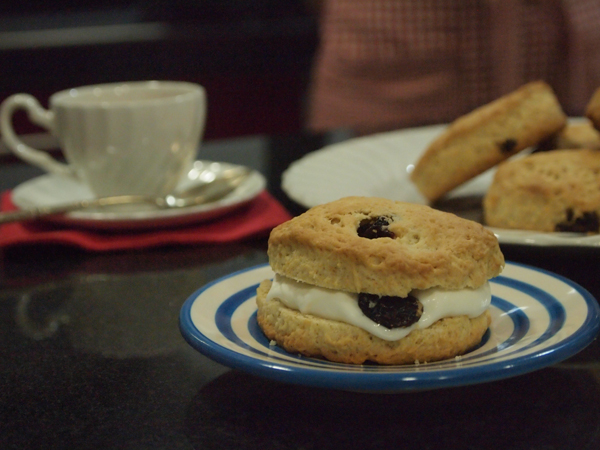
  • You can add chocolate chips, nuts, raisins… to the dough. This time we used dried cranberries.

  • To eat them, just split them in half and spread on butter and jam, whipped cream, lemon curd or anything else you fancy.

Pics and Cakes

[English version] SCONES* Ingredients: *

  • 260 g all-purpose flour

  • 50 g granulated white sugar

  • *1 sachet baking powder *

  • 1/4 teaspoon salt

  • 75 g cold unsalted butter

  • 1 large egg

  • 120 ml milk, half-and-half, or heavy cream

  • *Preheat oven to 190 degrees C. Line a baking sheet with parchment paper. *

  • In a large bowl, whisk or sift together the flour, sugar, baking powder and salt. Cut the butter into small pieces and blend into the flour mixture with a pastry blender, two knives, or with your fingertips. (The mixture should look like coarse crumbs.) In a small measuring cup whisk together the milk or cream and beaten egg. Add this mixture to the flour mixture. Stir just until combined. Do not over mix.

  • Transfer to a lightly floured surface and knead the dough gently four or five times and then pat into a 1,5cm of thickness. Then, using a 6 cm round cookie cutter, cut the dough into rounds. Place the rounds on the prepared cookie sheet, spacing a few centimetres apart. Brush the tops of the scones with a little cream.(This helps to brown the tops of the scones during baking.)

  • *Bake for about 15 -18 minutes or until nicely browned and a toothpick inserted into the center of a scone comes out clean. Remove from oven and transfer to a wire rack to cool. *

Tips:

*- We forgot brushing the scones with milk before baking. The result was wonderful anyway, so in case you forget it too, don’t panic! *

- You can add to the dough chocolate chips, nuts, raisins… We used dried cranberries.

*- You can serve them with butter and jam, marmalade, whipped cream, lemon curd or anything you like. *


Comments

Marivi (2013-01-26 00:39:22):

They look fantastic, and with the filling I’m sure they were even better.

Cristina (2013-01-26 00:55:54):

I really like your version, with cranberries they must be really good ;) and judging by the photos they look delicious!

A kiss!

PIlarHG (2013-01-26 00:59:03):

The same thing happened to me! I ended up making the recipe today too! Lucky it’s a quick one! They turned out great! ;)

Apfelstrudelkuchen (2013-01-26 01:55:06):

Hi!!!

Yeah, it’s true that nothing happens if you don’t brush them, because those scones look absolutely delicious.

A little kiss, Sandra von Cake

Palstelera (2013-01-26 12:48:42):

The truth is they were really tasty, and since I used the leftover cream to whip it up with a bit of sugar, even better. :-)

Palstelera (2013-01-26 12:49:39):

So glad you like them. The cranberries were a last-minute decision and they worked out really well.

Palstelera (2013-01-26 12:50:13):

Yes! Thank goodness they were quick :-)

Palstelera (2013-01-26 12:51:02):

Although now I’ll have to make them again to make them thicker and brushed with milk to see how they turn out :-)

Gri (2013-01-28 11:20:08):

I love your scones… they look fantastic!

A hug Gri http://eltallerdelosviernes.blogspot.com.es/2013/01/hoy-toca-receta-del-cwk.html

mara (2013-01-28 16:49:19):

They turned out so well and look so good with cranberries. I made mine plain because my daughters don’t like them. Here’s my version http://masdulcequesaladopuntocom.blogspot.com.es/2013/01/scones.html

zordor (2013-01-30 05:45:23):

This had a rhyme to it, but honestly I can’t remember what it was right now… :P

guillus (2013-02-27 20:27:45):

Scones! Do we also have to explain how to eat them? :P

guillus (2013-02-27 20:28:47):

Scones! Do we also have to explain how to eat them? :P And with clotted cream they’re even better…

January 25, 2013 · 5 min · Palstelera

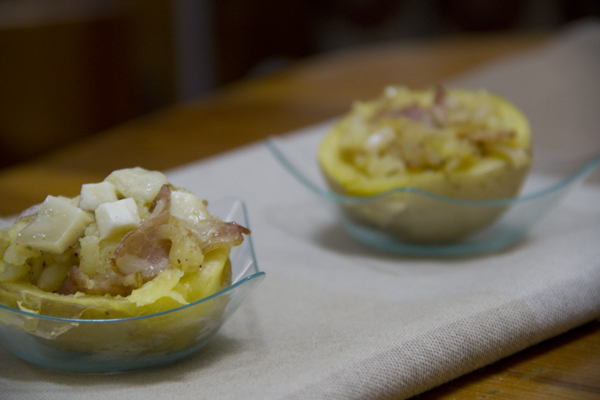
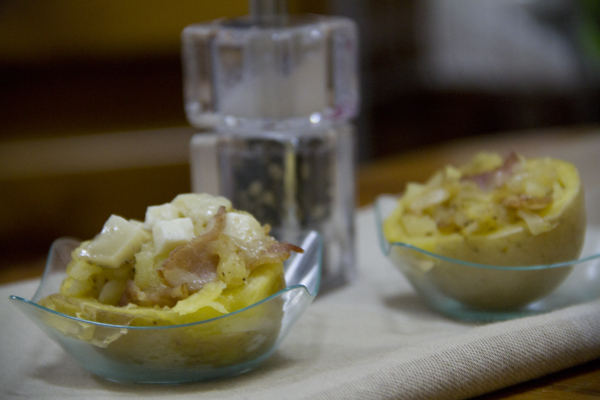
Stuffed Potatoes

I have to admit we’re a bit like sponges — anything we see and like, we try to make at home. That’s exactly what happened with today’s recipe. A few years ago we went with friends to spend Easter week in Camposancos, a lovely little village in Pontevedra, and there Ana (with Germán’s help) made us some delicious stuffed potatoes that could have fed a regiment (well, maybe we weren’t quite that many…). The thing is, we loved the idea and ever since it’s been part of our recipe book.

Pics and Cakes

What do we need?

  • 4 medium potatoes

  • 5 slices of bacon

  • 1 onion

  • Cheese

  • Salt

  • Pepper

How do we make it?

  • Bake the potatoes in the oven. (You can check here if you’re not sure how to do it.)

  • Meanwhile, chop the bacon and onion and sauté them in a pan with a little olive oil.

  • When the potatoes are ready — you can check by poking them with a kitchen skewer — take them out of the oven and cut them in half.

  • Carefully, with the help of a spoon, scoop out the halves, leaving the skin with a thin layer of potato.

  • Mix the scooped-out potato with the sautéed bacon and onion. Season with salt and pepper.

  • Fill the potato halves with the mixture, add a bit of cheese on top, and put them in the oven to broil.

Tips:

  • Any kind of cheese works. We like it with Emmental (elementary, my dear Watson).

  • If you don’t feel like baking the potatoes, you can boil them instead, but we recommend at least broiling them with the cheese in the oven.

  • This is just our take on the filling. Feel free to adapt it to your taste.

Pics and Cakes

December 27, 2012 · 2 min · Cesmm

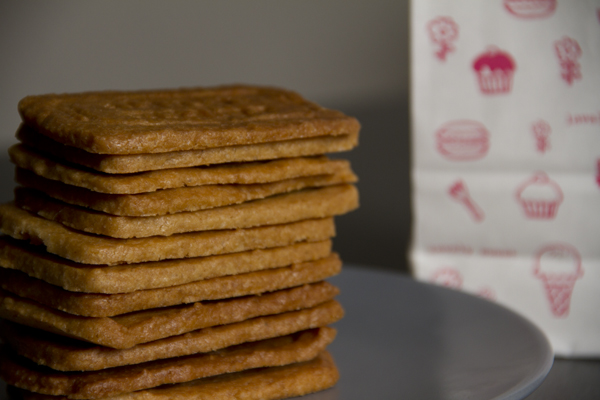
Speculoos Cookies

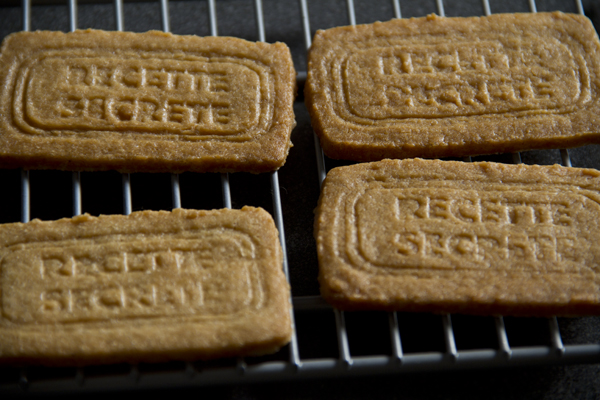
These cookies are typical of Belgium, France, and the Netherlands, and they’re known for their intense aroma and flavor packed with spices. That smell tends to take over Christmas markets, since traditionally it was Saint Nicholas who handed them out to the kids over there. Nowadays in Spain you can find them under the name “galletas caramelizadas” by the Lotus brand, but in France and Belgium, at least, you can find them in all sorts of shapes and from a ton of different brands. For example, if you ever get the chance, don’t miss out on trying speculoos spread (pâte à tartiner) or speculoos ice cream.

Pics and Cakes

What do we need?

  • 250 g (2 cups) flour

  • 170 g (3/4 cup) brown sugar

  • 150 g (2/3 cup) butter

  • 1 teaspoon baking soda

  • 1 egg, lightly beaten

  • 1 pinch of salt

  • 2 teaspoons of spice mix*

How do we make it?

  • In a bowl, add the flour, baking soda, salt, and spices. Stir a bit.

  • In another bowl, the room-temperature butter, the sugar, and the egg. Add all of this to the flour mix and combine well until you get a smooth, even dough. Pop it in the fridge, covered with plastic wrap, for at least two hours or overnight.

  • Preheat the oven to 170°C (340°F).

  • Once you take it out of the fridge, roll the dough between two plastic sheets so it doesn’t stick, to about half a centimeter (1/5 inch) thick. Cut it out with whatever cookie cutters you like, or if you don’t have any, just make rectangles with a knife.

  • Bake for about 15 minutes.

  • The pre-made spice mix isn’t easy to find, so you can make your own with these proportions: 2 tablespoons ground cinnamon, 5 grated cloves, 1 small tablespoon grated nutmeg, 1 teaspoon ground pepper, 1 small tablespoon ground ginger, and 3 grated cardamom seeds.

Pics and Cakes

Tips:

  • Butter cookies are best baked when the dough is cold. Otherwise, they’ll spread too much in the oven and lose whatever shape you gave them. What you can do is put the rolled-out dough in the fridge, cut it without handling it too much, and straight into the oven.

  • If you go looking for speculoos cookie recipes, you’ll find tons, and they all vary in some way. In fact, Belgian and French recipes use kinds of sugar we don’t have here (vergeoise and cassonade), and we usually swap them out for brown sugar. My advice is to try out your recipe and tweak it to your taste.

  • Traditional cookies were made using wooden molds, which is why they have stamped designs on them. I used some cookie stamps I bought in France, but you have to be careful because the dough is a bit sticky.

Pics and Cakes

Pics and Cakes


Comments

La Enana (2012-12-19 11:20:58):

Wow!! So easy to make!!!! :) I love them!!!

Esther (2012-12-29 14:21:45):

The dough is already in the fridge! In a few hours we’ll be tasting your recipe… I can already tell you the dough is super yummy!!!!

Palstelera (2012-12-30 21:09:47):

How did they turn out?

Esther (2012-12-31 17:23:31):

Really good… they didn’t last long, honestly! The oven I put them in runs hot, and at 170 they got a bit scorched, so afterwards I dropped it down to 150. As for the spice mix, total success! HAPPY 2013, Picsandcakes!!!

Palstelera (2013-01-05 00:17:16):

So glad to hear it!

December 19, 2012 · 3 min · Palstelera

Caprese Windmills

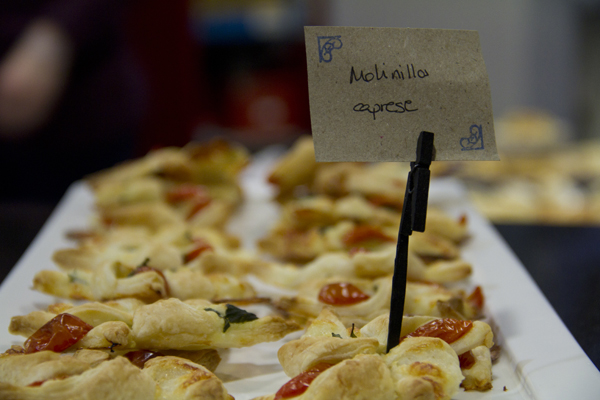
Today we bring you another easy recipe you can make for any get-together. The recipe, taken from Directo al Paladar, is inspired by Italian cooking. Mozzarella, basil and tomato — a delicious combo that works not just in these little windmills but also in salads and, one of my favorites, on pizzas.

Pics and Cakes

What do we need?

  • 1 sheet of puff pastry

  • 1 ball of mozzarella

  • 2 ripe tomatoes

  • Basil

  • Olive oil

  • Oregano

How do we make it?

  • Roll out the puff pastry on a lightly floured surface.

  • Cut it into squares about 8-10 cm (3-4 inches) on each side.

  • Once you have the squares, make a cut along each diagonal, stopping before you reach the center, so you can fold the corners in toward the middle.

  • Slice the mozzarella into strips and place a basil leaf and a piece of cheese on each of the “blades” formed by the puff pastry.

  • Wash the tomatoes and slice them into strips too, then place them on two of the blades.

  • Preheat the oven to 180°C (355°F).

  • Sprinkle with a little oregano, drizzle with a bit of olive oil and put them in the oven.

  • Bake for 10 minutes or until golden brown.

  • When you take them out of the oven, place them on a rack so they stay crispy.

Tips:

  • This appetizer can be eaten warm or cold. If you decide to reheat it (in the oven or microwave) be careful not to let them get soft.

  • If you don’t like this “filling,” you can swap it for any other flavor — even sweet.

Pics and Cakes

December 4, 2012 · 2 min · Cesmm

Petal Cake

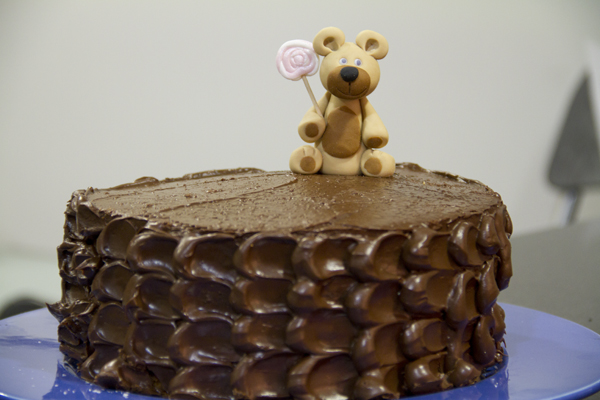
We’ve had this recipe pending for a few days now, but since in the meantime we published our Whole Kitchen challenges, it had to be pushed back to this week. And well, what better week for a birthday cake… :-D I made the recipe following exactly the one @SandeeA did at La Receta de la Felicidad. So all credit for the explanation this time goes to her. My personal touch was just the little sugar bear.

Pics and Cakes

What do we need?

For the sponge cake (to make a tall cake, we’ll need to bake two sponges like this one, so double the quantities):

  • 250 g (about 1 cup + 2 tbsp) butter, room temperature

  • 250 g (1 ¼ cups) sugar

  • 4 eggs

  • 225 g (1 ¾ cups) all-purpose flour

  • 25 g (about 3 tbsp) cornstarch

  • half a packet of Royal-style baking powder (8 g, about 2 tsp)

For the chocolate buttercream:

  • 750 g (about 1 ⅔ lb) melting chocolate

  • 375 g (about 1 ⅔ cups) butter, room temperature

  • 100 g (about ¾ cup) powdered sugar

How do we make it?

  • Preheat the oven to 180 ºC (355 ºF).

  • Prepare a cake pan by greasing it with butter and dusting it lightly with flour.

  • In a large bowl, using a whisk or a spoon, mix the butter and sugar well until you get a smooth, creamy mixture.

  • Add the eggs one at a time, not adding the next one until the previous one is fully incorporated.

  • Add the flour, cornstarch, and baking powder and mix with a spatula or spoon until everything is well combined.

  • Pour the batter into the prepared pan, spreading it evenly.

  • Bake for 25-30 minutes at 180 ºC (355 ºF).

  • Take it out of the oven and wait a few minutes before unmolding.

  • Repeat these steps to make a second sponge cake just like the first one. (If you have two identical pans, you can make all the batter at once and divide it between both pans.)

  • Slice each sponge into two layers, trying to make them as even as possible.

  • Next, we start preparing the chocolate buttercream. First, we’ll melt the chocolate.

  • Chop it up and place it in a microwave-safe bowl. Heat it in 30-second intervals, stirring each time, until the chocolate is fully liquid. Let it cool for a few minutes.

  • Meanwhile, in another large bowl, beat the butter and sugar at top speed with a whisk until you get a fluffy, pale, smooth mixture (about 5 minutes).

  • Check that the chocolate you melted earlier has cooled down, and add it to the butter mixture. Beat a bit more until fully combined, and then move on to filling and decorating the cake.

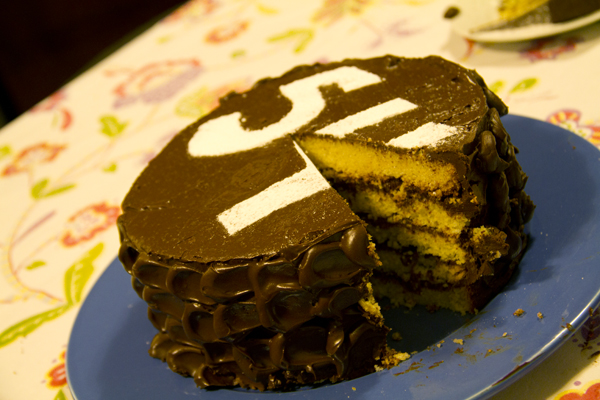
  • Place the first sponge layer — the least perfect of the ones you made — on the plate you’ll be serving on, covered with some strips of parchment paper or printer paper, so it doesn’t get stained and you can pull them out easily afterwards.

  • Place a couple of spoonfuls of filling on this sponge layer and spread it evenly — it’s fine if some spills over the sides.

  • Place another sponge layer on top, pressing down gently and making sure it’s well aligned with the layer below. Add another two spoonfuls of filling and proceed as before.

  • Continue the same way with the rest of the layers. On top, place the most perfect sponge, with the bottom side facing up (it’s always the prettiest). If you don’t want the sponge layers to shift, since we’re about to cover and decorate the cake, you can stick a skewer down through the center of the cake, which you’ll remove once you’re done decorating.

  • Cover the cake with a first, very thin layer of chocolate buttercream — this is just to set things in place and hide any imperfections in the sponge layers.

  • Leave the chocolate cake in the fridge for 15 minutes so this layer firms up.

  • Using a piping bag fitted with a medium-sized round tip, pipe dots of buttercream onto the cake, forming a vertical line (4 dots, in my case).

  • Place a spatula on top of each dot and slide it to the right in a single motion (or to the left if you’re left-handed). Wipe the spatula clean and continue doing the same with the rest of the dots, remembering to always wipe the spatula between strokes.

  • Each time you finish a row of dots, grab the piping bag, create a new line of dots, and repeat the pattern across the whole cake. The spot where you finish the last row of petals will have some imperfections, and that should be the “back” of your cake.

  • If you’re not going to eat it the same day, store the chocolate cake preferably outside the fridge so the chocolate buttercream stays creamy, since the fridge tends to harden it.

Tips:

  • To decorate it, you can make a stencil out of a sheet of paper, cutting out the number of years the birthday person is turning, and dust it with powdered sugar.

  • I made this sugar bear out of modeling paste to crown the cake. I’ll do a tutorial soon so you can see how easy it is.

Pics and Cakes

[English version] PETALS CAKE* *Ingredients:

  • *250 g butter, room temperature *

  • *250 g sugar *

  • 4 eggs

  • *225 g all purpose flour *

  • *25 g corstarch *

  • *8 g baking powder *

For the chocolate buttercream:

  • 750 g dark chocolate, melted

  • *375 g butter, room temperature *

  • *100 g confectioners’ sugar *

  • Preheat oven to 180ºC

  • Prepare a cake pan (butter and flour the bottom and the sides of the pan).

  • In a large bowl, place butter and sugar, and mix well.

  • Add eggs one by one.

  • Add flour, cornstarch and baking powder, and beat until combined.

  • Pour batter into pan and bake for 25 minutes.

  • Leave the cake in its pan on a wire rack for 10 minutes and then turn out to cool.

  • Repeat the whole process to make another similar cake.

  • Now we are going to prepare the chocolate buttercream.

  • Using and electric mixer, cream butter and sugar, until light and fluffy (about 5 minutes). Add melted chocolate, that shall be cool, and mix well. Now the buttercream is ready to use.

  • Fill the cake layers with chocolate buttercream, and then frost it with a thin layer of buttercream.

  • Place the cake in the fridge for 15 minutes to set.

  • Place the remaining chocolate buttercream on a piping bag fitted with a medium sized round tip.

  • Create a row of dots (vertical), as shown on the pictures.

  • Using a spatula, spread every dot to the right, in one motion (or to the left if you are left-handed). Clean the spatula between every swipe.

  • Once you have spread one row of dots, add another row of dots and repeat the pattern until the whole cake is covered with “petals”.

  • If you are not going to eat the cake on the same day, please avoid keeping it in the fridge if possible, so that the chocolate buttercream remains creamy.

Tips:

  • You can create a template showing the number of the age that the special person is turning and then sprinkle with confectioners’ sugar.

  • On the top, I placed this sugar bear made by myself. Soon I will post a tutorial about how to make it with gum paste.


November 29, 2012 · 6 min · Palstelera

Baklava

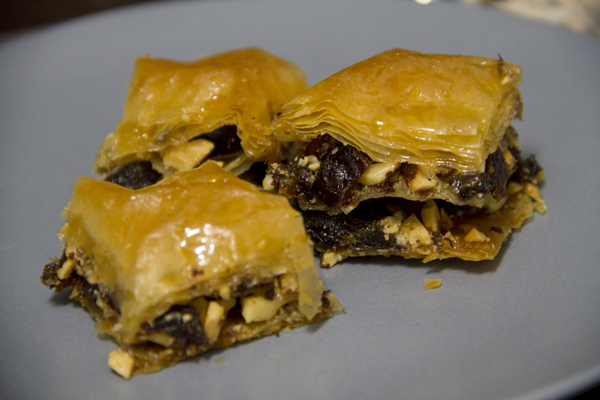
Whole kitchen, for their Sweet Proposal for the month of November, invites us to prepare a Persian classic: Baklava. Apparently this little pastry has its origins in ancient Mesopotamia, although several cultures and civilizations are still fighting over who actually invented it. Persian, Greek or Arab — it’s delicious. This time we’ve made two versions: one with dates and toasted almonds, and another with hazelnuts and chocolate. Filo pastry is a wonder of the kitchen that you really have to try, both for sweet and savory.

Pics and Cakes

What do we need?

  • 1 package of filo pastry

  • 100 g (3.5 oz) butter

For the syrup:

  • 210 ml (scant 1 cup) water

  • 180 g (about 3/4 cup) sugar

  • 30 g (1 tbsp) honey

  • Juice of half a lemon

  • A cinnamon stick

For the filling:

  • 18 dates

  • 50 g (1.75 oz) toasted almonds

  • 50 g (1.75 oz) chocolate (drops or chips)

  • 50 g (1.75 oz) hazelnuts

Pics and Cakes

How do we make it?

  • We start by making the syrup. Put all the ingredients in a saucepan and, over high heat, bring to a boil. Lower the heat a bit and let it simmer for about 15 minutes so it thickens.

  • Preheat the oven to 180°C (355°F).

  • Prepare the filling: pit the dates and cut them into small pieces. Chop the almonds and hazelnuts as well. In one bowl mix the dates with the almonds, and in another mix the hazelnuts with the chocolate.

  • Melt the butter for a few seconds in the microwave.

  • Grease the baking dish you’re going to use with butter and cut all the filo sheets to the size of your tray.

  • Lay down a sheet of filo and, with a brush or your hands, smear it with butter on one side. Add another layer and brush it with butter again. Keep going until you have 8 layers.

  • Spread half of the date-and-almond filling over the filo.

  • Add more filo on top — this time, 4 layers (always brushed with butter so they stay separate after baking).

  • Add the rest of the date-and-almond filling.

  • Make another batch of 8 filo layers (always buttered).

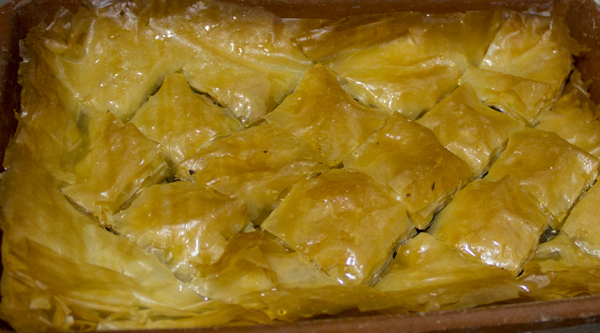
  • With a sharp knife, cut the baklava into squares.

  • Bake for 45 minutes total: the first 20 minutes uncovered, and the next 25 minutes with a sheet of aluminum foil over the baklava so it doesn’t brown too much.

  • As soon as you take it out of the oven, let it rest for 5 minutes, then pour the cold syrup over the hot baklava (this way it’ll stay crispy).

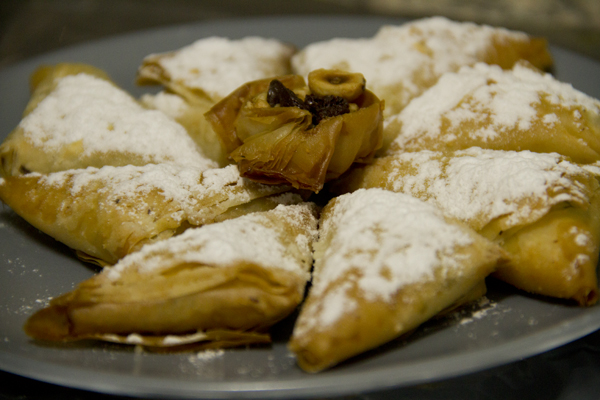
  • For the hazelnut-and-chocolate version you can repeat the same process in another baking dish, or make triangles. To do that, cut the filo into strips of about 5 cm by 20 cm (2 in by 8 in). Brush each layer with butter and stack 4 strips together.

  • Place a teaspoon of filling at one end and fold a corner over to form a triangle with the filling tucked inside. Take the other end and keep folding the triangle over itself. (Since it’s a bit tricky to explain, I found [this video](

{{}}

) where you can easily see how to do it.)

  • Bake them at 180°C (355°F) too, but they’ll be ready in 10–15 minutes.

  • Once out of the oven, you can dust them with powdered sugar.

Tips:

  • Filo pastry dries out very quickly, so whenever you’re not using it, keep it well wrapped in a plastic bag.

  • It’s important to add butter between each layer, but you don’t need to “drown” it either.

  • It’s quite a rich, filling sweet, so it’s better to cut the squares small.

Pics and Cakes

[English version] BAKLAVA* *Ingredients:

  • 1 package of filo pastry

  • 100 g butter

For the syrup:

  • 210 ml water

  • 180 g sugar

  • 30 g honey

  • Juice of 1/2 lemon

  • Cinnammon stick

For the filling:

  • 18 dates

  • 50 g almonds

  • 50 g chocolate (drops or chips)

  • 50 g hazelnuts

  • Combine the syrup ingredients in a medium saucepan and bring to boil. Let the syrup simmer on low heat for about 15 minutes

  • Preheat oven at 180ºC.

  • *Now prepare the filling: pit the dates and chop into small pieces. Chop almonds and hazelnuts. Mix almonds and dates into a bowl and chocolate and hazelnut in other. *

  • Melt the butter in the microwave for a few seconds.

  • Butter the baking pan and cut the filo pastry sheets into the size of the baking pan.

  • *Place a sheet of filo pastry and butter it. Place another sheet over it and butter again. Do it again until having 8 layers. *

  • *Scatter half of the dates-almonds filling. *

  • *Place more filo pastry. This time, only 4 layers but always buttered. It will make to have separate layers once the baklava is baked. *

  • *Add the other half of the filling. *

  • *Create another pack of 8 layers of filo pastry (always buttered). *

  • *With sharp knife cut baklava into small squares. *

  • *Bake for 45 minutes. The first 20 minutes uncovered and then you can cover with aluminium foil to prevent it from browning too much. *

  • When you take it out from oven, let stand for 5 minutes and then pour the cold syrup.

  • For the hazelnut-chocolate version, you can follow the same steps or make small triangles of filo pastry. For the triangles, cut the pastry into stripes (4 x 20 cm aprox.). Butter each stripe and put 4 of them together.

  • *Add a tsp of the filling in one of the sides and proceed to fold into triangle shape. You can see how to do it easily in [this video](

{{}}

).*

  • Bake at 180ºC only for 10-15 minutes.

  • You can powder some confectioners’ sugar when you take them out from oven.

Tips:

*- Filo pastry dries very fast, so when you are not using it, keep it in a plastic bag. *

- It’s important to butter every single sheet (layer) of filo pastry but don’t “over butter” (otherwise, it will be too greasy).

- It’s a filling sweet, so make small squares when cutting the baklava.


Comments

Apfelstrudelkuchen (2012-11-26 00:03:04):

Hi!!

Your baklava-as-triangles version turned out really original!! And with dates it must be amazing.

Hugs,

Mara (2012-11-26 17:34:08):

So good with the chocolate touch. I love the idea of making individual portions, because when you cut it the filo sheets tend to come apart a bit. Since everyone at home liked it so much I’ll make it again, and I’m going to do it your way, in the individual triangle version. This is my version: http://masdulcequesaladopuntocom.blogspot.com.es/

tía pi (2012-11-27 17:48:26):

This Friday I have guests over for dinner — it’s going to be a light meal, so the baklava is going to be a great dessert. I’ll let you know how it goes.

silvia (2012-11-29 22:09:14):

The little chocolate triangles were really tasty… and that’s saying something, because I’m not really one for sweets…

Palstelera (2012-12-07 19:16:00):

Mara, I’m glad you like the little-triangles version… :-)

November 25, 2012 · 6 min · Palstelera