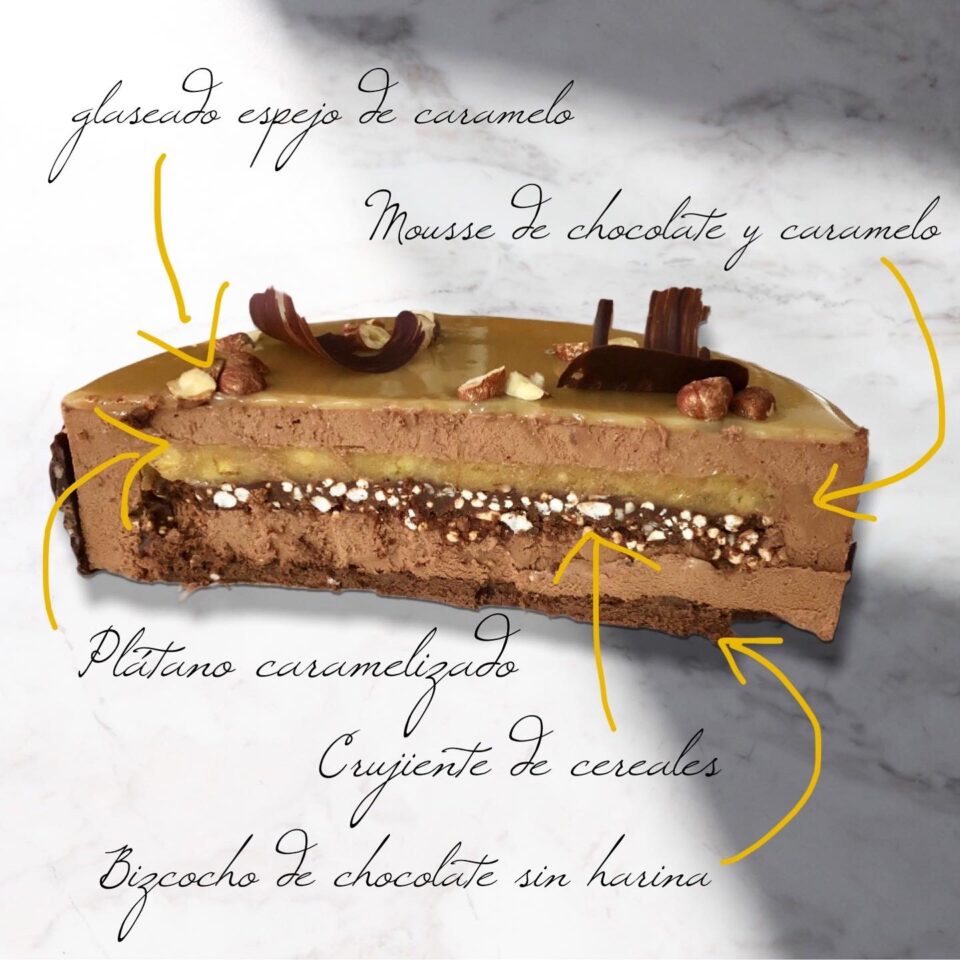
Chocolate and caramel cake with banana and crunchy cereal layer
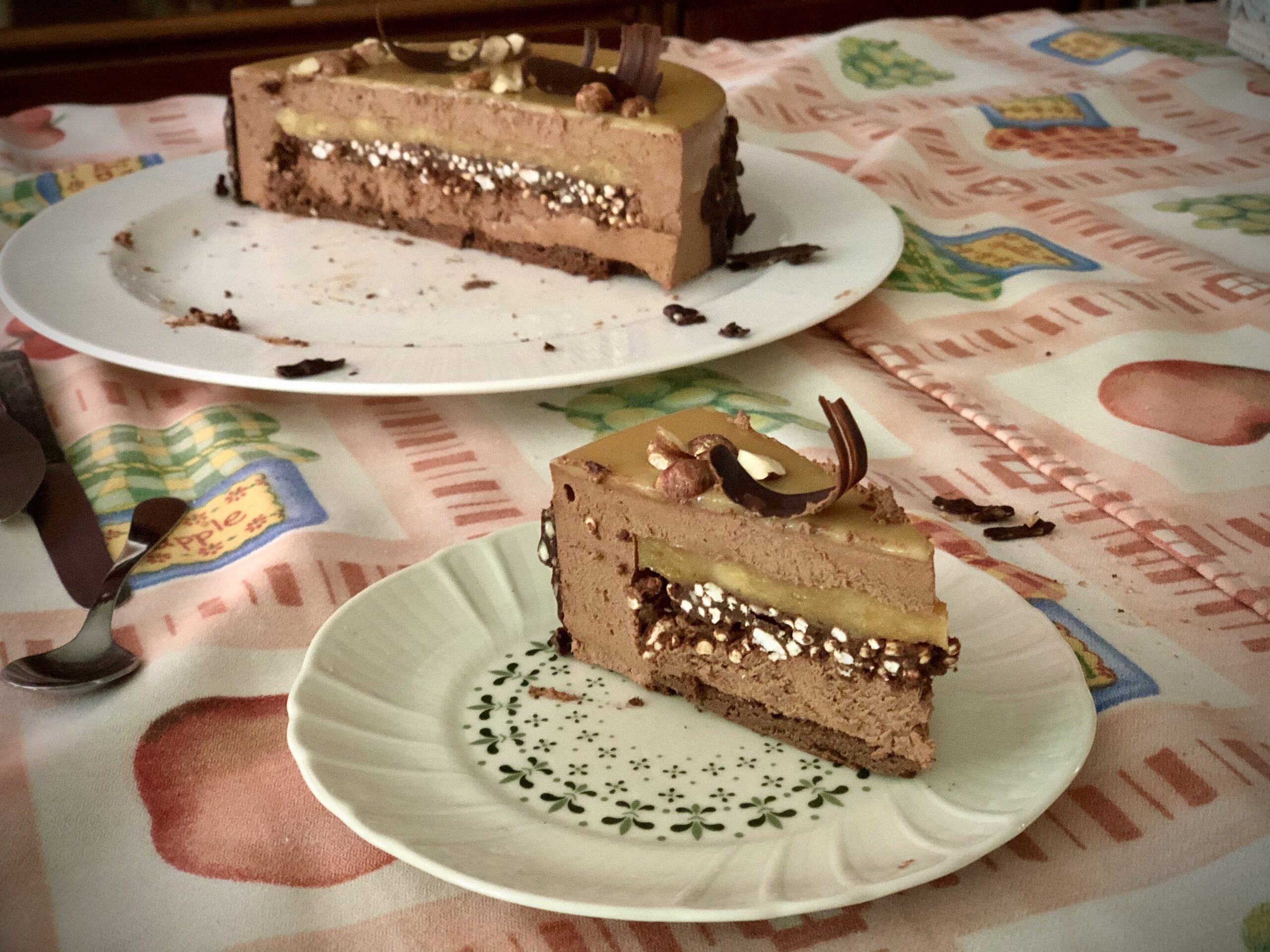
This time I wanted to make a chocolate cake that didn't have a super intense pure-chocolate flavor, since some of my taste-testers aren't huge fans of that level of intensity. The banana filling won me over as a way to balance out all that sweetness, and the crunchy layer adds a bit of joy to creamy desserts.
The recipe is from Ettore Cioccia, although I made several changes to the filling and decoration because I wanted to use up ingredients I had at home and try out some new things. So here's my version of this delicious cake — I hope you like it. It's not a complicated cake, but it does have several components and requires patience and planning to give yourself enough time, considering all the chilling/freezing times involved.
Ingredients
Crunchy cereal layer
- 60 g (2.1 oz) almond butter
- 35 g (1.2 oz) chocolate
- 20 g (0.7 oz) raw chopped hazelnuts
- 15 g (0.5 oz) puffed rice
- 15 g (0.5 oz) puffed quinoa
Caramelized banana
- 30 g (2 tbsp) sugar
- 15 g (1 tbsp) butter
- 3 bananas (210 g / 7.4 oz)
- Lemon juice
- 2 g gelatin (1 sheet)
Flourless chocolate sponge
- 60 g (2.1 oz) 65% dark chocolate
- 20 g (1.5 tbsp) unsalted butter
- 2 egg whites at room temperature
- 2 egg yolks
- 20 g (1.5 tbsp) sugar
Chocolate and caramel mousse
- 200 g (7 oz) 65% chocolate
- 6 g gelatin (3 sheets)
- 60 g (1/4 cup) sugar
- 100 ml (1/2 cup) heavy whipping cream
- 4 egg yolks, beaten
- 400 g (14 oz) heavy cream whipped to soft peaks
Ferrero-style coating
- 215 g (7.6 oz) 65% chocolate
- 40 g (3 tbsp) sunflower oil
- 45 g (1.6 oz) chopped almonds (almond brittle)
Caramel mirror glaze
- 300 g (1.5 cups) sugar
- 300 g (1 cup) glucose syrup, slightly warmed in the microwave
- 375 ml (1.5 cups) water
- 200 g (7 oz) sweetened condensed milk
- 300 g (10.6 oz) white couverture chocolate, finely chopped
- 18 g gelatin, hydrated beforehand and then dissolved in 108 ml (about 1/2 cup) of hot water
Method
- We start by making the crunchy cereal layer. Melt the chocolate in the microwave in short bursts to keep it from burning. Next, add the almond butter and mix well. Finally, add the cereals and hazelnuts and mix again until everything comes together.
- Line the bottom of a 17 cm (6.7 in) springform ring or pan with plastic wrap and a strip of acetate around the edge. Pour in the chocolate mixture and smooth out the surface with a spoon. Pop it into the freezer.
- For the caramelized banana, hydrate the gelatin in a bowl of cold water.
- Cut the bananas into small dice and add a splash of lemon juice so they don't oxidize.
- Put the sugar in a saucepan and let it melt until it forms an amber-colored caramel. Add the butter, and once it's incorporated, add the banana. Cook for a few minutes over low heat, stirring frequently (the mixture is likely to get more liquid as the fruit releases its juice).
- Drain the gelatin well and stir it into the saucepan after turning off the heat. Stir well so it dissolves completely.
- Take the crunchy layer out of the freezer and pour the caramelized banana on top, forming another even layer. Put it back in the freezer.
- To make the chocolate sponge, preheat the oven to 180°C (355°F).
- Melt the chocolate and butter in short bursts in the microwave.
- In another bowl, whip the egg whites to stiff peaks with a pinch of salt and the sugar. Once they're firm, fold in the beaten yolks gently.
- Next, add the melted chocolate, also folding gently so it doesn't deflate, until you have a smooth batter.
- Spread it onto a parchment-lined baking sheet (it's not a lot of batter and it's not very runny) until it's about 1 cm (0.4 in) thick. The important thing is that you'll be able to cut a 17 cm (6.7 in) circle out of it later.
- Bake for 8 minutes.
- To make the chocolate and caramel mousse, hydrate the gelatin sheets in very cold water.
- Melt the chocolate in the microwave in short bursts and set aside.
- In a saucepan, melt the sugar and let it cook until you get a light caramel. Add 100 ml (1/2 cup) of cream (warmed in the microwave so there isn't a big temperature difference). Pour it in a little at a time, stirring constantly to keep crystals from forming, and very carefully so it doesn't splash you.
- Pour the mixture over the beaten egg yolks while stirring constantly, then return it to the heat until it reaches 82–84°C (180–183°F).
- Take it off the heat and add the well-drained gelatin, stirring until it dissolves.
- Next, blend with an immersion blender until smooth, and pour this hot cream over the melted chocolate. Mix well and let cool to 40–45°C (104–113°F).
- Finally, fold in a third of the soft-peak whipped cream and mix. Add the rest and fold gently again.
- For the assembly, take a 20 cm (8 in) springform pan (or ring) and line the edge with a strip of acetate and the bottom with plastic wrap.
- Now we're going to layer everything. First, spread a generous layer of chocolate and caramel mousse in the bottom and use a spatula to coat the sides too. Then unmold the banana and hazelnut crunch insert and place it on top of the mousse with the crunchy side facing up. Fill with more mousse, and finally lay down the chocolate sponge disc. Put the cake in the freezer for at least 3–4 hours (I leave it overnight and finish the decoration the next day).
- Now we're going to prepare the glazes. For the Ferrero-style coating, melt the chocolate in the microwave and then add the oil. Once it's well combined, add the chopped almonds. Set aside until it cools to 35°C (95°F).
- To make the caramel mirror glaze, hydrate the gelatin in a bowl of cold water. Heat the water, drain the gelatin, and dissolve it in this hot water. Set aside.
- In a saucepan, make a dry caramel using just the sugar — no water. When it turns a dark golden color, turn off the heat and pull the pan off the burner. Immediately and very carefully, slowly pour in the 375 ml (1.5 cups) of water while whisking. (Be very careful — it splatters and burns badly.)
- Then add the glucose, stir well until it dissolves, and next add the condensed milk and white chocolate, whisking until the chocolate dissolves and is fully incorporated.
- Finally, add the dissolved gelatin and mix until combined. Let it rest until the caramel cools to 25–30°C (77–86°F).
- All that's left is the final assembly. Take the frozen cake out of the freezer and remove the pan, the acetate strip, and the plastic wrap. Set the cake on top of a smaller mold or bowl so it's elevated and you can glaze it well. It's a good idea to put a plate or tray underneath to catch the drippings of glaze so you can reuse them.
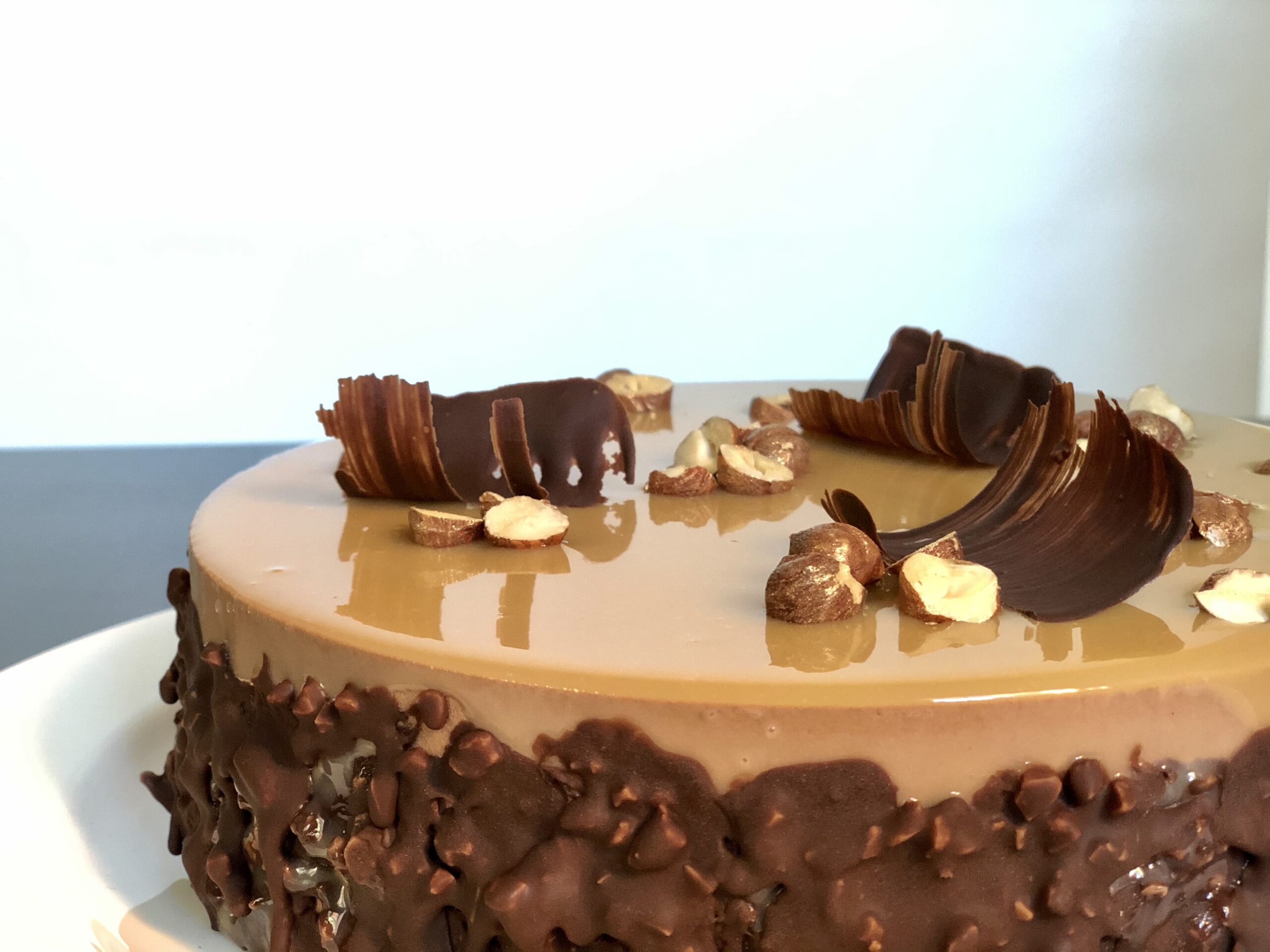
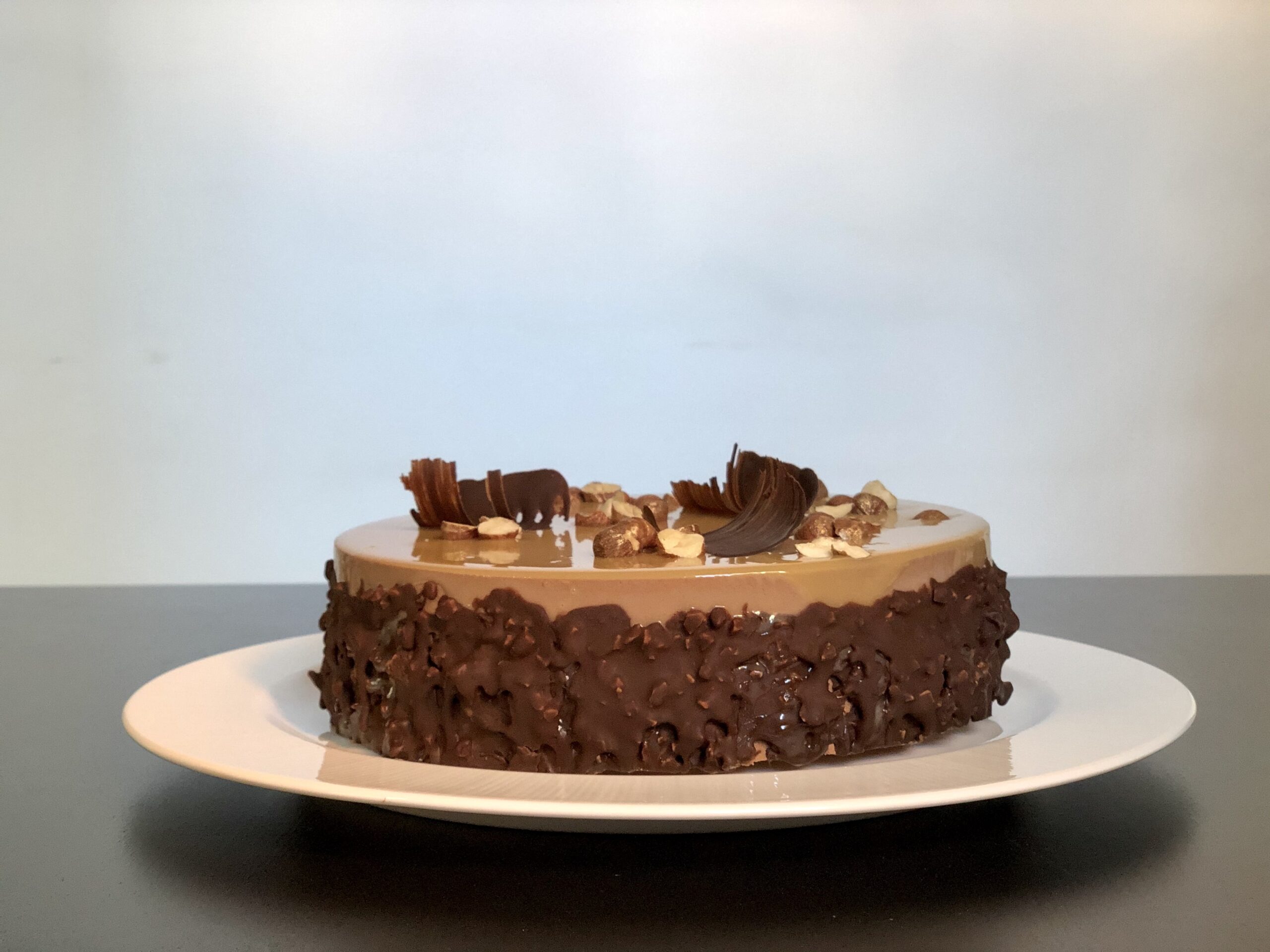
- First we're going to glaze the sides with the Ferrero coating. The easiest way is to put the coating in a pitcher and pour it over the sides. Since the cake is frozen, the chocolate will set almost instantly. If you have any gaps, you can patch them up with the help of a spoon.
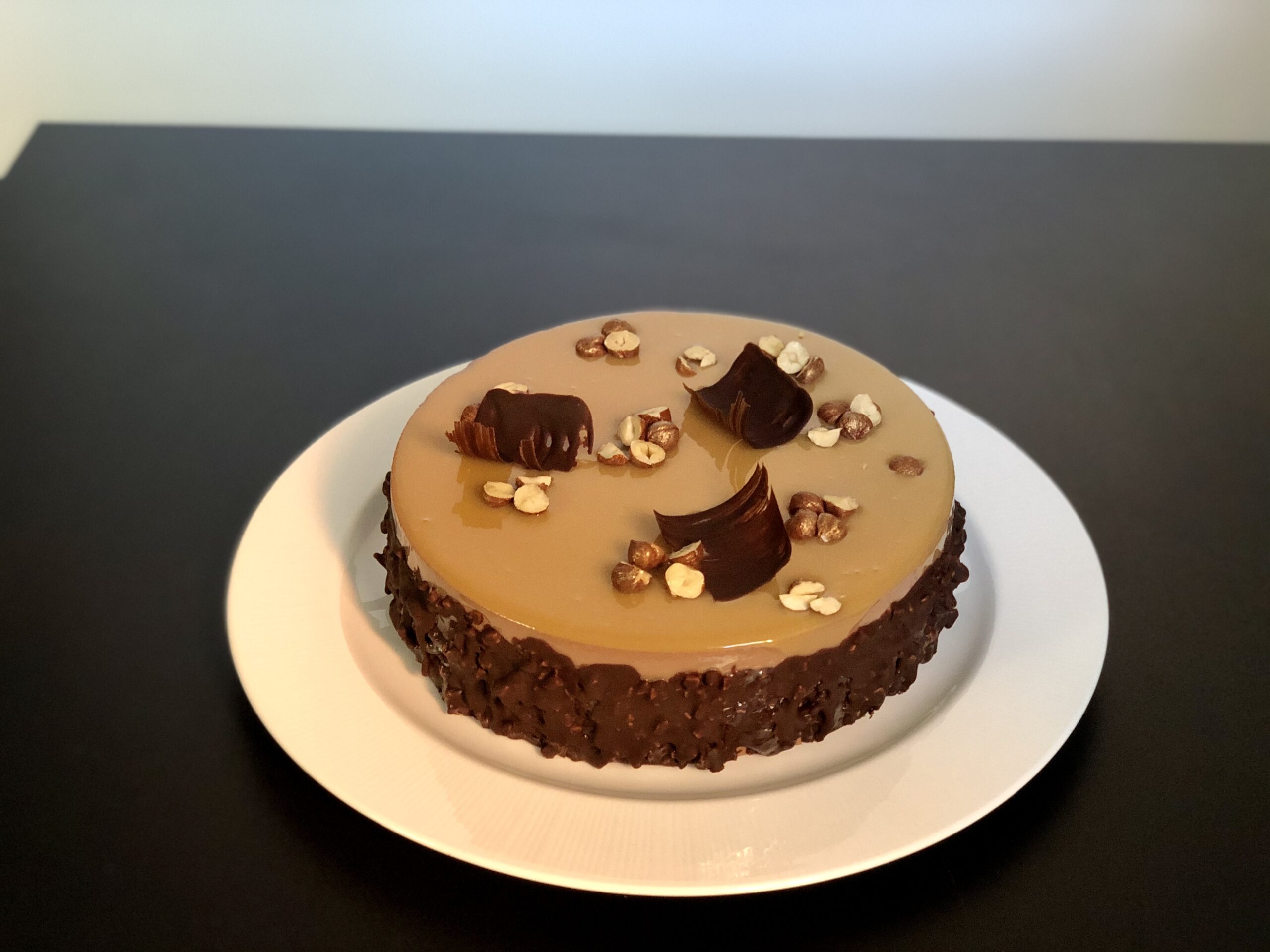
- Finally, pour the mirror glaze over the top of the cake. You want to use just the right amount so it only covers the top and doesn't drip down the sides. You can finish decorating it with broken hazelnuts and chocolate.
- Carefully transfer it to a flat plate and store in the fridge. Before serving, you'll need to give it 2 or 3 hours to defrost slowly.
PiC tips
- The amounts I give for the mirror glaze are enough to cover the entire cake (top and sides). In that case, you wouldn't need the Ferrero-style coating, and it would also look beautiful. Any leftover glaze (that hasn't been contaminated with other components of the cake) can be stored in the fridge for a few days, or longer in the freezer, and reheated whenever you want to glaze another dessert. In fact, that's what I did. This glaze had been frozen — it was leftover from a previous cake. You can also choose to halve the quantities.
- I used almond butter, but you can use any other nut butter or even praline like Ettore does in his original recipe.