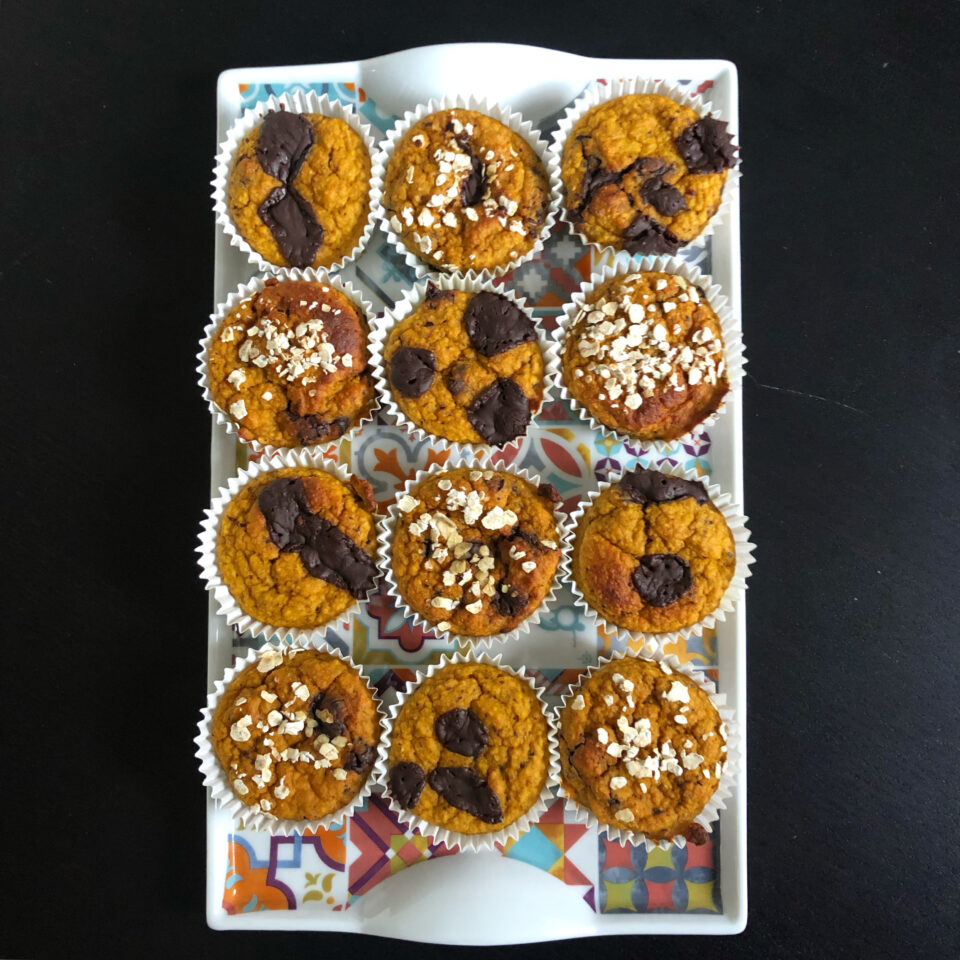
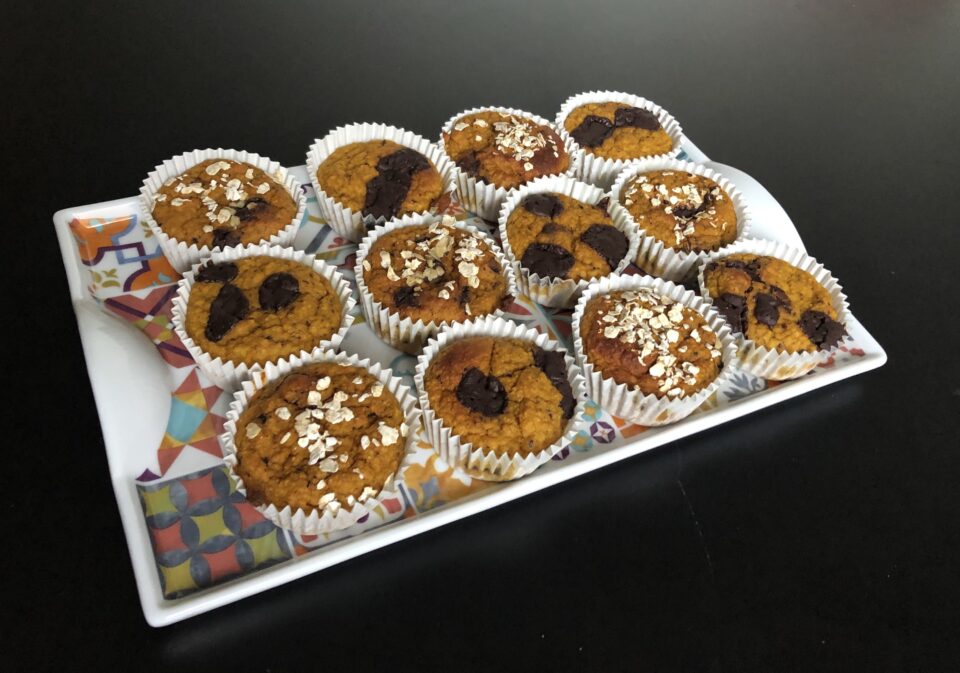
This recipe is another one of those healthy ones, since it skips refined sugars, refined flours and fats. The result is a fairly decent and tasty treat but, although it's fluffy, the texture is a little "chewy" for my taste and a bit moist, as tends to happen with recipes that include other vegetables (zucchini, carrot, etc.). All in all, for me this is a treat that works well for eating with less guilt and in a healthier way, but they're not the muffins I'd make for a special occasion or when I really want to treat myself or someone else.
Ingredients
150 g (1.5 cups) ground oats
250 g (1 cup) pumpkin purée
150 g (2/3 cup) plain yogurt
1 tablespoon honey
6 dates (pre-soaked)
2 eggs
1.5 teaspoons baking powder
1 teaspoon cinnamon
1 pinch of salt
2 tablespoons milk
100 g (3.5 oz) 70% dark chocolate, chopped into small pieces
Method
Peel and chop the pumpkin into chunks and boil until soft. Drain and mash with a fork to make a purée.
Preheat the oven to 180°C (355°F).
Blitz the soaked dates in a food processor to make a paste. Add the pumpkin purée and blend again until you get a smooth mixture.
In a bowl, combine the wet ingredients (eggs, honey, milk and the pumpkin-date purée).
Separately, mix the dry ingredients (oats, salt, baking powder) and add them to the wet mixture.
Mix well and fold in the chocolate pieces.
Divide between muffin liners and bake for 25 minutes.
PiC Tips
You can sprinkle some oat flakes or extra chocolate on top before baking.
If you use silicone or metal molds, don't forget to grease them first. With paper liners they stick a bit (so they won't be the prettiest muffins you'll ever make).
The best dates for sweetening are Medjool dates, which are meatier, but if you don't have any you can use regular ones.
Cinnamon Pull-Apart Bread
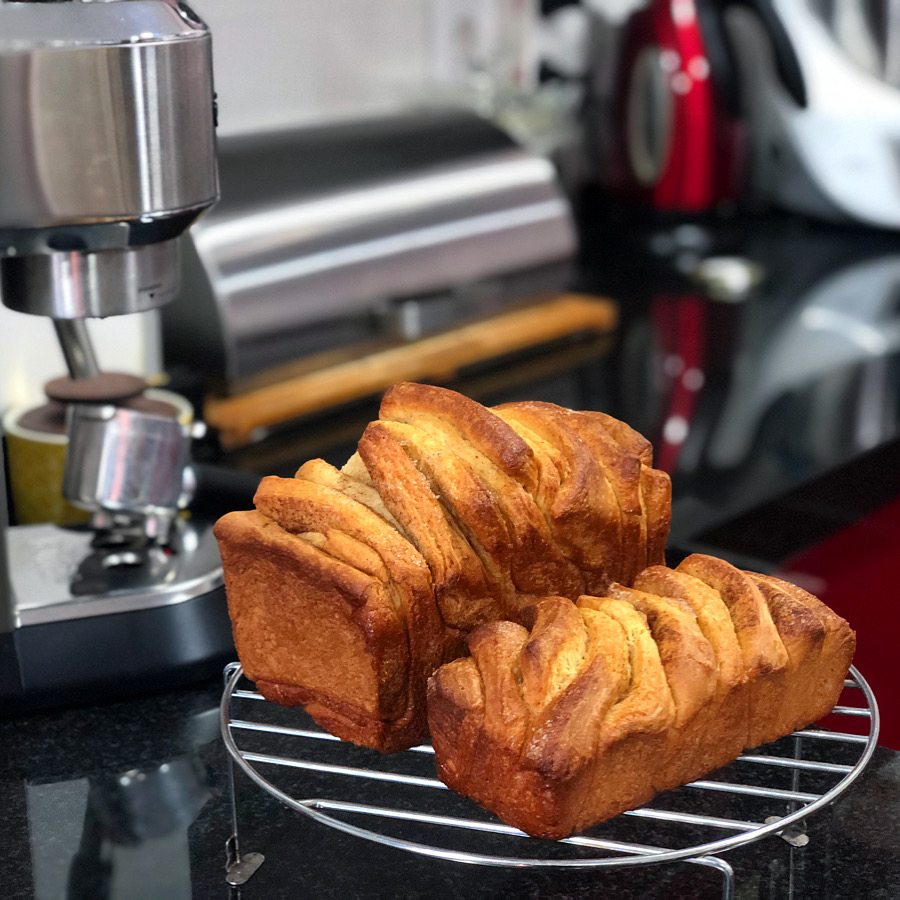
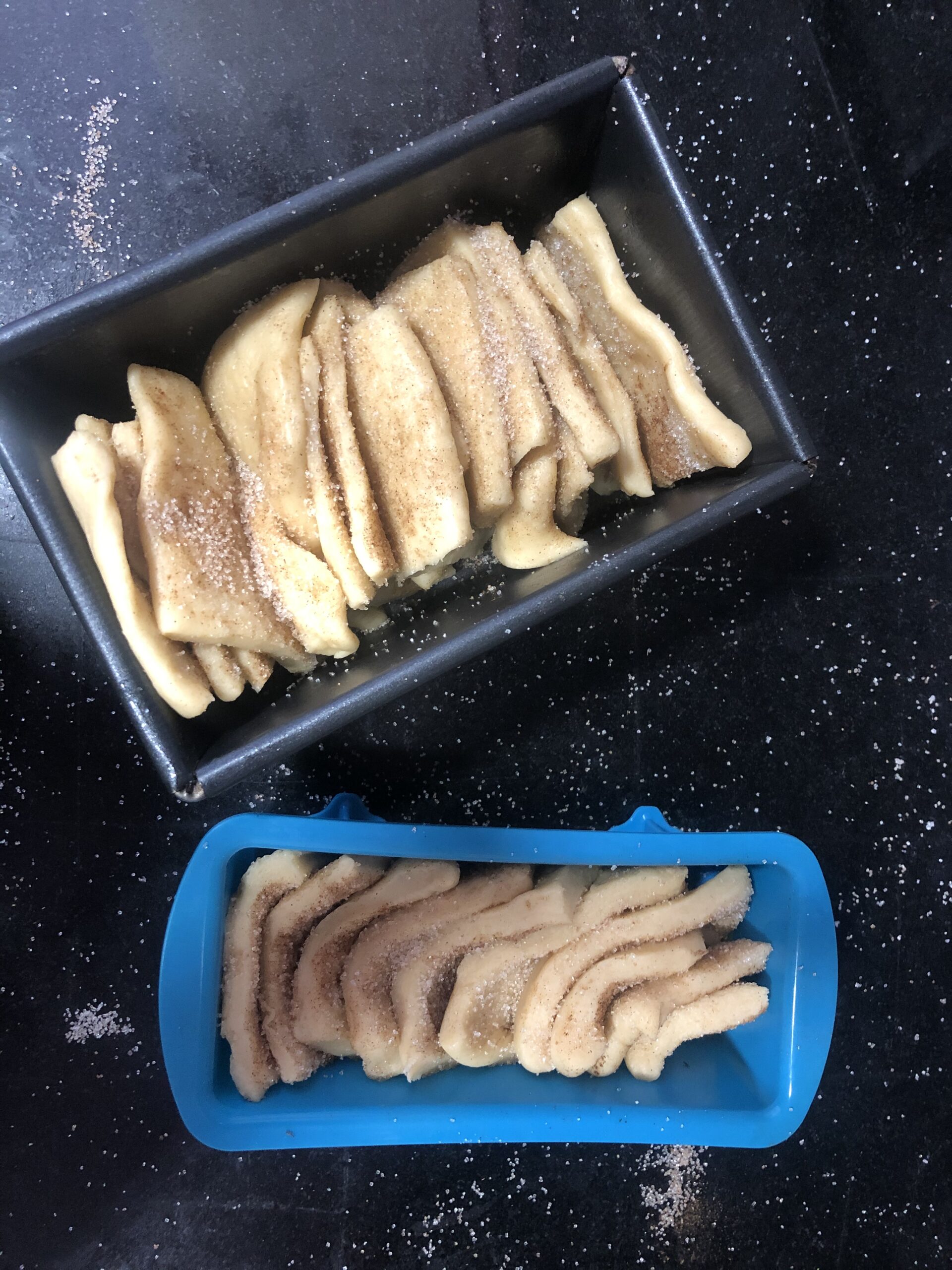
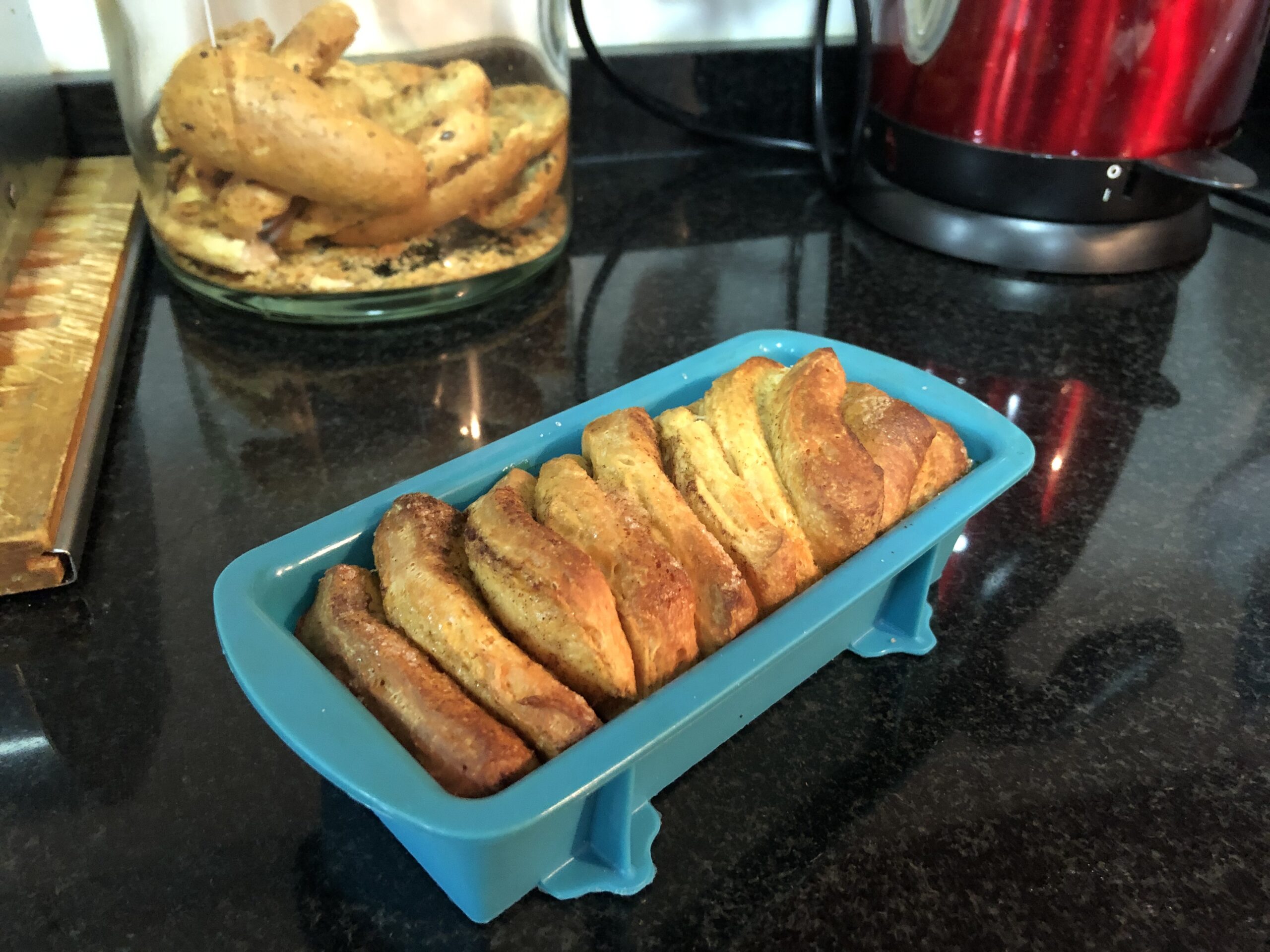
One day I woke up, saw this gorgeous brioche-style sweet bread on Claudia&Julia's Instagram, and knew I had to make it. In my case, I made two loaves, a medium one and a small one to give away. I really liked the texture, though I think I should have been more patient with the first proof of the dough so it would rise more and be fluffier. My taste-testers loved it; I'll have to make it again to truly enjoy it once my brain decides to start picking up the aroma and flavor of cinnamon again, after fully recovering from the aftereffects of damn COVID-19.
Ingredients
330 g (2.6 cups) bread flour
4 g (1.25 tsp) active dry yeast
125 ml (1/2 cup) milk
2 eggs
75 g (6 tbsp) sugar
1/2 teaspoon salt
60 g (4 tbsp) butter (at room temperature)
1 teaspoon ground cinnamon
Method
Mix the bread flour and dry yeast in a bowl. Make a well in the center and add the lightly beaten eggs, the warm milk, 30 g (2 tbsp) of the sugar (reserve the rest), and the salt.
Whisk the wet ingredients with a fork while gradually incorporating the flour and yeast mixture. Stir until the dough gets too stiff, then turn it out onto a clean work surface and knead for 10 minutes. You want to end up with a smooth dough.
Next, add the butter, cut into small cubes, and keep kneading until it's fully incorporated.
Grease a deep, roomy bowl with a touch of oil and let the dough rest inside it, covered with a clean dry kitchen towel, until it doubles in size (it'll depend on room temperature, but easily two hours).
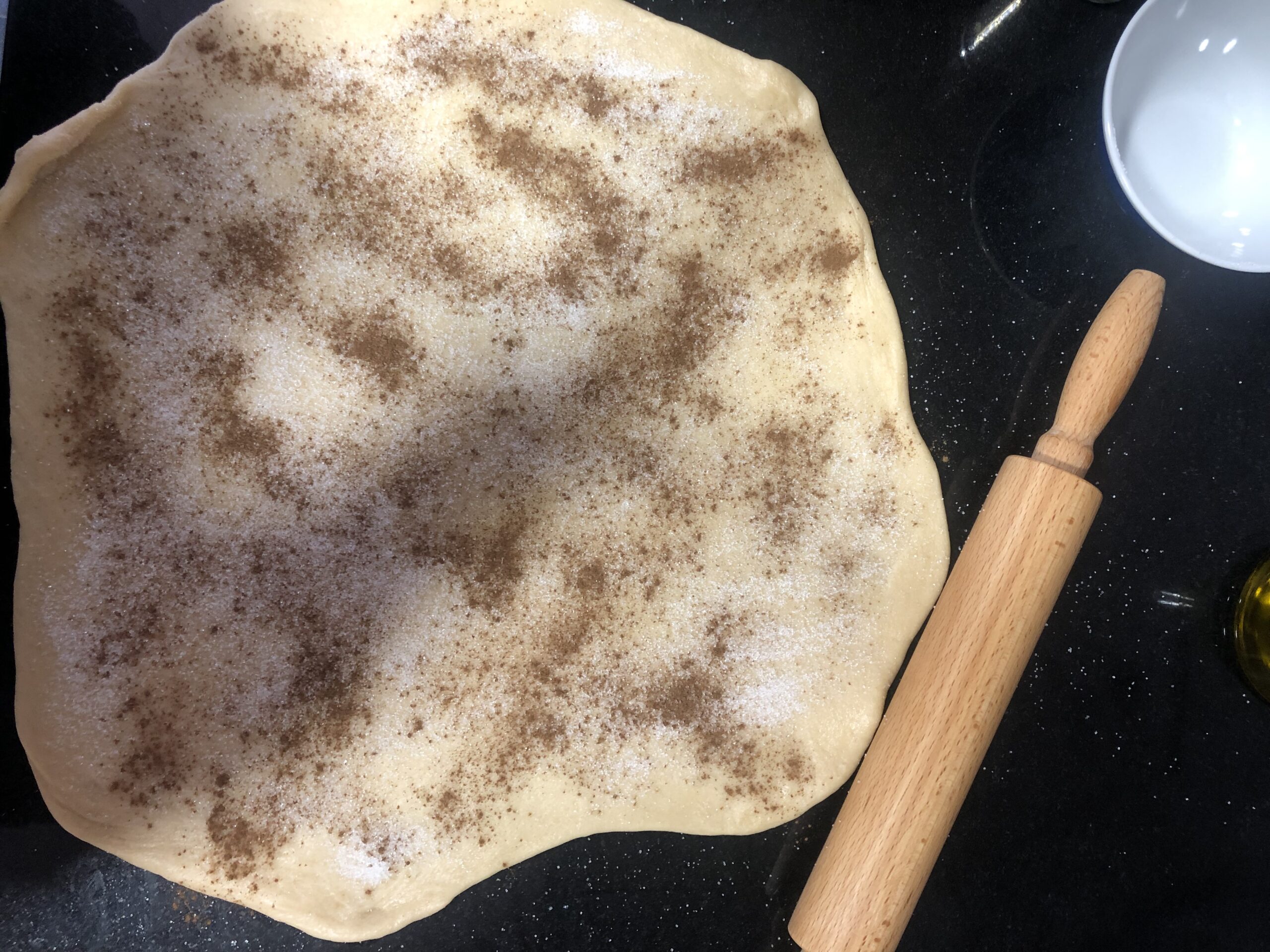
Once the first rise is done, punch it down by pressing with your fingers a few times. Roll the dough out with a rolling pin to about one centimeter (about 3/8 inch) thick.
Sprinkle with the rest of the sugar and the ground cinnamon and press down with your hands or the rolling pin so it sticks well.
Cut the dough into squares slightly narrower than the loaf pan you're going to bake it in. Don't worry if they're a bit uneven.
Place the squares of dough vertically inside the previously greased loaf pan. Any sugar and cinnamon left on the counter from falling off the dough as you arranged it can be sprinkled over the top of the bread.
Cover the pan with a clean dry kitchen towel and let it rise again for about 60 minutes, or until it nearly reaches the rim of the pan.
Put the pan in the oven, preheated to 180°C (350°F) with top and bottom heat, and bake for 45-50 minutes. If you see it browning too much, cover with foil.
Take it out of the oven and let it cool before unmolding and serving.
PiC Tips
Be patient with the proofing times — they depend on room temperature, so in winter it'll take longer, but not waiting long enough can completely ruin the recipe.
If you don't like cinnamon, leave it out or swap it for something else. It won't be a cinnamon pull-apart bread anymore, but it'll be just as delicious.
Banana, Cocoa and Peanut Butter Loaf
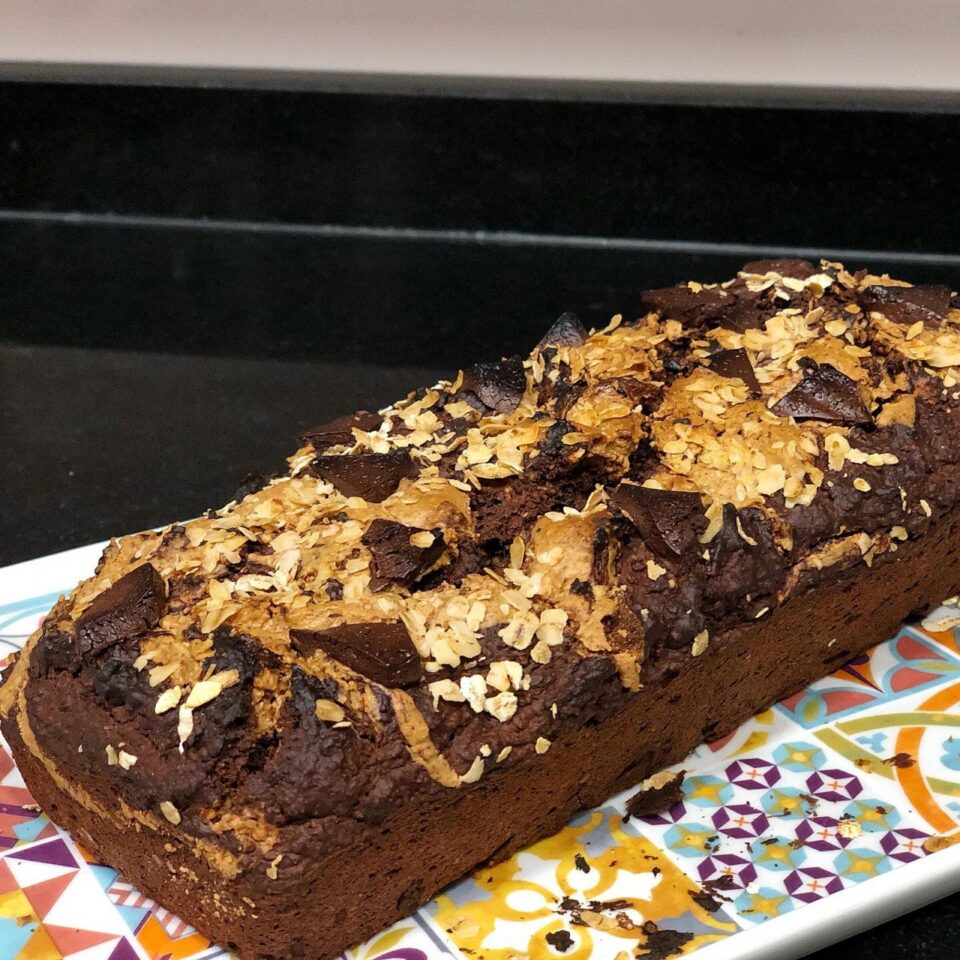
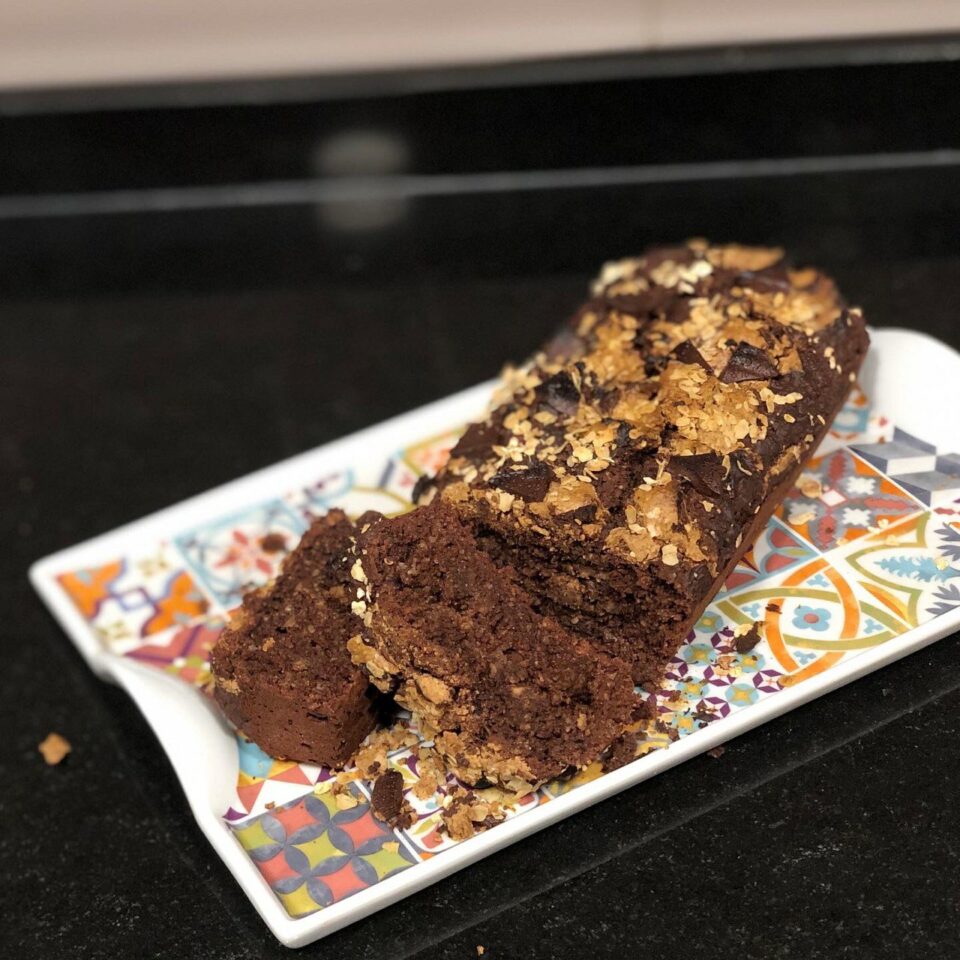
A healthy loaf cake with a moist texture and a strong peanut butter flavor. Definitely not for everyone, but I'm crazy about it. These flavors are addictive for me and I can't really hold back. The good news is that the ingredients are healthy and, even though we can't really call it diet food — especially because of the peanut butter — we know it's a pretty moderate treat.
I got the recipe from @petit_fit's Instagram profile, but I tweaked it a little. Here's my version. Hope you like it.
Ingredients
3 ripe bananas
50 g (1.75 oz) honey
40 g (1.4 oz) extra virgin olive oil
50 ml (3.5 tbsp) milk
1 egg
4 tablespoons peanut butter
175 g (6 oz / about 1.75 cups) ground oats or oat flour
50 g (1.75 oz) pure unsweetened cocoa powder
5 g (1 tsp) baking powder (Royal-type)
A pinch of salt
A couple of squares of dark chocolate and some oat flakes (for topping)
Method
Preheat the oven to 180°C (355°F).
Mash the bananas in a bowl with a fork and add the wet ingredients (honey, milk, oil and the lightly beaten egg).
Stir until everything comes together.
Add the dry ingredients (oats, cocoa, salt and baking powder) and mix well.
Grab a loaf pan (plumcake-style) and grease it with a bit of oil.
Pour half of the batter into the pan and drop two tablespoons of peanut butter on top. Then, using a knife, swirl the peanut butter into the batter to get a kind of marbled effect.
Add the other half of the reserved batter and another two tablespoons of peanut butter. Repeat the marbling process.
Finally, chop the chocolate into chunks and scatter them on top along with a few oat flakes.
Bake for about 45-50 minutes and it's ready to enjoy (technically you should wait for it to cool… I never can).
PiC Tips
Try to use peanut butter that's 100% peanuts, with no added sugar, salt or weird stuff, because it doesn't need any of that. It's pretty easy to find this kind these days at Mercadona, Ahorramás or sports/nutrition supplement shops.
Same goes for the cocoa. It's really easy to find pure 100% cocoa (I usually use Mercadona's store brand). Don't be fooled by advertising for "intense" cocoas because they tend to contain added sugars, sweeteners or even some kind of flour as a thickener.
If you don't have oat flour but do have oat flakes, you can blitz them in a food processor or Thermomix. You can choose how fine you want them. In my case, I used roughly ground oats.
As always, you can swap the honey for another sweetener of your choice, or for dates that have been soaked and blended into a paste. Also keep in mind that the riper the bananas, the more sweetness they'll add.
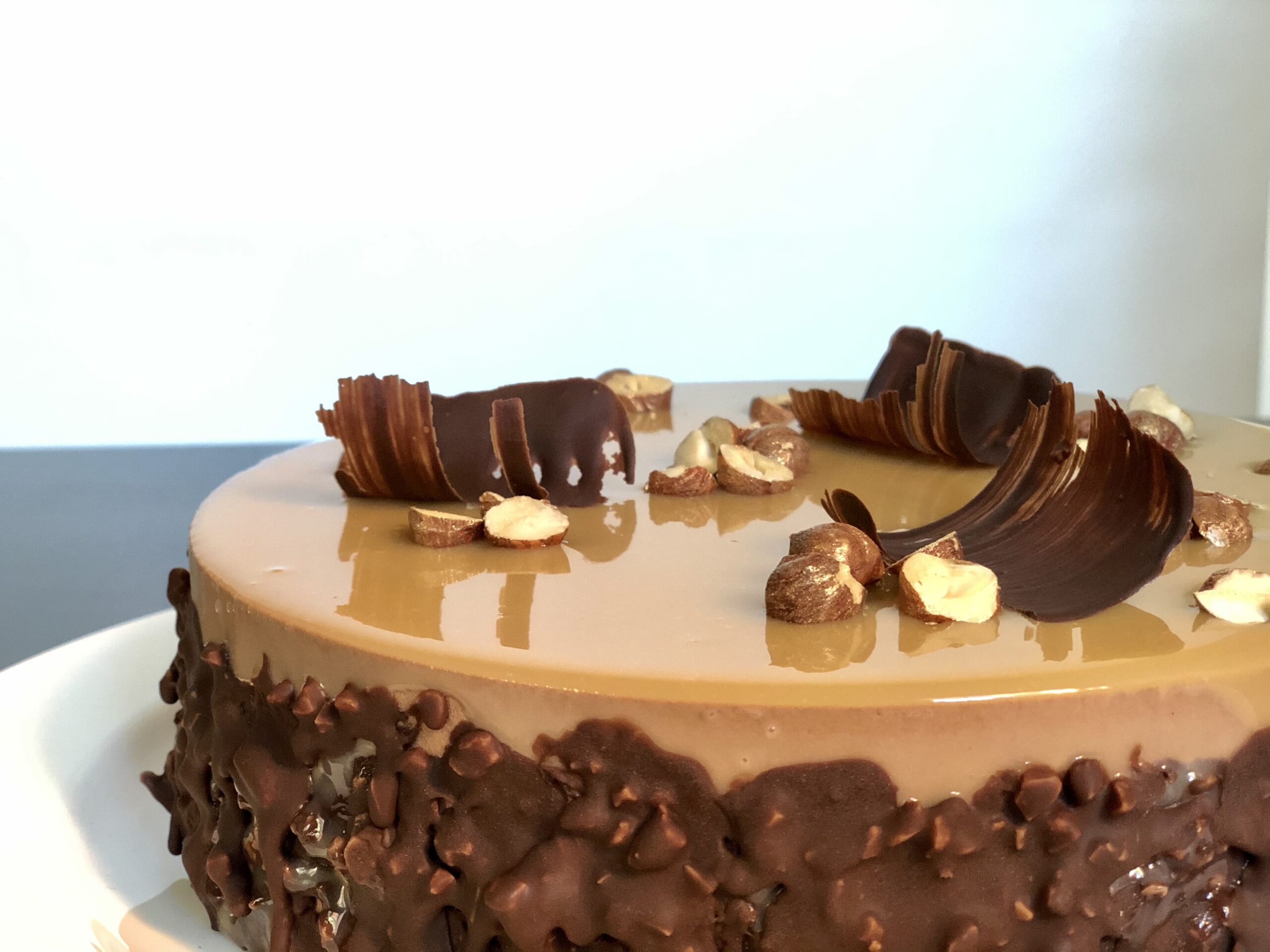
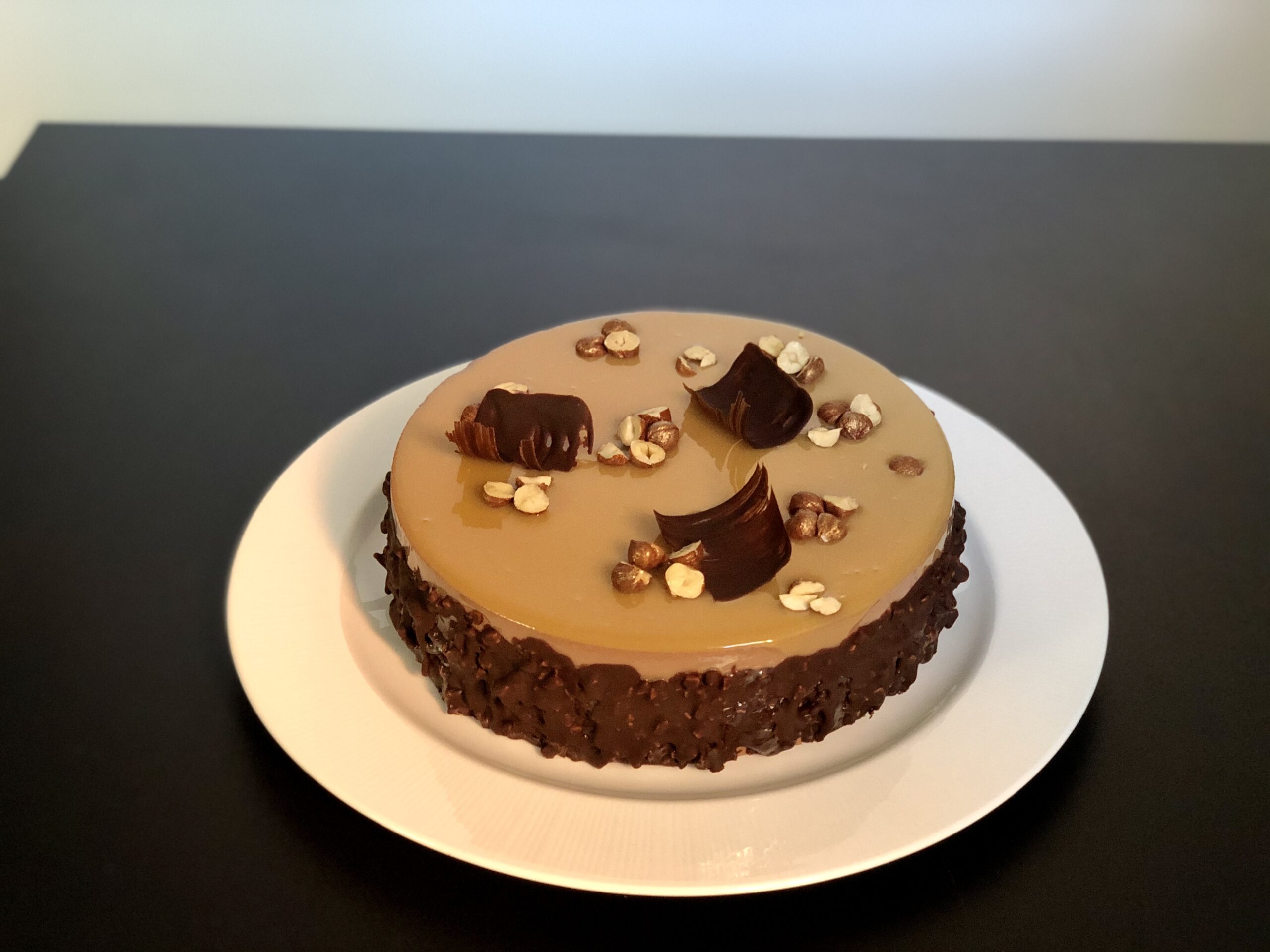
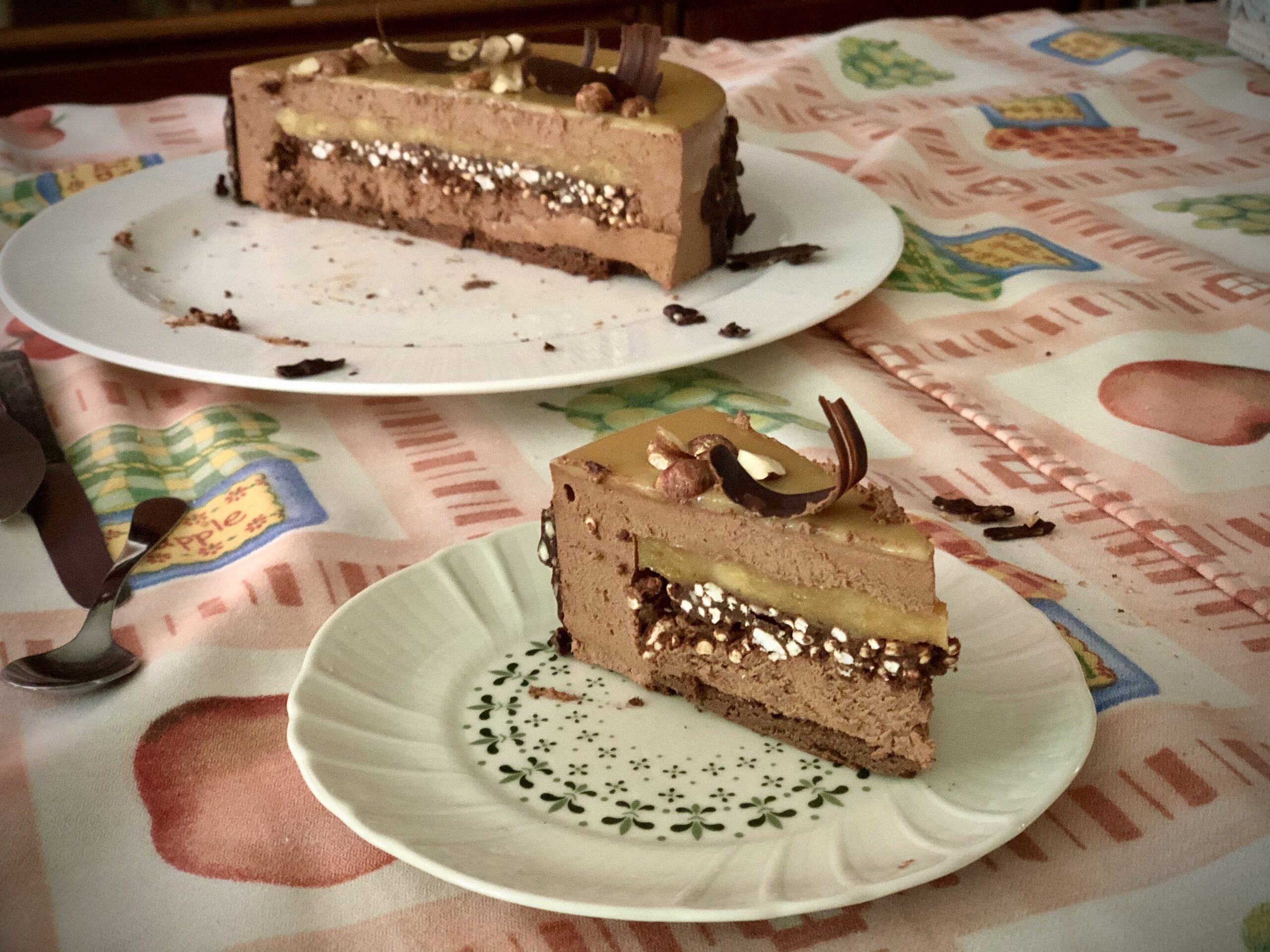
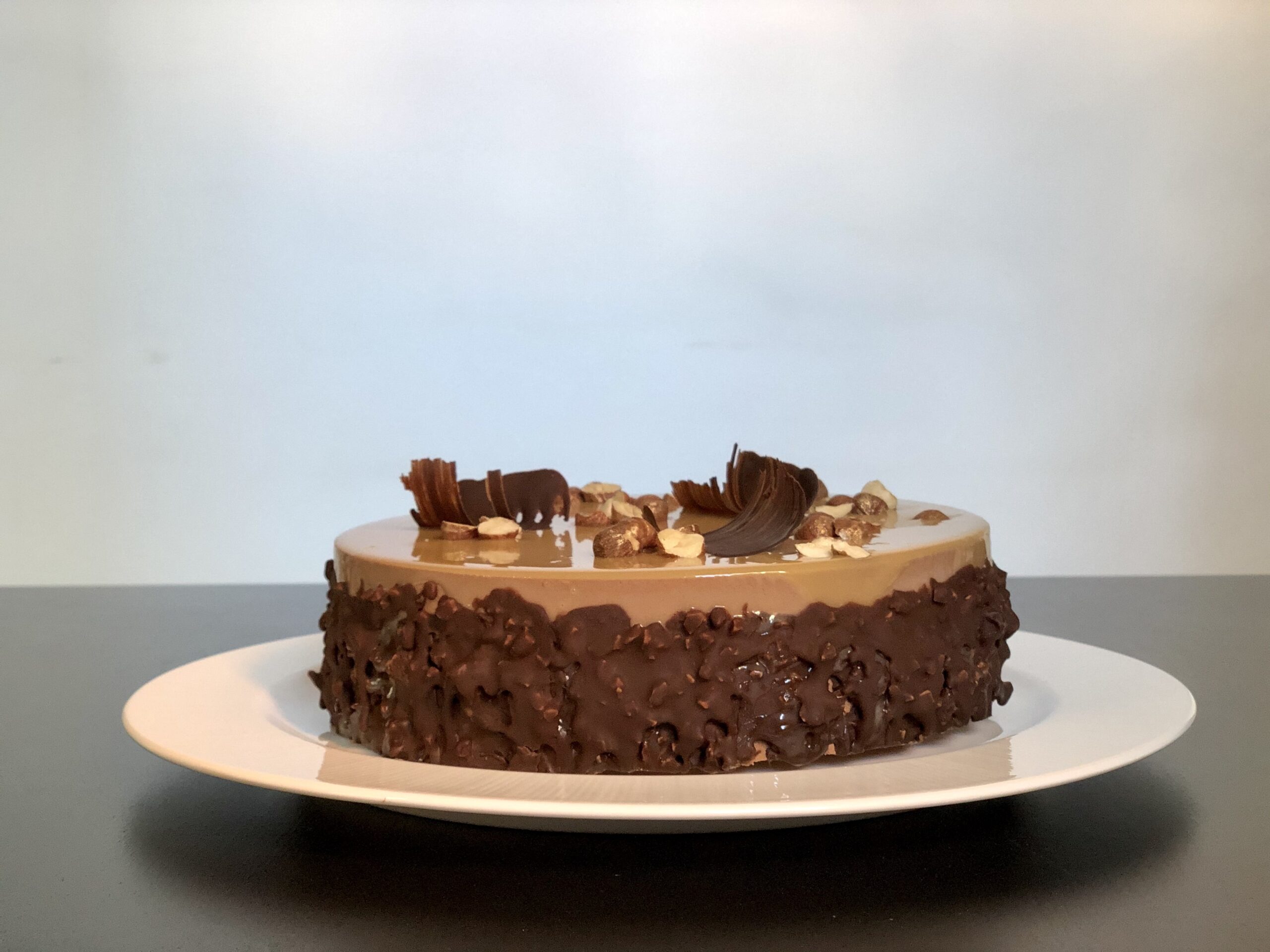
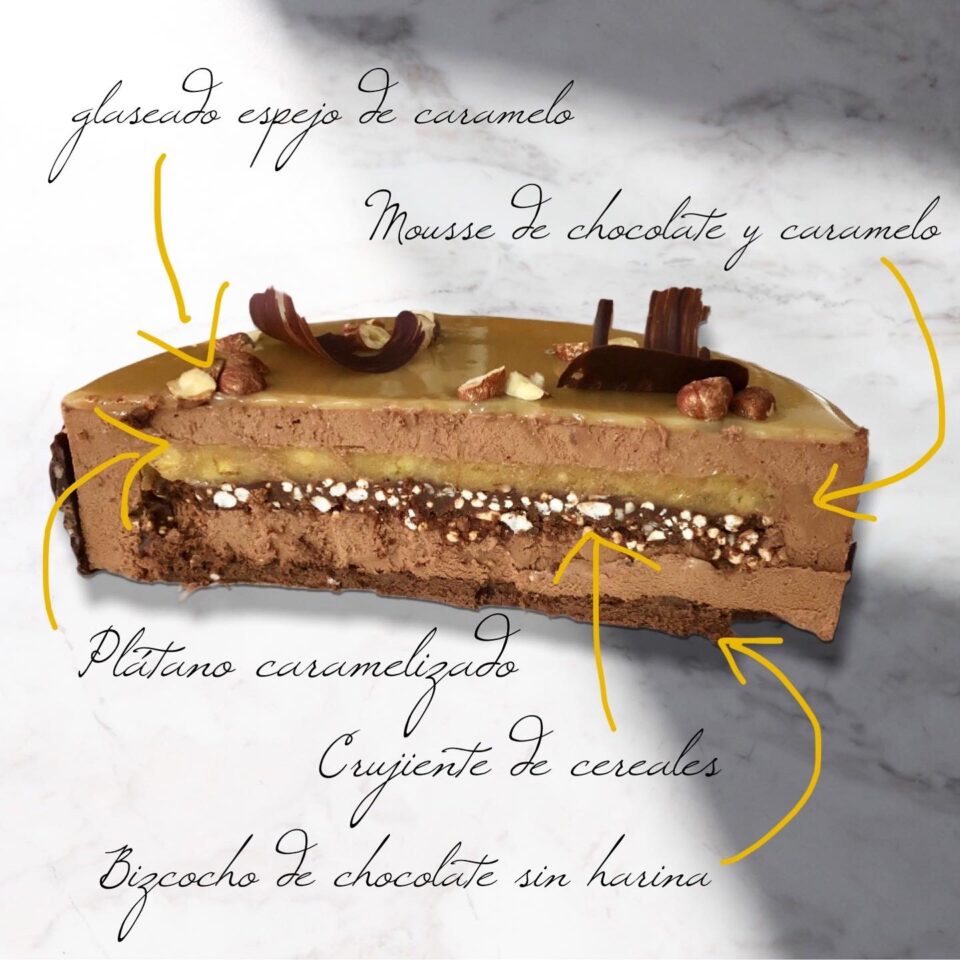
Chocolate and caramel cake with banana and crunchy cereal layer
This time I wanted to make a chocolate cake that didn't have a super intense pure-chocolate flavor, since some of my taste-testers aren't huge fans of that level of intensity. The banana filling won me over as a way to balance out all that sweetness, and the crunchy layer adds a bit of joy to creamy desserts.
The recipe is from Ettore Cioccia, although I made several changes to the filling and decoration because I wanted to use up ingredients I had at home and try out some new things. So here's my version of this delicious cake — I hope you like it. It's not a complicated cake, but it does have several components and requires patience and planning to give yourself enough time, considering all the chilling/freezing times involved.
Ingredients
Crunchy cereal layer
60 g (2.1 oz) almond butter
35 g (1.2 oz) chocolate
20 g (0.7 oz) raw chopped hazelnuts
15 g (0.5 oz) puffed rice
15 g (0.5 oz) puffed quinoa
Caramelized banana
30 g (2 tbsp) sugar
15 g (1 tbsp) butter
3 bananas (210 g / 7.4 oz)
Lemon juice
2 g gelatin (1 sheet)
Flourless chocolate sponge
60 g (2.1 oz) 65% dark chocolate
20 g (1.5 tbsp) unsalted butter
2 egg whites at room temperature
2 egg yolks
20 g (1.5 tbsp) sugar
Chocolate and caramel mousse
200 g (7 oz) 65% chocolate
6 g gelatin (3 sheets)
60 g (1/4 cup) sugar
100 ml (1/2 cup) heavy whipping cream
4 egg yolks, beaten
400 g (14 oz) heavy cream whipped to soft peaks
Ferrero-style coating
215 g (7.6 oz) 65% chocolate
40 g (3 tbsp) sunflower oil
45 g (1.6 oz) chopped almonds (almond brittle)
Caramel mirror glaze
300 g (1.5 cups) sugar
300 g (1 cup) glucose syrup, slightly warmed in the microwave
375 ml (1.5 cups) water
200 g (7 oz) sweetened condensed milk
300 g (10.6 oz) white couverture chocolate, finely chopped
18 g gelatin, hydrated beforehand and then dissolved in 108 ml (about 1/2 cup) of hot water
Method
We start by making the crunchy cereal layer. Melt the chocolate in the microwave in short bursts to keep it from burning. Next, add the almond butter and mix well. Finally, add the cereals and hazelnuts and mix again until everything comes together.
Line the bottom of a 17 cm (6.7 in) springform ring or pan with plastic wrap and a strip of acetate around the edge. Pour in the chocolate mixture and smooth out the surface with a spoon. Pop it into the freezer.
For the caramelized banana, hydrate the gelatin in a bowl of cold water.
Cut the bananas into small dice and add a splash of lemon juice so they don't oxidize.
Put the sugar in a saucepan and let it melt until it forms an amber-colored caramel. Add the butter, and once it's incorporated, add the banana. Cook for a few minutes over low heat, stirring frequently (the mixture is likely to get more liquid as the fruit releases its juice).
Drain the gelatin well and stir it into the saucepan after turning off the heat. Stir well so it dissolves completely.
Take the crunchy layer out of the freezer and pour the caramelized banana on top, forming another even layer. Put it back in the freezer.
To make the chocolate sponge, preheat the oven to 180°C (355°F).
Melt the chocolate and butter in short bursts in the microwave.
In another bowl, whip the egg whites to stiff peaks with a pinch of salt and the sugar. Once they're firm, fold in the beaten yolks gently.
Next, add the melted chocolate, also folding gently so it doesn't deflate, until you have a smooth batter.
Spread it onto a parchment-lined baking sheet (it's not a lot of batter and it's not very runny) until it's about 1 cm (0.4 in) thick. The important thing is that you'll be able to cut a 17 cm (6.7 in) circle out of it later.
Bake for 8 minutes.
To make the chocolate and caramel mousse, hydrate the gelatin sheets in very cold water.
Melt the chocolate in the microwave in short bursts and set aside.
In a saucepan, melt the sugar and let it cook until you get a light caramel. Add 100 ml (1/2 cup) of cream (warmed in the microwave so there isn't a big temperature difference). Pour it in a little at a time, stirring constantly to keep crystals from forming, and very carefully so it doesn't splash you.
Pour the mixture over the beaten egg yolks while stirring constantly, then return it to the heat until it reaches 82–84°C (180–183°F).
Take it off the heat and add the well-drained gelatin, stirring until it dissolves.
Next, blend with an immersion blender until smooth, and pour this hot cream over the melted chocolate. Mix well and let cool to 40–45°C (104–113°F).
Finally, fold in a third of the soft-peak whipped cream and mix. Add the rest and fold gently again.
For the assembly, take a 20 cm (8 in) springform pan (or ring) and line the edge with a strip of acetate and the bottom with plastic wrap.
Now we're going to layer everything. First, spread a generous layer of chocolate and caramel mousse in the bottom and use a spatula to coat the sides too. Then unmold the banana and hazelnut crunch insert and place it on top of the mousse with the crunchy side facing up. Fill with more mousse, and finally lay down the chocolate sponge disc. Put the cake in the freezer for at least 3–4 hours (I leave it overnight and finish the decoration the next day).
Now we're going to prepare the glazes. For the Ferrero-style coating, melt the chocolate in the microwave and then add the oil. Once it's well combined, add the chopped almonds. Set aside until it cools to 35°C (95°F).
To make the caramel mirror glaze, hydrate the gelatin in a bowl of cold water. Heat the water, drain the gelatin, and dissolve it in this hot water. Set aside.
In a saucepan, make a dry caramel using just the sugar — no water. When it turns a dark golden color, turn off the heat and pull the pan off the burner. Immediately and very carefully, slowly pour in the 375 ml (1.5 cups) of water while whisking. (Be very careful — it splatters and burns badly.)
Then add the glucose, stir well until it dissolves, and next add the condensed milk and white chocolate, whisking until the chocolate dissolves and is fully incorporated.
Finally, add the dissolved gelatin and mix until combined. Let it rest until the caramel cools to 25–30°C (77–86°F).
All that's left is the final assembly. Take the frozen cake out of the freezer and remove the pan, the acetate strip, and the plastic wrap. Set the cake on top of a smaller mold or bowl so it's elevated and you can glaze it well. It's a good idea to put a plate or tray underneath to catch the drippings of glaze so you can reuse them.
First we're going to glaze the sides with the Ferrero coating. The easiest way is to put the coating in a pitcher and pour it over the sides. Since the cake is frozen, the chocolate will set almost instantly. If you have any gaps, you can patch them up with the help of a spoon.
Finally, pour the mirror glaze over the top of the cake. You want to use just the right amount so it only covers the top and doesn't drip down the sides. You can finish decorating it with broken hazelnuts and chocolate.
Carefully transfer it to a flat plate and store in the fridge. Before serving, you'll need to give it 2 or 3 hours to defrost slowly.
PiC tips
The amounts I give for the mirror glaze are enough to cover the entire cake (top and sides). In that case, you wouldn't need the Ferrero-style coating, and it would also look beautiful. Any leftover glaze (that hasn't been contaminated with other components of the cake) can be stored in the fridge for a few days, or longer in the freezer, and reheated whenever you want to glaze another dessert. In fact, that's what I did. This glaze had been frozen — it was leftover from a previous cake. You can also choose to halve the quantities.
I used almond butter, but you can use any other nut butter or even praline like Ettore does in his original recipe.
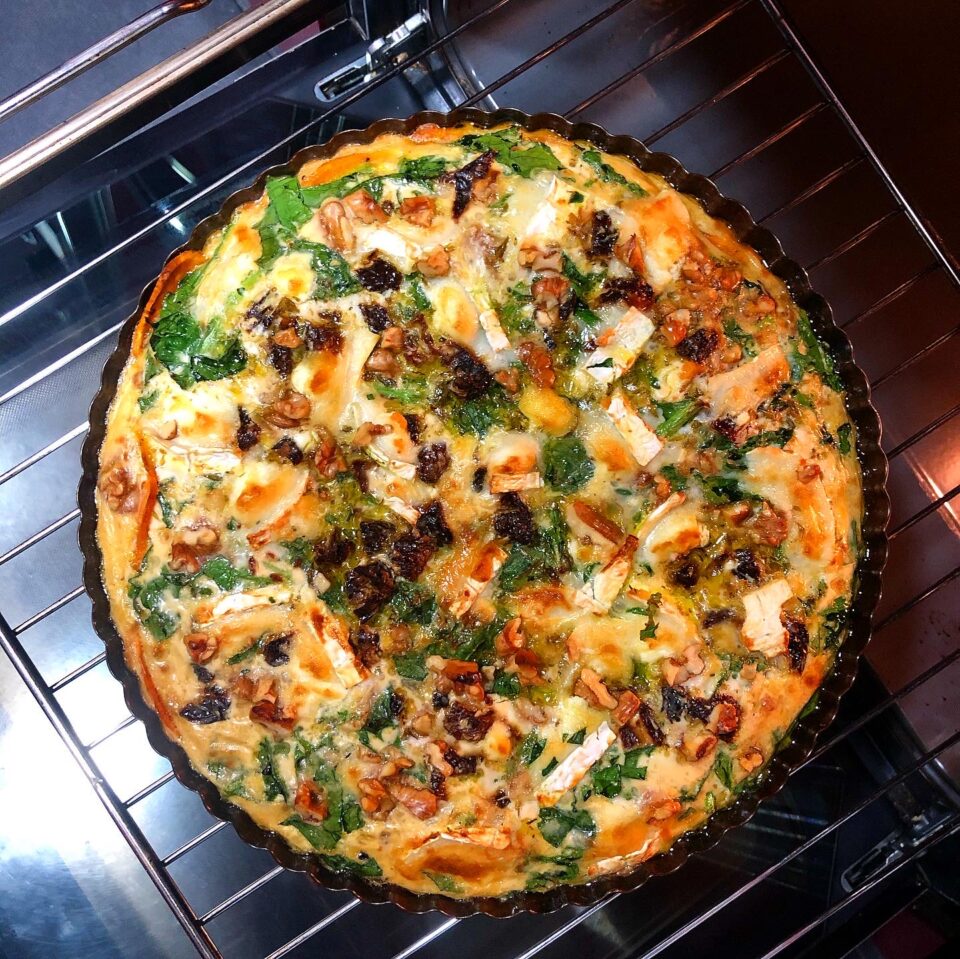
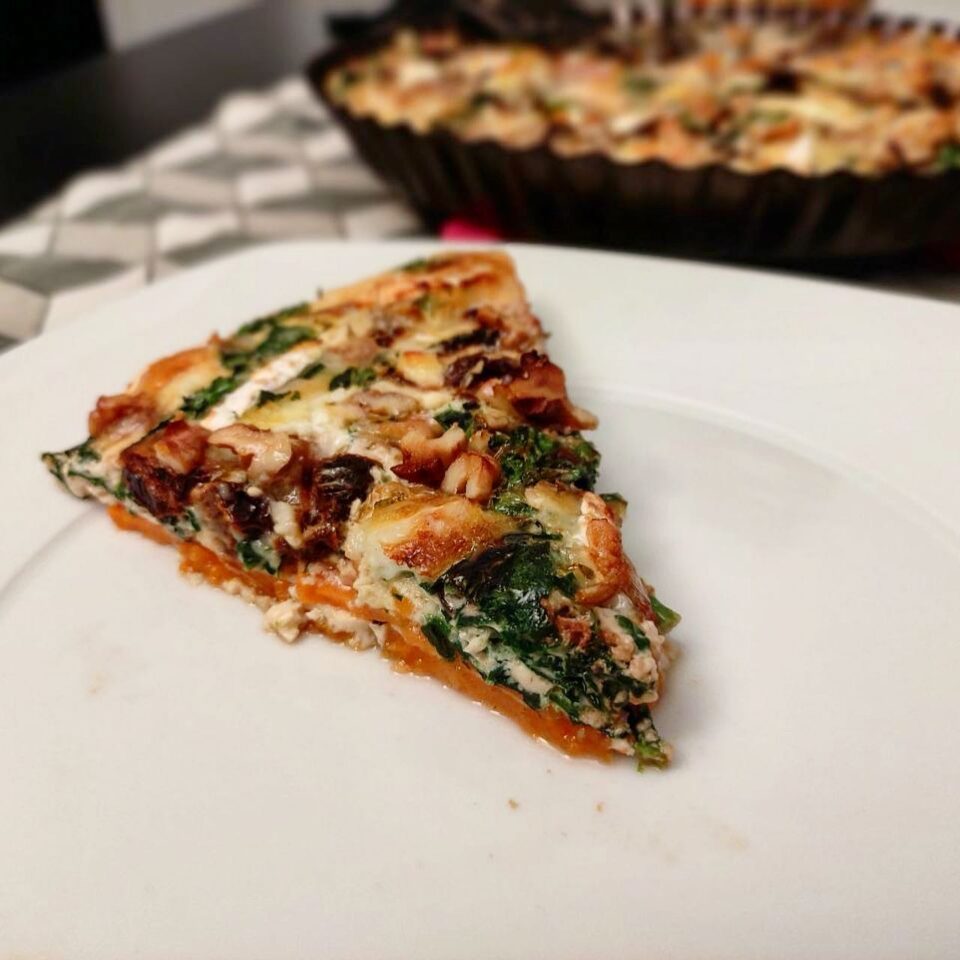
Sweet Potato Pseudo-Quiche
This is a different way to make a pseudo quiche or savory tart, and it's also a great alternative for those who can't or don't want to eat gluten. Compared to a traditional quiche, it's missing the crunch of the shortcrust pastry, but on the upside it's less calorie-dense and adds a really pleasant hint of sweetness.
Ingredients
1 large sweet potato
4 eggs
350 ml (1.5 cups) milk
85 g (3 oz) fresh spinach
100 g (3.5 oz) sun-dried tomatoes
110 g (4 oz) goat cheese
A handful of chopped walnuts
2 tablespoons cream cheese (I used Skyr)
Salt, pepper, and extra virgin olive oil
Method
Preheat the oven to 190°C (375°F).
Wash the sweet potato, make a few slits in the skin, and microwave it for a couple of minutes (you can skip this step, but it softens it up a bit and makes it easier to slice).
Take the sweet potato out, careful not to burn yourself, peel it, and cut it into very thin slices (about 3 mm / 1/8 inch).
In a bowl, toss the sweet potato slices with salt, pepper, and olive oil, then arrange them in an overlapping pattern in a round oven-safe pan, covering the bottom and the sides.
Bake for about 20 minutes.
Meanwhile, beat the eggs in a bowl, season with salt and pepper, add the cream cheese, milk, and sun-dried tomatoes, and mix well.
Once the baking time is up and the sweet potato is soft, take the pan out, place the lightly chopped raw spinach over the sweet potato base, and pour the milk and egg mixture on top.
Finally, scatter the chopped goat cheese and walnuts evenly across the surface.
Bake for about 30 minutes and it's ready to enjoy.
PiC Tips
The cream cheese isn't necessary — I threw it in to use up some that had been sitting in the fridge for a few days. If you want to use cream instead of milk like in traditional quiches, go for it; it'll come out a bit richer and creamier.
When I say sun-dried tomatoes, I mean the ones that have been dehydrated and then rehydrated, usually packed in seasoned oil. If you only have plain dehydrated tomatoes and want to "revive" and season them yourself for any recipe, it's super easy. Bring 700 ml (3 cups) of water to a boil, then turn off the heat, add 50 ml (3.5 tablespoons) of white vinegar and the dehydrated tomatoes. Let them sit for half an hour. Then take the tomatoes out and pat them dry with paper towels. Transfer them to a jar with olive oil, garlic, and whatever herbs you like, and in a couple of days everything will have soaked up a delicious flavor.
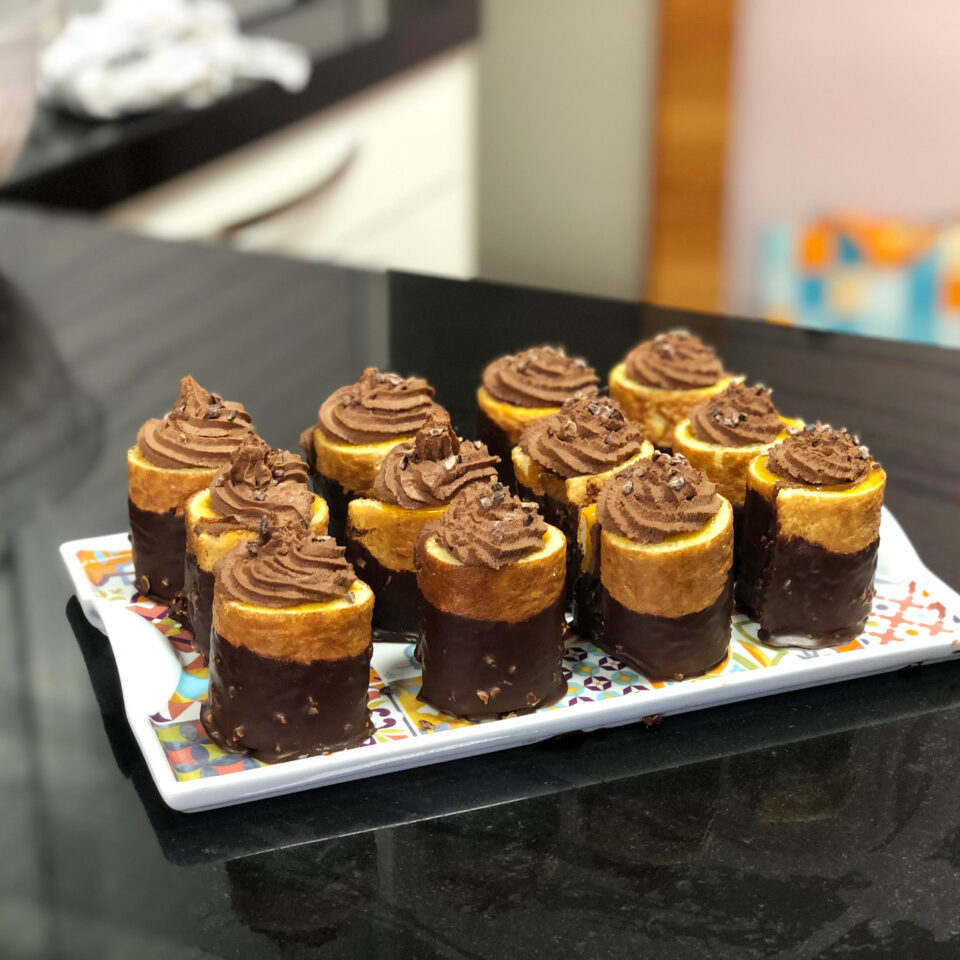
Chocolate and Mango-Passion Roll Cakes
This recipe comes from Ettore Cioccia, who I call "my master" because I've followed several recipes from his blog Bavette and they all turn out amazing. On top of that, I had the luck of attending a pastry course he gave in Madrid and I couldn't have enjoyed it more. So if you feel like making a delicious dessert and spending a good while in the kitchen putting together different components, you can pick any of Ettore's recipes and you'll be guaranteed success. Today I'm sharing my version of his chocolate and mango-passion fruit roll cakes. The only thing I did differently from his recipe was the pionono sponge, since I used the one from another pastry great: Osvaldo Gross.
Ingredients
For the dark chocolate ganache
100 g (3.5 oz) heavy cream (30-35% fat)
100 g (3.5 oz) chocolate (66% cocoa)
210 g (7.4 oz / about 1 cup) cold heavy cream
For the pionono-style sponge
5 eggs
50 g (1.75 oz / about 1/4 cup) sugar
50 g (1.75 oz / about 1/3 cup) flour
A pinch of salt
One tablespoon of honey (about 25 g / 0.9 oz)
For the exotic jam
265 g (9.3 oz) mango purée
85 g (3 oz) passion fruit purée
70 g (2.5 oz / about 1/3 cup) granulated sugar
13 g (0.5 oz) pectin
For the Ferrero Rocher glaze
250 g (8.8 oz) chocolate (60% cocoa)
50 g (1.75 oz / about 1/4 cup) sunflower oil
70 g (2.5 oz / about 1/2 cup) granulated almonds
Method
Dark chocolate ganache
In a small saucepan, bring 100 g (3.5 oz) of cream to a boil. Pour the boiling cream over the chocolate (which we've previously melted in the microwave) in two or three additions, mixing well after each one.
Then add the cold cream and mix until everything is well combined. Cover with cling film pressed against the surface and chill in the fridge for at least 4 hours.
For the pionono-style sponge
Preheat the oven to 190ºC – 200ºC (375ºF – 390ºF).
Put the eggs into the bowl of your stand mixer along with the sugar, salt, and honey, and whisk until you reach what's called "ribbon stage" (this is when you can lift a spoonful of batter and drizzle it over the rest, drawing lines on the surface that don't disappear right away). Since it takes a good while, it's best to use a stand mixer.
Sift the flour and fold it in with the mixer at minimum speed. Bump the speed up to maximum for a few seconds.
Using a spatula, fold everything together with gentle, sweeping motions.
Prepare the oven tray with parchment paper greased with butter or margarine.
Pour the batter onto the prepared tray and spread it out so the surface is level (we want a thin sponge, about 4-5 mm / 1/6 inch thick).
Bake for 8 to 10 minutes until the surface is golden and the bottom is too — you can check by lifting it with the help of the paper (carefully, so you don't burn yourself).
For the exotic jam
Mix the sugar with the pectin.
Gently heat both fruit purées together to about 40ºC (105ºF) and add the sugar-pectin mixture. Bring to a boil for a few seconds.
Remove from the heat and transfer the purée to a clean bowl.
Let it cool to 36ºC (97ºF), stirring frequently.
Finally, spread a thin, even layer of the jam over the sponge sheet. Chill in the fridge until the jam firms up a little.
For the Ferrero Rocher glaze
Melt the chocolate to about 50ºC (120ºF) in the microwave.
Stir in the sunflower oil and mix well.
Add the granulated almonds and mix again so they're evenly distributed.
Let the coating cool down to 35ºC (95ºF).
Assembling the dessert
With electric beaters, whip a little more than half of the chocolate ganache and keep the rest in the fridge. At medium speed, whip just until you get a creamy texture.
Spread a thin, even layer of ganache over the jam we placed on the sponge. Let it firm up in the fridge.
Cut the sponge — with its layers of jam and ganache — into strips. I made mine 5 cm (2 inches) wide.
Roll up each strip with the filling on the inside, being careful not to tear the sponge.
Freeze the rolls for about 10-15 minutes (or you can leave them in the freezer until you need them if you've prepared the recipe ahead).
Take the rolls out of the freezer and dip each one into the chocolate coating we prepared, going about halfway up.
Whip the rest of the ganache with electric beaters at medium speed until you get a medium-firm consistency.
Using a piping bag fitted with a star tip, pipe little chocolate roses on top of each roll. You can decorate with cocoa nibs.
Let them temper a bit and enjoy.
PiC tips
Even though I followed the exact proportions, my jam didn't set as much as I'd have liked (no idea why), so if you see it's too runny, you can add a bit more pectin (that's the ingredient that gels it). I'd also suggest not using all of the jam you make — pay attention to the thickness and aim for a thin layer over the sponge base.
In his recipe, Ettore Cioccia makes 4 large roll cakes; I preferred bite-sized portions — or rather, two- or three-bite ones ;-). You can adjust this however you like when you cut the sponge.
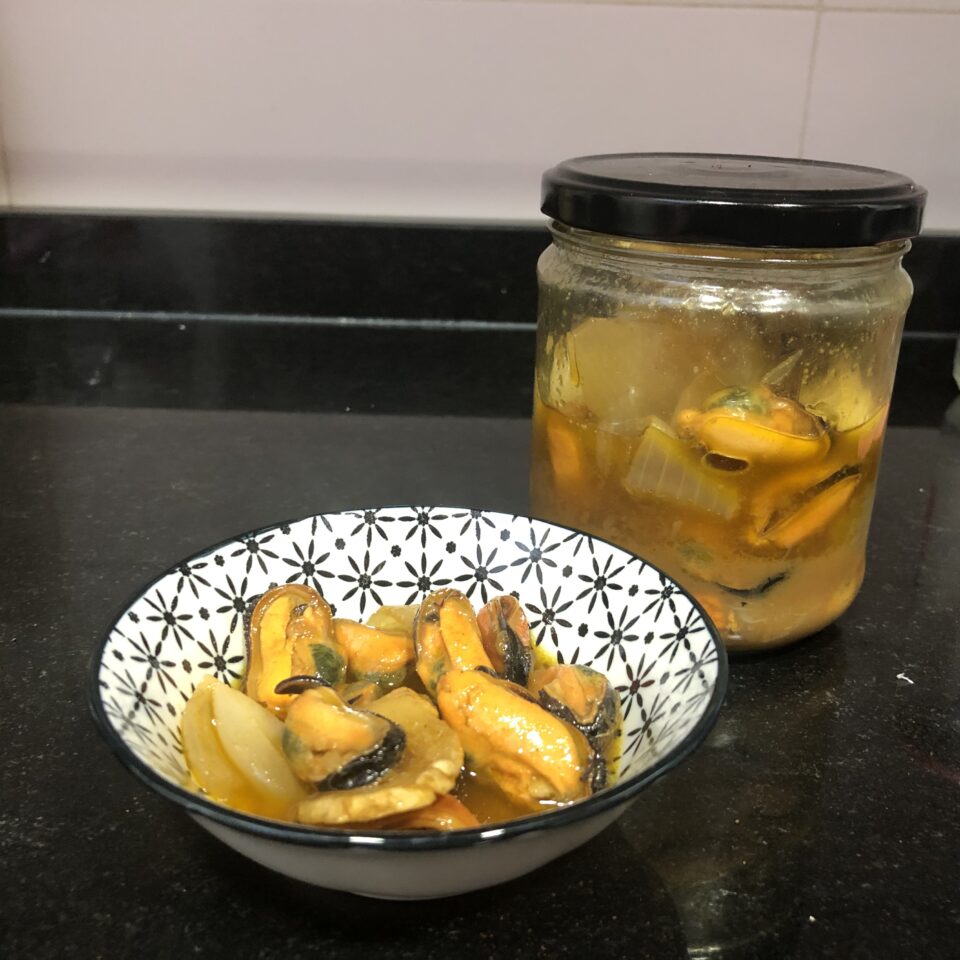
Pickled Mussels
At first I thought this would be one of those recipes that wasn't worth making at home, but how wrong I was. I felt like making the escabeche, seeing the method, and checking whether I could pull off that characteristic flavor. I liked it so much that I've repeated the process about three times this summer. They go a long way and keep for several days in the fridge, so there's no excuse not to have a really tasty homemade appetizer on hand.
Ingredients
1 kg (2.2 lb) mussels
300 ml (1.25 cups) olive oil
100 ml (scant ½ cup) sherry vinegar
50 ml (3 tbsp + 1 tsp) white vinegar (I used rice vinegar)
100 ml (scant ½ cup) white wine
1 head of garlic (cloves separated, unpeeled)
1 large onion, julienned
3 slices of fresh ginger
Whole peppercorns (I used allspice)
2-3 dried chili peppers
3 bay leaves
Salt
2 teaspoons paprika (sweet, hot, or a mix)
Method
Steam the mussels just until they open but stay tender. Remove the shells and beards. Set aside.
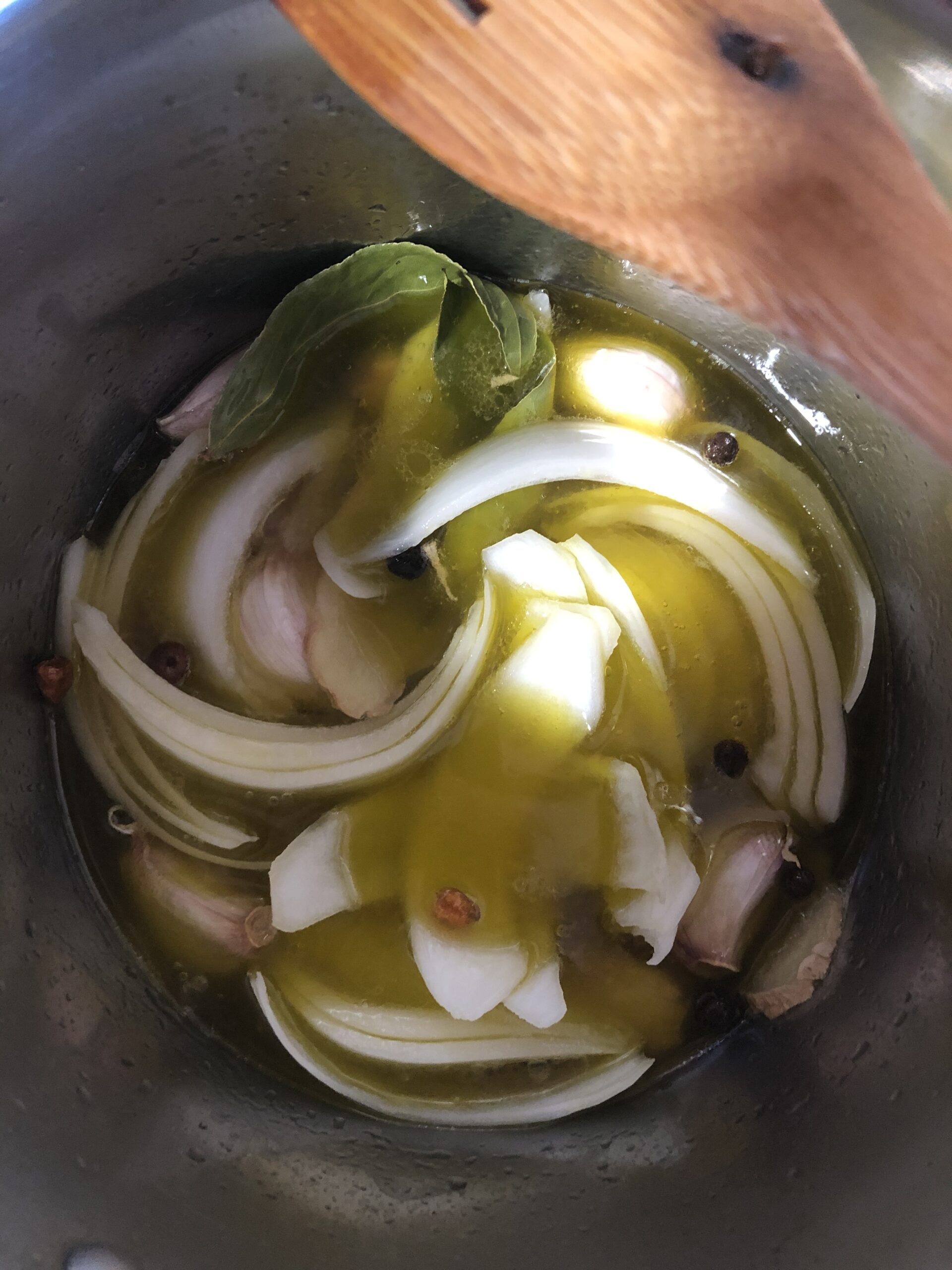
Heat the oil in a saucepan and add all the ingredients except the cooked mussels and the paprika.
Let it simmer over medium heat for 30 minutes.
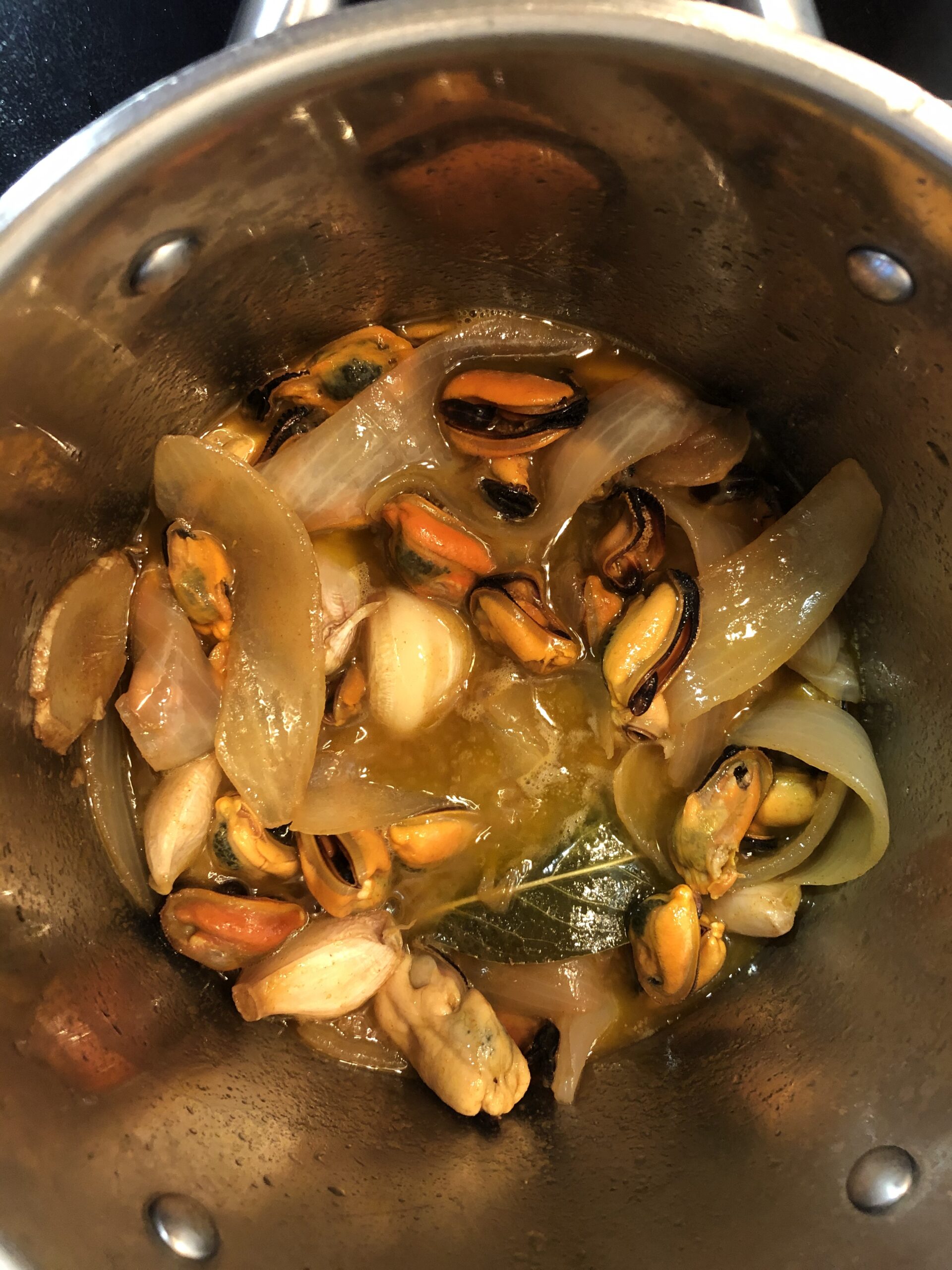
Once the time is up, take it off the heat and add the paprika. Stir well and add the mussels.
Put it back on the heat for a few seconds just to warm the mussels through.
All that's left is to transfer everything to jars and they're ready to enjoy. Although it's better to leave them for a few hours so the flavors settle in nicely.
PiC Tips
You can sterilize the jars beforehand by boiling them in water for 15-20 minutes.
With this recipe we're not creating a true preserve since we haven't vacuum-sealed them or boiled them afterwards, so I recommend keeping them in the fridge. When you want to enjoy them, take them out of the fridge a bit ahead of time so they come to room temperature and the oil isn't so solid.
You can add other herbs or spices to taste, depending on what you have in your pantry.
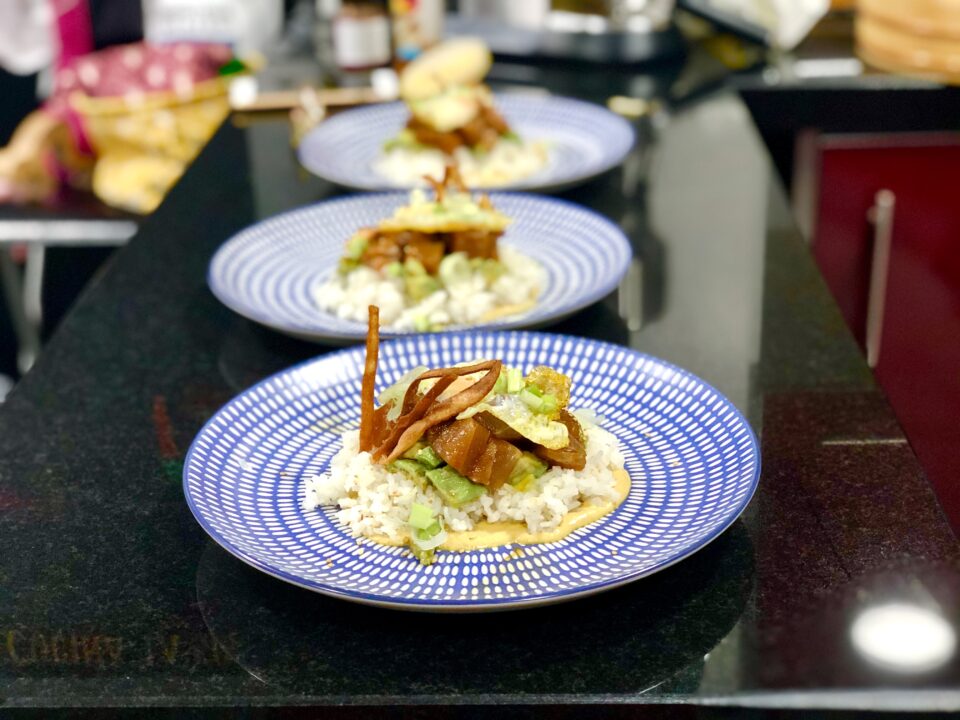
Tuna and Avocado Poke with Mango Huancaína
I made this recipe following the exact steps from Kitchen Club, and honestly, if the ingredients promised to be a flavor bomb, the result was even better than expected. So many flavors that combined perfectly. If anything, the little fried egg would be a dispensable element, but the sauce was delicious and made all the tasters go back for seconds. Presentation-wise it didn't turn out anywhere near as spectacular as the original recipe, but the flavor was up to par.
Ingredients
(Serves 6)
Mango huancaína sauce
80 g (2.8 oz) fresh cheese (burgos-style)
100 ml (scant ½ cup) evaporated milk
60 ml (¼ cup) mango purée
3 cracker or soda-style biscuits
1 slice of sandwich bread soaked in milk
2 tbsp chopped onion
40 g (1.4 oz) walnuts
3 tbsp ají amarillo paste (or to taste)
½ tsp cumin
salt
Tuna tartare
300 g (10.5 oz) tuna
Zest of 1 lime
1 tsp shichimi togarashi (I didn't have any and used harissa paste)
1 tbsp sesame oil
30 ml (2 tbsp) soy sauce
50 ml (3.5 tbsp) olive oil
Rest of the recipe
400 g (14 oz) sushi rice
2 ripe avocados
6 quail eggs
2 corn tortillas
Salt, oil and sesame seeds
Method
Start by making the huancaína sauce. Sauté the onion in a pan with a little olive oil over high heat — it should be golden but still crunchy.
In a food processor, add the onion and the rest of the ingredients, and blitz until you get a creamy sauce.
Adjust the salt. Set aside.
Chop the tuna into medium dice and dress it with lime zest, harissa, sesame oil, soy sauce and olive oil. Stir gently and set aside.
Cut the avocados into medium dice and dress with salt and olive oil (you can leave the pits in until plating so they don't oxidize, or add a little lime juice).
Cut the corn tortillas into strips and fry until crispy but not burnt (they brown pretty quickly and harden as they cool). Set aside.
Fry the quail eggs with crispy edges.
When it's time to plate, spoon a generous amount of sauce on each plate, then place the sushi rice on top without packing it down, add the dressed avocado, the tuna tartare, and finish with the quail egg and the corn tortilla strips.
Garnish with fresh spring onion and sesame seeds.
PiC Tips
You can easily find ají amarillo paste at Latin grocery stores. Same goes for mango purée, which they usually have frozen (a great option if it's not mango season or you can't find ripe ones).
I haven't included how I made the sushi rice because I used the rice cooker and then cheated a bit by using a powdered mix that already comes with the salt, sugar and vinegar. I brought mine from Japan, but you can probably find something similar at Asian grocery stores.
Remember to freeze the fish for at least 24 hours to avoid anisakis problems.
Dorayaki
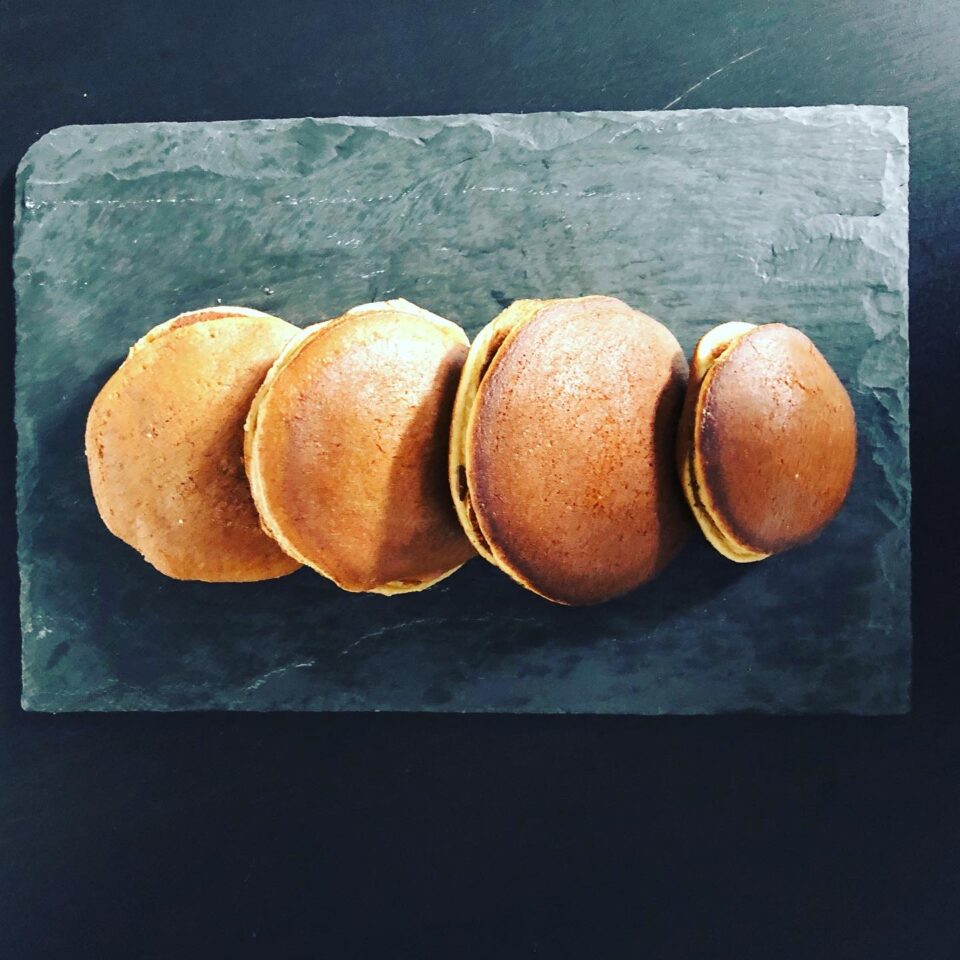
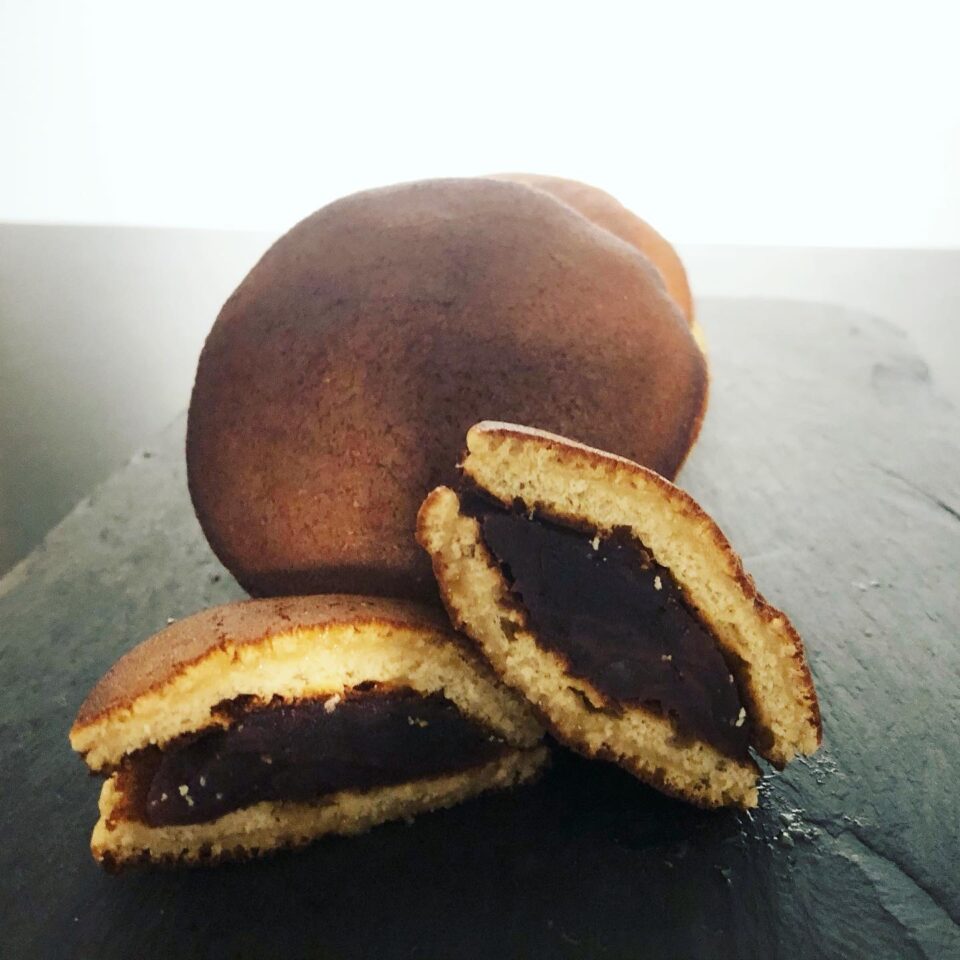
Dorayaki are a traditional Japanese sweet that you probably know as the favorite food of the cartoon character Doraemon. They're a type of pancake cooked in a pan and sandwiched together (kind of like a Codan shell, but a bit thicker). The traditional filling is anko, a sweet paste made from azuki beans and sugar. Anko is used in lots of Japanese desserts, so if you've never tried it, I encourage you to give it a chance — even if the words "bean" and "sweet" don't sound too tempting together in the same sentence.
This recipe comes from Masaharu Tada, the chef at the residence of the Japanese Ambassador in Spain.
Ingredients
Makes 5 units (that is, 10 pancakes)
1.5 g (¼ tsp) baking soda
15 ml (1 tbsp) water
2 eggs
6 g (1 tsp) mirin (I didn't have any and substituted white wine)
15 g (1 tbsp) honey
80 g (⅔ cup) powdered sugar
100 g (¾ cup) flour
300 g (10.5 oz) anko for the filling
Method
Mix the baking soda with the water until fully dissolved. It's better if the water is lukewarm to make this step easier.
Beat the eggs in a bowl with a whisk and add the mirin, honey, and sugar, then whisk again.
Once everything is combined, add the water and baking soda mixture and whisk again.
Add the flour and whisk until you get a smooth, lump-free batter — but be careful not to overmix.
To make sure the batter has no lumps at all, pass it through a strainer or sieve.
Let the batter rest for 30 minutes so that the baking soda kicks in and you get a much fluffier, more homogeneous batter.
Once the resting time is up, heat a pan, brush on a little vegetable oil, and pour a small amount of batter in the center — it'll spread on its own into a perfect circle.
When bubbles appear on the surface, it's time to flip the pancake and cook the other side.
Repeat with the rest of the batter.
Once all the pancakes are done, all that's left is to pair them up and put the anko filling inside. The best way is to roll the anko into a ball, place it on one pancake, cover with its pair, and gently press them together so they close without breaking.
PiC Tips
If you don't have or don't like anko, you can fill them with chocolate cream or pastry cream. Anko is the original version and, besides being delicious, it's easier to handle for this recipe since it's a more compact filling.
The heat of the pan will depend on your stove. You need to keep an eye on them so the dorayaki turn out golden on the outside but well cooked on the inside. I made them on medium heat on an induction cooktop.
It's a fairly sweet batter and since the anko is also sweet, I think you could get away with reducing the amount of powdered sugar a little.
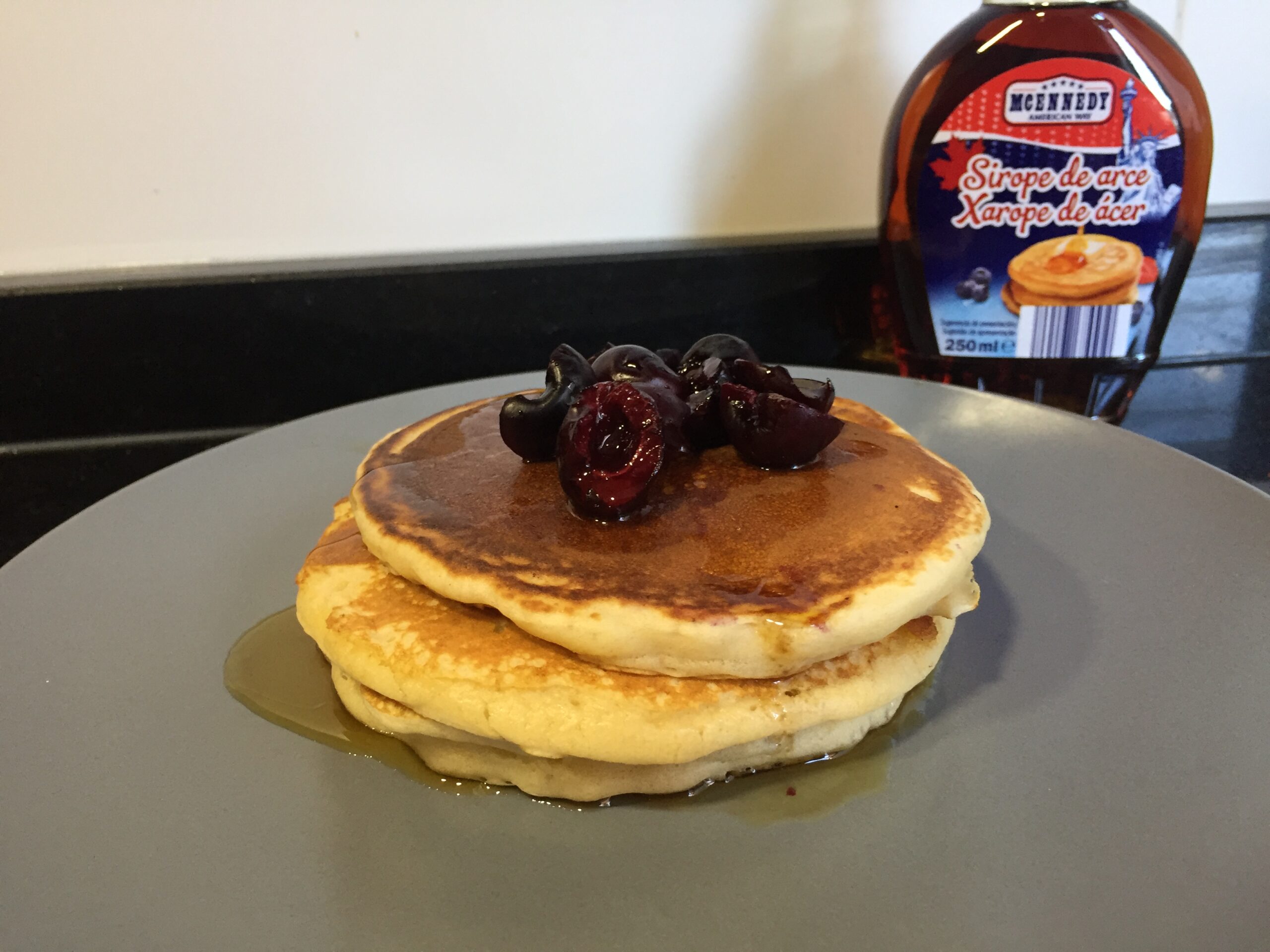
American Pancakes
And this is the exact title of recipe number 1029 in the book «1080 Recetas» by Simone Ortega, a classic of Spanish kitchens. It really can't get any simpler or more delicious. There are loads of pancake variations out there, but let's start with the basics and just enjoy ;-).
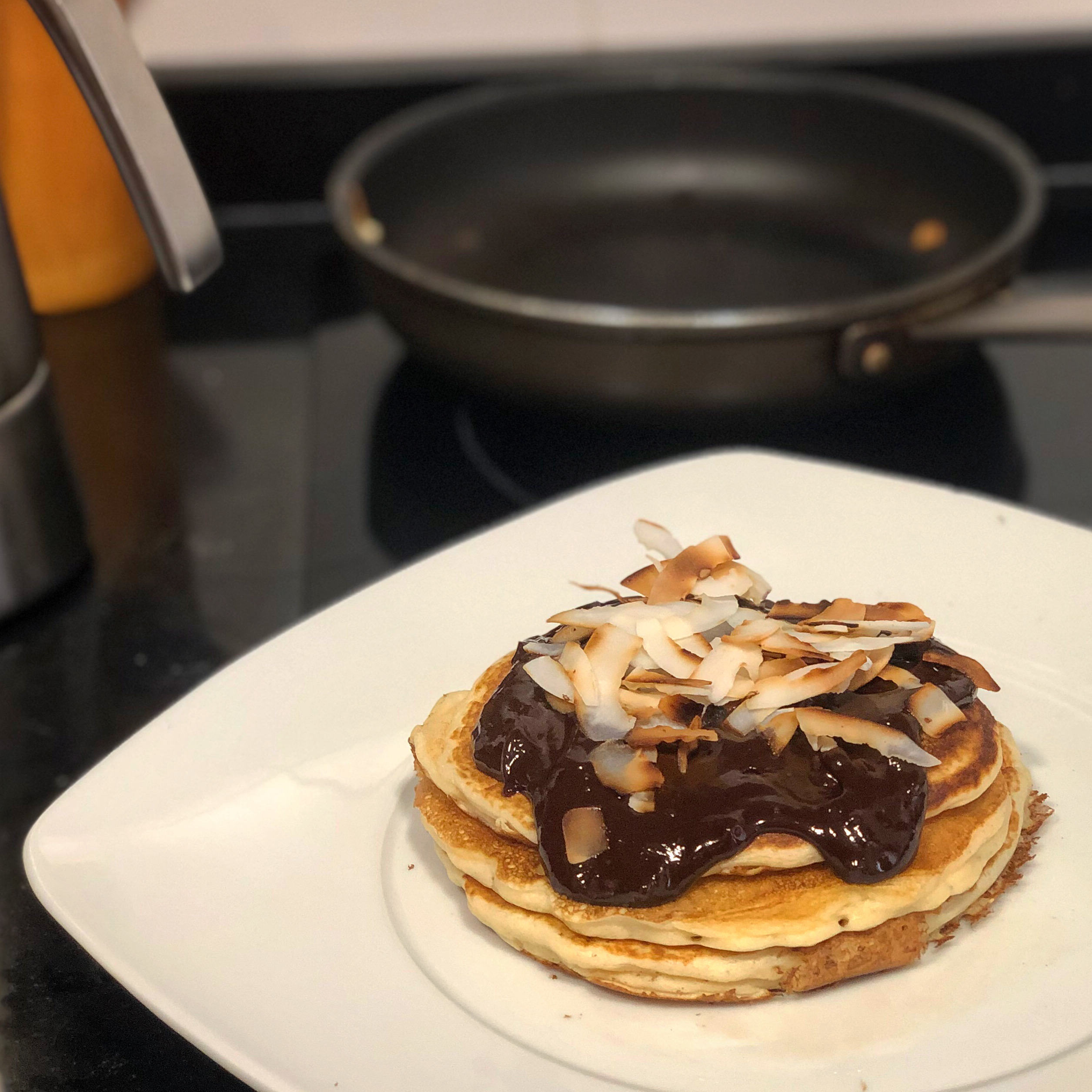
Pancakes with dark chocolate and toasted coconut
Ingredients
200 g (1 ⅔ cups) flour
½ teaspoon of salt (in Simone's words: «the mocha-spoon kind», so really tiny)
3 teaspoons of Royal-type baking powder
1 tablespoon of sugar
1 tablespoon of olive oil
2 eggs
1 glass (a water glass) of cold milk (about 200 ml / ¾ cup + 1 tbsp)
Method
Here I'm not going to follow the traditional recipe, I'm going to make it way easier for you, so you can whip up some pancakes even before heading off to work.
Put all the ingredients in a blender jug or bowl and blitz them with a hand blender or any kitchen robot until you get a smooth, even batter.
Heat a pan and, when it's nice and hot, pour a bit of the batter in the center. It'll form a perfect circle. Cook it over medium heat.
When you see bubbles forming all over the surface, that's the moment to flip it with a spatula and cook it for a similar time on the other side.
Repeat with all the batter.
Serve with syrup, jam, chocolate, fruit, or whatever you like best.
PiC Tips
If you don't quite trust your pan's non-stick coating, you can add a little butter or oil to keep them from sticking.
If the olive oil flavor is too strong for you, you can swap it for sunflower oil.
If you don't want to make all the batter at once, you can keep the raw batter in the fridge and make the rest of the pancakes the next day (two days of guaranteed happiness). Or you can just halve the recipe directly (it divides easily).